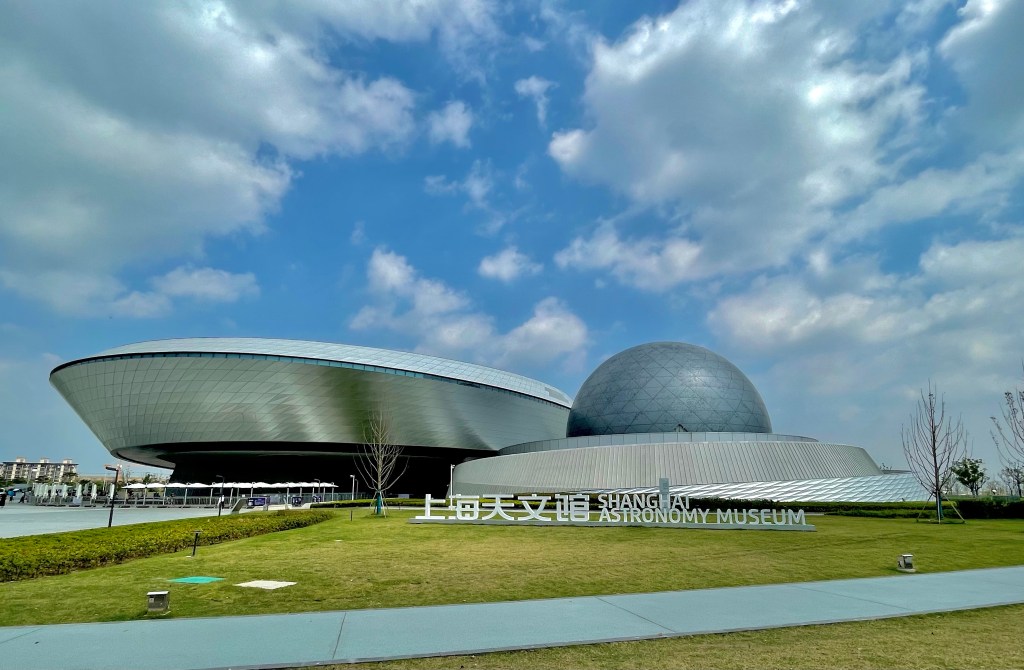
Opened in July 2021, it is the biggest and most modern astronomy museum in the world.
The architecture itself is stunning, even when viewed only from outside
The Shanghai Astronomy Museum (or Shanghai Planetarium) (上海天文馆) has been opened in July 2021. I was very lucky to get a ticket during the Mid-Autumn Festival. Normally, you have to book the tickets 7 days in advance and getting tickets on a major national holiday is nearly impossible.
The Shanghai Astronomy Museum is located in the Lin-Gang District, in the south eastern corner of the city. It takes almost 2 hours by subway/train from the city centre. I took line 16 which exits at the Dishui Lake. From the exit station, it is about 800m, an easy 10 minute or so walk.
As with all educational institutions, such as museums, the entry fee is extremely reasonable (30 RMB). You book your online ticket through WeChat and just show it at the entrance. You also need (as usual) both health codes, the Shanghai Health Code and the 14 day travel history .
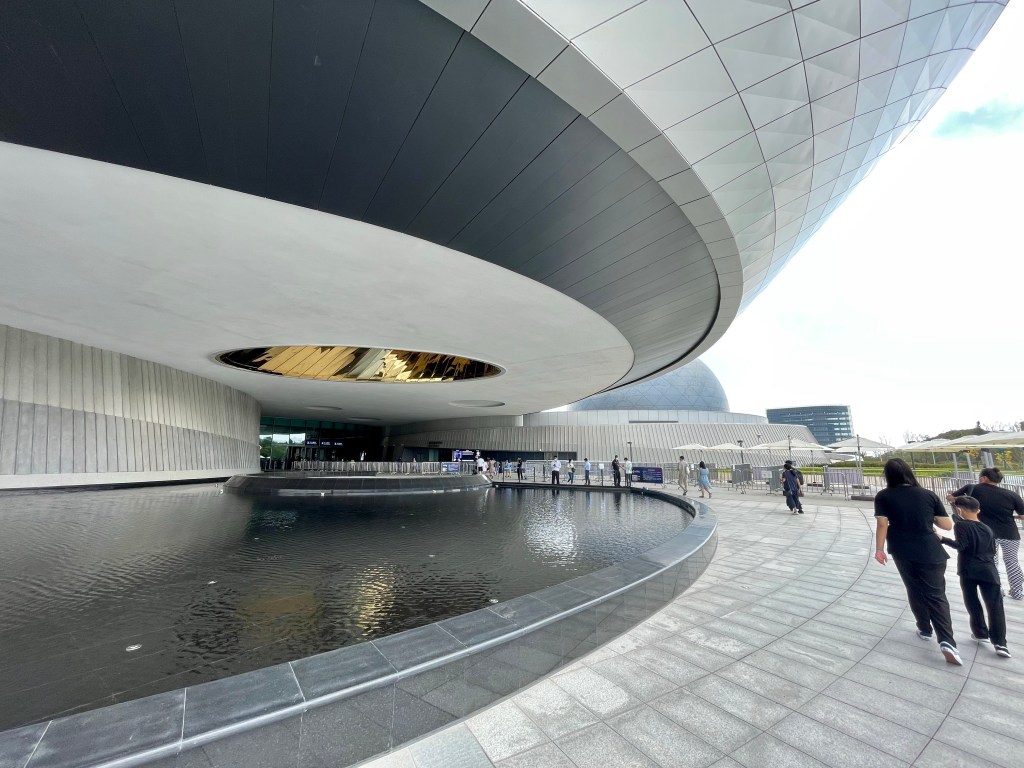
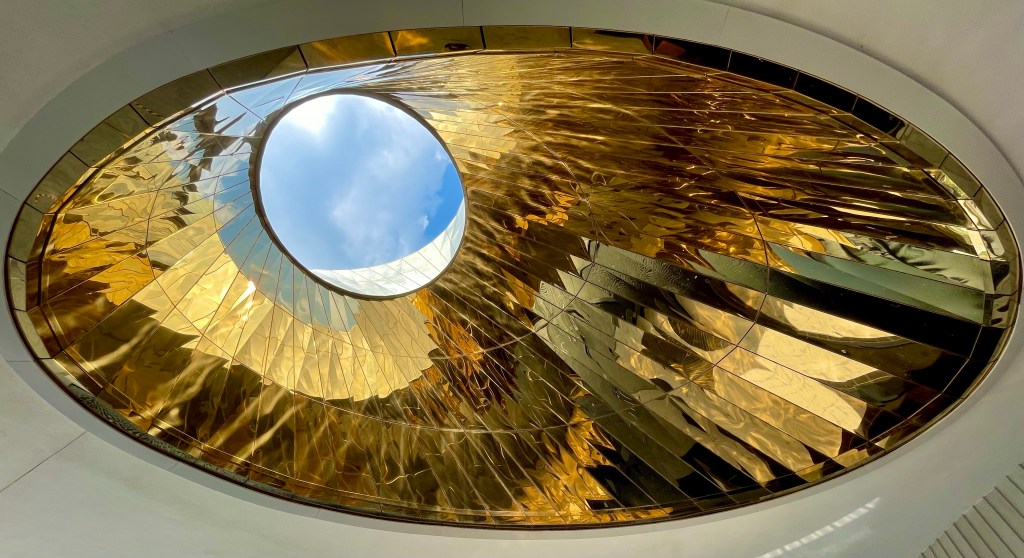
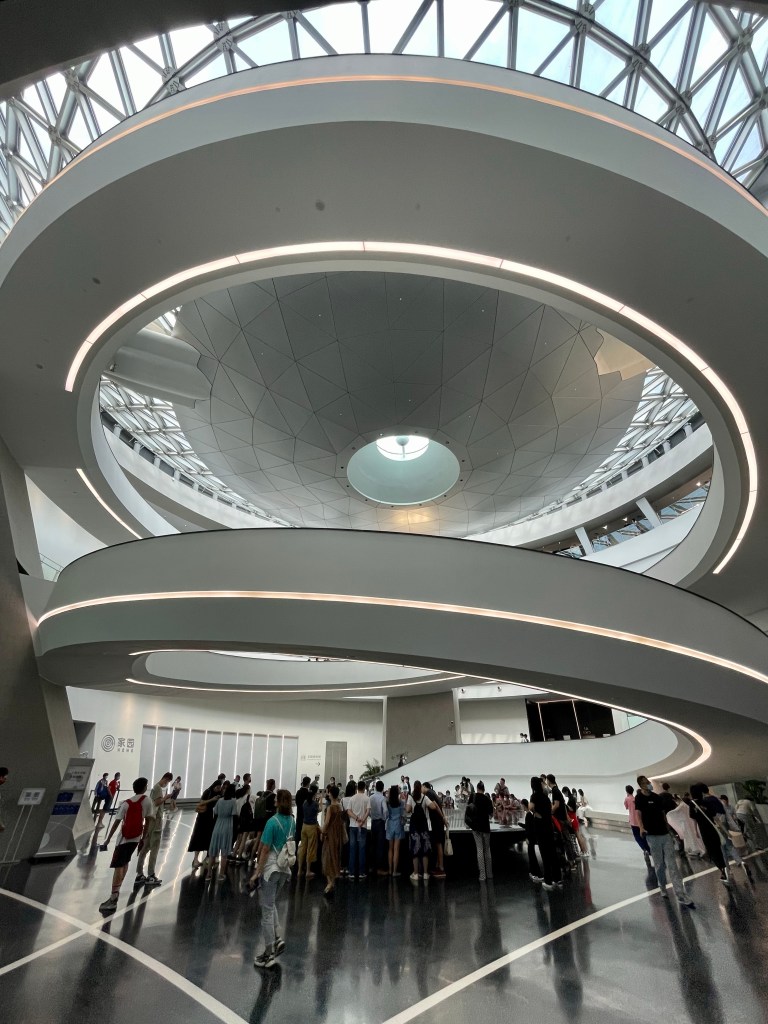
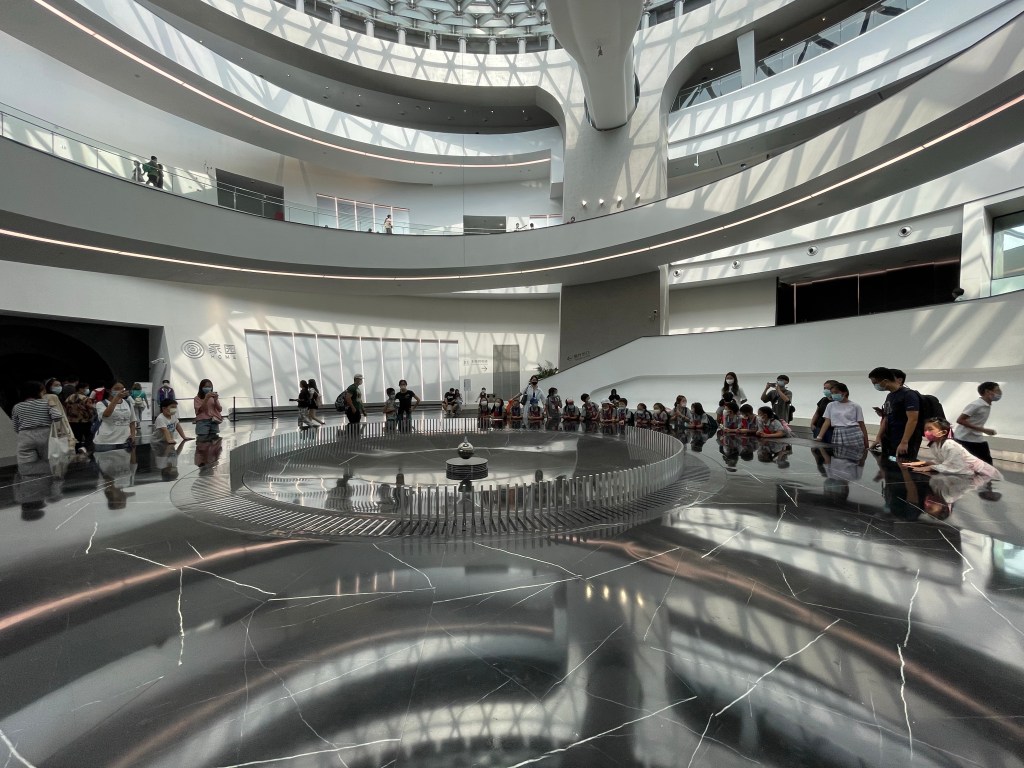
The entrance is an impressive piece of architecture and once you are inside, it gets even better.
The entrance hall
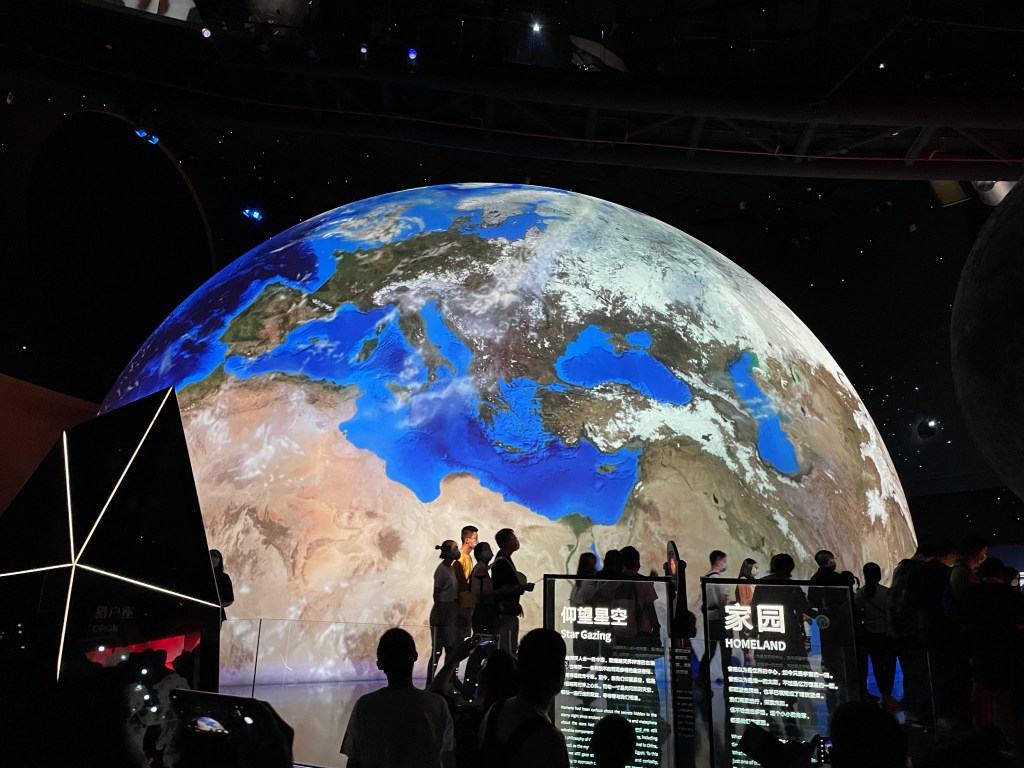
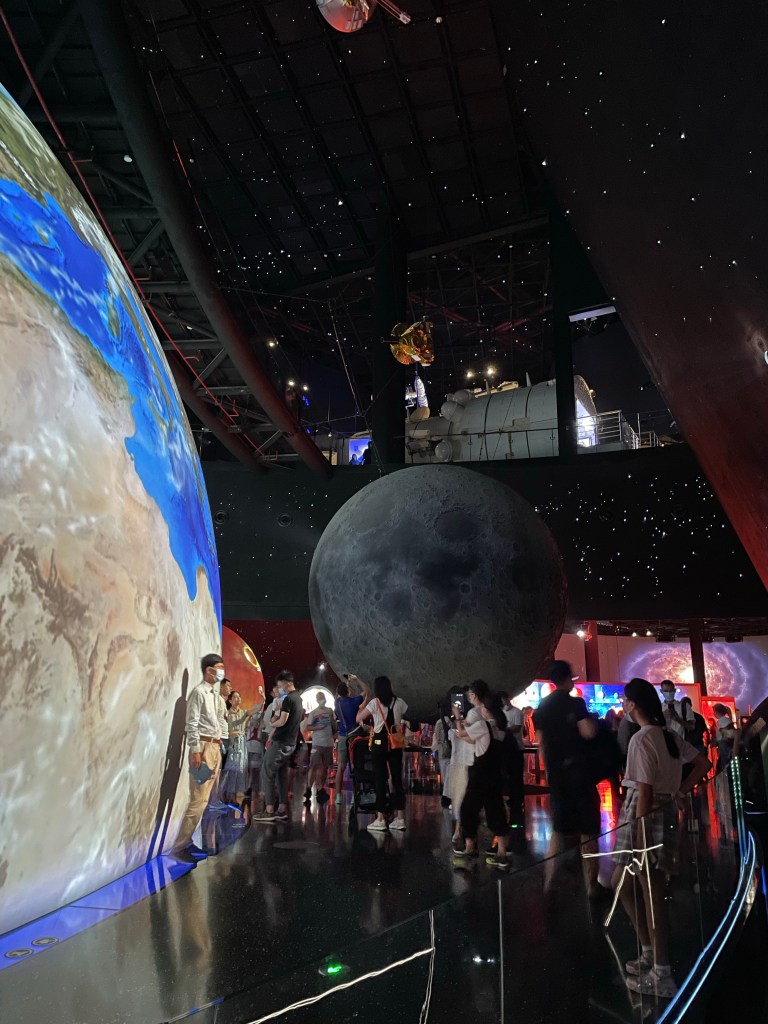
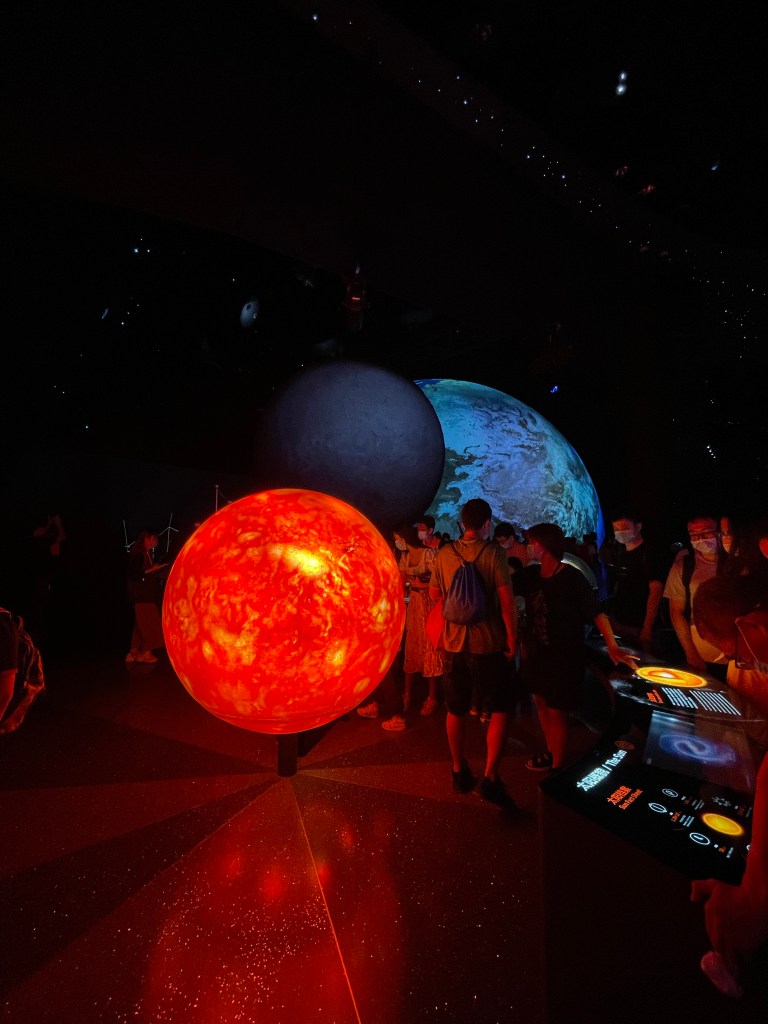
The first exhibition is dedicated to our solar system. The biggest focus is on the earth, with a huge animated sphere. Earth and moon are to scale compared to each other, it was quite impressive how big the moon actually is. I would consider myself an astronomy nerd, but i never quite realized this size.
Clouds in motion
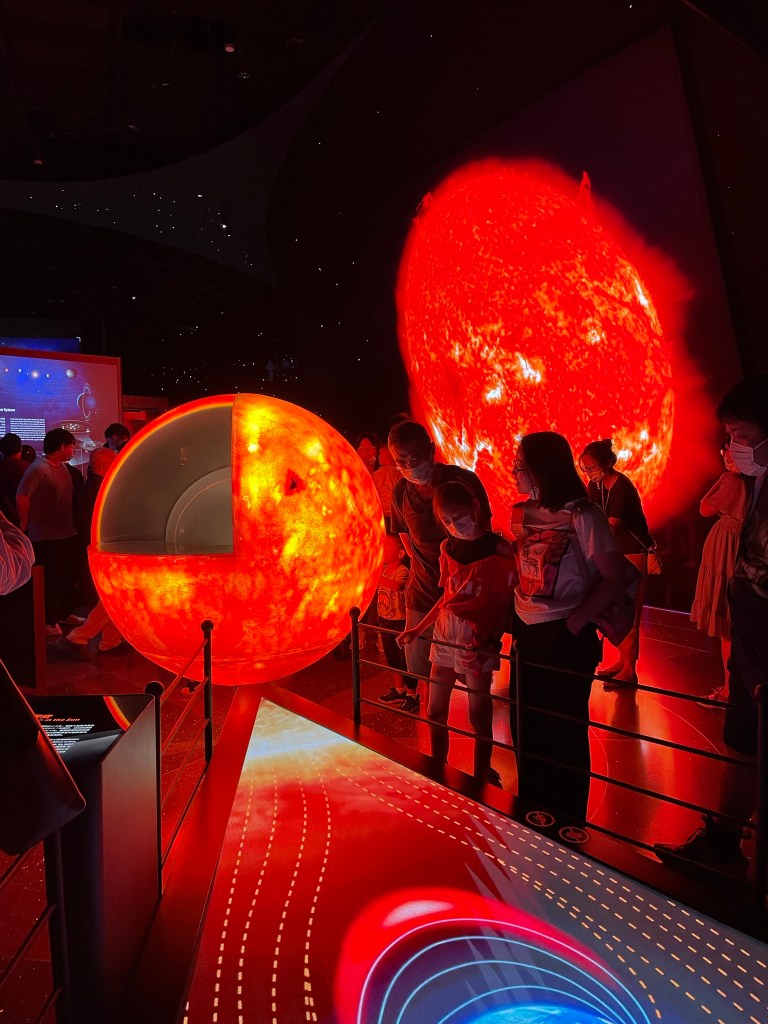
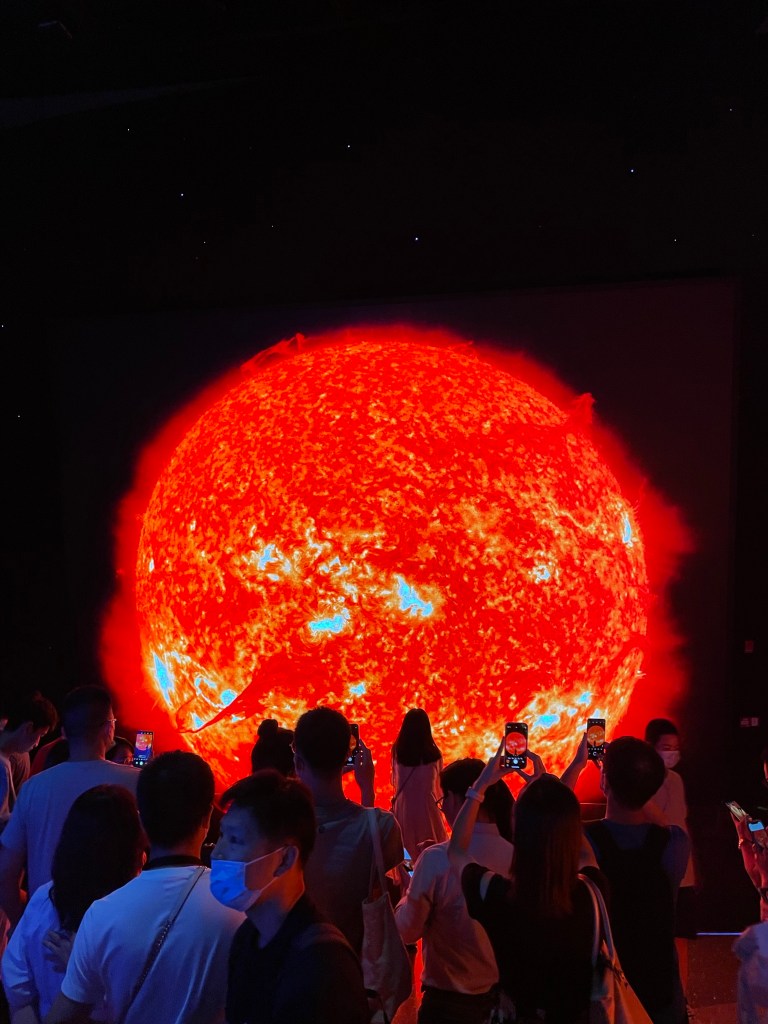
The second largest focus was (logically) on our sun. Details like how the internal fusion process works were explained very clear so even children can understand it.
The display and facts about the other planets was not less impressive and all based on the latest information.
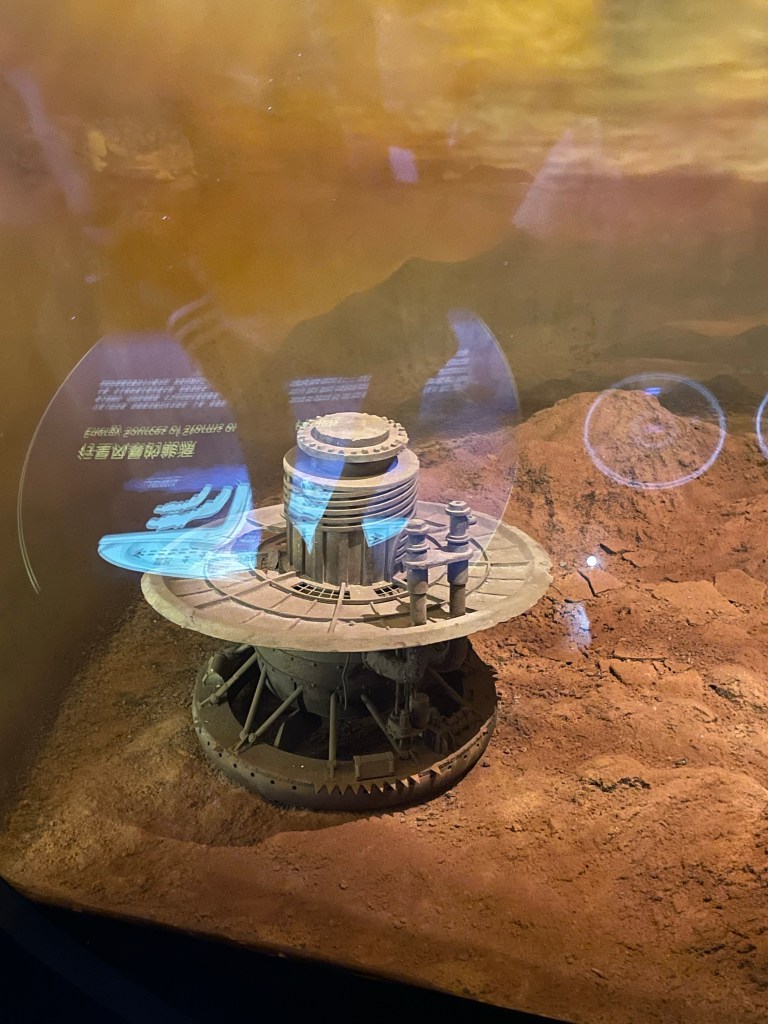
replica of a Venera probe which landed on Venus in the 1960s and 70s
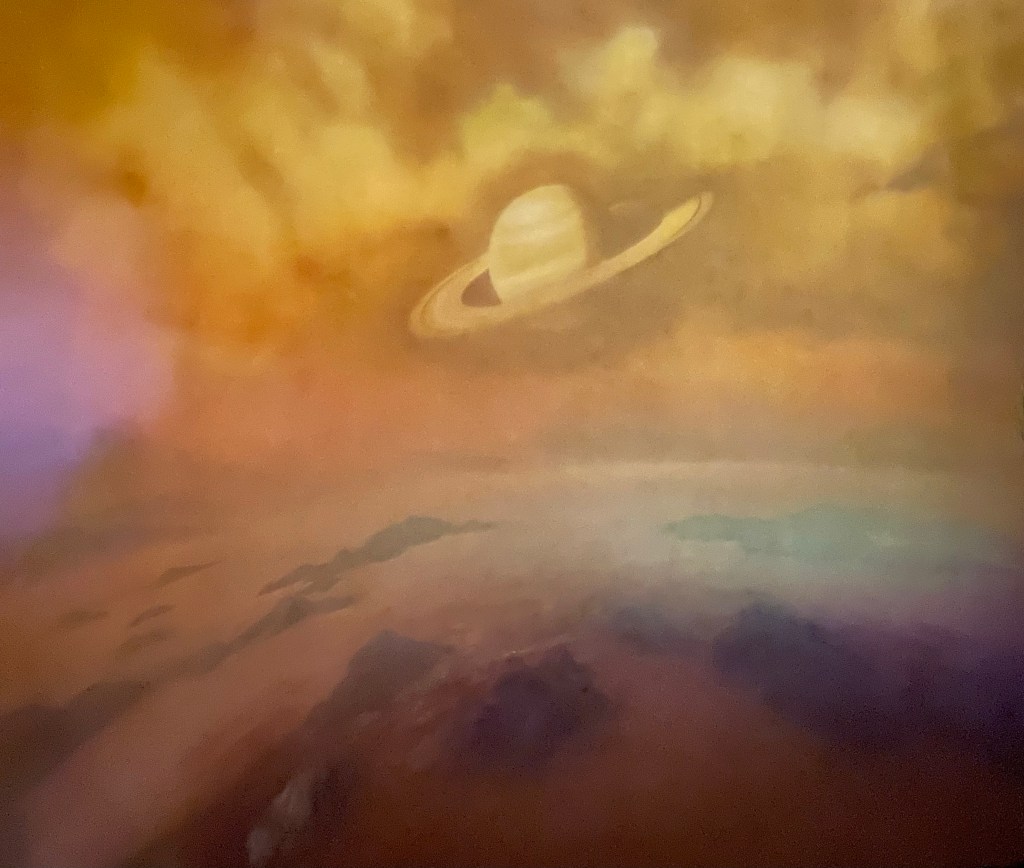
A artists impression on how it looks on Titan, on of the large moons of Saturn.
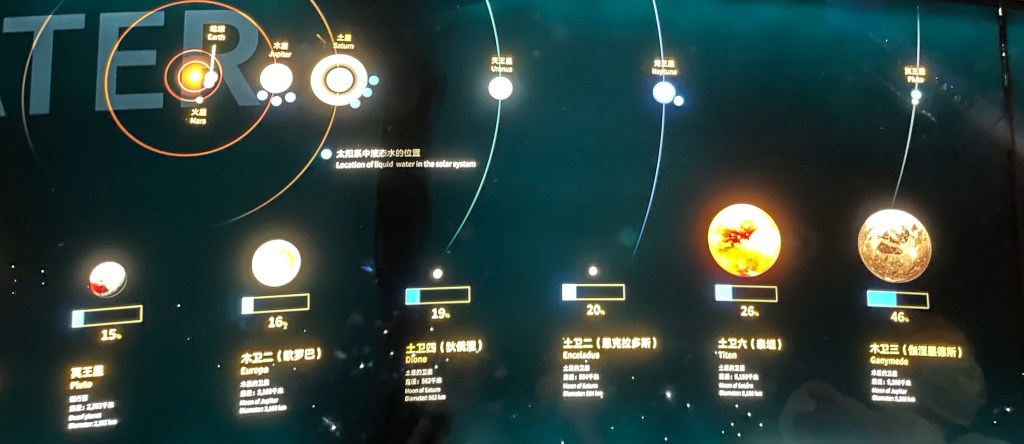
A display of where in our solar system liquid water can be found and in which amount
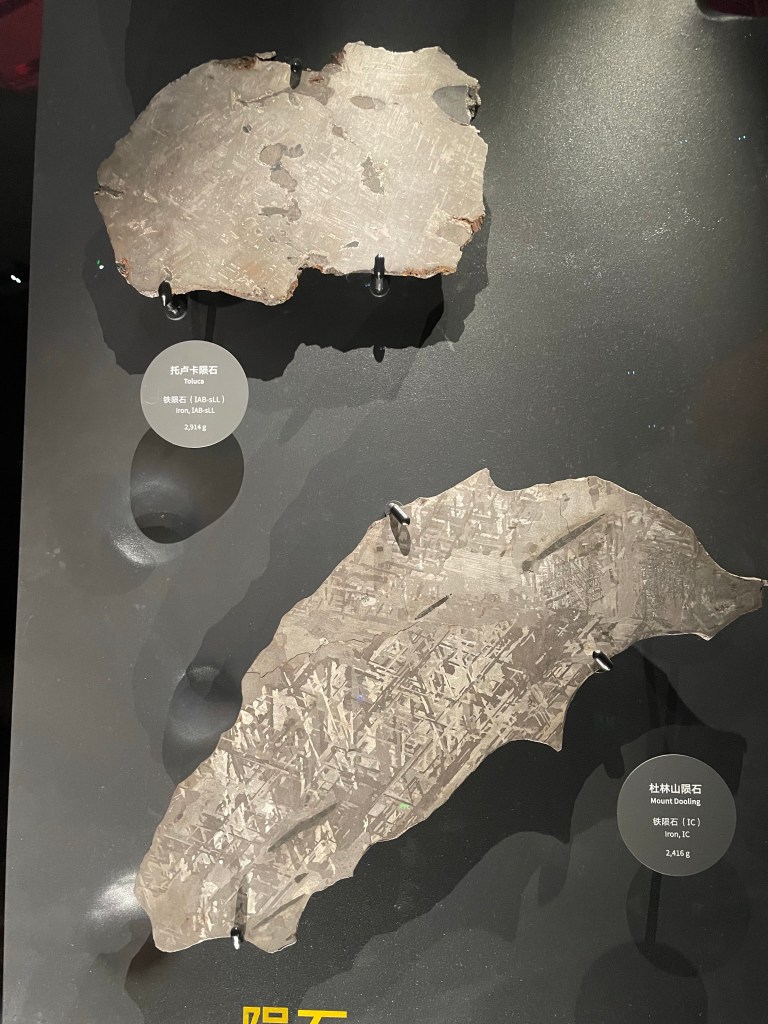
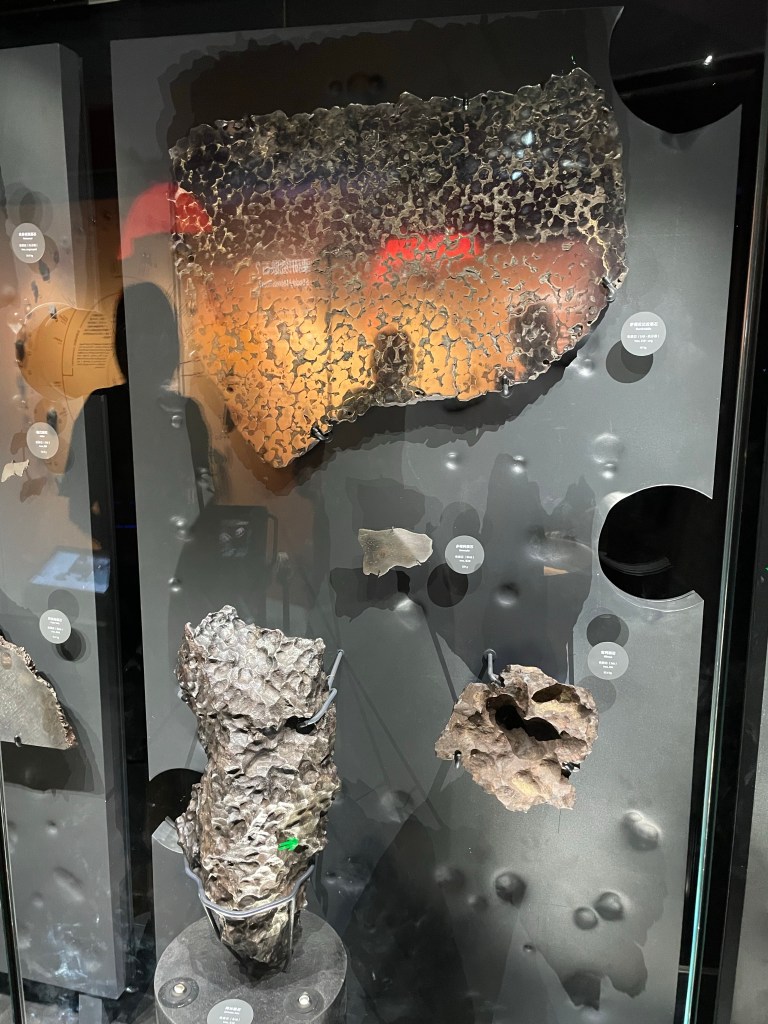
There were some amazing and huge meteoroids displayed as well.
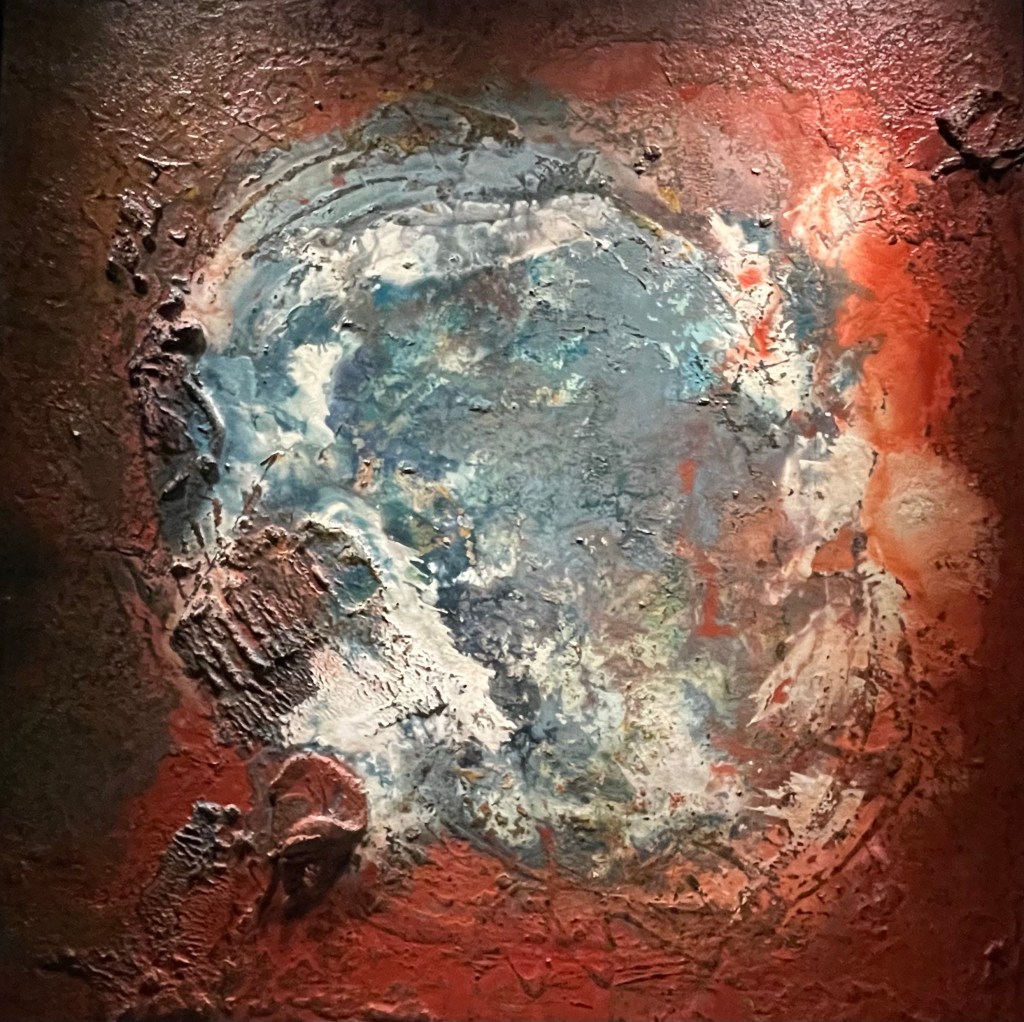
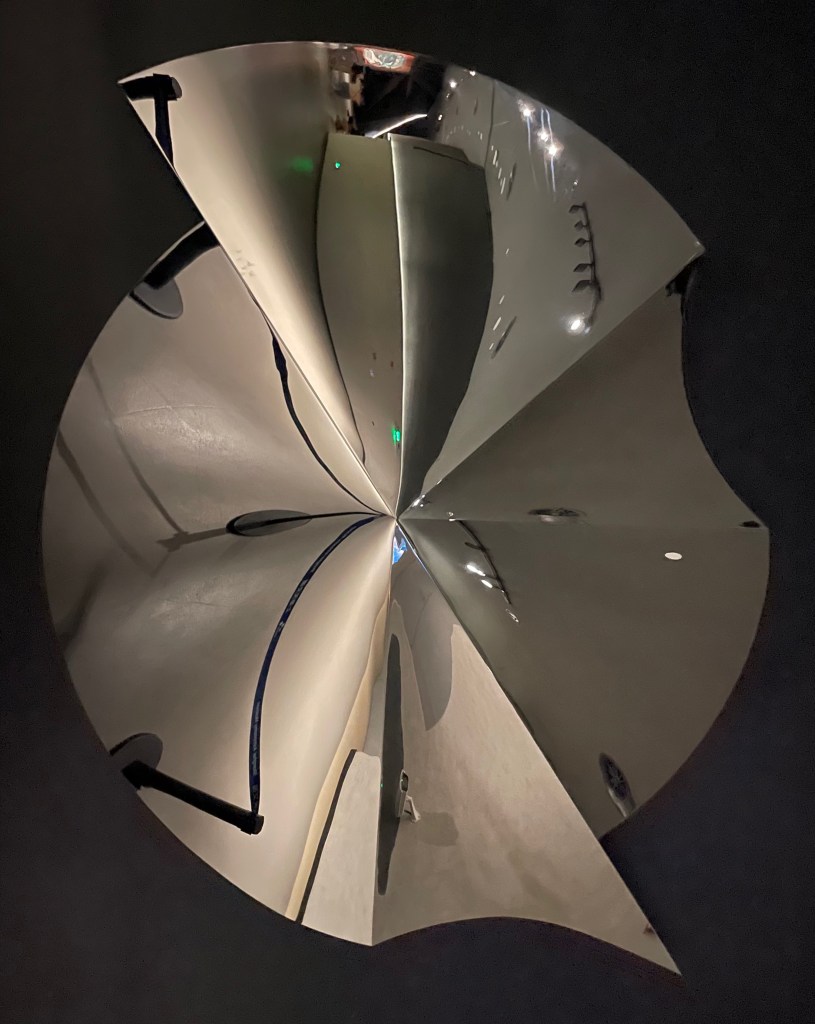
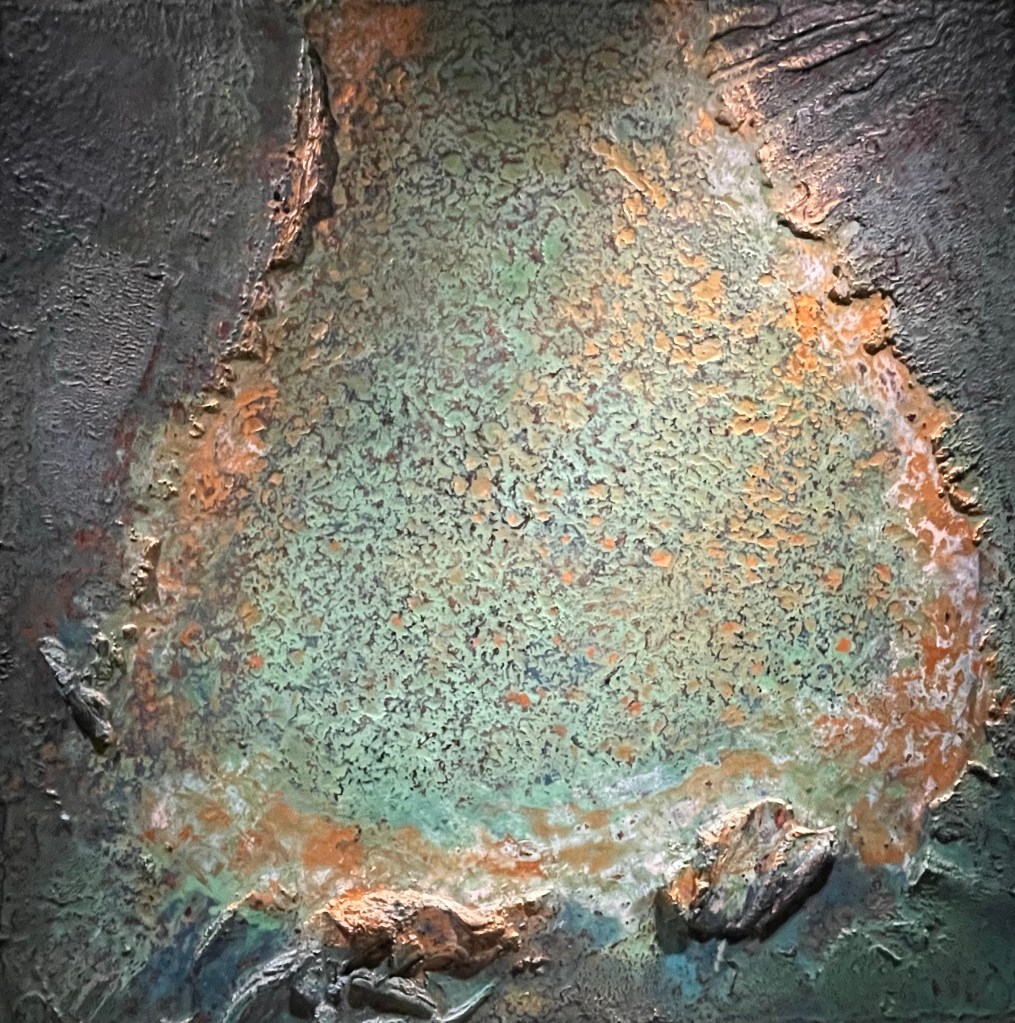
On the way to the next exhibition there were a number of photographs and art related to the universe. I am not a big art fan, but most of them looked great.
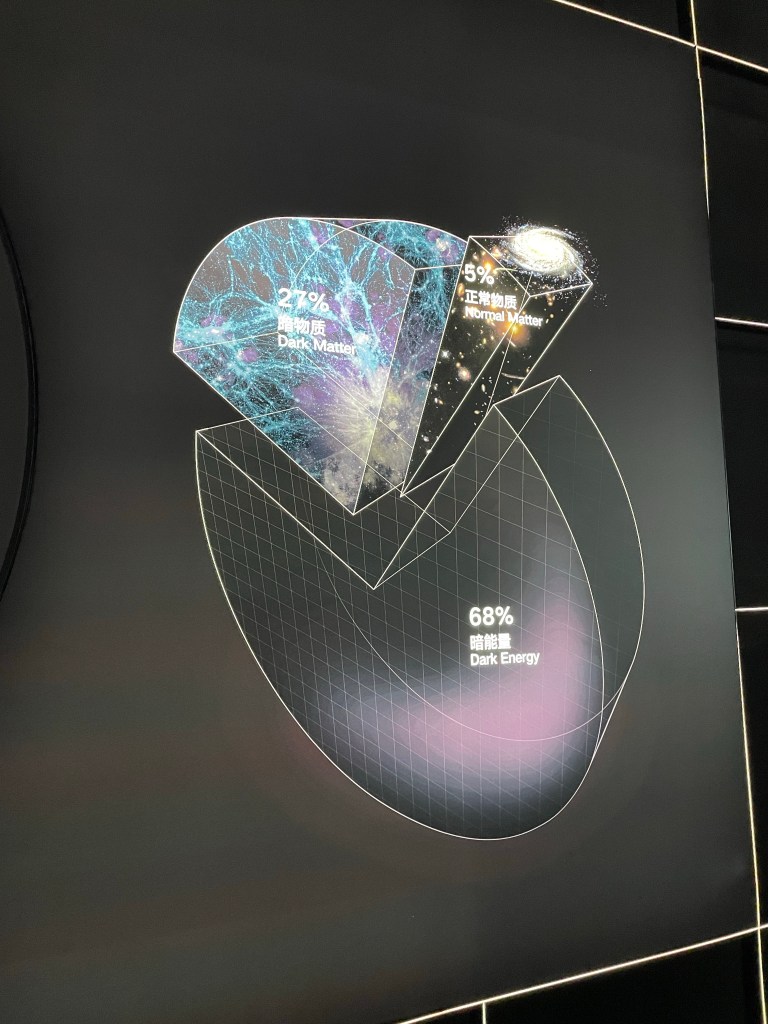
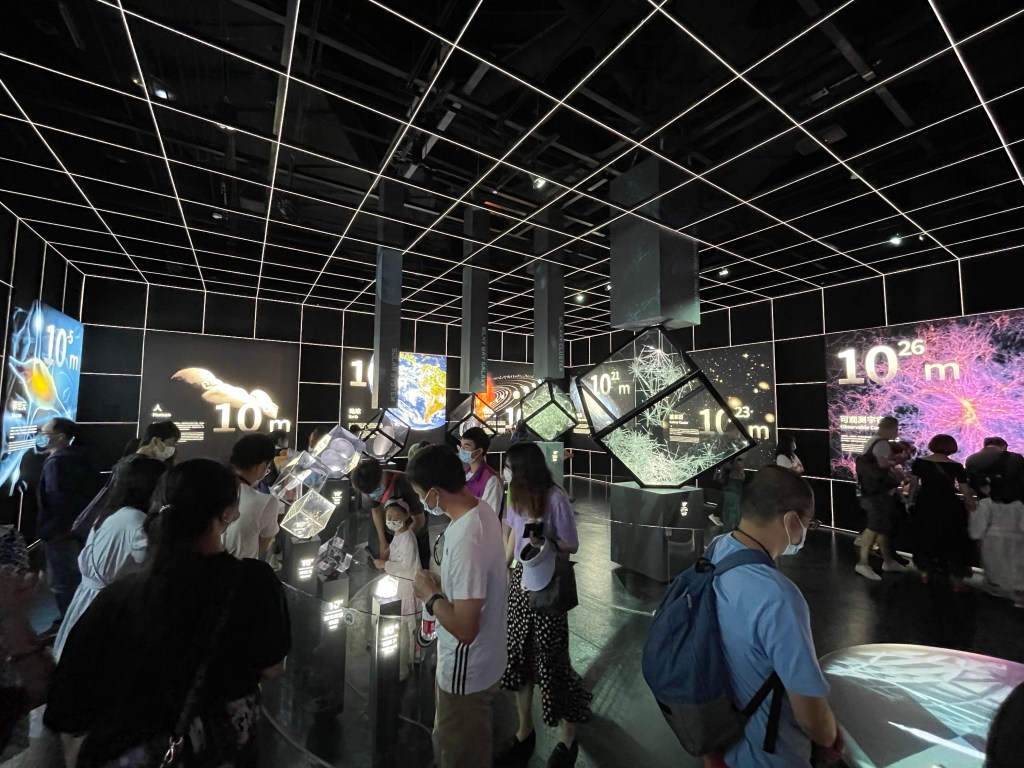
The next part of the exhibition was dedicated to scales in the universe, from the smallest to the biggest, as well as the believed timeline from the big bang to now.
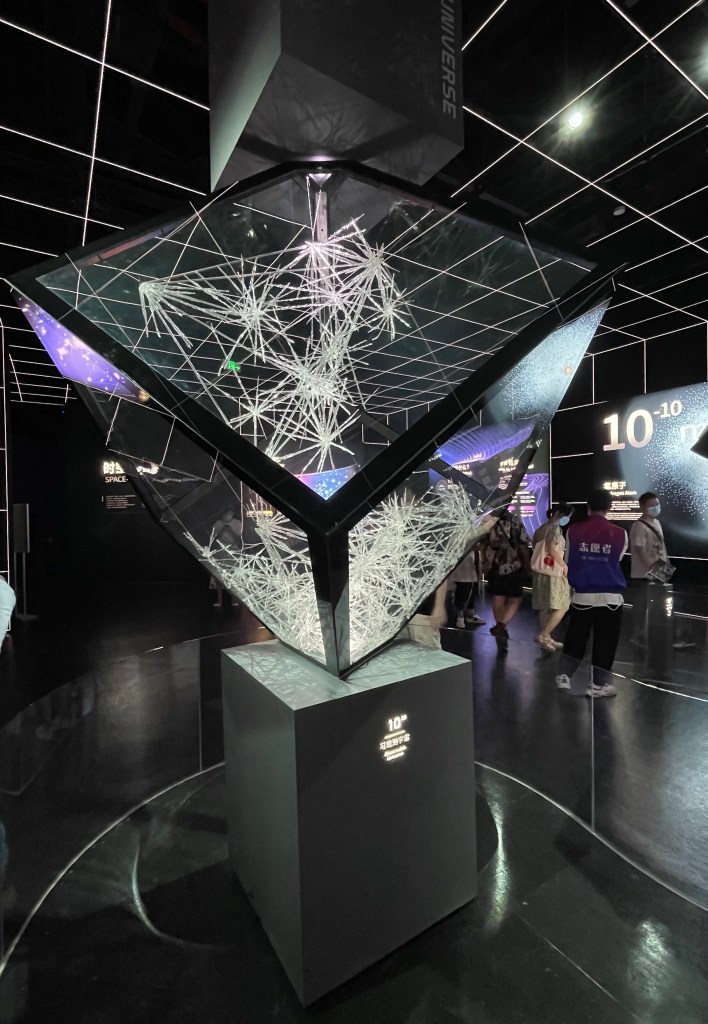
The largest scales in the universe (simplified)
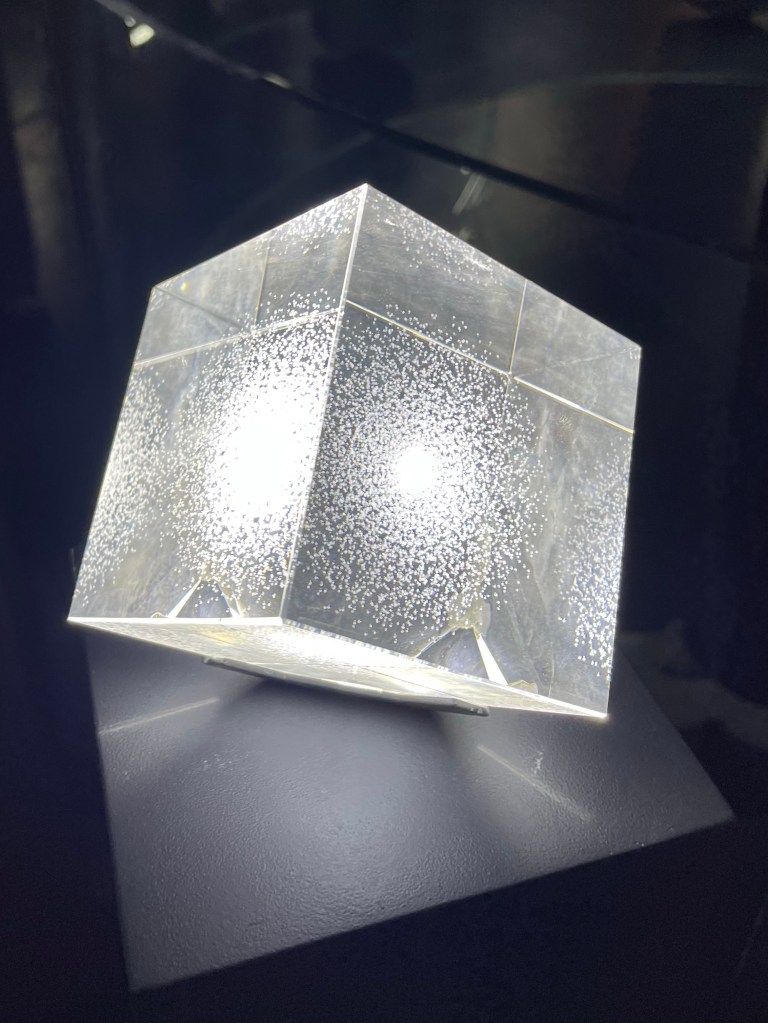
Model of a hydrogen atom
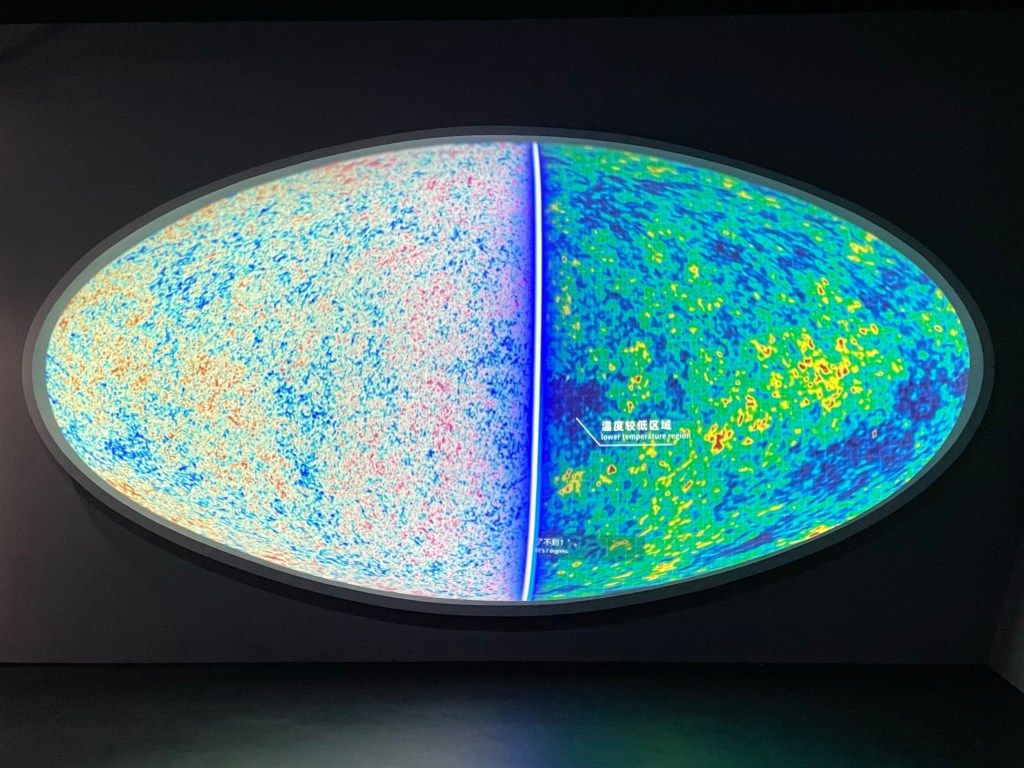
visualization of the cosmic background radiation
from the smallest objects to the largest
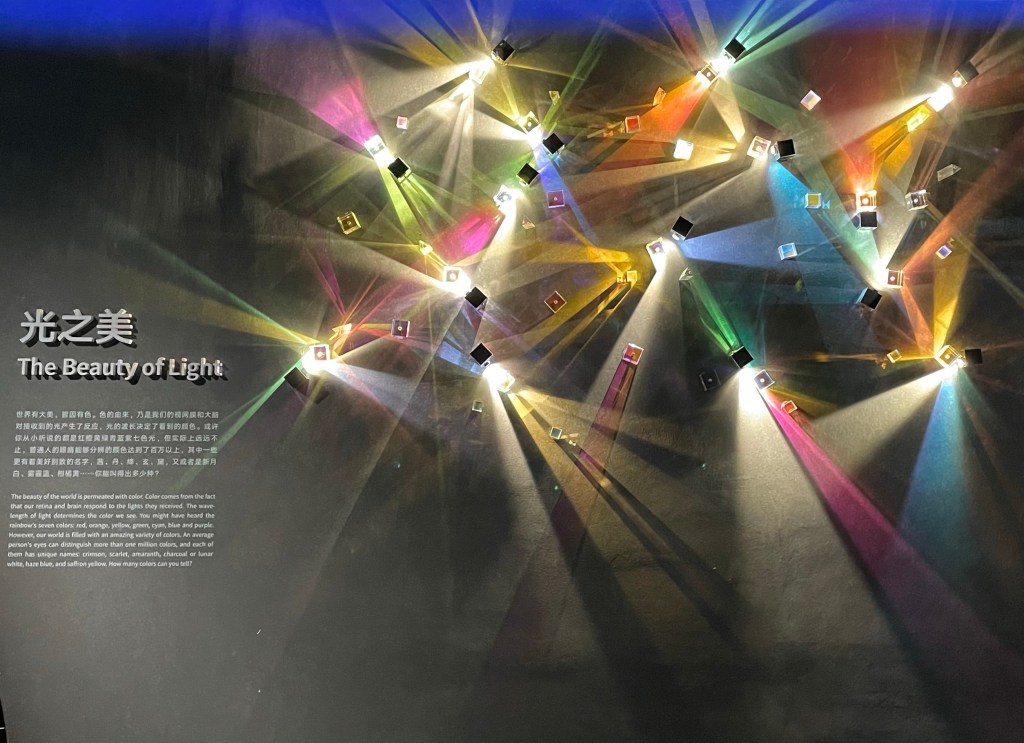
There were some more sections about light, history of different theories (such as particle physics, quantum theory, relativity, black holes etc. There were no really distinct pictures there, so i leave this up to your imagination or feel free to lookup at wikipedia.
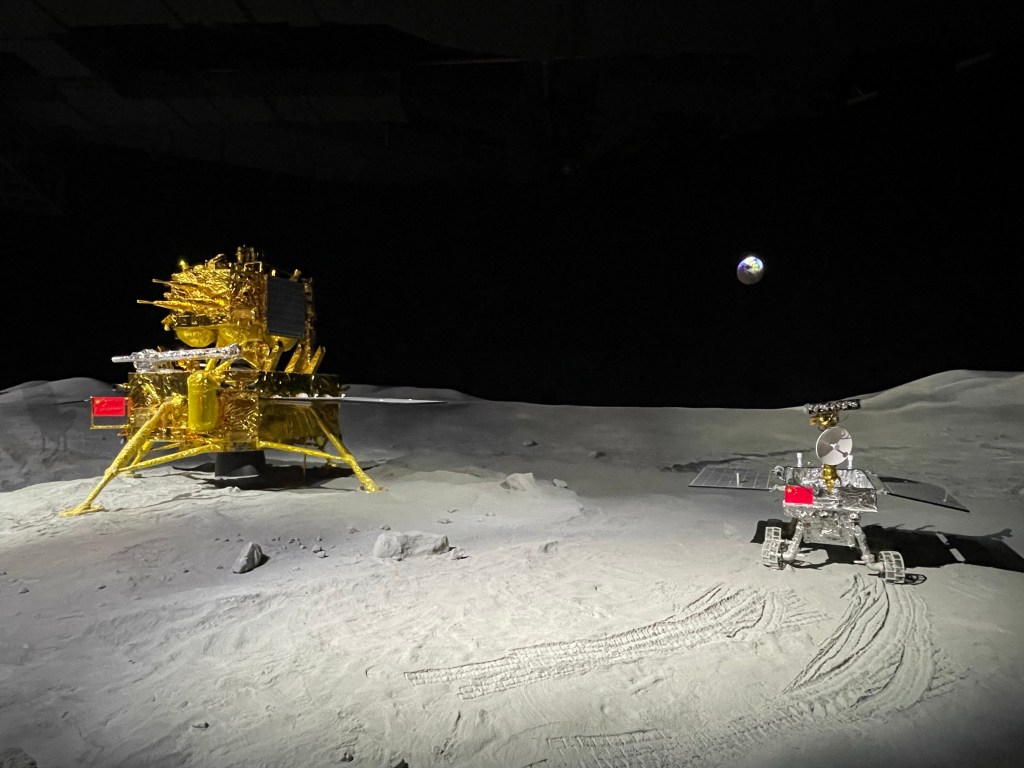
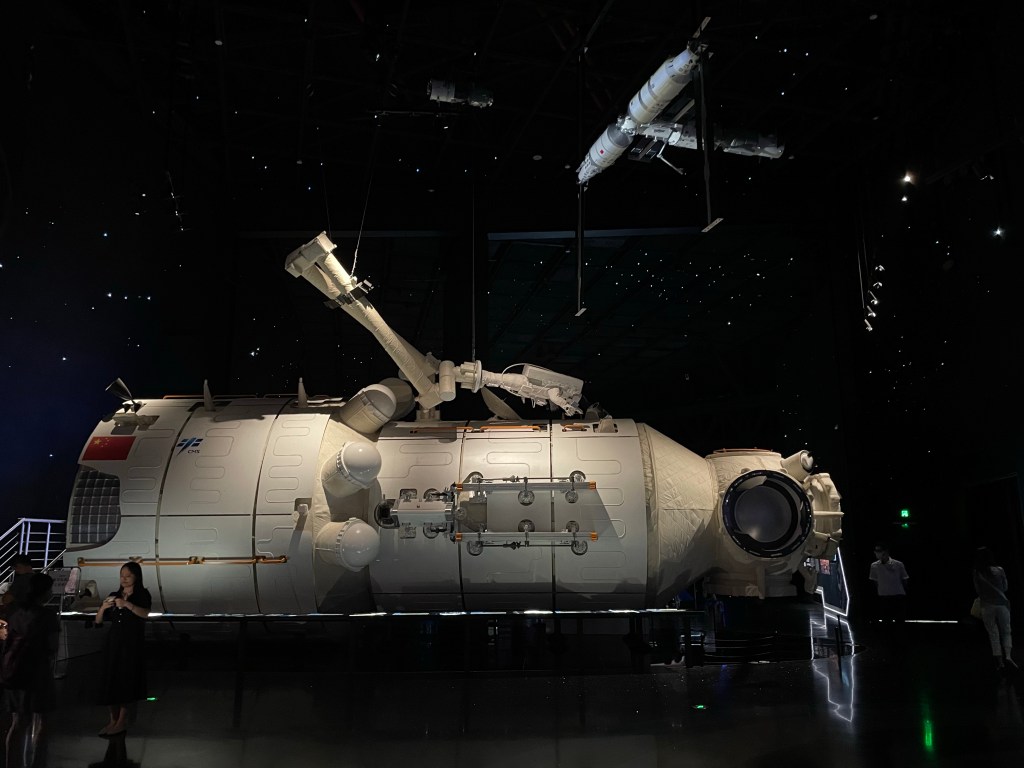
The next large section was the exploration of space and the image people had about space from about 6,000 B.C., the Egyptians, Copernicus etc. The most impressive and interesting part was of course the modern time, with all the different robotic probes , manned spacecraft and rovers. It was and is especially impressive what China achieved in the last 20 years, with rovers on the mars, the moon, a manned space station and countless other spacecraft and related achievements.
A life sized model of the Chinese moon landers and roversA life sized model of a part of the Chinese Space Station
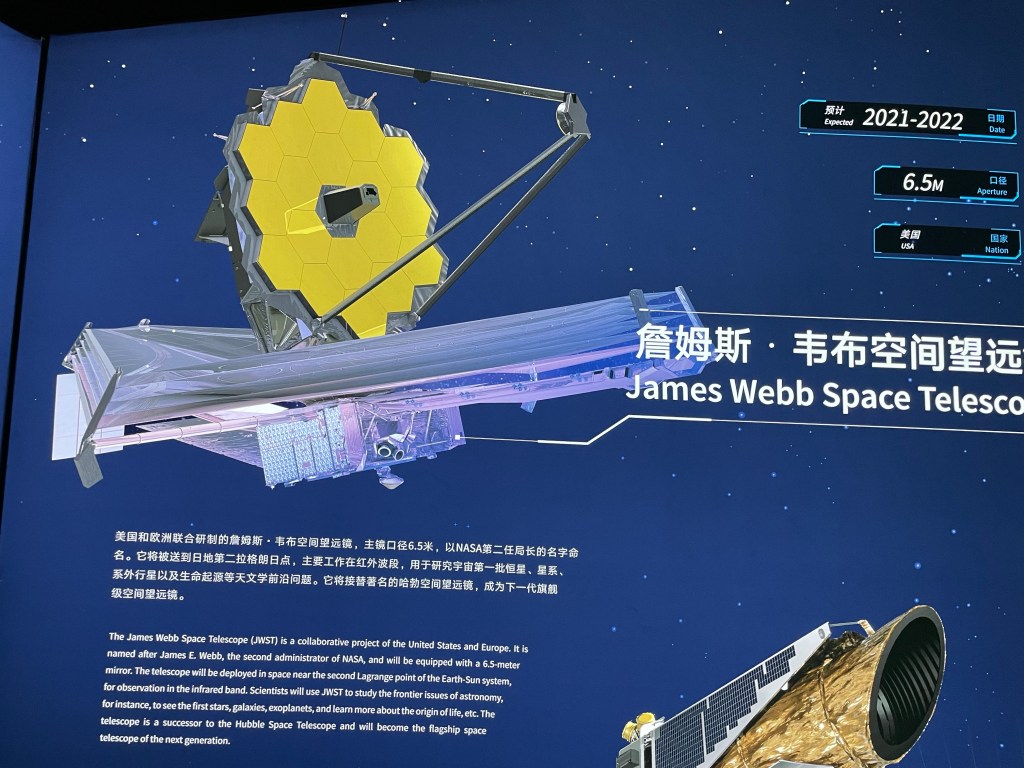
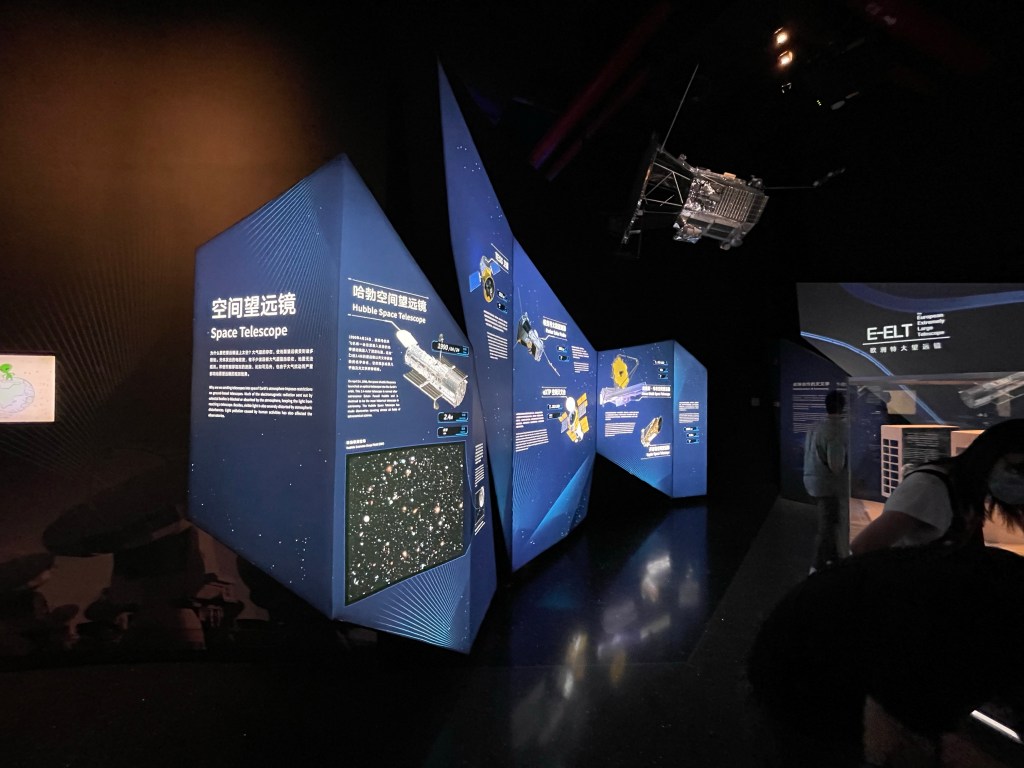
Another extremely interesting part was the „telescope“ part – with pictures and data about the latest space and earthbound telescopes. Also, the upcoming new telescope projects of the next 10 years were shown.
The JWST, hopefully launching this year.
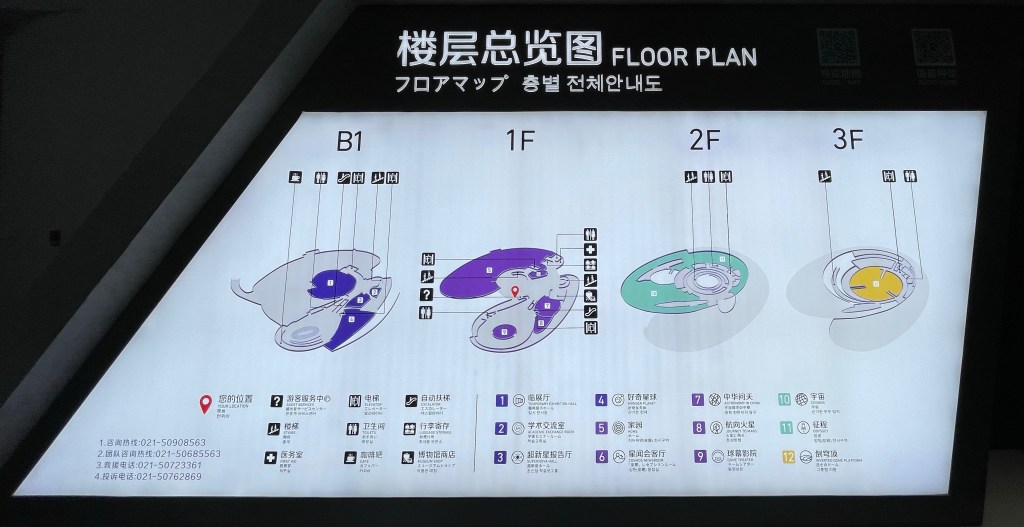
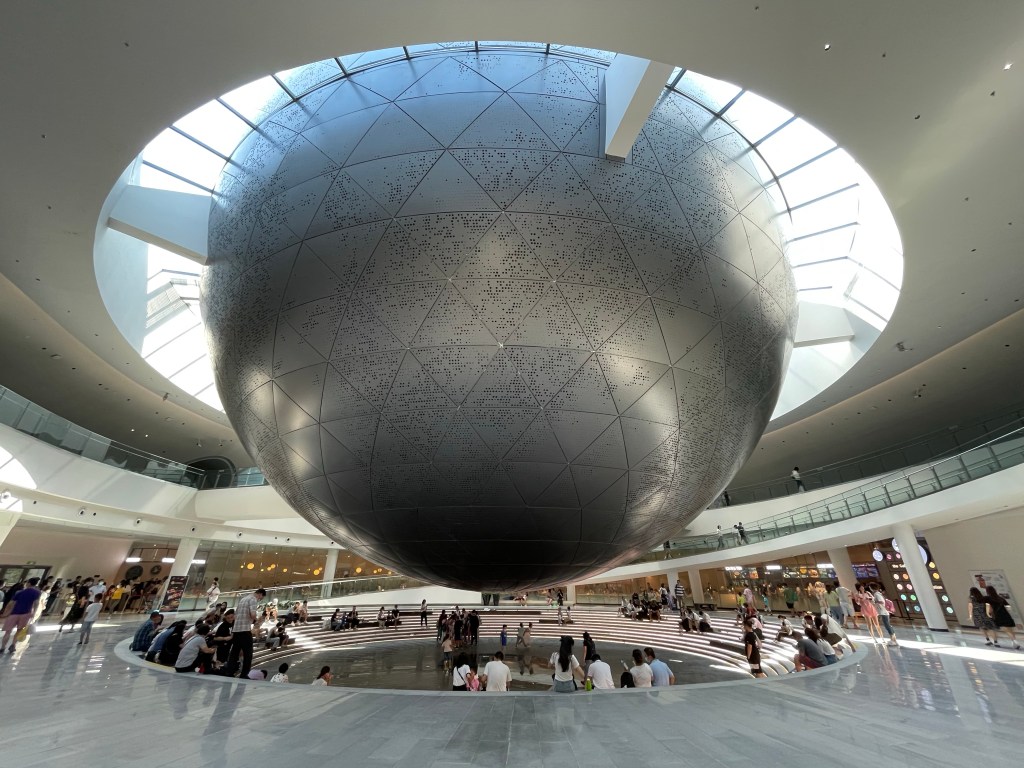
In the B1 floor, there were a few restaurants as well as some cinemas. Also, you could rest or eat beneath an enormous floating globe.
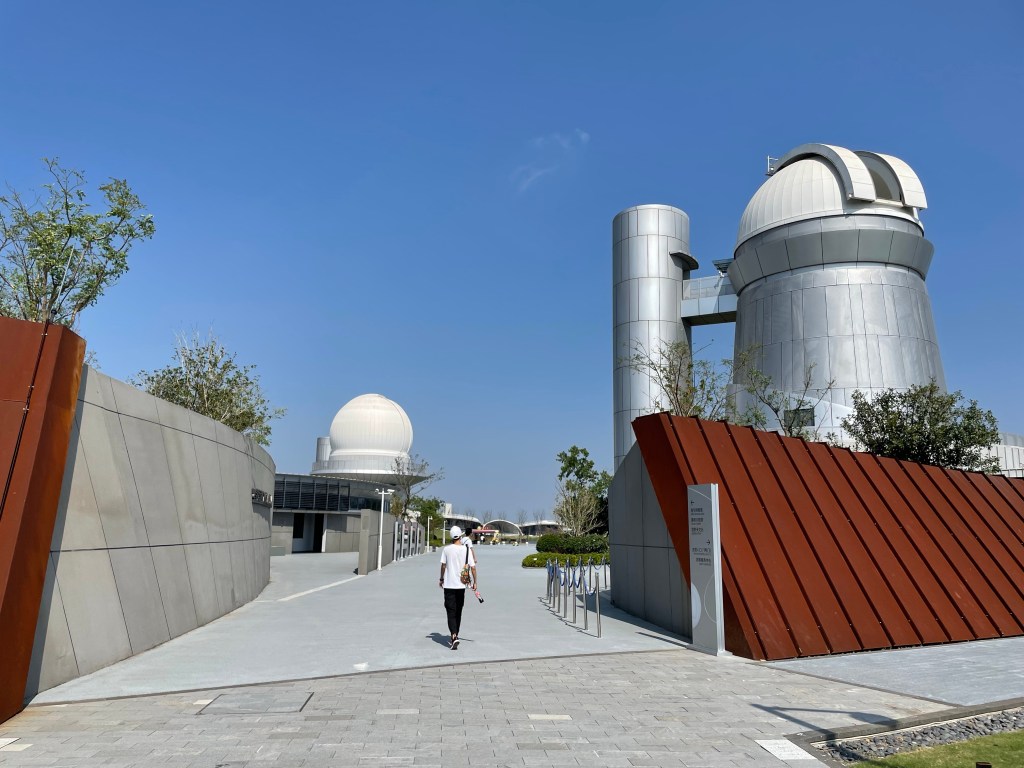
Outside, there are a few observatories, which open to fixed hours only. There are also some other „space themed“ spots in the adjacent park, it was however too warm to visit all of them.
I hope you enjoyed reading this article and hope you can enjoy the museum yourself soon! Or have you been there already? Feel free to share your impressions!
We pre-booked a car about 2 weeks ago through the APP „UCAR“. I set the pickup time to 8:30am and arrived at the car rental place around 9:00. So far so good. Of course, the guy there did not speak english, so I had to convey what I wanted in Chinese, which was in the end doable. As it turned out, you are supposed to input your passport number and driver license details into the APP before you pickup the car. Since I had not done that, everything had to be done manually and checked by their headquarters. Also, you need to pay 7,000 Yuan deposit, which is only possible with Alipay or a Chinese Credit card. The whole process took about 2 hours. About 11:00 I was back at the hotel and we started our way to the Danxia Zhangye „Rainbow Mountain“ National park.
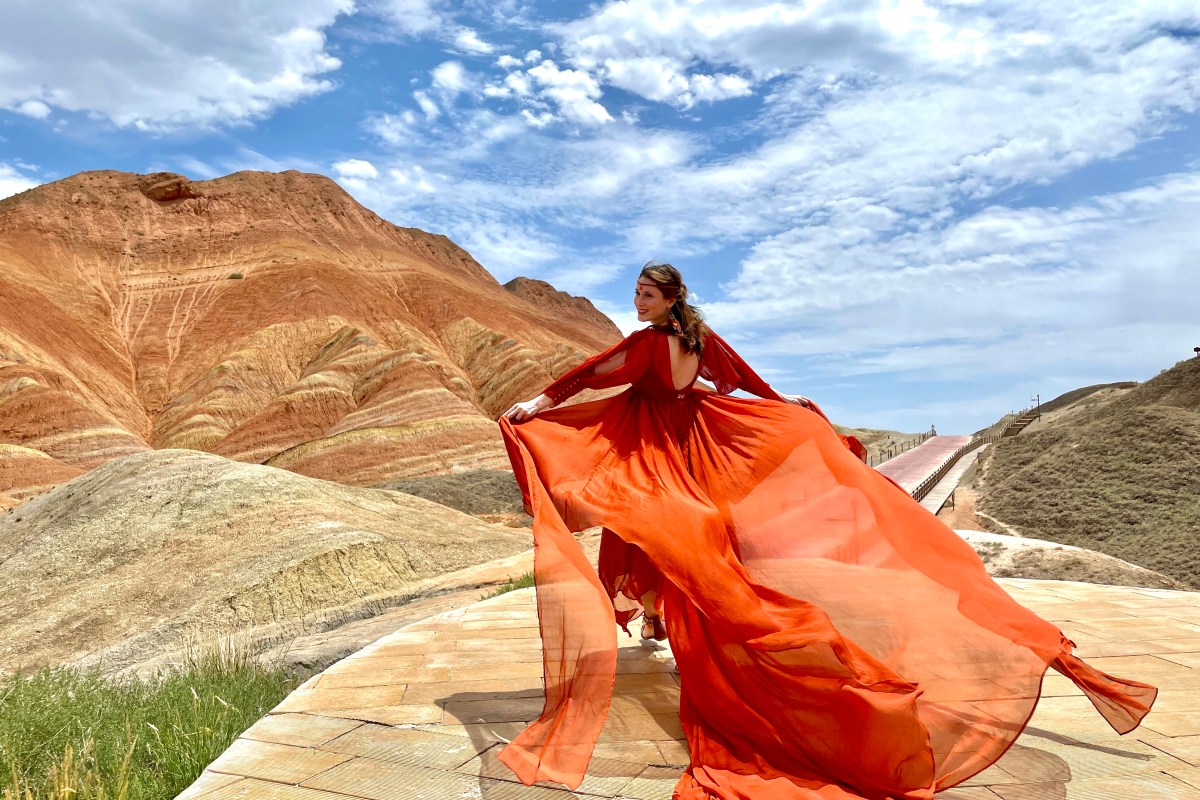
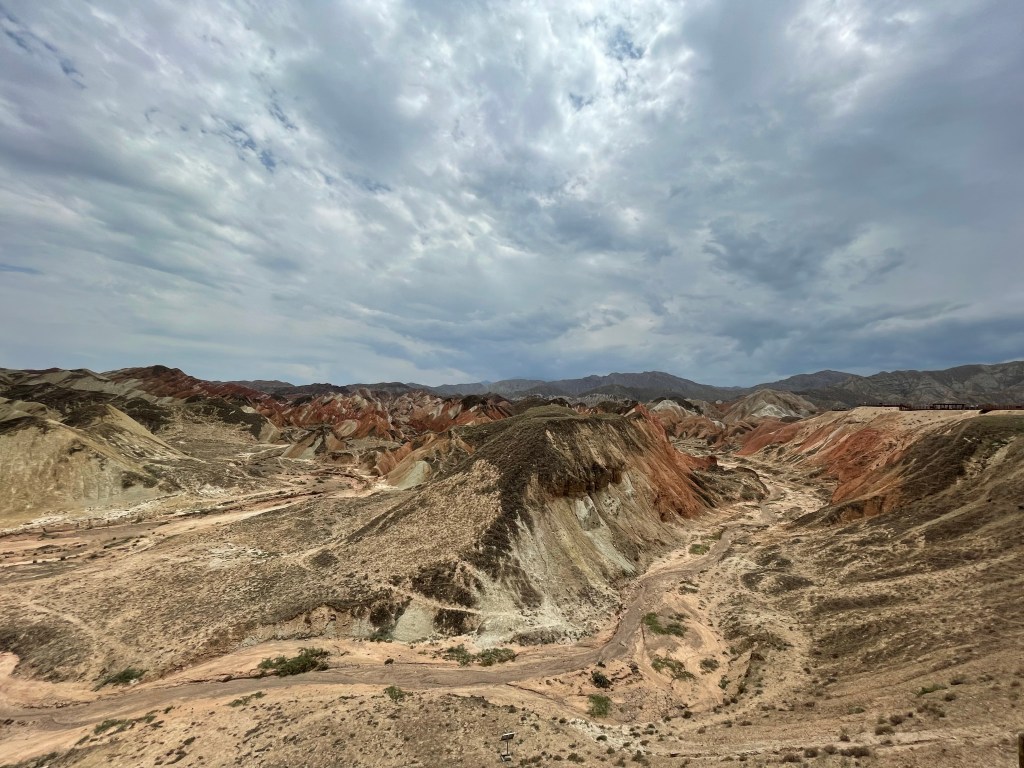
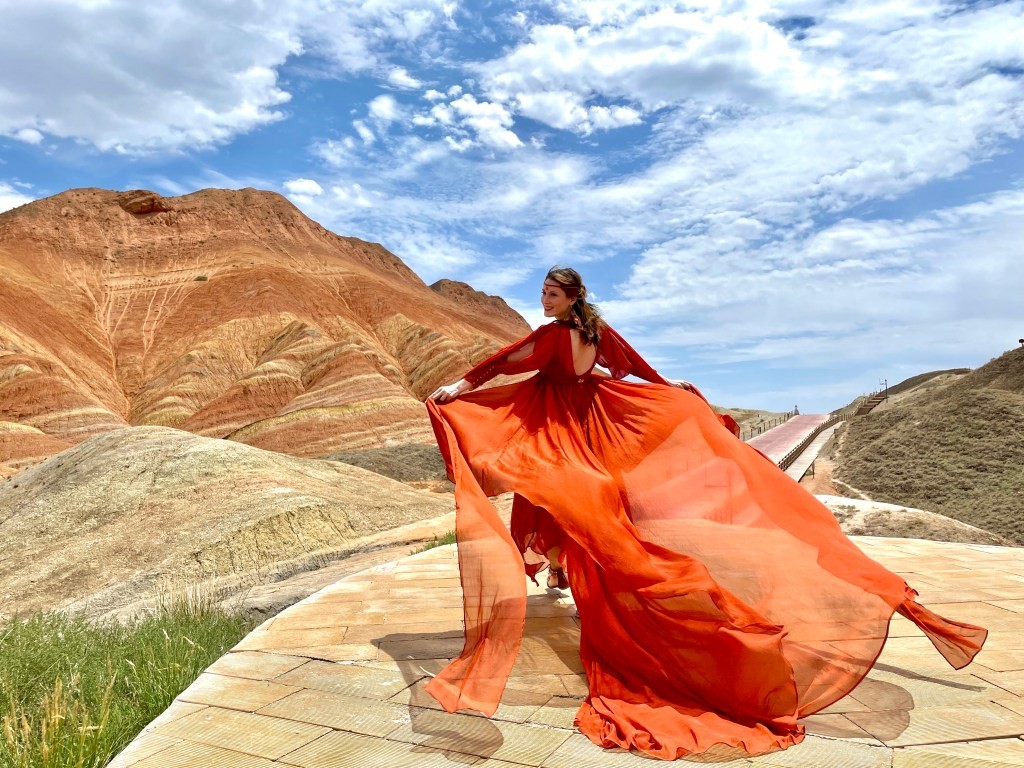
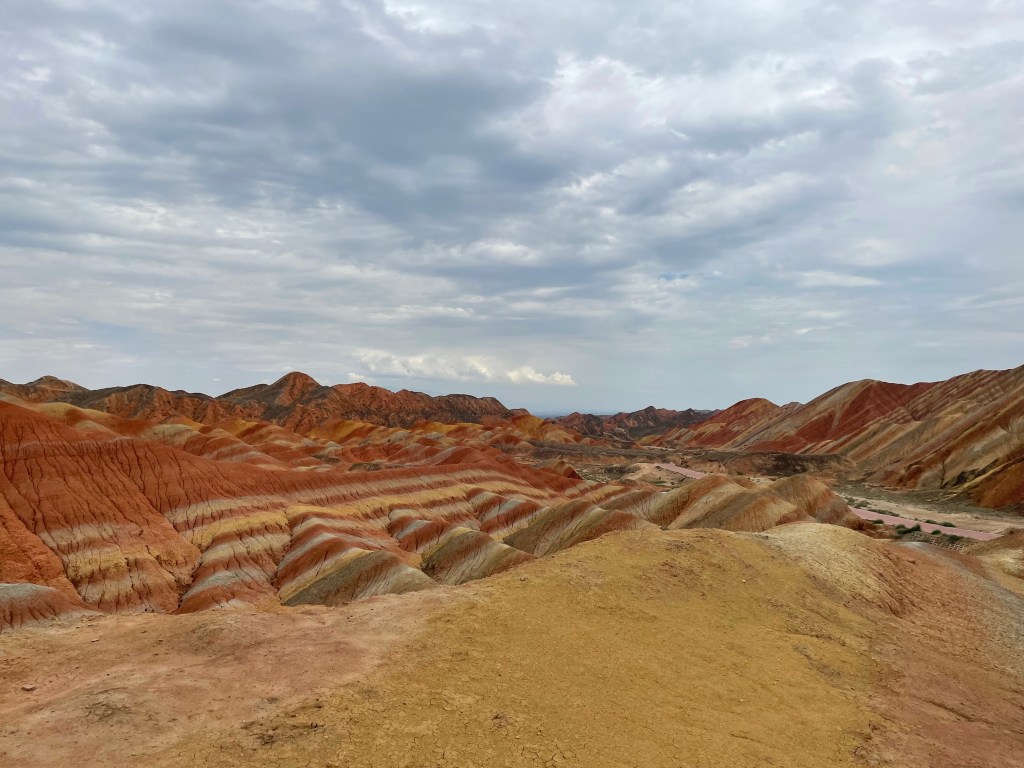
Zhangye Danxia Geopark (张掖丹霞地质文化公园)
We went in at the North Gate, bought the tickets for 79 Yuan/person.
From there you take the bus and go to the 5 main areas (there are individual stops and you can walk to the scenic spots.
There are nice tea and coffee shops at every bus stop.
The most magnificent spot was the one nearest to the East gate.
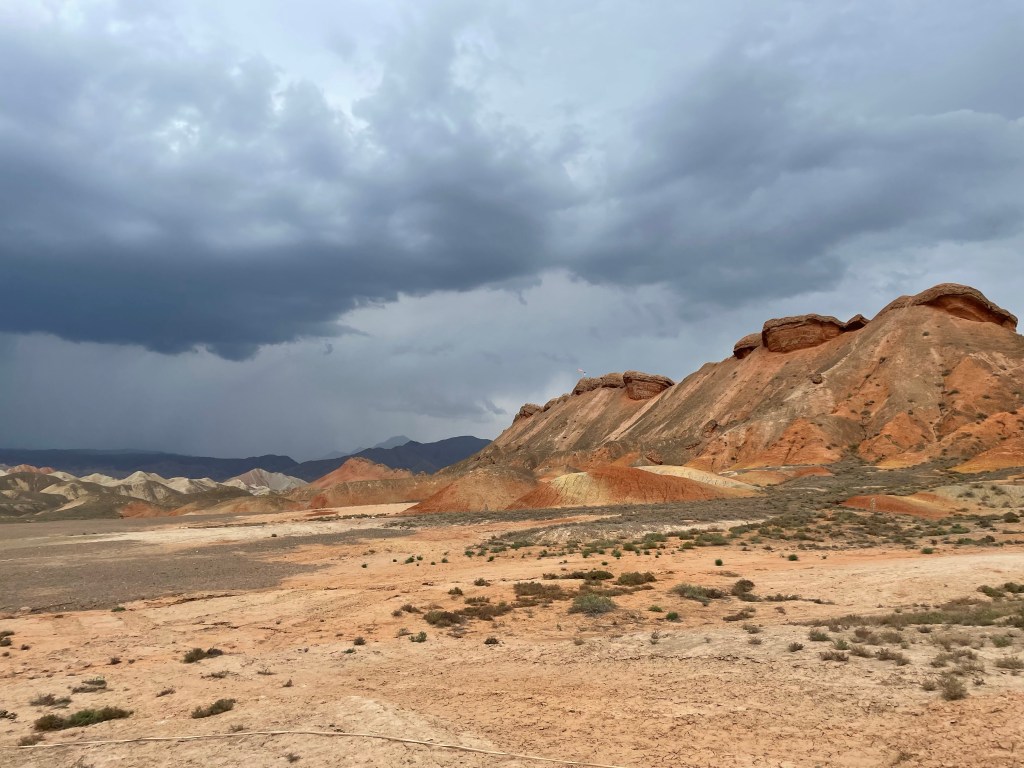
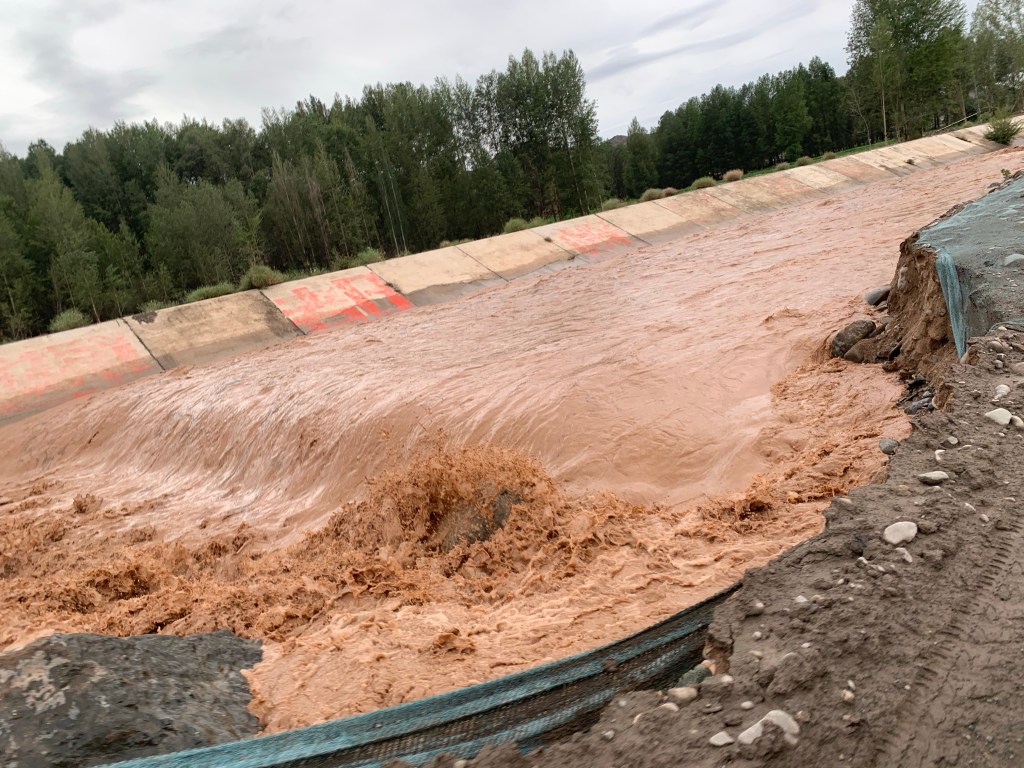
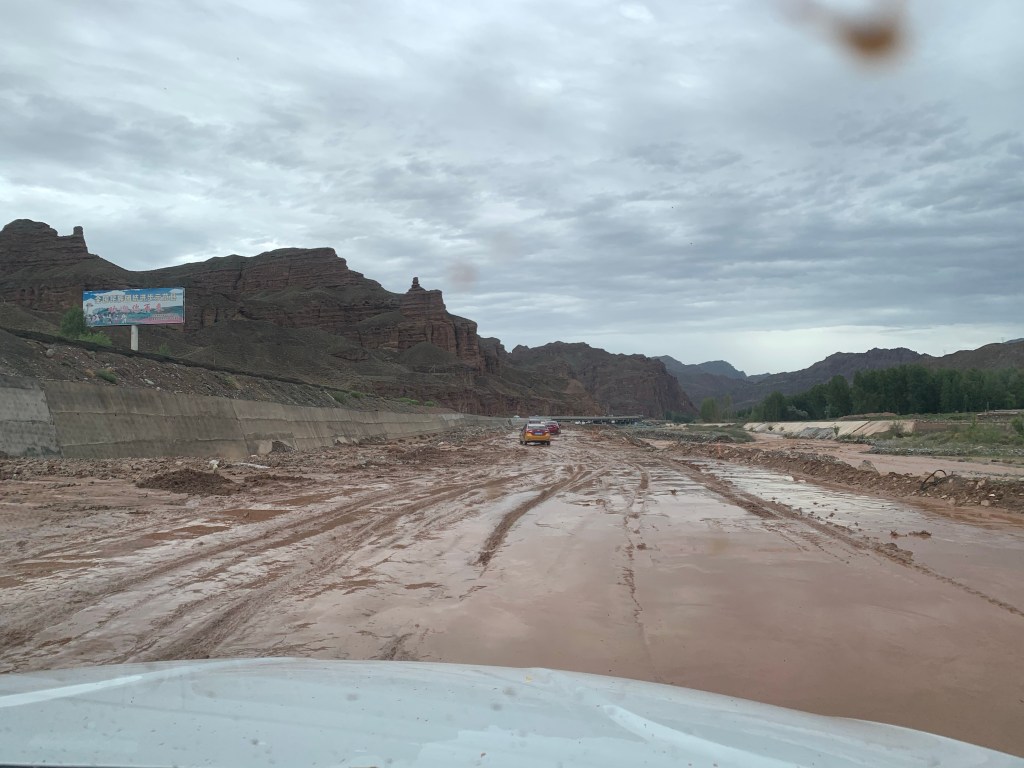
We finished around 16:30 and decided to go further to the „Binggou Danxia Scenic Area“ (the equivalent to monument valley in the USA). Unfortunately, the street had been washed away by the river there and a new road was under construction, so we had to go about 5km on a bumpy mud road. The river right next to us was strong and the water about to overflow onto the „street“, the mud was more than 10cm deep in some areas. (it was really scary at times!)
When we arrived, the lady at the ticket office told us, the park is closed due to the recent thunderstorm. So we headed back and stopped at a Sichuan Restaurant. It was almost empty, perhaps it was too early, it had good reviews. The staff was very surprised to see foreigners and were were eager to serve us a great food. The food was delicious!
Zhangye – Day 3 – Pingshan Lake Grand Canyon (平山湖)
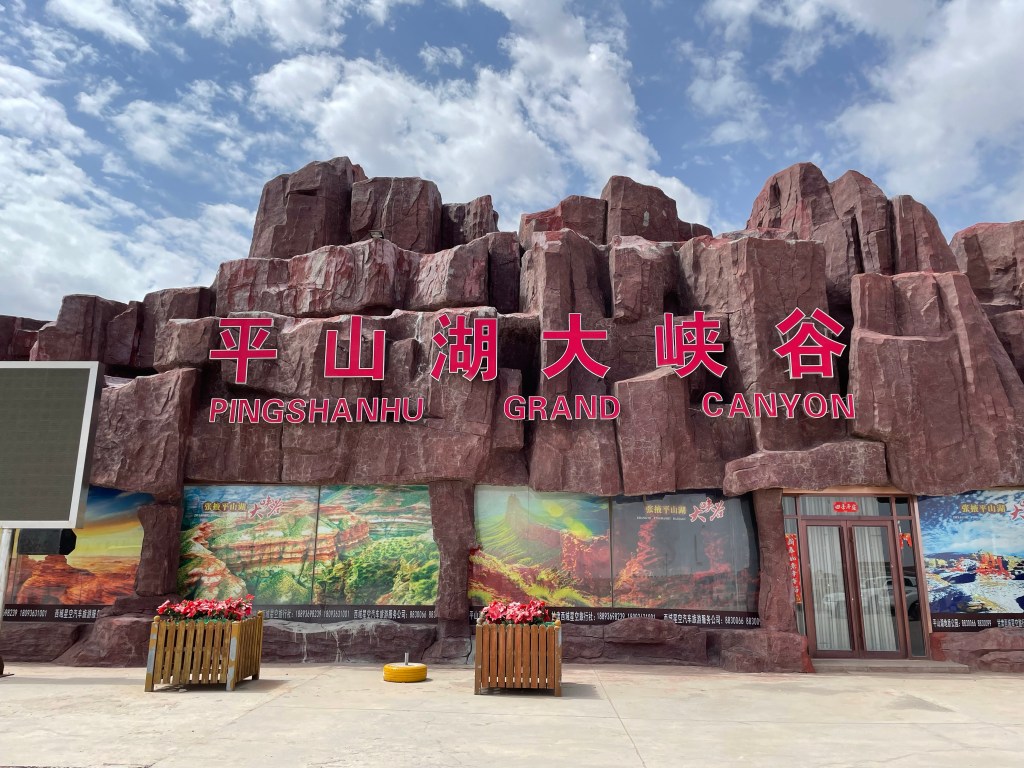
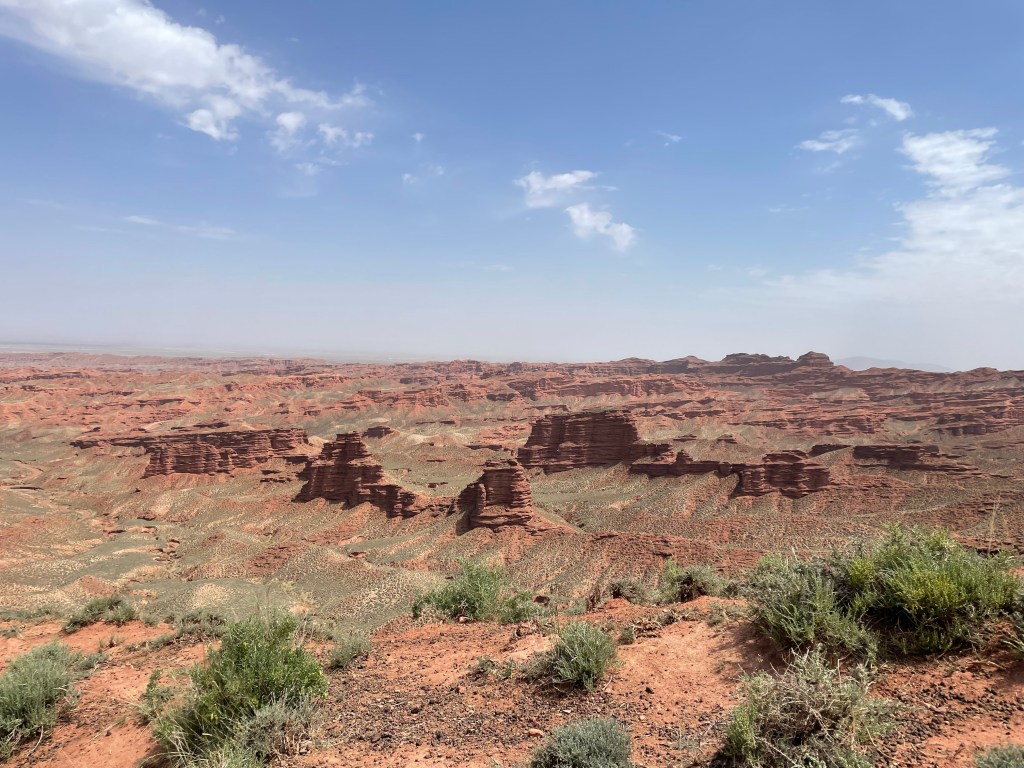
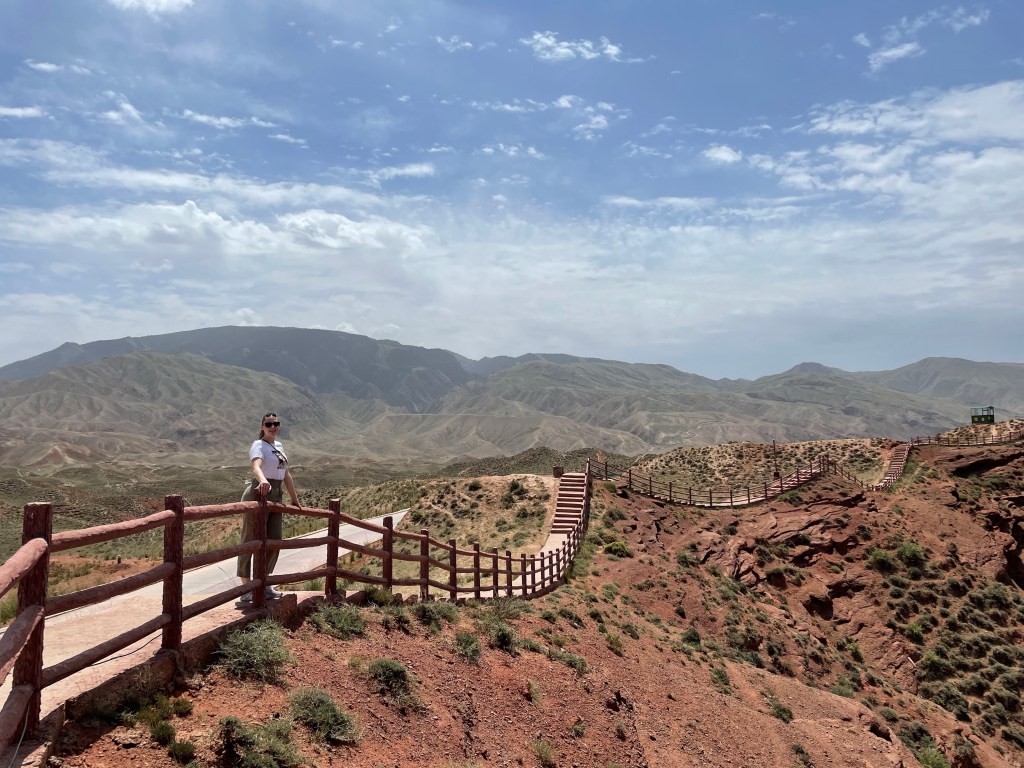
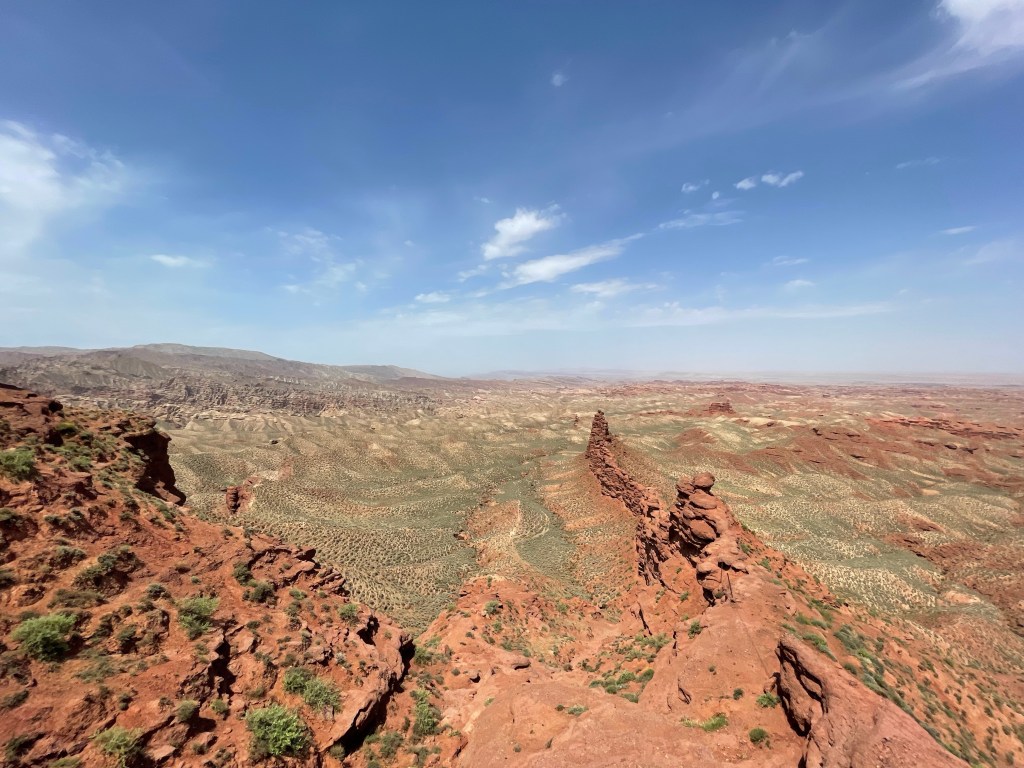
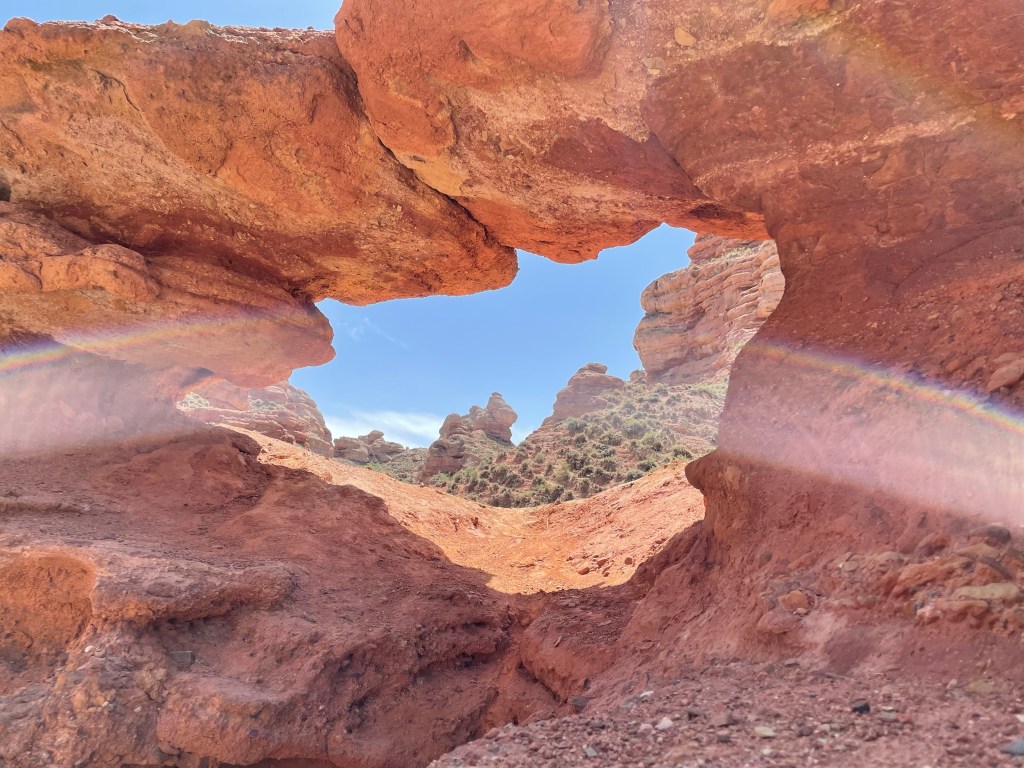
Pingshanhu Grand Canyon is a scenic area about 1 hour north of Zhangye, on the border to Inner Mongolia province. It is very similar to the grand canyon in North America.
We went there by car, I don’t think there are any taxis going so far out of the city. If you should manage to take a taxi, make sure it stays there, we have not seen any taxis there to take people back, only busses.
Park Entrance
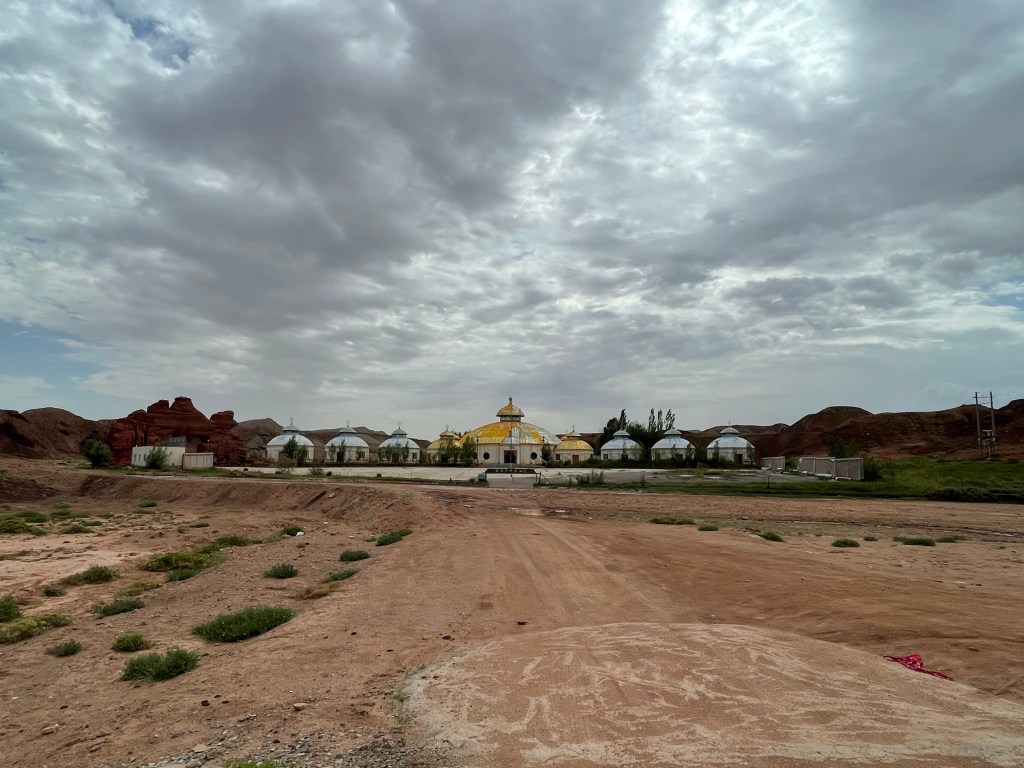
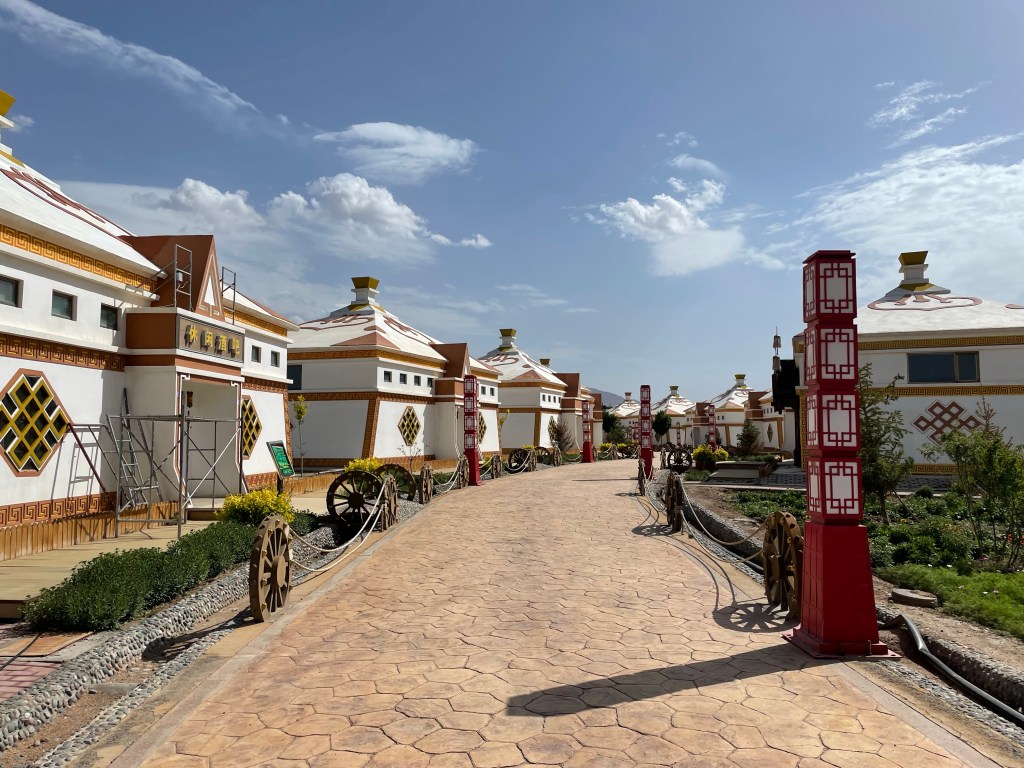
On the drive to the park, right after the toll gate to the highway, we found an abandoned tourist village (?) in a mongolian tent style. It was really a surreal view. Other than that, there is a lot of vast emptiness out there.
We suppose it is an abandoned holiday village
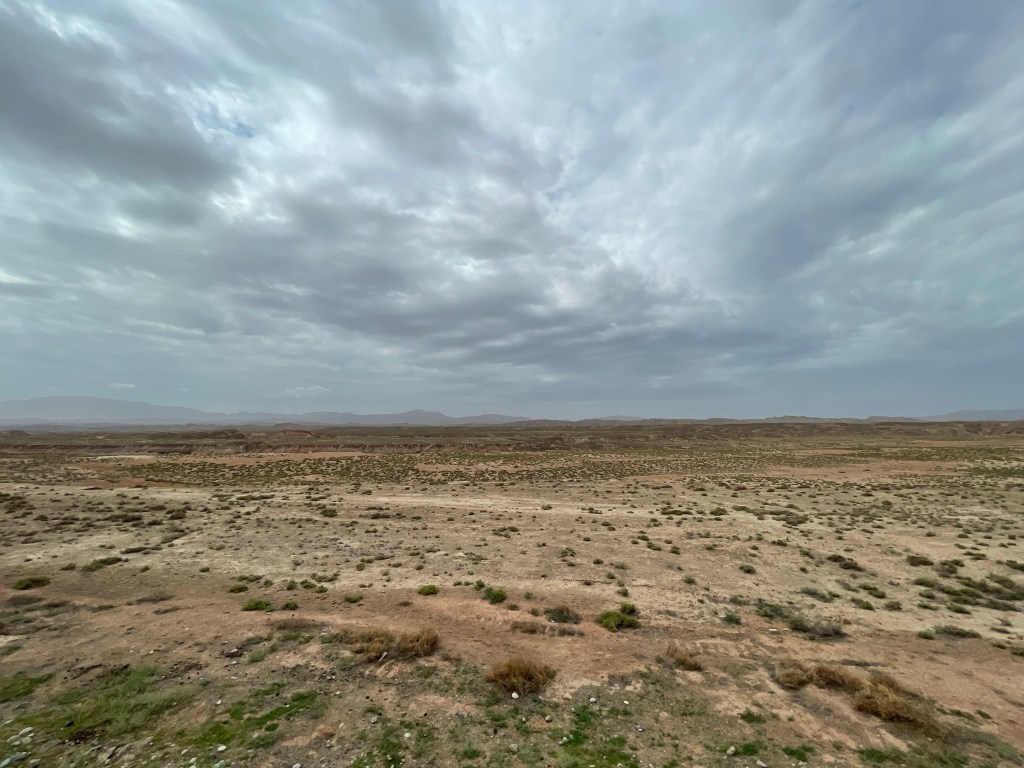
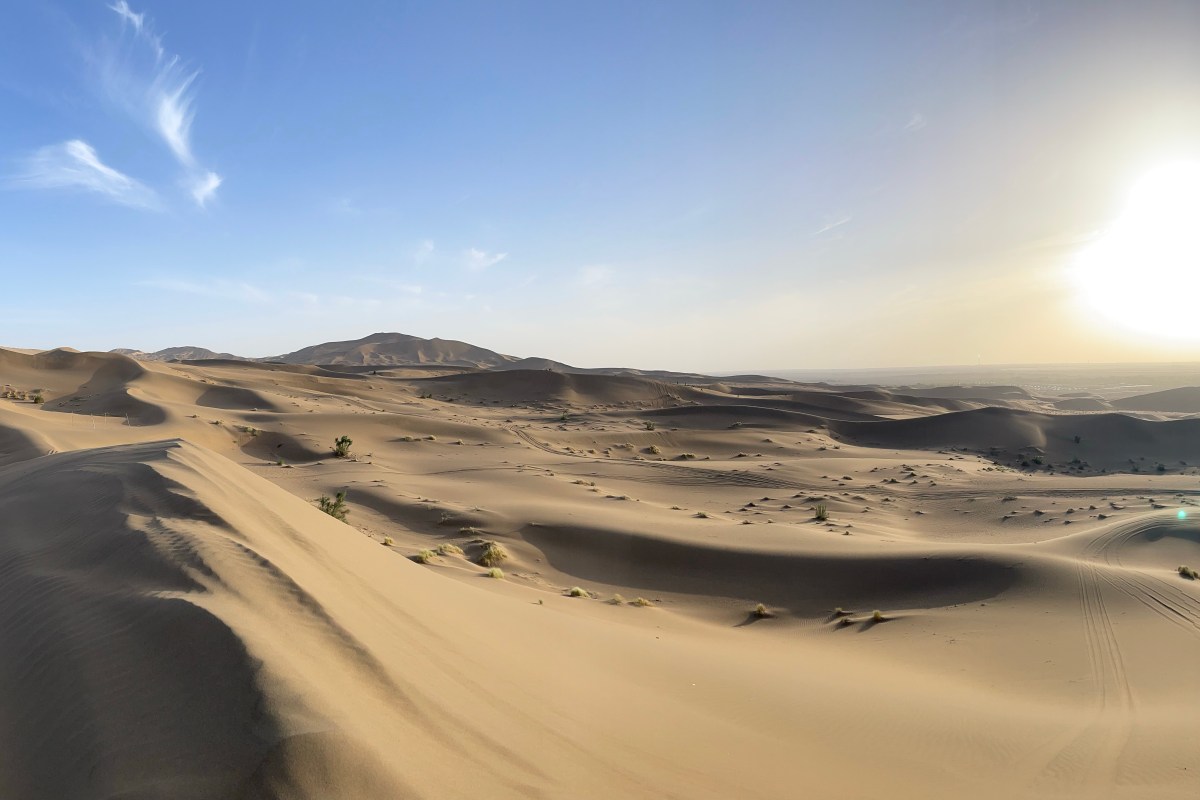
There is nothing but sand in the desert
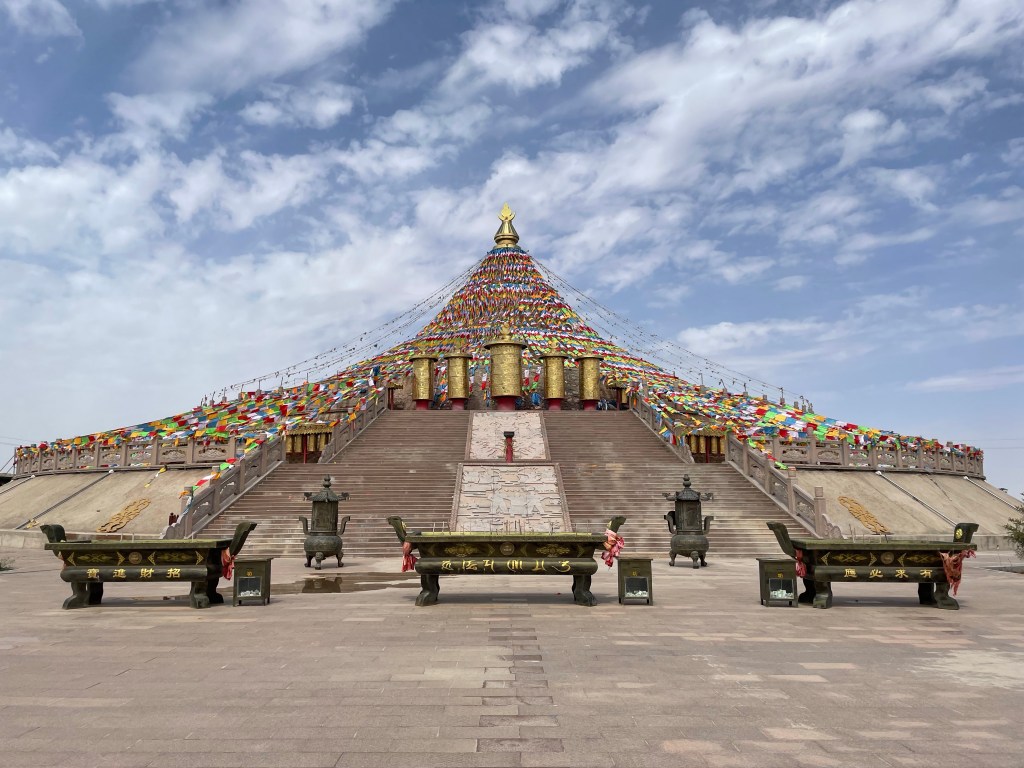
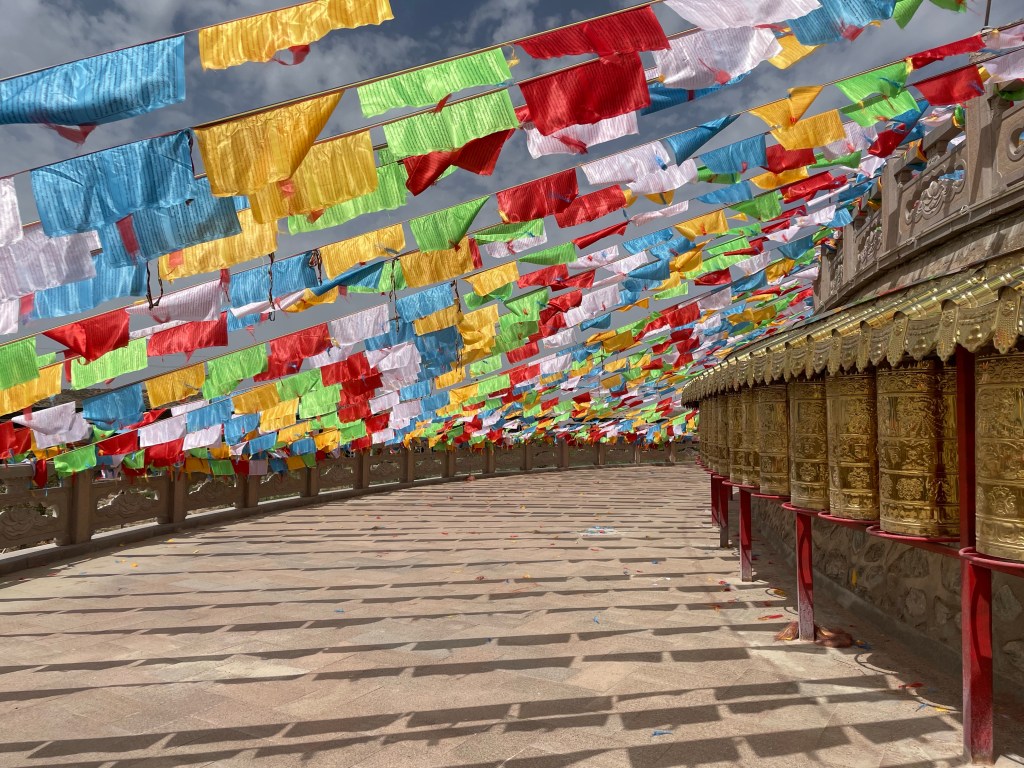
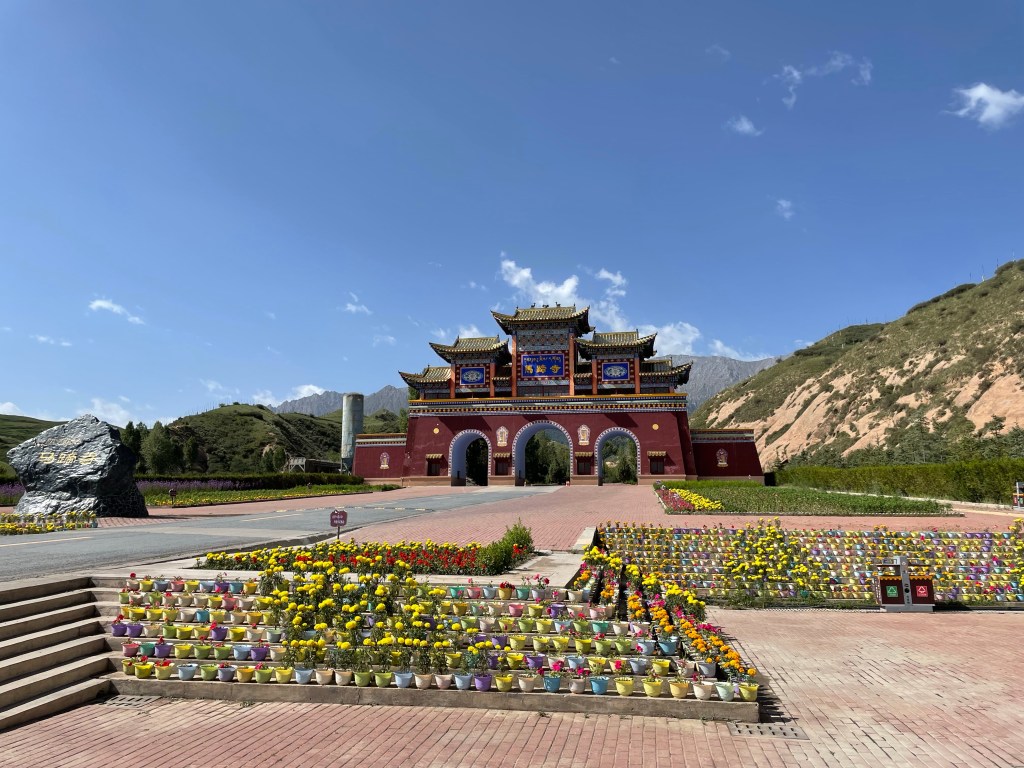
Before entering the actual park, make sure to see the very nice temple (?) in front of the gates. It looked very „Tibetan“.
There are 2 options you can chose from when buying a ticket, route 1 and route 2. Route 1 is basically everything by hiking, route 2 includes a ride on a truck to the bottom and a camel ride. We chose the latter, but in hindsight, it was not worth it. The ride down on the truck/bus (it was a strange kind of vehicle) was a bit scary and quite long.
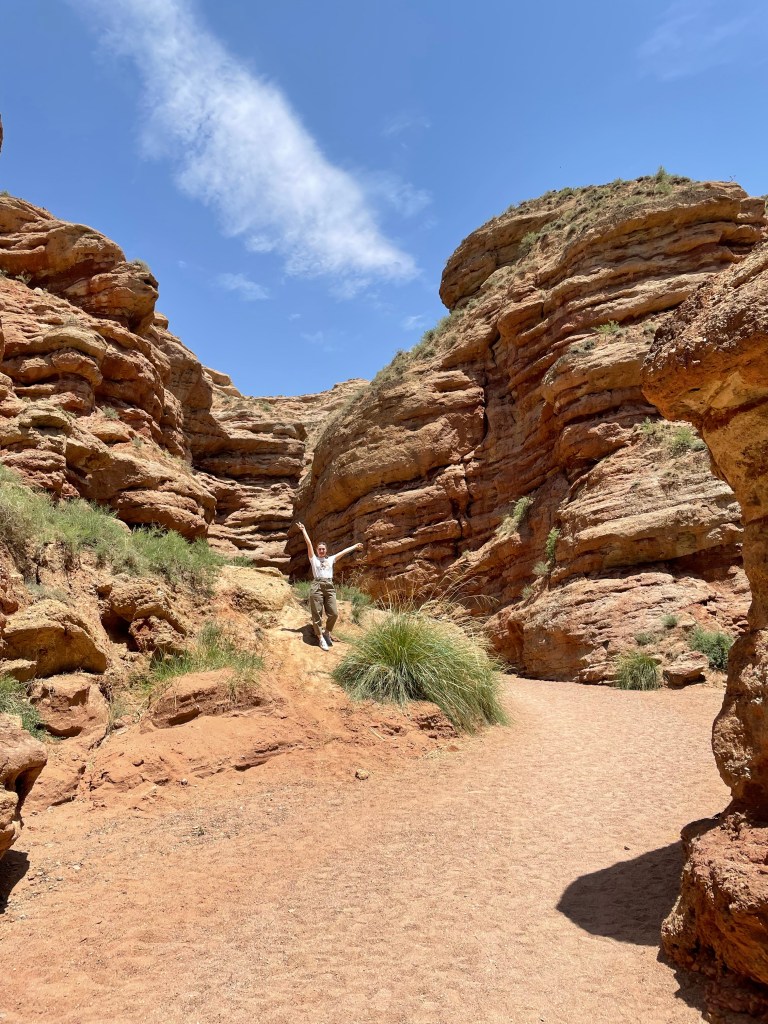
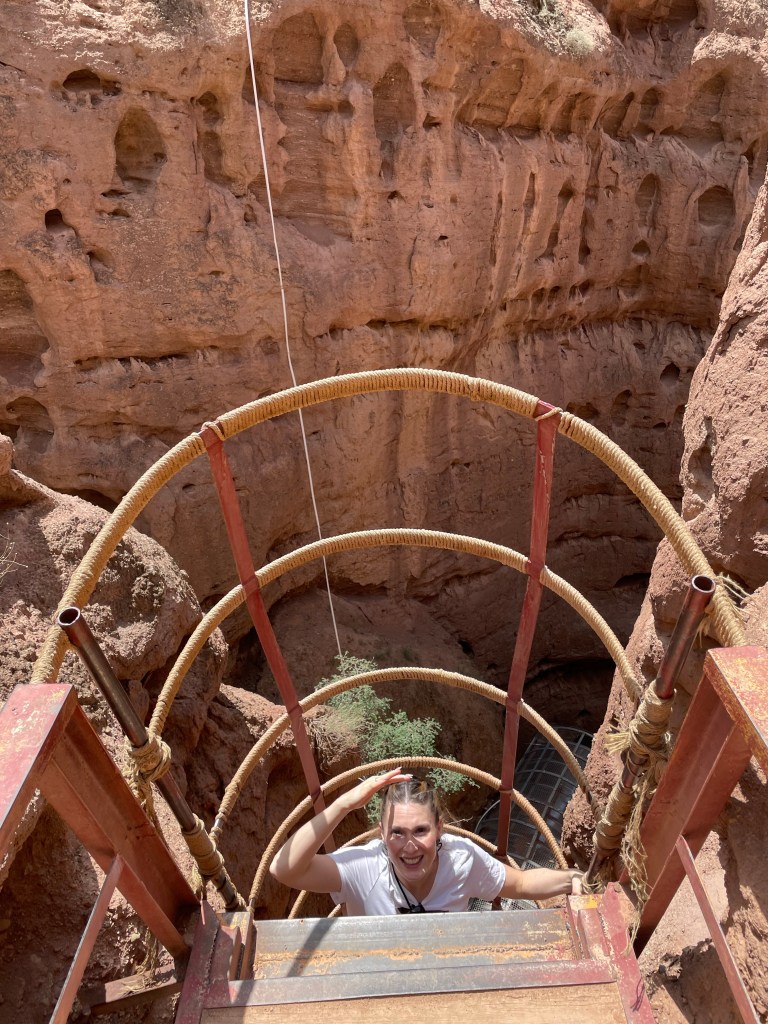
Arrived at the bottom of the canyon, you can hike for maybe around 1 kilometer and then take a camel ride or chose to hike up 2 vertical ladders (each about 25 meters long). It was actually quite fun, but i suppose for larger people it could be difficult, I had a backpack and it was really narrow. Before you get to the ladders, the canyon gets really narrow as well. If you have been to Antelope Canyon before, it is basically the same experience, just not so colorful.
on the bottom of the canyon.
Climbing up the ladders
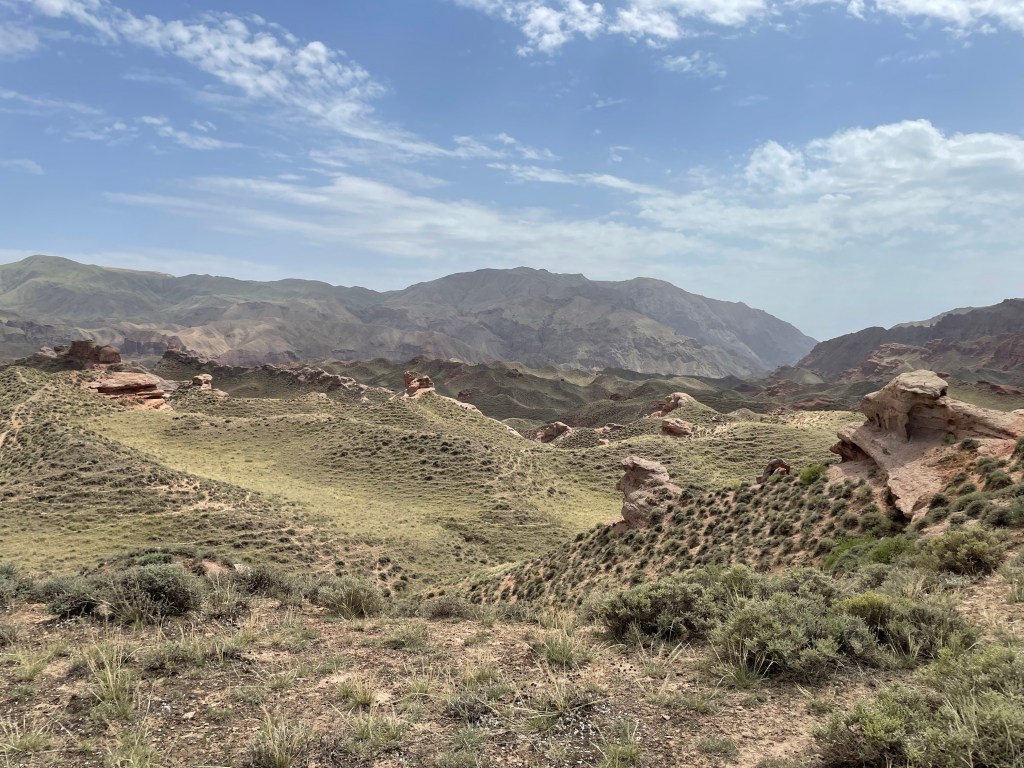
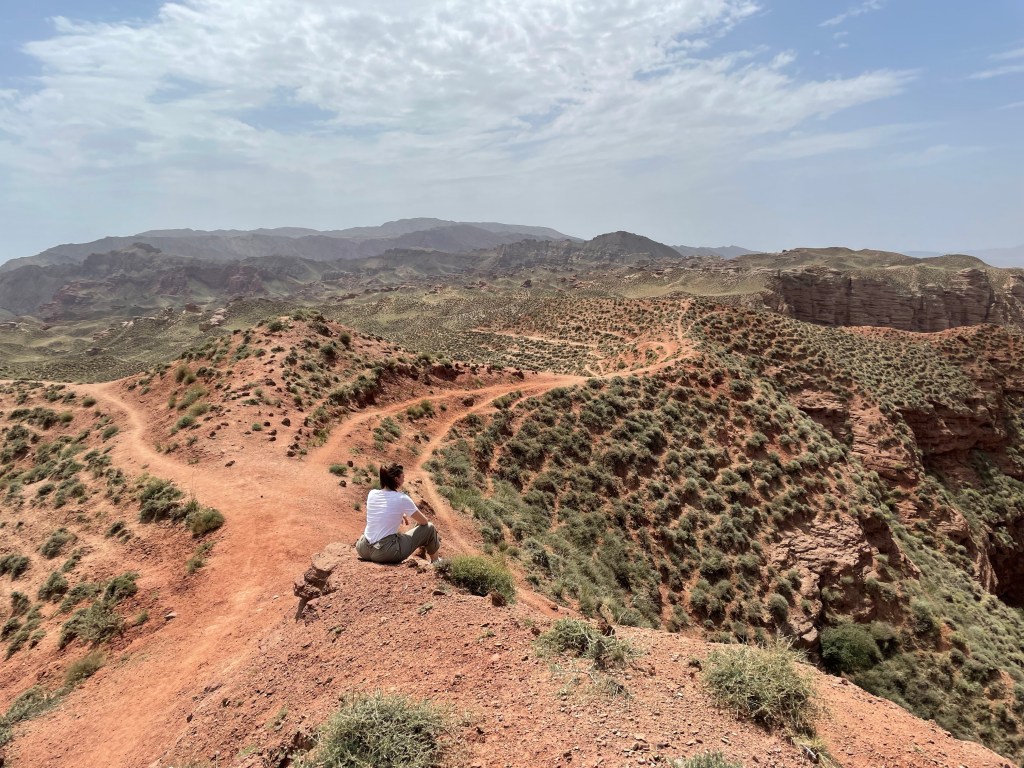
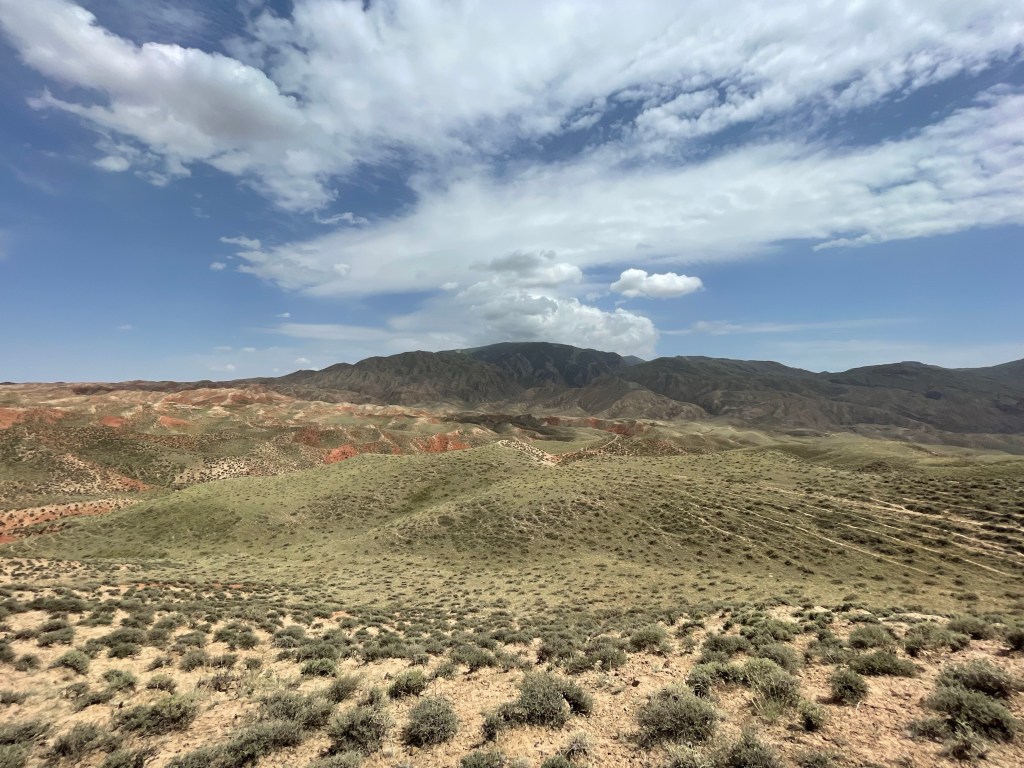
Back on the top, we stopped for some snacks and drinks and went off into the „hinterland“, meaning outside of the dedicated walkways / main route. We were not really sure if it was allowed or not. One sign clearly mentioned a path to the „eastern forest mountain“, which was visible in the far east. We did not figure it out, but had a great time walking around in the wilderness. The views were absolutely stunning, just nature, nothing else there.
Such a wonderful place
In the wilderness, we were wondering if there are any animals living as it was so green. We managed to see some lizards, which were perfectly camouflaged to the color of the sand, some sort of hamster (?), donkeys and all kind of other small creatures (bugs etc.).
Holiday Village near the park entrance
A view from the bottom to the top of the canyon
Zhangye Day 3
Mati Temple (马蹄寺)
Mati Temple is located about 1hr 30 minutes south of Zhangye. The road there is a small provincial road, leading up from the city of Zhangye (about 1.600m over sea level) up to 2.600m. The entrance fee is 88 Yuan and it is possible to drive with your own car in the park and stop wherever you like.
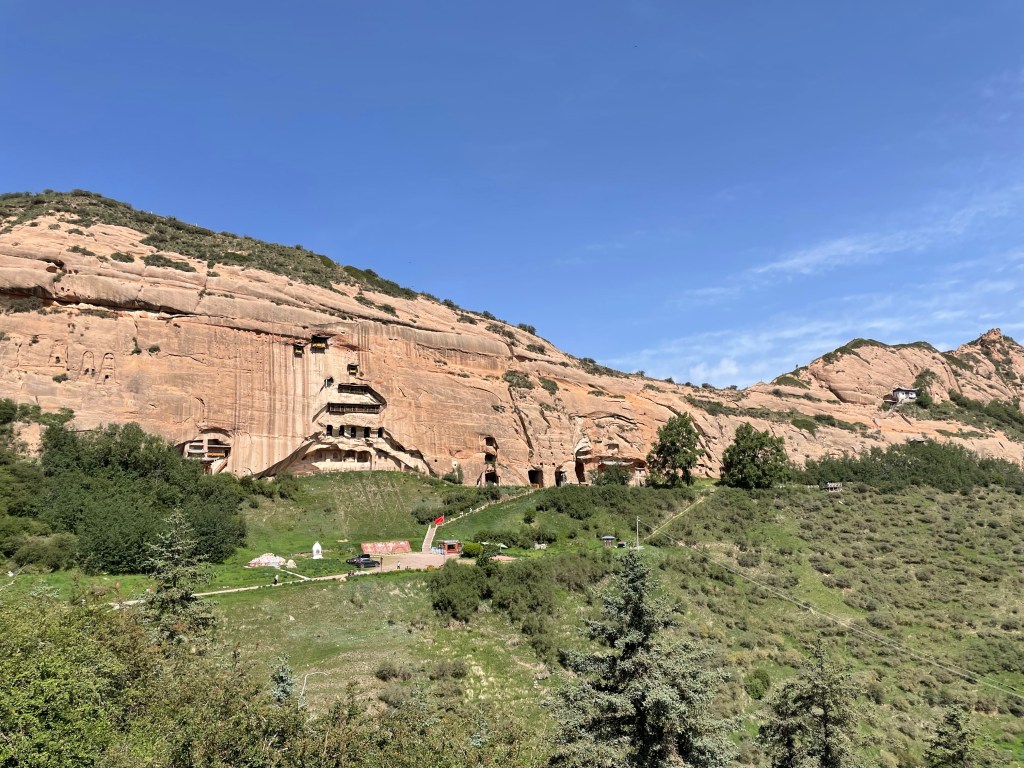
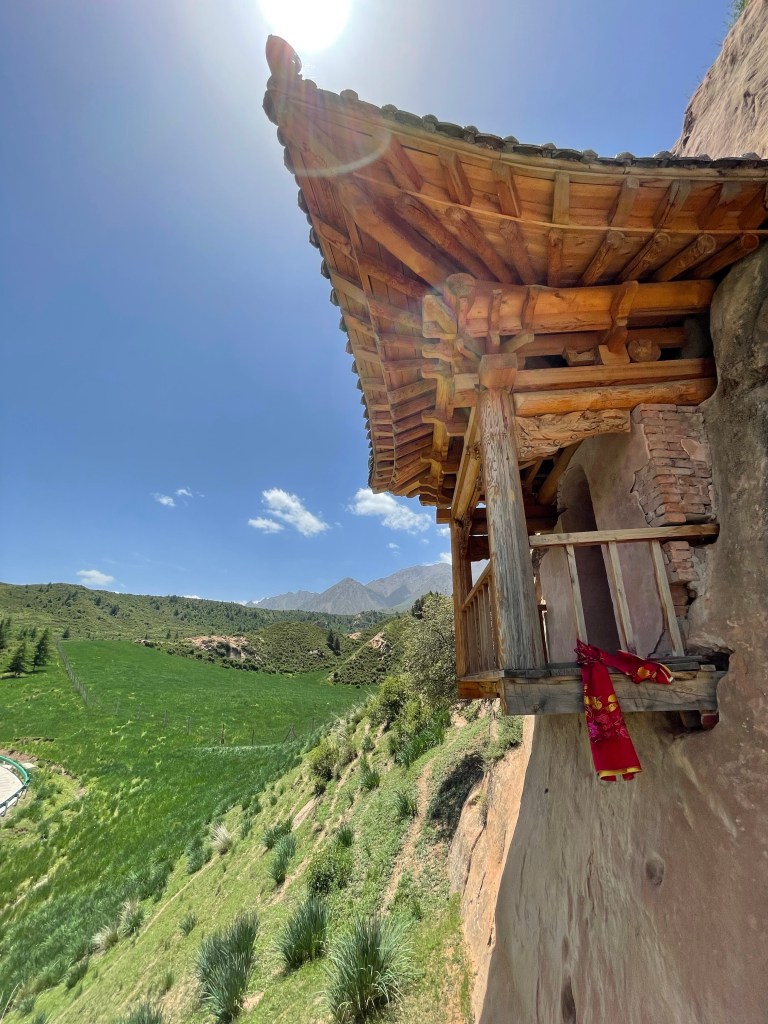
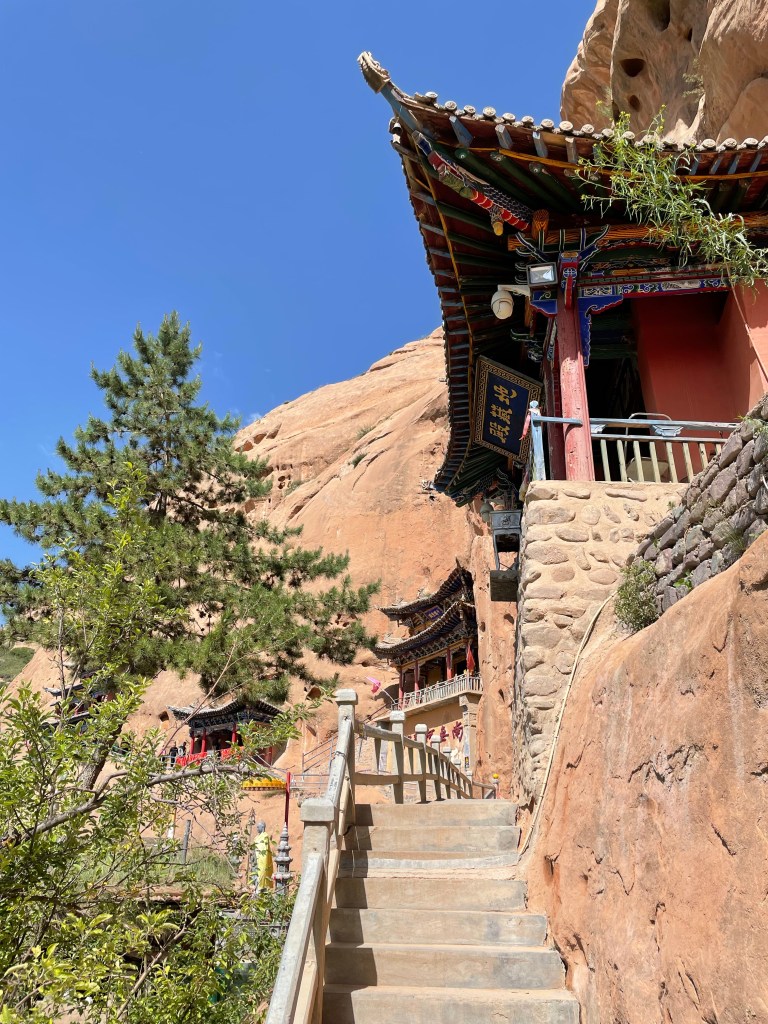
The special thing about this temple area is that all the „chambers“ are build into the mountains. It is unbelievable how the Tibetan monks did this about 1,800 years ago. It must have been a tremendous work. There is one huge chamber on the ground level with a huge buddha statue (around 15 meters i guess) and you can go up inside the mountain to all the small chambers.
The caves are carved into the mountain
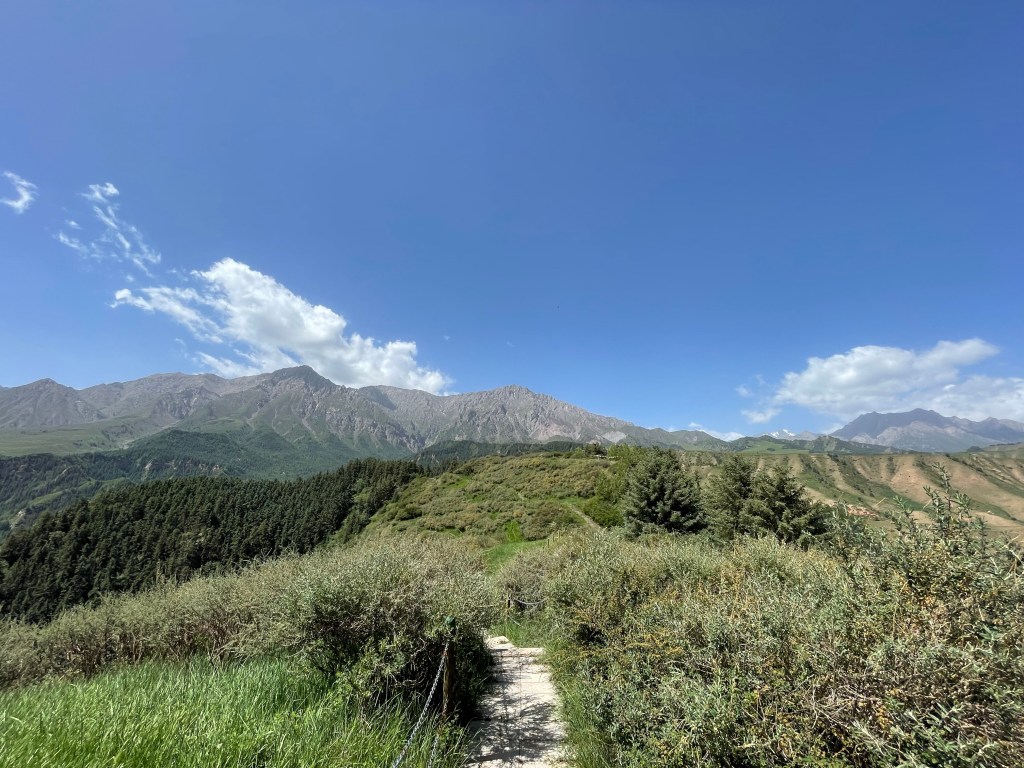
Reminds me of the Alps!
Please don’t forget that it is not allowed to take pictures of the Buddha statues and other relics!
There is another small area, which is dedicated to a Tibetan, who was crowned king with 16 years age and then eventually united more than 30 tribes. There are also possibilities for horse riding in the area, but i skipped that.
Eventually, when you are done in the main area, there is a road leading to another temple about 20km away, but i didn’t go there, it is most likely a very scenic route through the highlands.
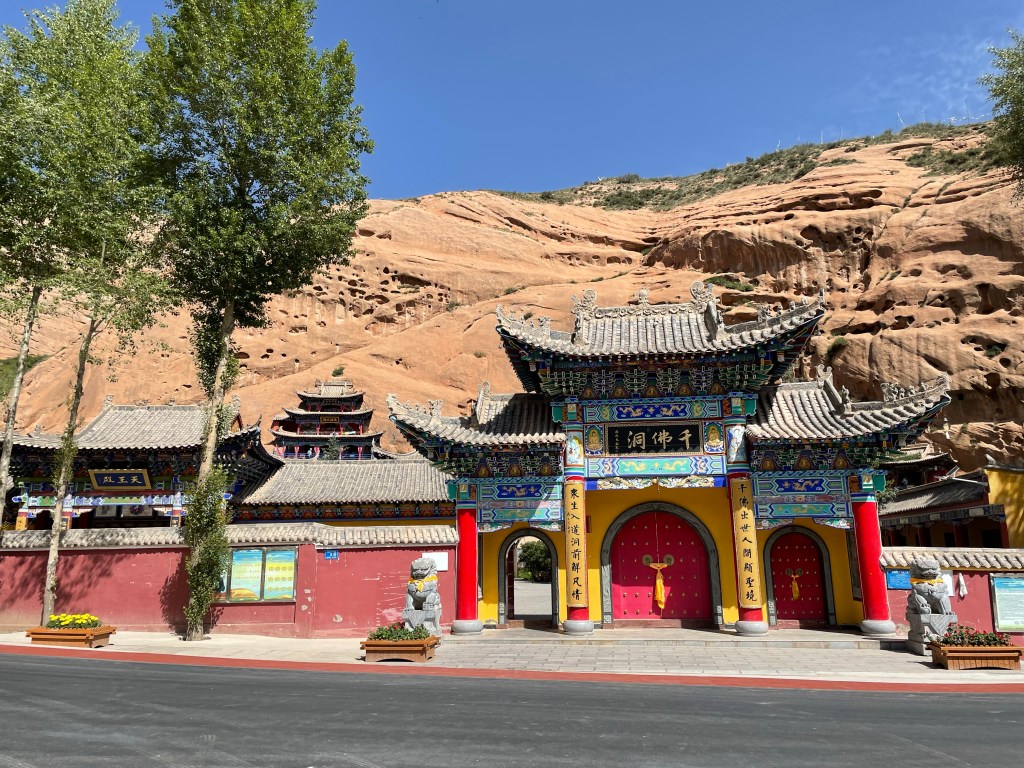
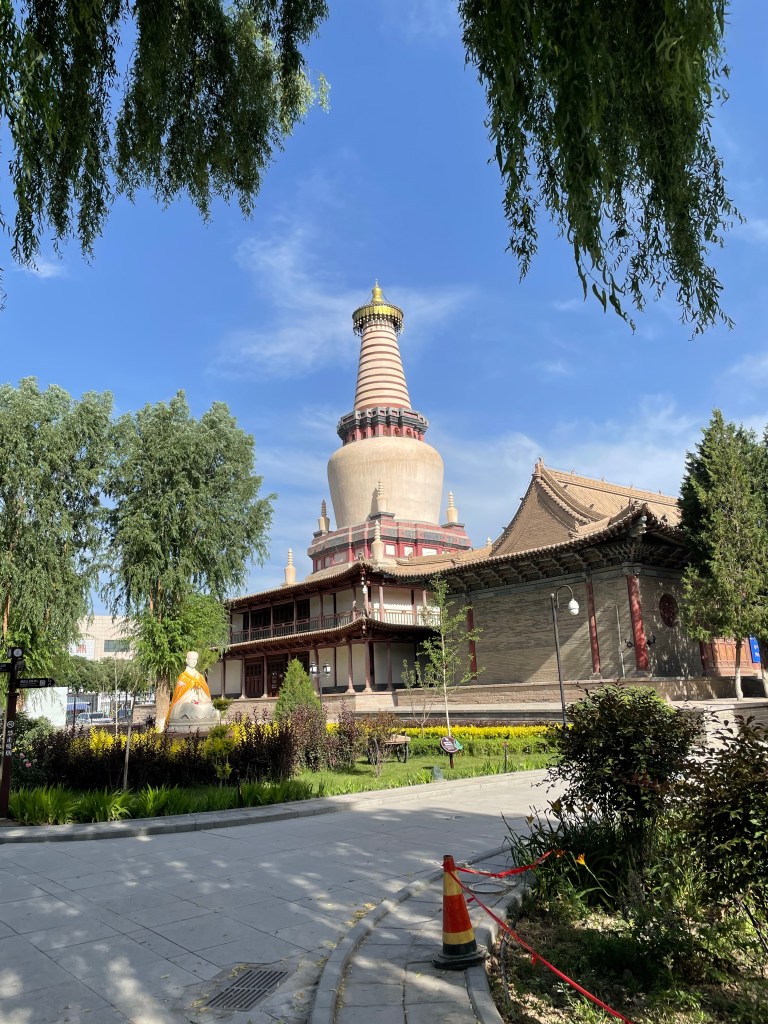
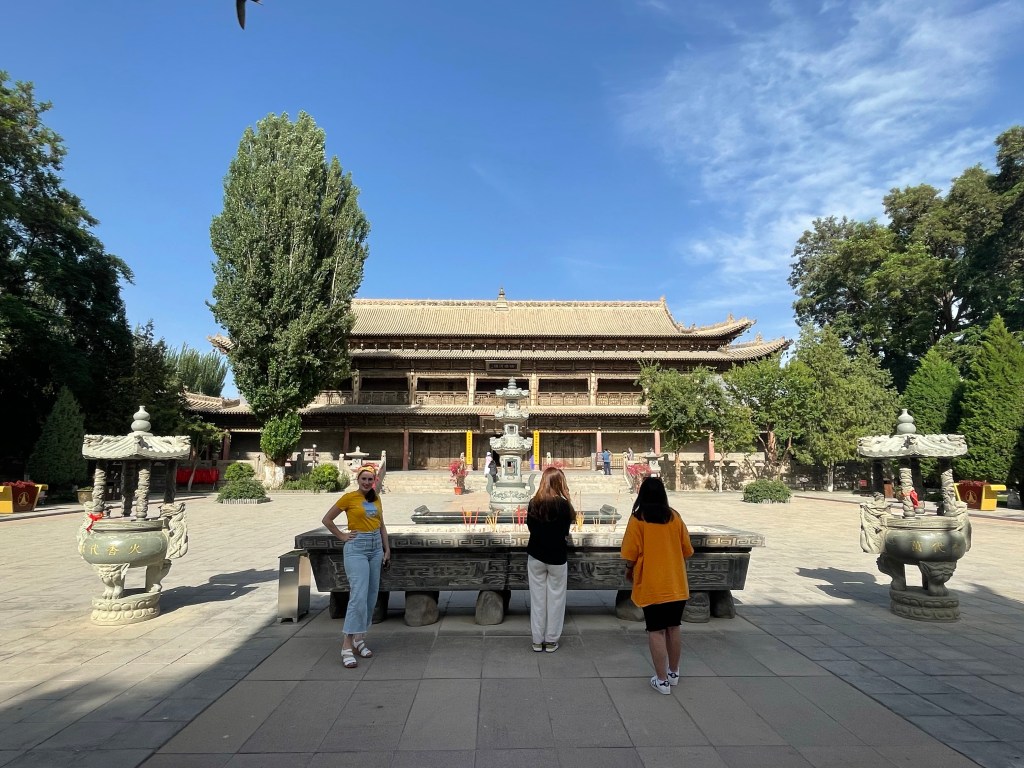
We visited 2 of them, and even though we are really „saturated“ with temples, the Dafo Zen Temple was impressive, it contained a sleeping Buddha statue which is about 30 meters big among many other relics.
Dafo Zen Temple
Cultural Sidenote: We didn’t really know where the entrance to the temple was, so we searched around a bit. Doing so, we caught the attention of a bunch of local young men that were sitting in front of a shop. They were so excited to see foreigners and asked us if the could take a photo with us. They called everyone who was around there, even the grandfather and we took a photo together. This kind of authentic, open-hearted friendliness is something we experience all over China! Wherever we go, especially in the more rural areas, people always seem really happy and have a smile on their face and greet you with a genuine smile and even try to strike up a conversation in english, even though.
Zhangye Wetland Park
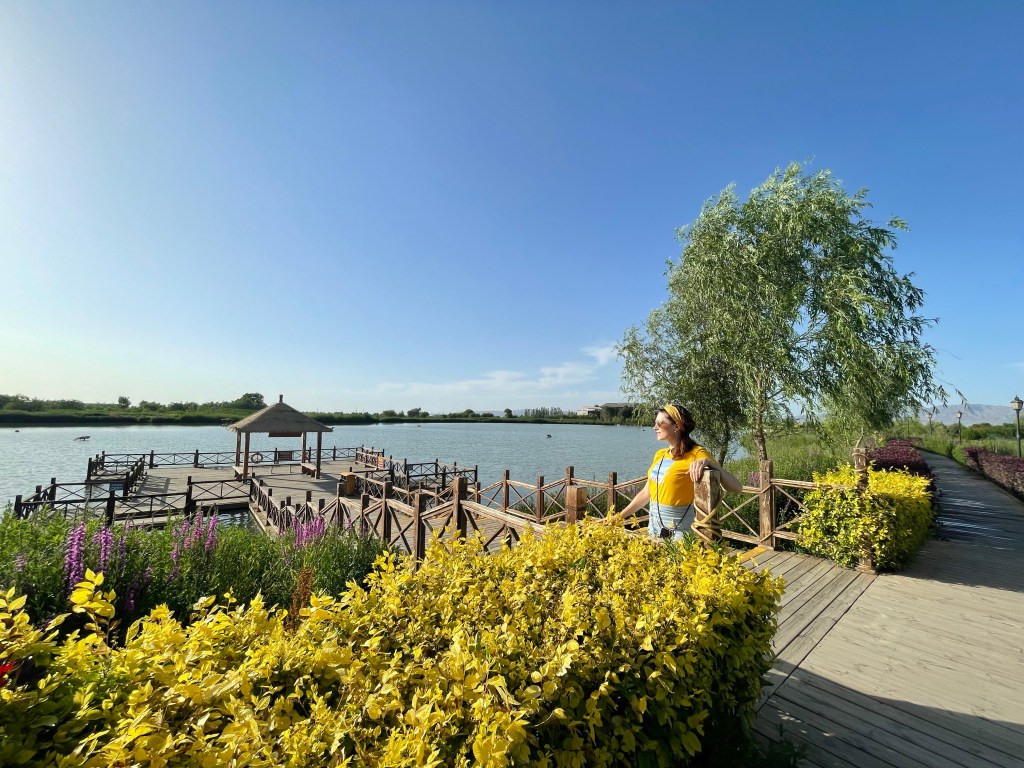
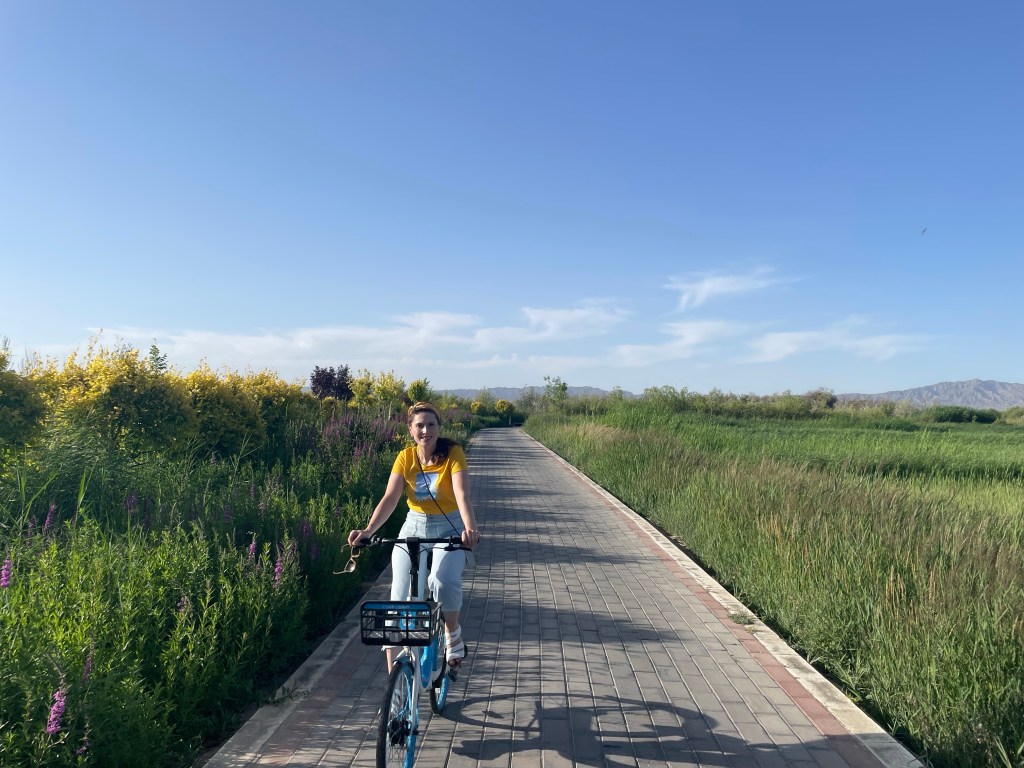
Located just at the north end of town, there is a enormous wetland park. It is a public park, so there is no cost. You can rent a bicycle and drive around, in total it is about 20-25km drive, depending on which way you go. There are additional footpaths, that are really designed very cute, with small wooden bridges, „outlook towers“ and so on. Each area has a distinct flora, meaning different trees, plants etc. It is really a small paradise and should not be missed on a trip to Zhangye!
Ganjia Grasslands
The last 3 days, we spend on the Tibetan highlands in the southwest of Gansu, near the boarder to Qinghai province.
How to get there? There are basically 2 options, you can take a flight / train to Lanzhou, the capital of Gansu province, or to Xining, the capital of Qinghai province. From each locations, it is an approximately 3-4 hours drive, mostly on highways. We drove from Lanzhou and took about 3.5 hours.
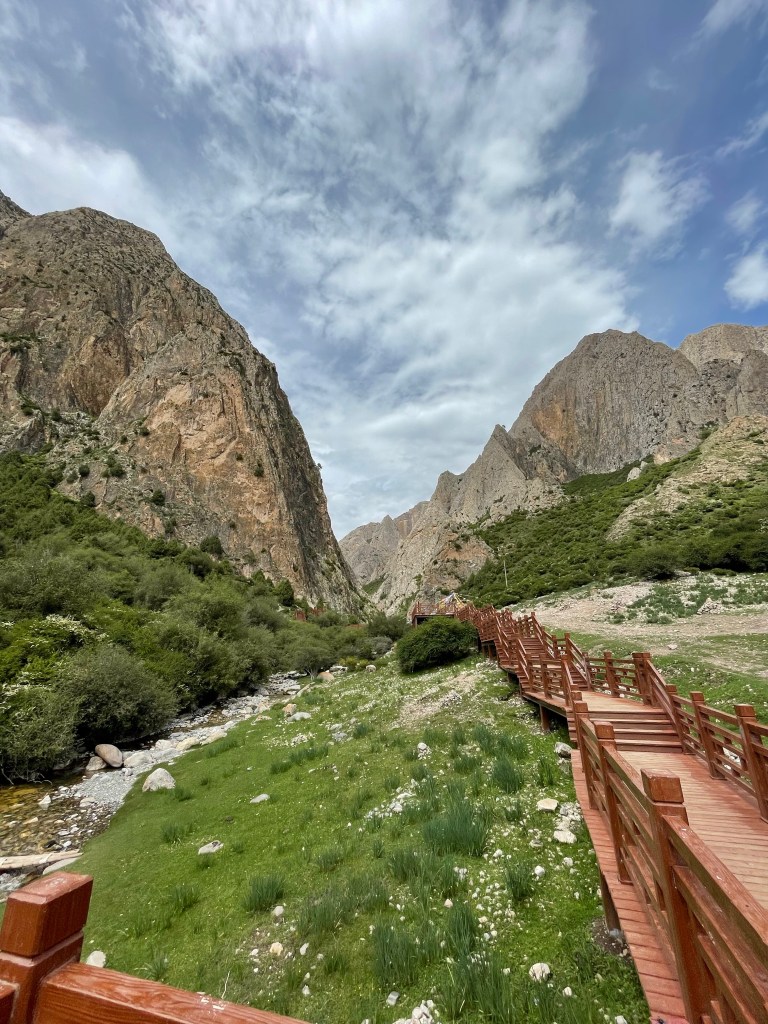
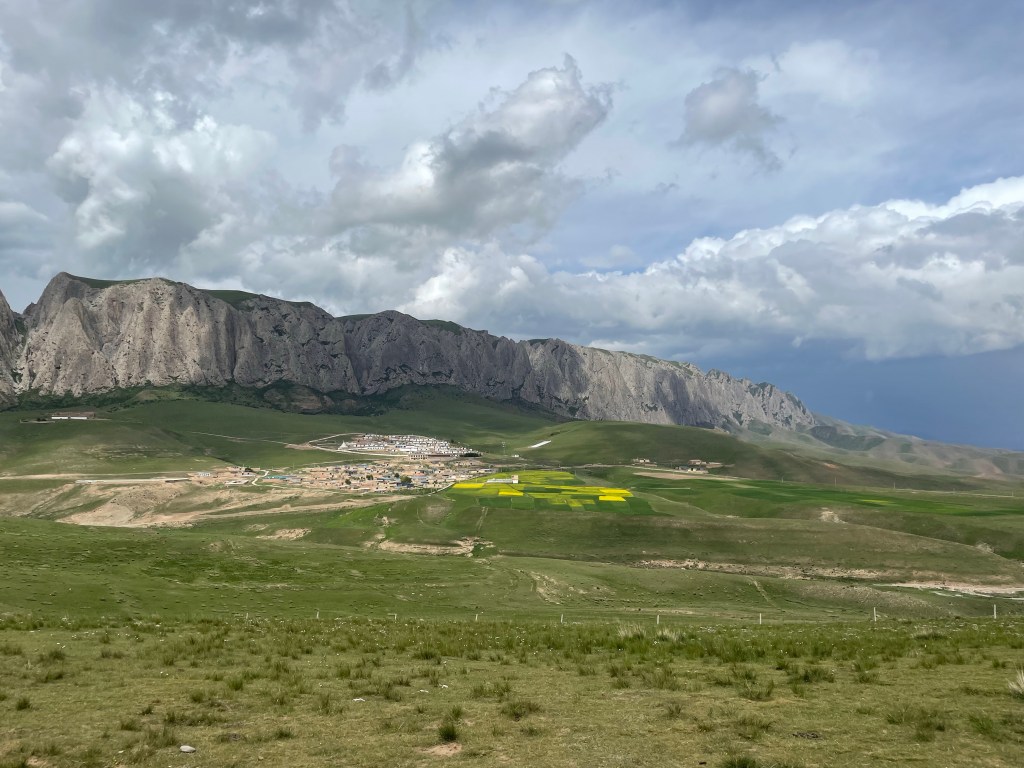
The area is a highland plateau with an altitude of about 2,900m. It is a gorgeous natural scenery, basically hills, mountains, grasslands and a whole lot of nothingness. There are still things to do here, from horse riding, quad driving or just hiking.
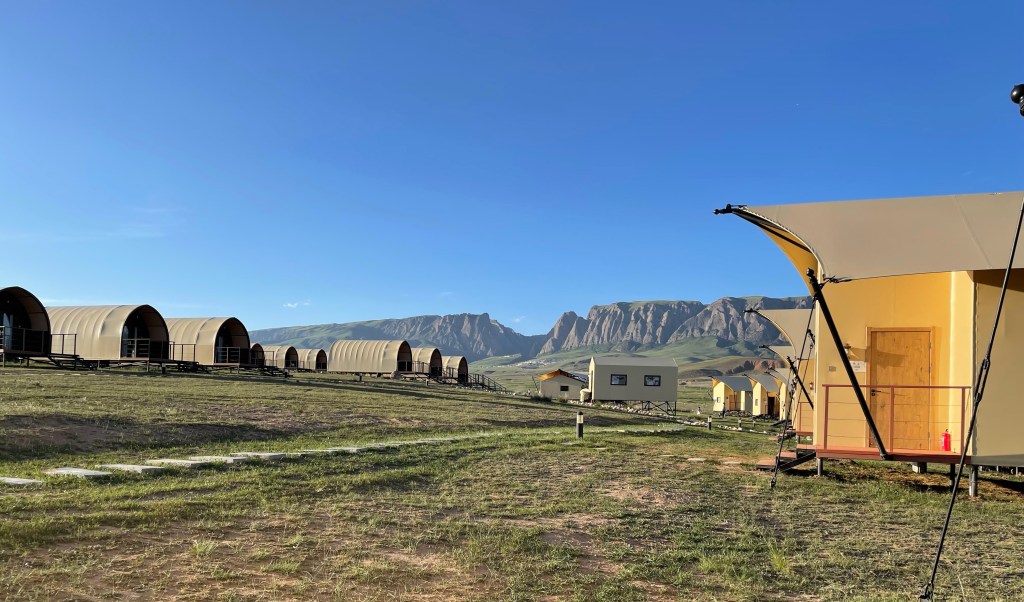
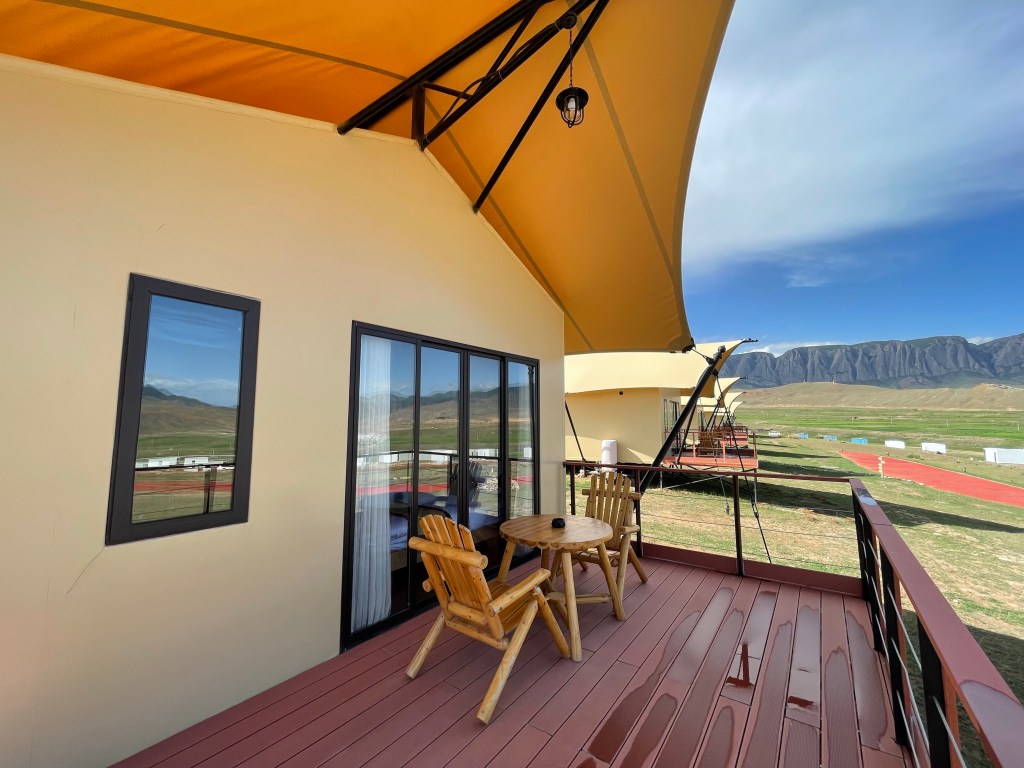
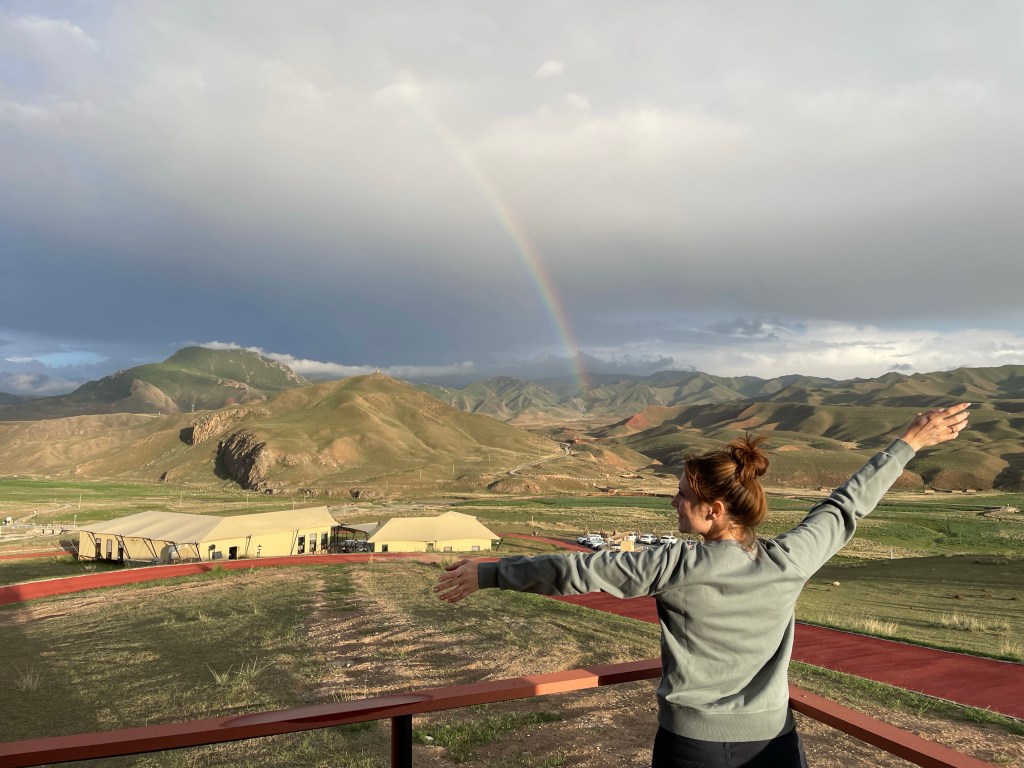
The gem of our stay was the „hotel“, Ganjia Eco Campsite. It’s basically small beautiful huts in the grassland. The service of the hotel is good, there is a WeChat group, you can chat with the staff and they will support you with any request, although sometimes a little slow.
The temperature is really warm during the day, and the sun intense, as you would expect at that altitude. During the night however, the temperature drops to below 10 degrees and there are occasional storms or at least very strong winds.
Most of the people here belong to the Tibetan culture. It is clearly audible, as they are speaking Tibetan and also the road signs and so on are in Chinese and Tibetan. There is a lot of culture to be discovered, if you ask the people, they will happily introduce their culture to you.
There is plenty of fauna as well, marmots/groundhogs, rabbits, yaksn and horses, just to name a few.
Gan Jiamijing
There is a small nature park near the camp (entrance 40 Yuan per person), called Gan Jiamijing, which features a round trip by a small bus, which stops at different stations in a 20 minutes stop interval.
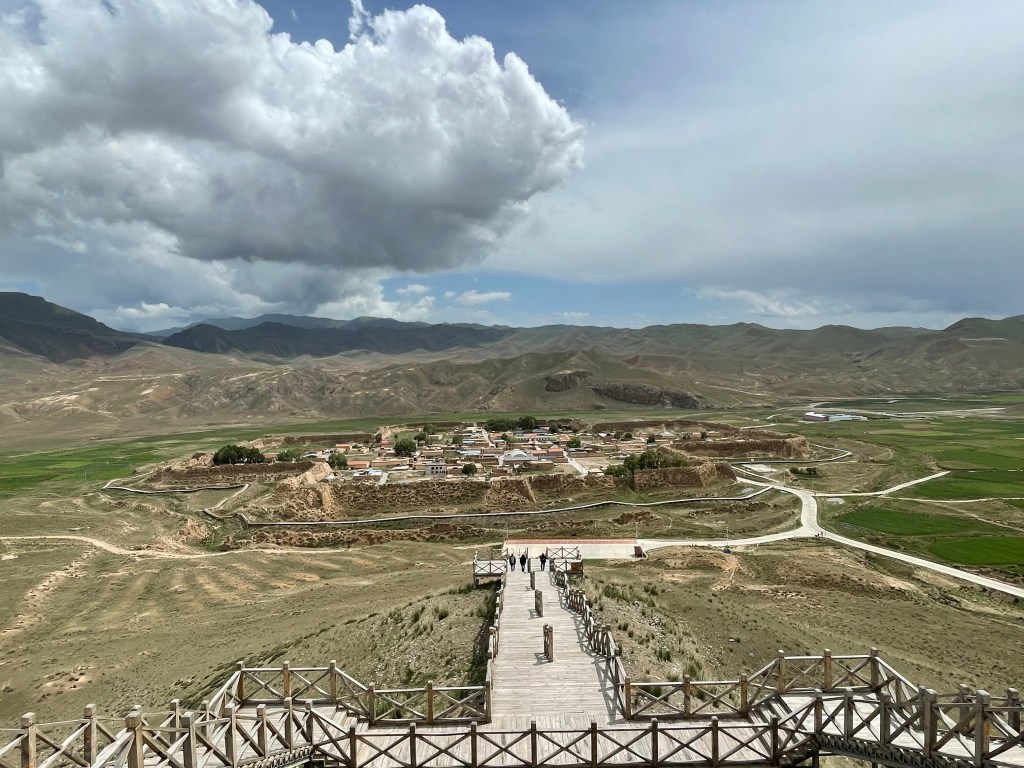
The first stop is at the „octagonal walled city“, an ancient remnant of a long gone city. The city walls are still recognizable and used as protection form wind for the current city.
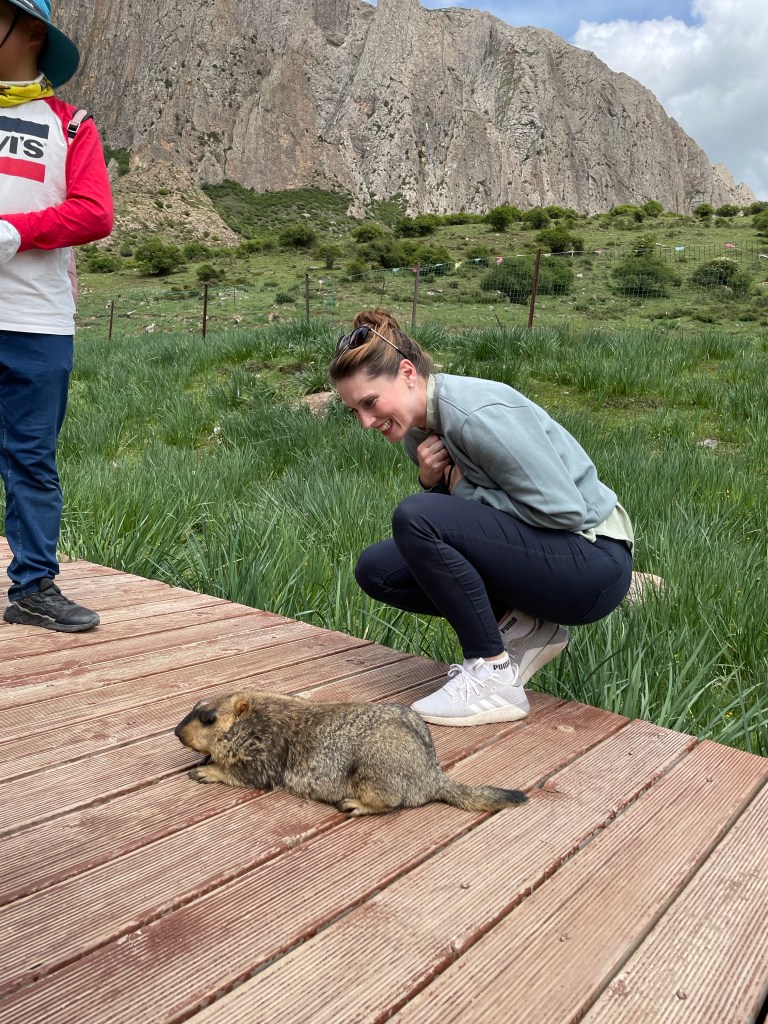
Second stop is at a mountain area, inhibited by buddhist monks. It’s amazing how simple the people live here. There is also a great spot to see wild marmots/groundhogs, as they are use to tourists, they are often seen begging for food. Beware, they have very sharp teeth!
From this area, it is also possible to hike further into the mountains, according to the map there must be a lake further up. We did not take the hike.
A friendly marmot
The last stop is a spot overlooking the whole plateau, monastery and village.
This concludes this trip. I hope I was able to inspire you to visit some of this wonderful locations sometime as well.
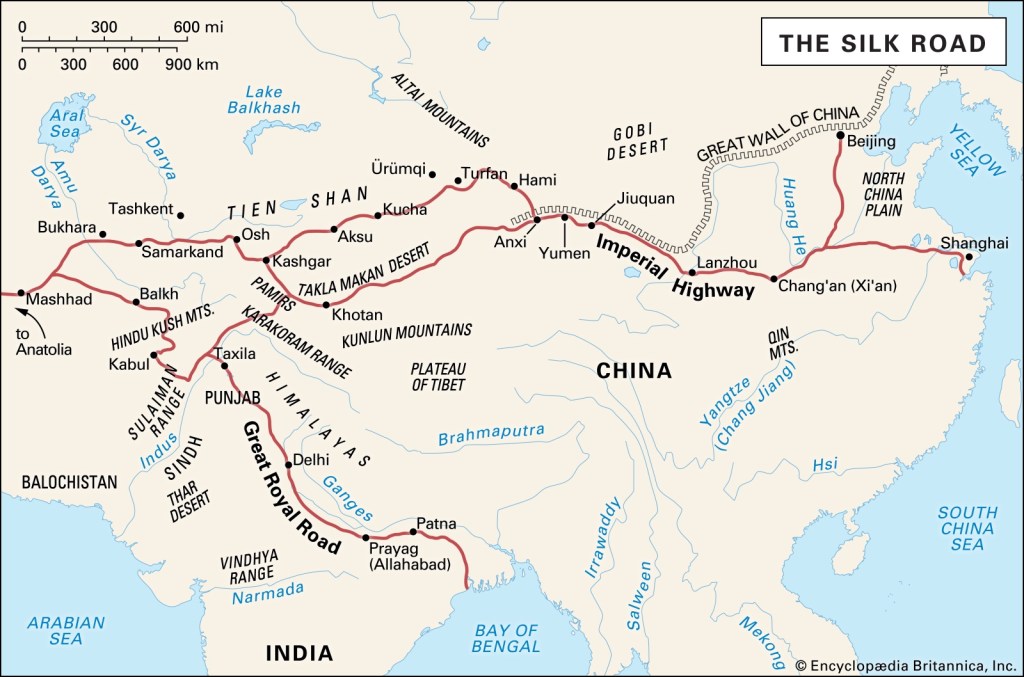
I am sure everyone has heard about the ancient silkroad, a former trade route from Asia to Europe. It went from Xi’an through Dunhuang, Samarkand, Constantinople and further into Europe. Gansu is one of the major provinces where the silkroad went through. Gansu is one of the poorest provinces in China and not very „famous“ for tourists, especially for international tourists. However, there are so many gorgeous natural sites and parks as well as much history to be discovered.
to Ganjia (in the south of Lanzhou, near the tibetan highlands)
The trip could be done in one week, but 8-10 days are better, especially if you want to relax a bit as well. A Chinese driver license will make it much easier for local mobility, although we still travelled the distances between cities by train. If you don’t have one, you can still go everywhere by Taxi, Didi or tours organized by a travel agency.
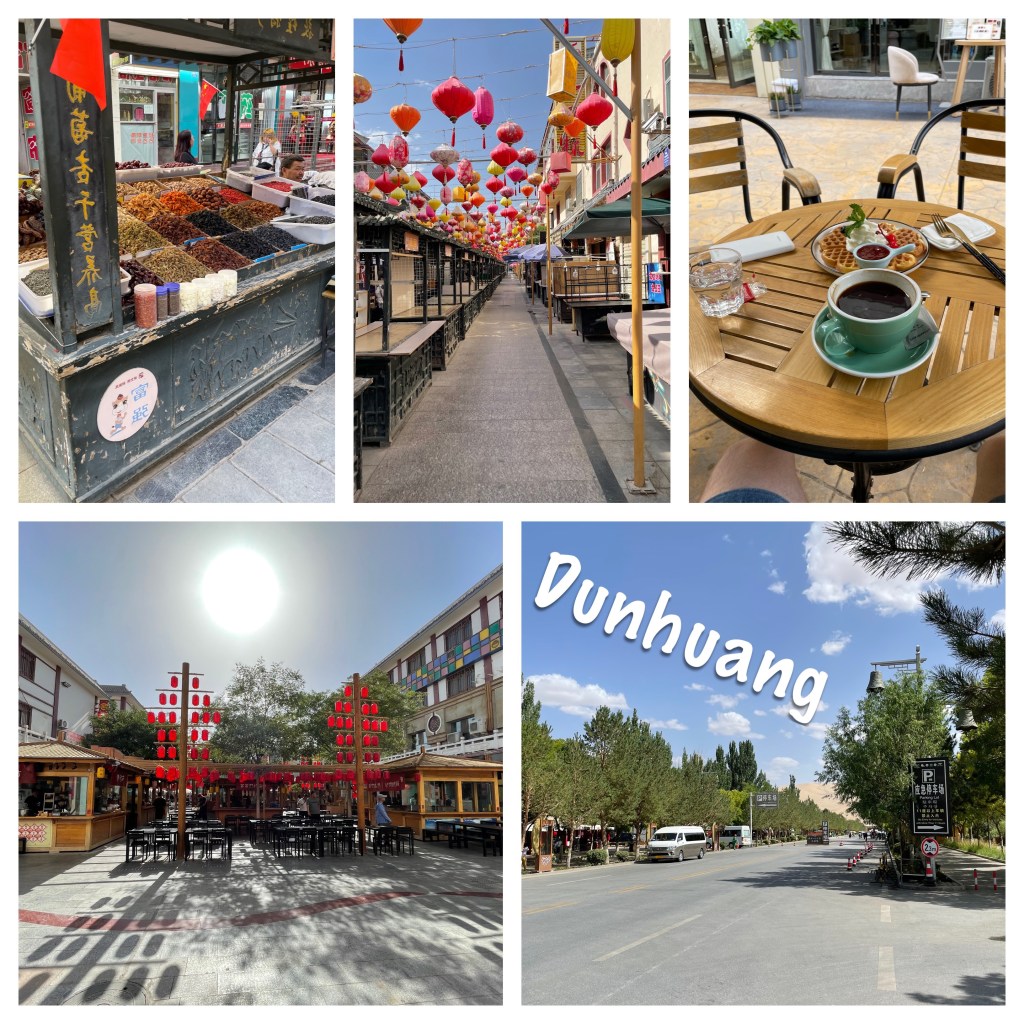
We took a flight from Xian to Dunhuang, arriving 14:45. Dunhuang is really a small city (only 150,000 people or so living there), so it took only 15 minutes from the airport to our hotel (HuaXia International Hotel).
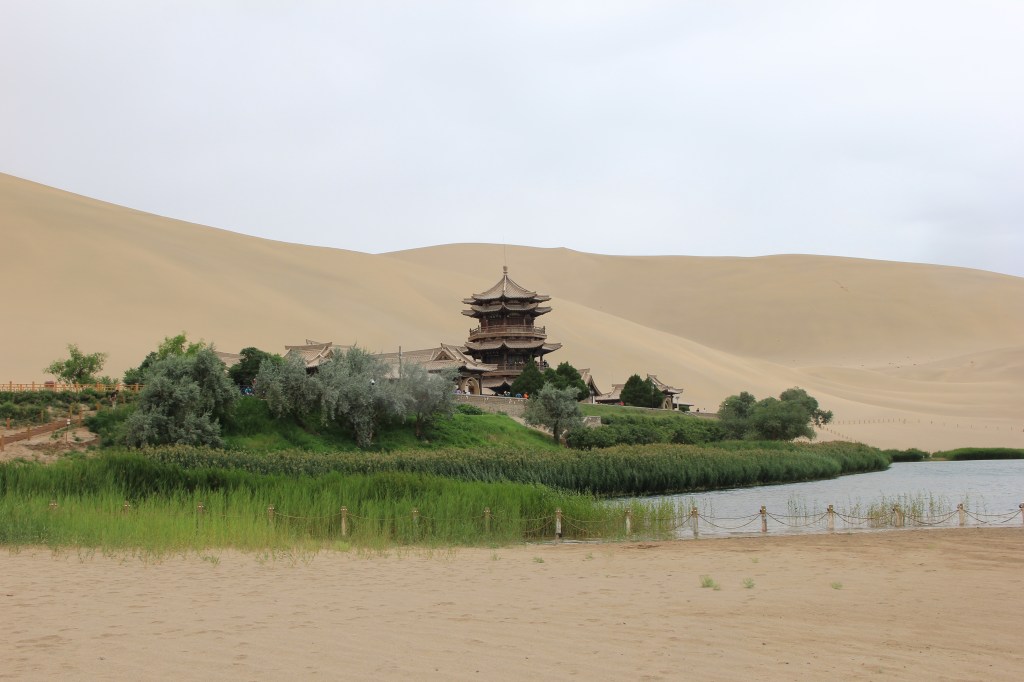
Mingsha Mountain Crescent Spring
The crescent shaped oasis is located about 1km away from the hotel and can be reached by foot or a 2 minute taxi drive.
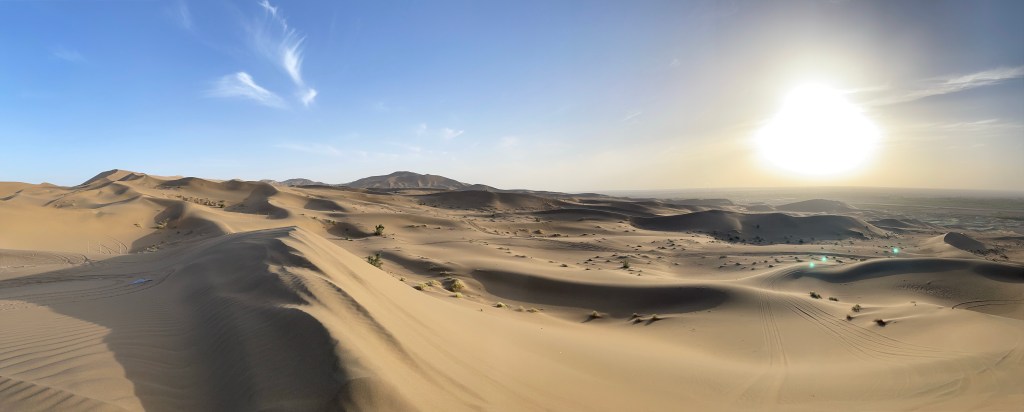
We took the chance on this day to visit the desert national park (110 Yuan entrance fee). As unusual as it sounds, this day it rained, at least some sprinkling. We did not mind, it was actually a nice change to the 38 degrees we experienced in Xian before.
The park is the perfect tourist location (as many are in China). Shops and restaurants in front of the entrance and inside the park any kind of entertainment you need.
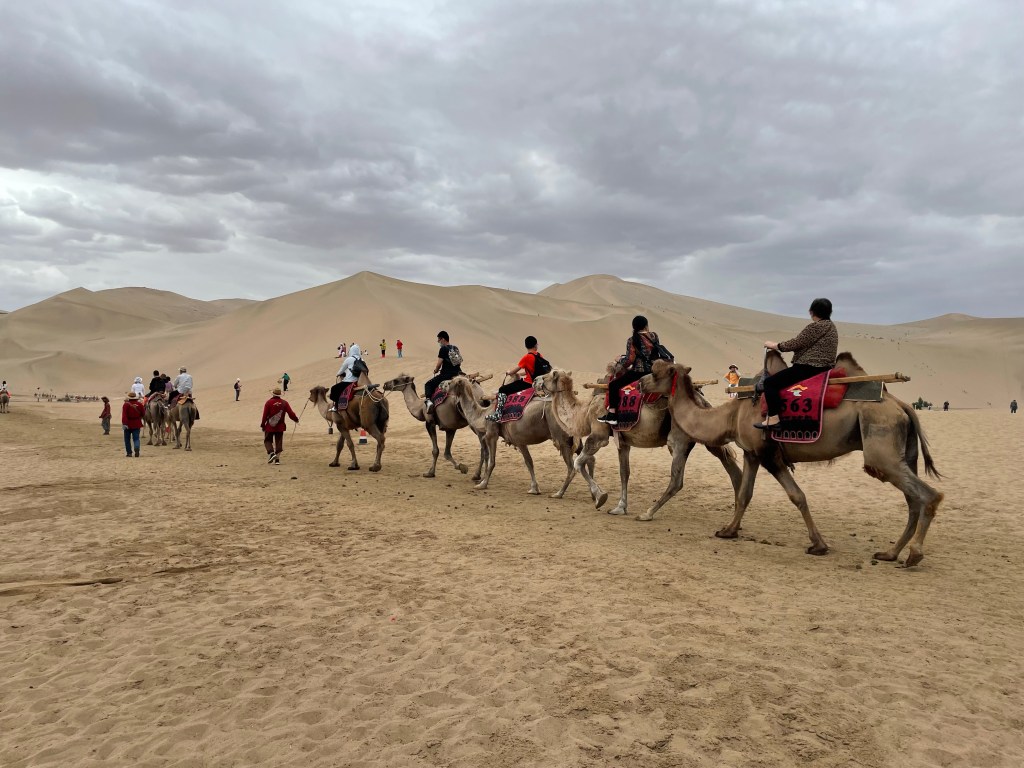
Camel Riding
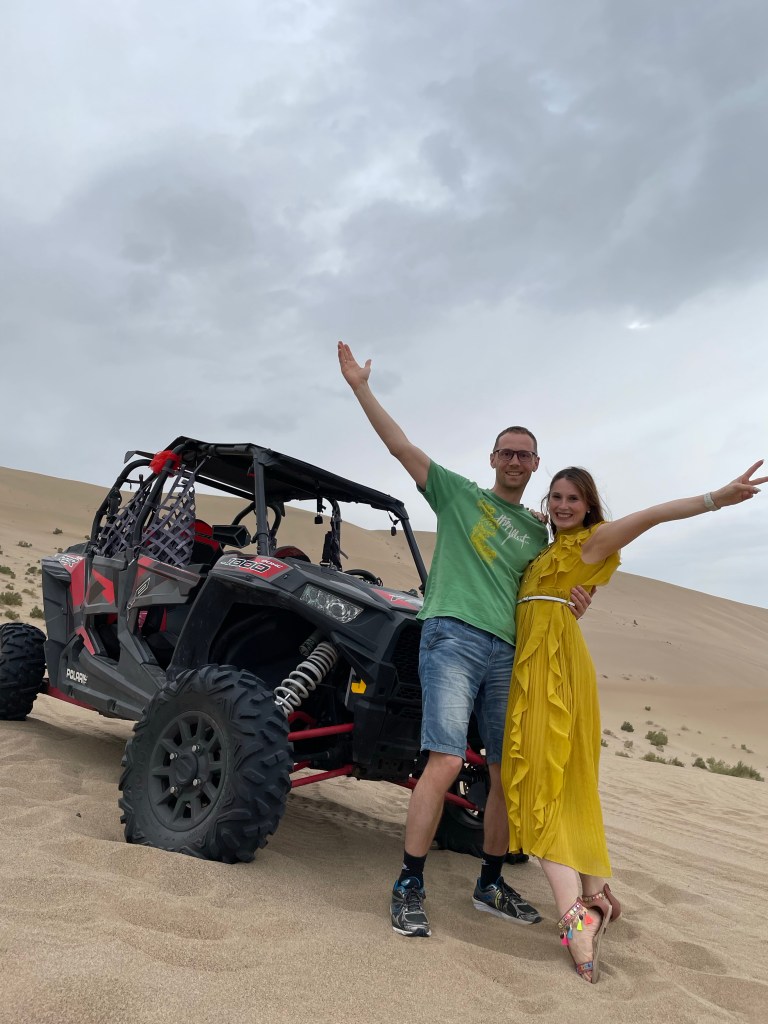
Quad and desert buggy driving
helicopter flights
dune sliding
dune climbing
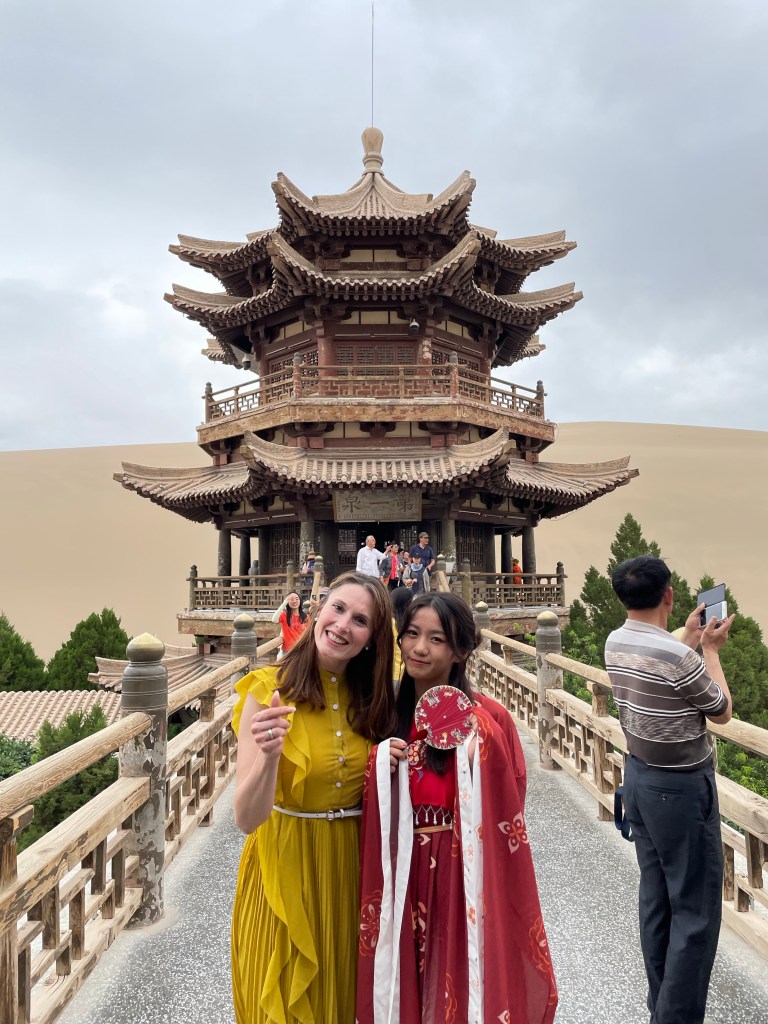
various photospots and costumes for pictures
For the less active people, you can even take an electric golf cart to the main oasis spot.
We wandered around the oasis a bit. Definitely make sure to go BEHIND it, so you can take pictures without hundreds or thousands of people.
After that we climbed a quite high dune, luckily there was a rope ladder in the sand that made it much easier.
Up on the dune, you will have a great view on the oasis. There are also quads and buggies you can take for a drive for 120 to 240 yuan.
Going back down the dune is quite easy and fun, just run, slide or roll down. Back down, we stopped for a small snack, some instant noodles.
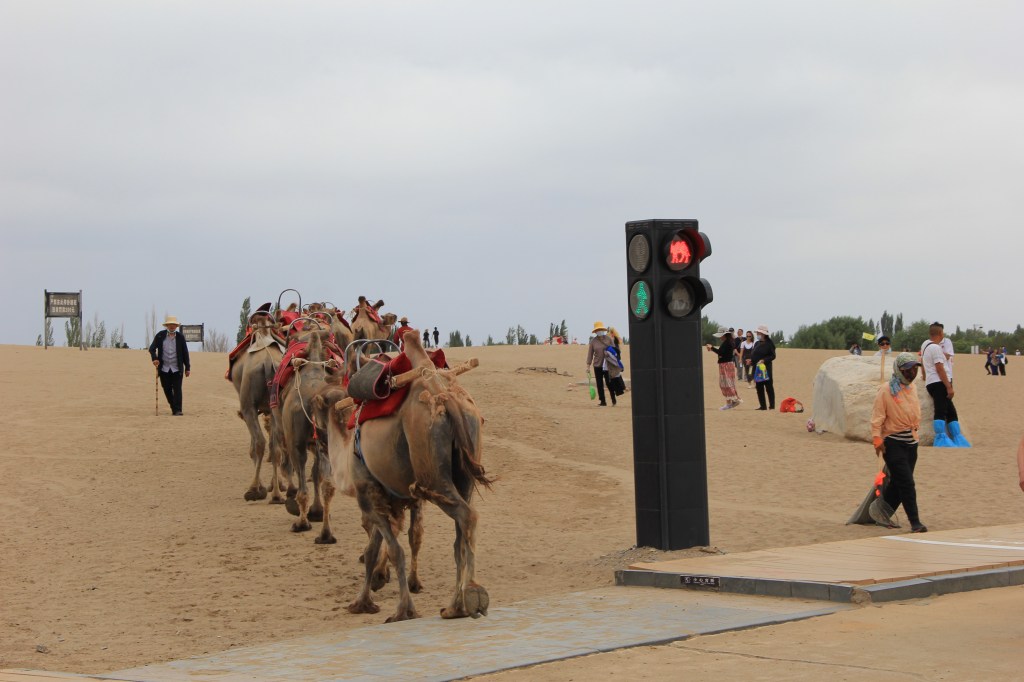
While walking back, we discovered a traffic light for pedestrians and camels on the other lane, which was quite hilarious, but also showed how well organized everything is.
There were around 1,000 camels „in action“
A traffic light for camels
Just outside the park gates, a restaurant „Chengdu Restaurant“ was recommended by Dianping, so we stopped there and had some really great food, for touristy prices (for chinese standards, compared to western prices it was still OK, 160 yuan for 2 persons).
Dunhuang, Day 2
Mogao Grottoes
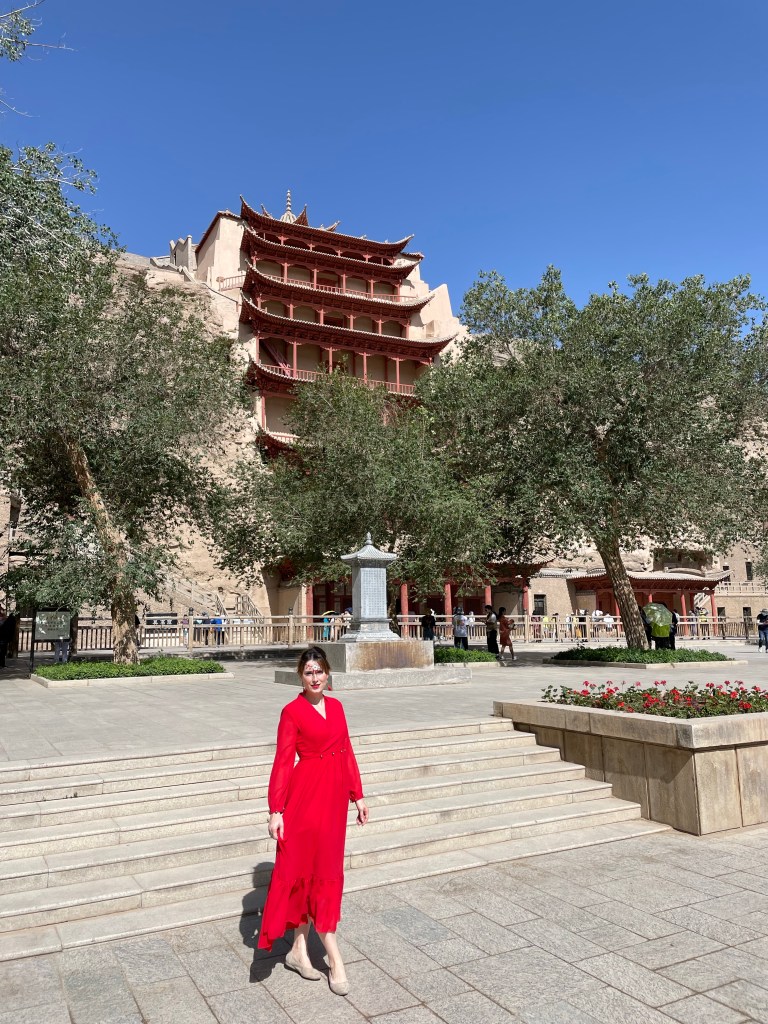
We got up early and made our way to the Mogao Grottoes, some ancient caves and temples built into stone walls near Dunhuang. It takes about 15-20 minutes from any point in Dunhuang. You have to buy a ticket at the ticket office and then take a bus to the main area. The bus drive takes about another 10 minutes and is free of cost.
The tourist area is really nice, there is a particular coffee shop there (the name had something to do with a dog) where we had a great coffee. The cake was a bit sweet for our taste, but OK.
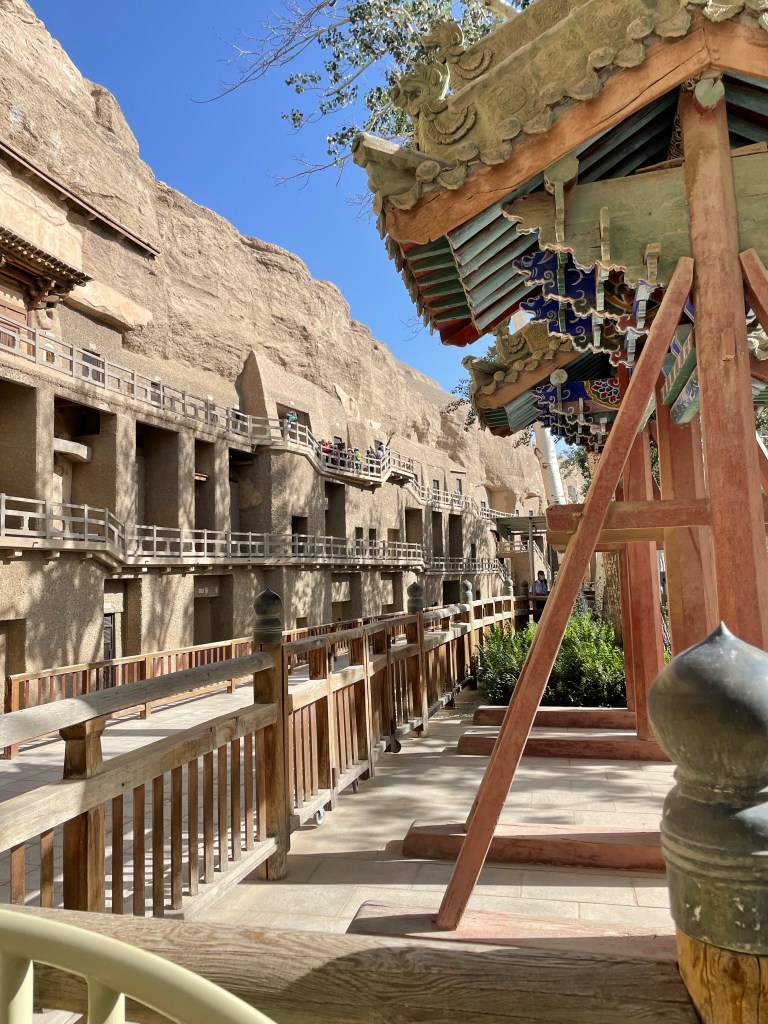
The main attractions are the caves and the temples inside, with standing and laying Buddha figures. Please keep in mind that you are not allowed to take pictures in there, the guards are very strict about it!
There are some stupas out in the desert, but we could not make out why they are there or what the were build for.
The main building in the MoGao grottoes
many small cave „appartments“ and temples
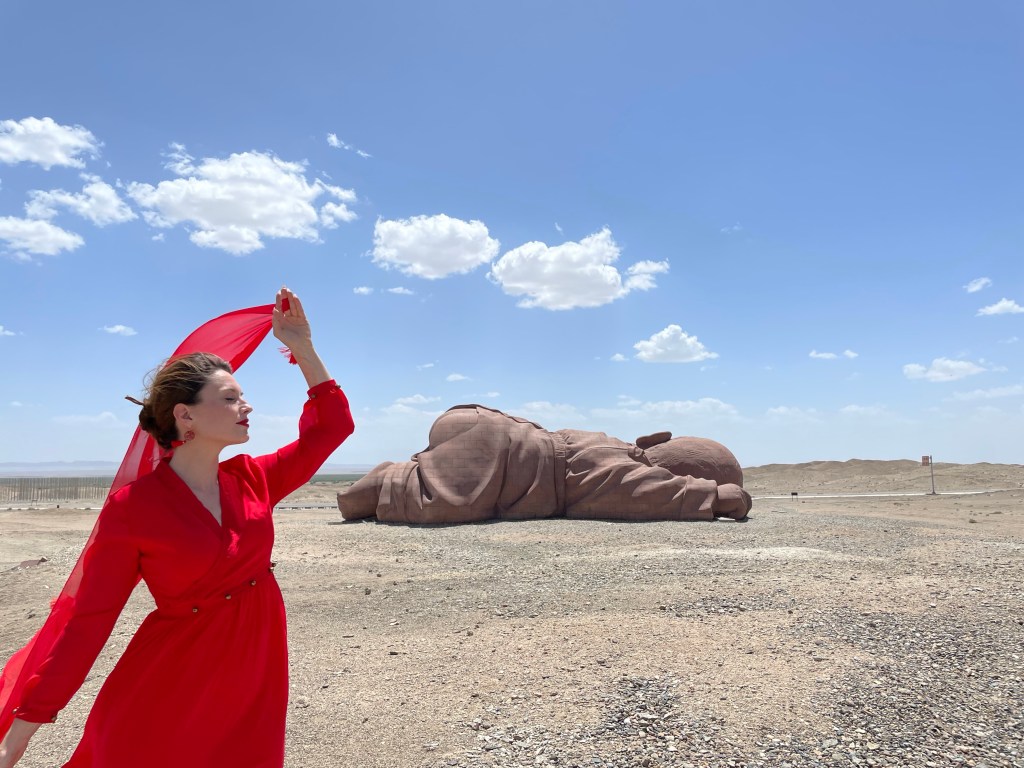
We went back with the bus to the entrance area. In the meantime, our hotel had organized a taxi driver that would take us to Dadi Zhizi, which is basically a giant baby laying in the middle of the desert. The drive from Dunhuang takes about 1.5 hours (one way) and the round trip cost us 300 yuan. There are also many other „artistic“ sculptures in the area, such as a giant head of a warrior. We did not bother to stop at any other.
Dadi ZhiZi (son of the earth), an enormous baby in the middle of the desert.
What we would generally advice is that you rent a car if possible (you need a chinese driving license) since most of the taxi and didi drivers are chronically tired and almost everyone we had fell into a „1-second-sleep“ often, which is a really scary experience I do not recommend.
Back in Dunhuang, my wife went to a professional photographer (there are a few near the oasis entrance) to take pictures in the desert with a traditional dress. This is much recommended, even though i do not generally like taking pictures or such kind of „dress-up photography“, the resulting pictures where stunning. The price is around 1,200 Yuan for a 3 hour session (including getting make up and dressed).
In the meanwhile, I went to „downtown“, to the dunhuang night market (during the day). We did not have the time to go there at night, but it is definitely worth it, there are many outdoor restaurants, bars and cafes. I can recommend the „Time Cabinet Cafe“, I had the best coffee in a long time there.
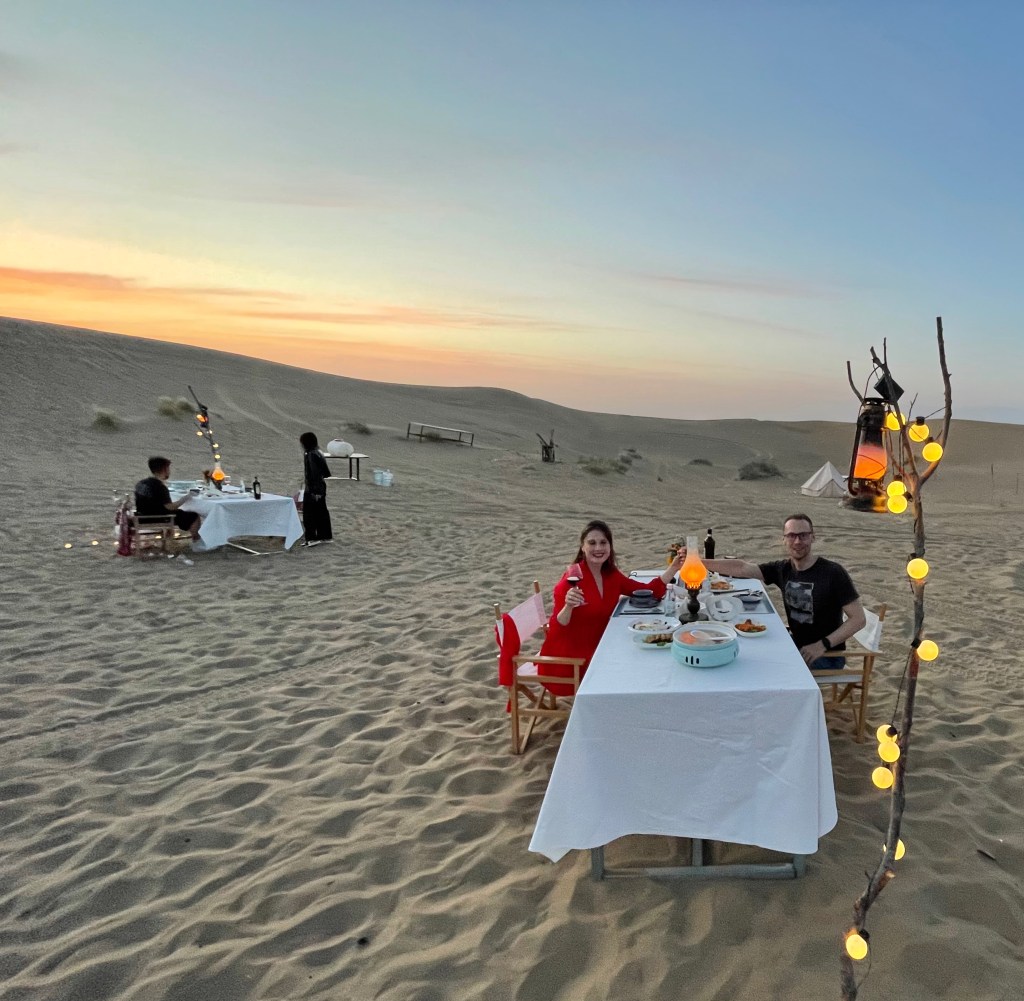
Around 6, I met up with my wife again and we were picked up by an off-road jeep to venture deeper into the desert and enjoy a romantic dinner in the dunes. Here we can highly recommend the „Dunhuang Wild Luxury Desert Camping Hotel“. The staff is super friendly and supported us on WeChat how to get there and how to get to the trainstation while leaving.
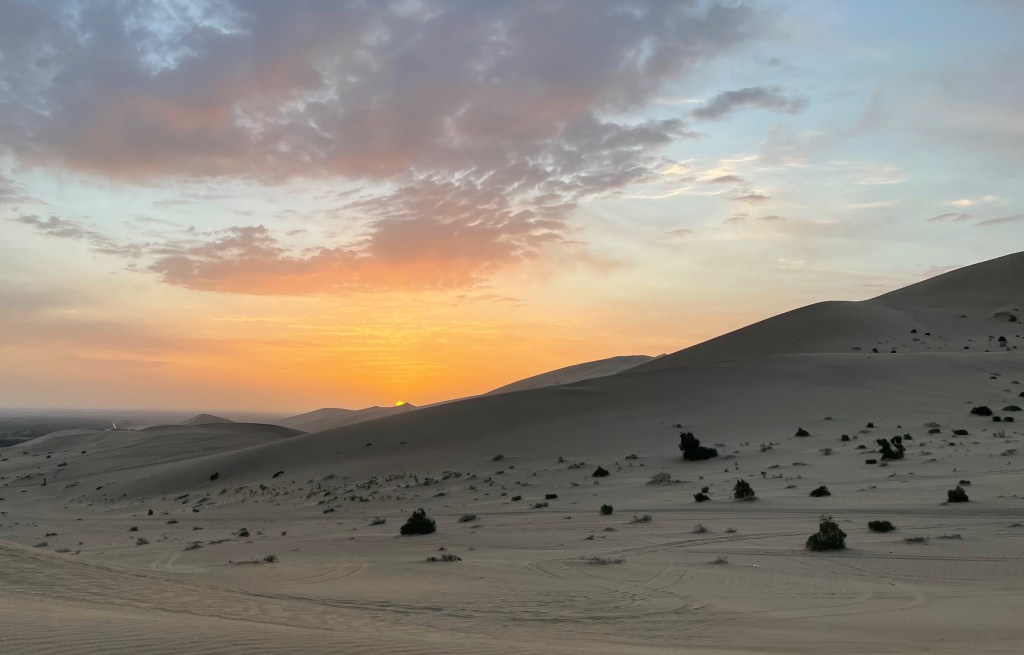
Sunset in the desert
You have to book including the „dinner option“. Then, around 19:00 you will be picked up at a location of your choice and driven into the „base camp“.
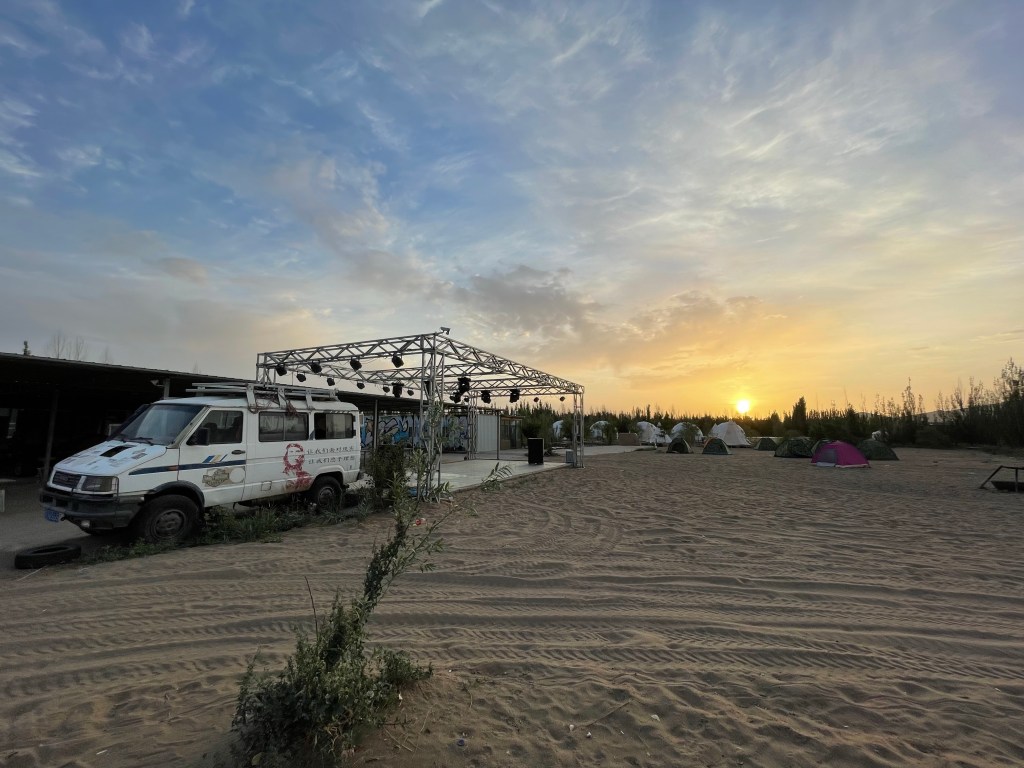
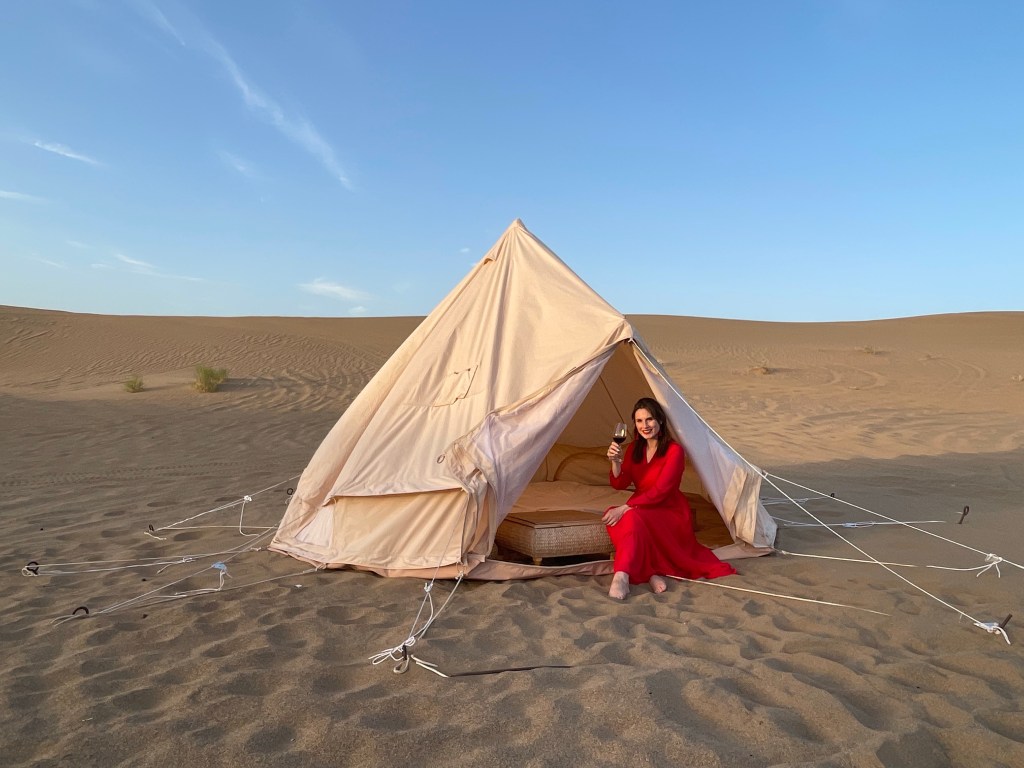
The base camp
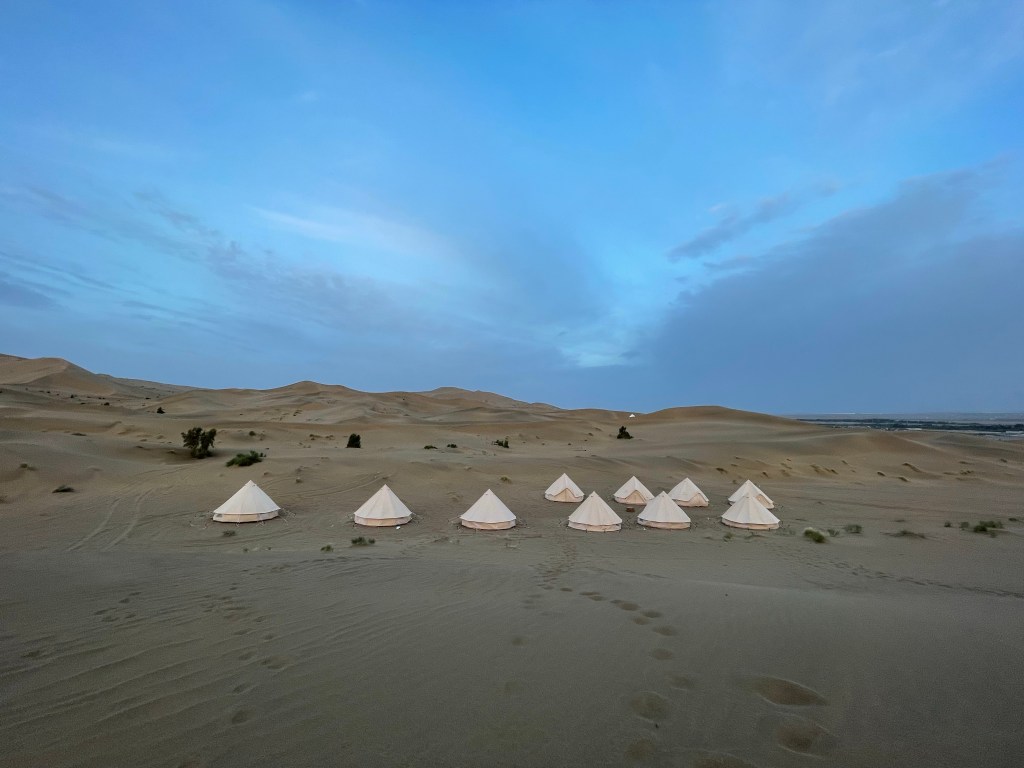
The camping area
From there, they will take you with some off road vehicle for a (crazy) drive through the dunes. It is like riding a rollercoaster. Then, you will be brought to the „dining area“ a place within the dunes, with 4-5 tables for couples set up. The dinner starts at sunset (around 9pm) and included many local dishes, meat as well as many vergetarian plates. It’s all inclusive, so you can drink as much red wine (local, but really good), water, soda etc. and have some snacks/deserts as well. The event ends around 10:30pm with a small firework. Then, you will be brought to your tents, which include a pair of mattresses (a bit hard for our taste).
Dinner in the desert
Of course, as you are out in the desert, don’t expect to get too much sleep, there is quite some noise, first from wind, second from other travelers being brought back and forth by quads later in the night and earlier in the morning. Don’t miss out the great sunrise at around 6:15am!
Sunrise in the desert
Jiayuguan, Day 1
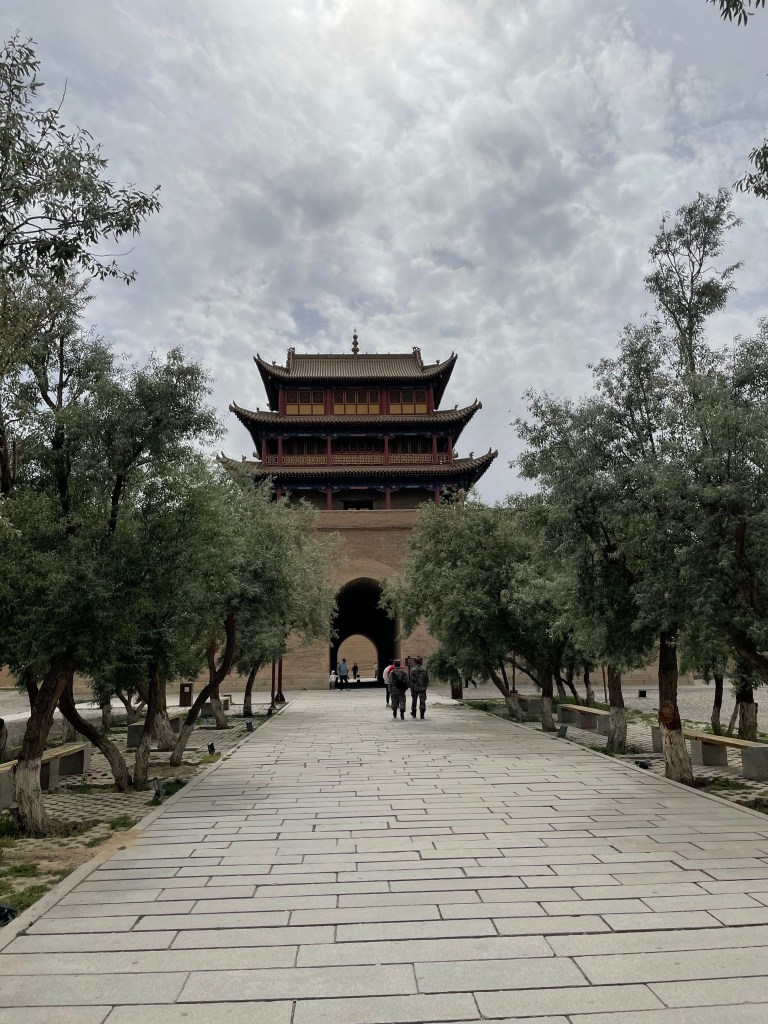
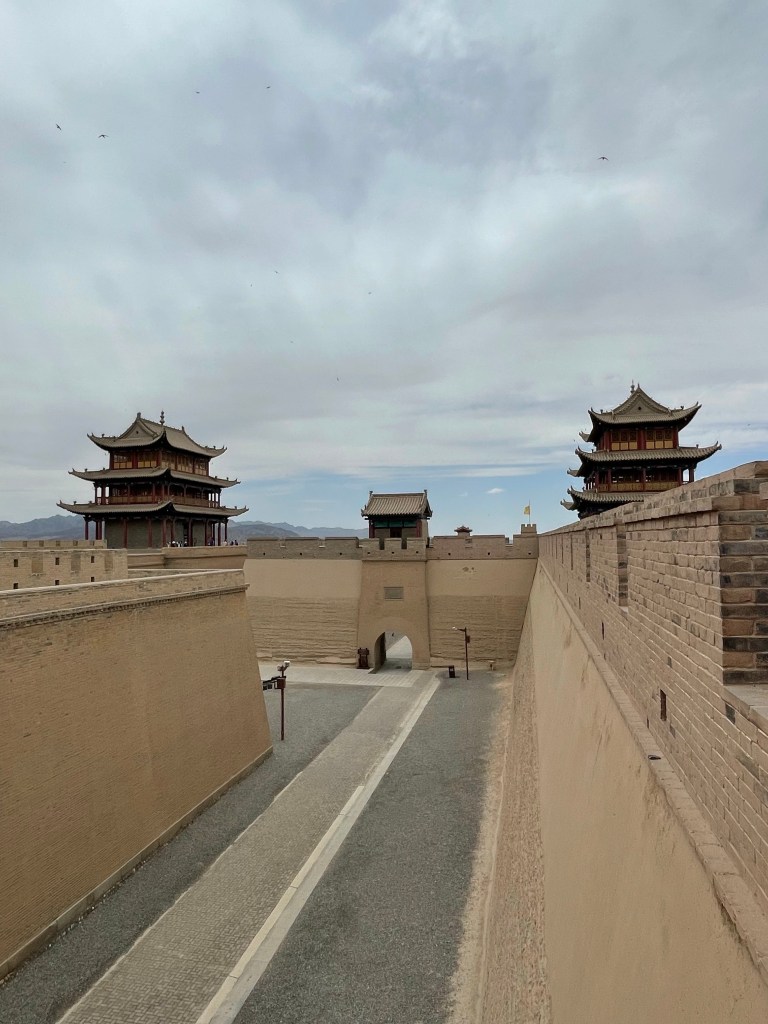
Jiayuguan Pass Fortress
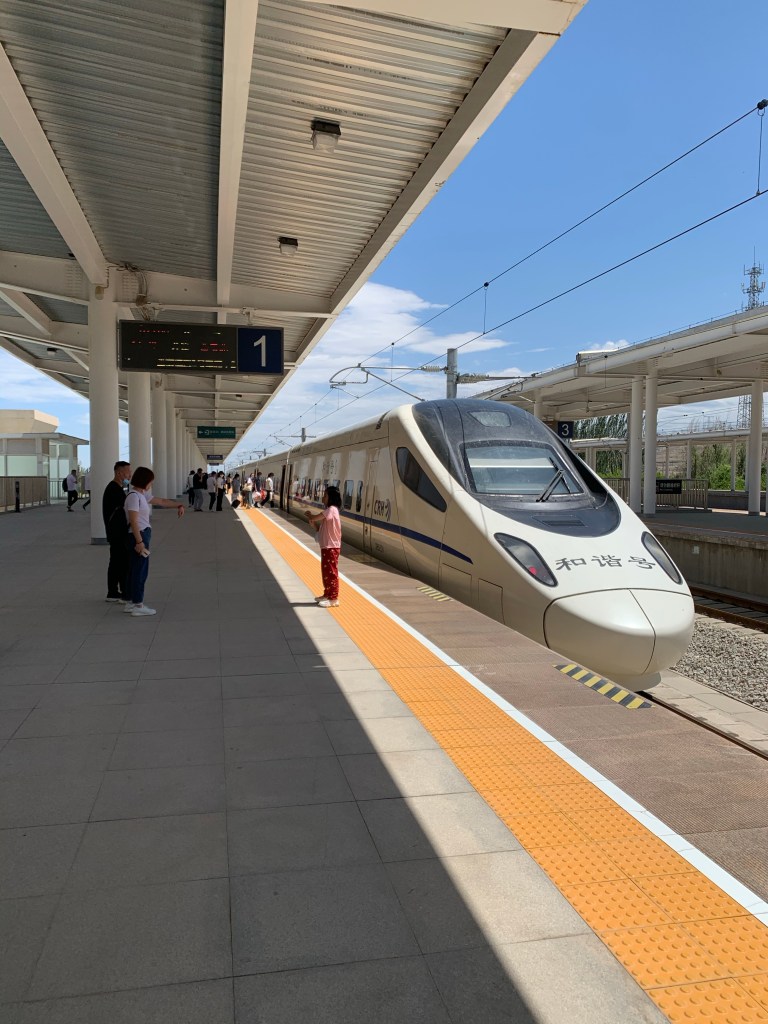
We decided to take a train to Jiayuguan from Dunhuang early in the morning (8:30am, there is only one bullet train each day). The ride takes about 2,5 hours, so we arrived in Jiayuguan at 11:20am. The city is as well small, so we booked a hotel in the city center, named „Plaza Holiday Inn“. It turned out it has nothing to do with the „real“ Holiday Inn chain, but it was not too bad either.
Chinese Bullet Train
There is only one „attraction“ in Jiayuguan, which is Jiayuguan Pass Great Wall Fortress (嘉峪关关城嘉峪关关城). The entrance fee is 110 Yuan, and it will take about maximum 2-3 hours if you really go slow.
Therefore, next time, we would not necessarily stay in Jiayuguan for a night, but directly travel on to Zhangye in the evening by train (only about 1.5 hours).
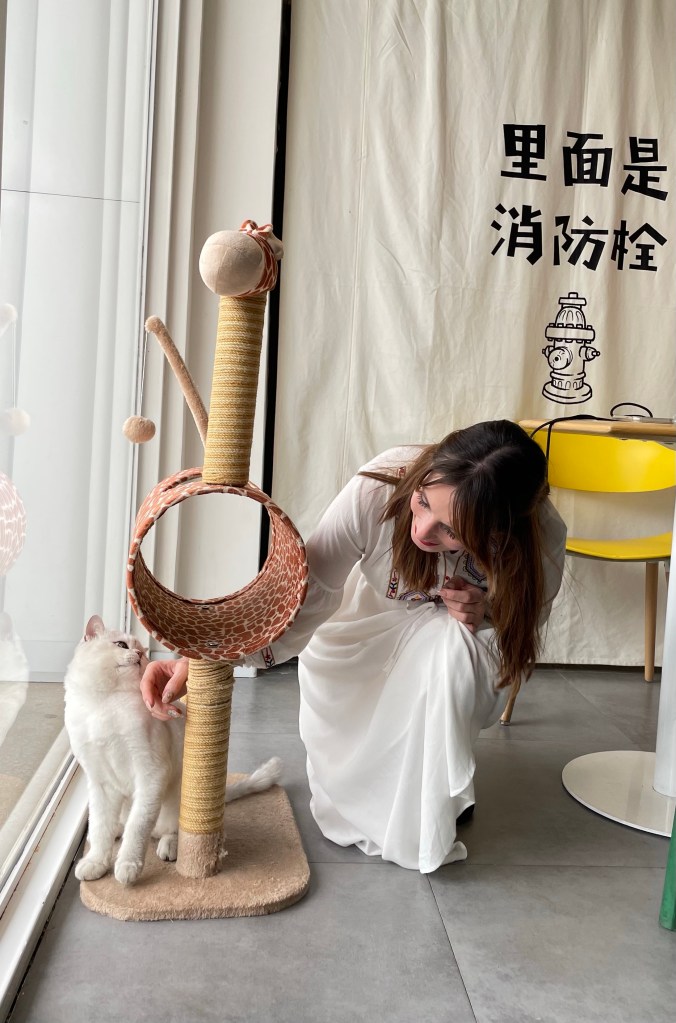
StayIn Cafe
A few nice places we found, we can recommend to visit:
StayIn Cafe, a small nice coffee shop, with an equally nice cat and a great assortment of english and chinese books to have a read.
Pizza Hut, yes – its fast food, but a really nicely decorated restaurant and the only western option we found. The pizzas were good as well, naturally!
Jiayuguan Day 2 / Zhangye
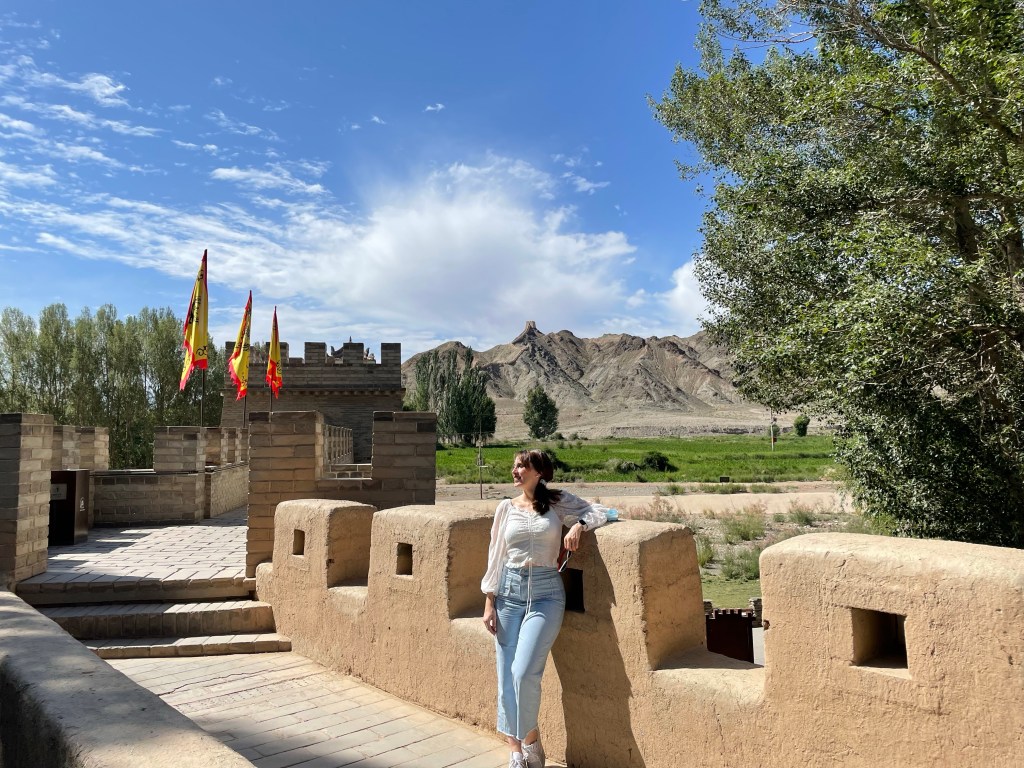
Jiayuguan Xuanbi Great Wall section
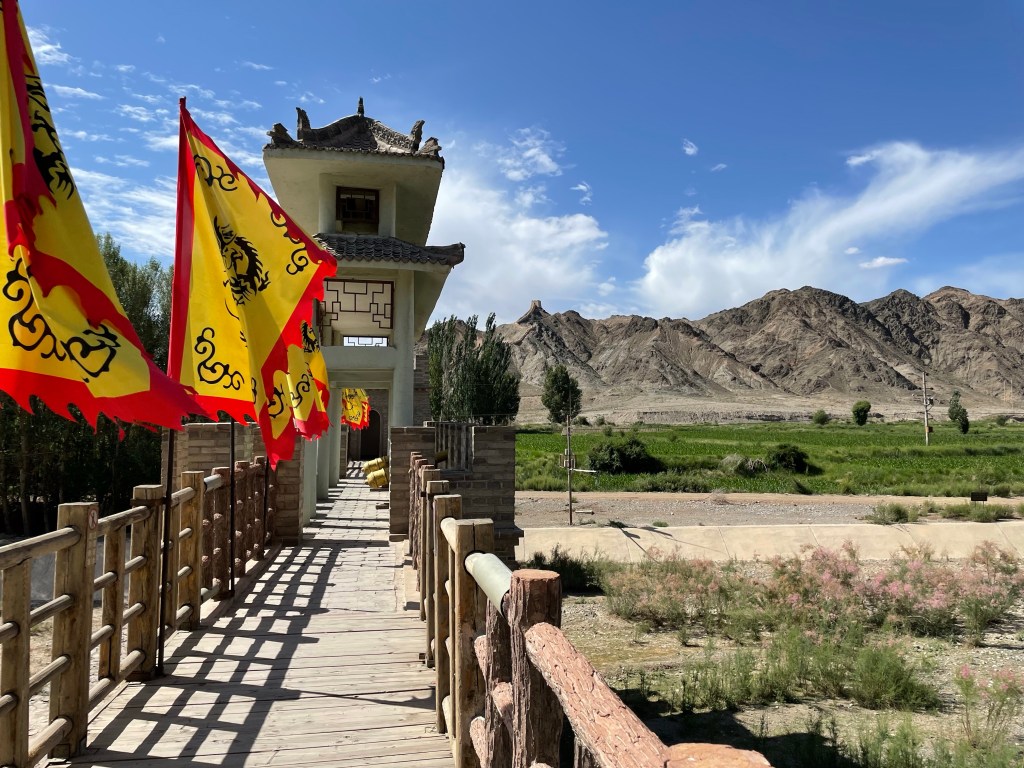
We started to the Jiayuguan Xuanbi Great Wall section, which turned out to be a surprise, the scenery was incredibly gorgeous and there were almost no tourists. (It takes normally about 20 minutes to go there from the city, but right when we wanted to go there, a convoy with about 20 tanks and other military vehicles crossed the street, so it took a bit longer. It was quite an impressive event though). The entrance with 21 Yuan per person was also reasonable.
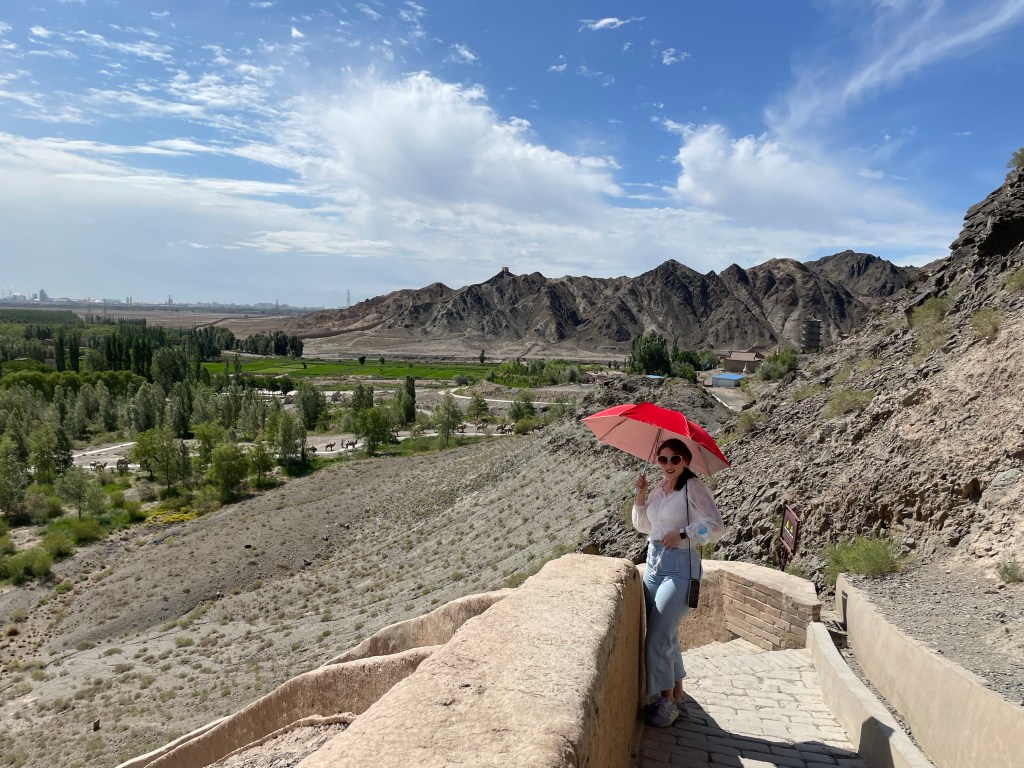
We took a hike up the wall and down the designated path, but it is possible to go off-track and hike through the mountains there. There is also another piece of the great wall just nearby, but again, there is not much more to see from there.
The whole tour took about 1.5 hours. On our way back we stopped again on one of the nice coffee shops and headed to the Jiayuguan south railway station.
How to choose the right hotel in Zhangye
We took the 14:40 high speed train from Jiayuguan to Zhangye (it takes about 1hr 20 minutes).
In small cities like Jiayuguan or Zhangye, there aren’t any international brand hotels, and chinese taste and standards for hotels are a bit different to europeans. For one, the beds are incredibly hard, even for me, who normally likes a hard mattress, it is way too hard. Therefore, I really took a long time to „research“ for the right choice of hotel.)
Arrived in Zhangye, we checked in into our pre-booked hotel „ZhangYe Ding He International Hotel“. However, the hotel was really run down and the room not clean, so we decided to look for another hotel and ended up in the Holiday Inn Express, which we can highly recommend. Clean, modern design and in a very nice location near the wetland park. The price was much better as well (around 250 RMB per night) I hope you can appreciate this recommendation.
For dinner, we went to the „Xi Bei Kitchen“ (Modern Chinese Restaurant and Western Restaurant), which was extremely delicious, had a creative design and reasonable prices (240 RMB for 2 persons and we had a lot of dishes and drinks).
The ancient silkroad (copyright Encyclopedia Britannica)
As you may know Xi’an, formerly also know as Chang‘an was once the center of the ancient silkroad and the capital of ancient China for a long time. Therefore, it is a „gem“ of Chinese history and every visitor to China should visit Xi‘an.
As you may know Xi’an, formerly also know as Chang‘an was once the center of the ancient silkroad and the capital of ancient China for a long time. Therefore, it is a „gem“ of Chinese history and every visitor to China should visit Xi‘an.
What we recommend is to visit following spots. It can be easily and relaxed be done in a 4 day trip, but also in a 3 day trip if you really pack it.
If you take one more day, you can go to Mount Huashan 华山 (Huashan Town, Huayin City, Weinan City, Shaanxi Province 陕西省渭南市华阴市华山), which is a 2 hour drive away from Xi’an and a full day tour.
June is a good time to visit, there is mostly no rain, but the temperatures can go into the upper 30 (centigrade!).
Day 1
We took a flight from Dalian around 7:00 and took the 10:30 flight to Xian with Tianjin Airlines. There are flights to Xi’an from any bigger city in China.
We took a taxi, but lately we had the issue that the drivers were very tired and even fell asleep during driving (maybe because of the heat, or just bad luck, we don’t know), so better take the very good subway to your destination.
Giant Wild Goose Pagoda
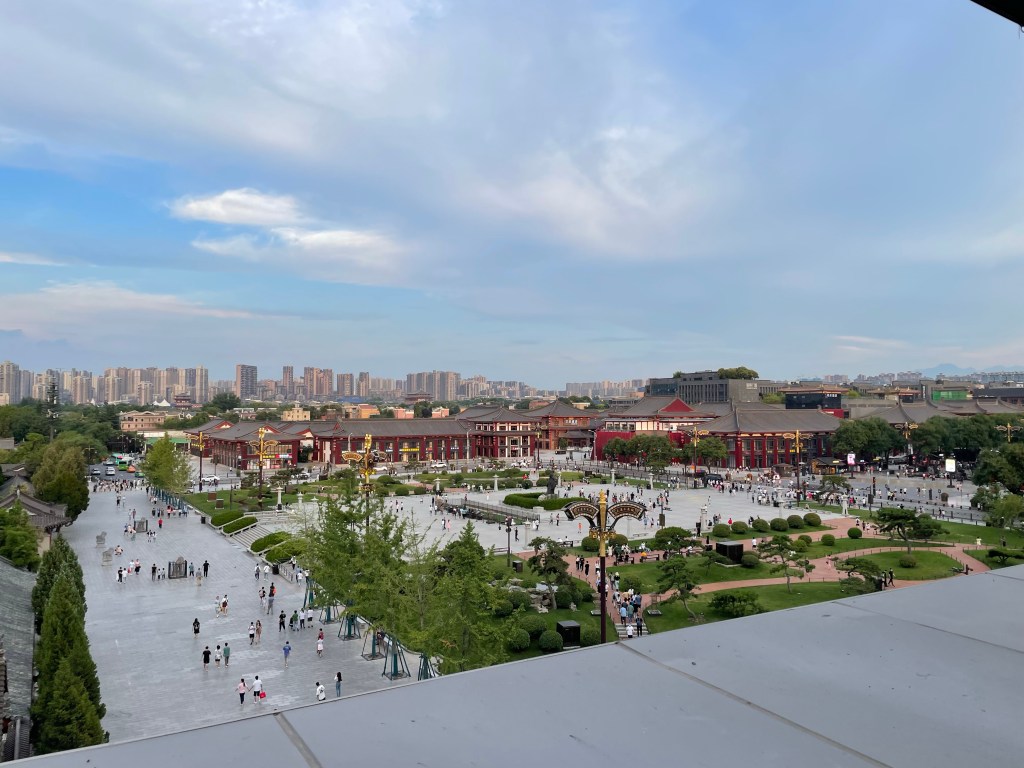
Arrived at our hotel in the inner city, we took a taxi to the area around the „Giant Wild Goose Pagoda“. There is a huge pedestrian area and a nice shopping center (Joy City) where we had lunch first (at the Blue Frog), then we went around the area and into the „pagoda area“ (you have to pay entrance, about 30 RMB). It was nice, but the pagoda was under restoration, so the view was obstructed by construction supports.
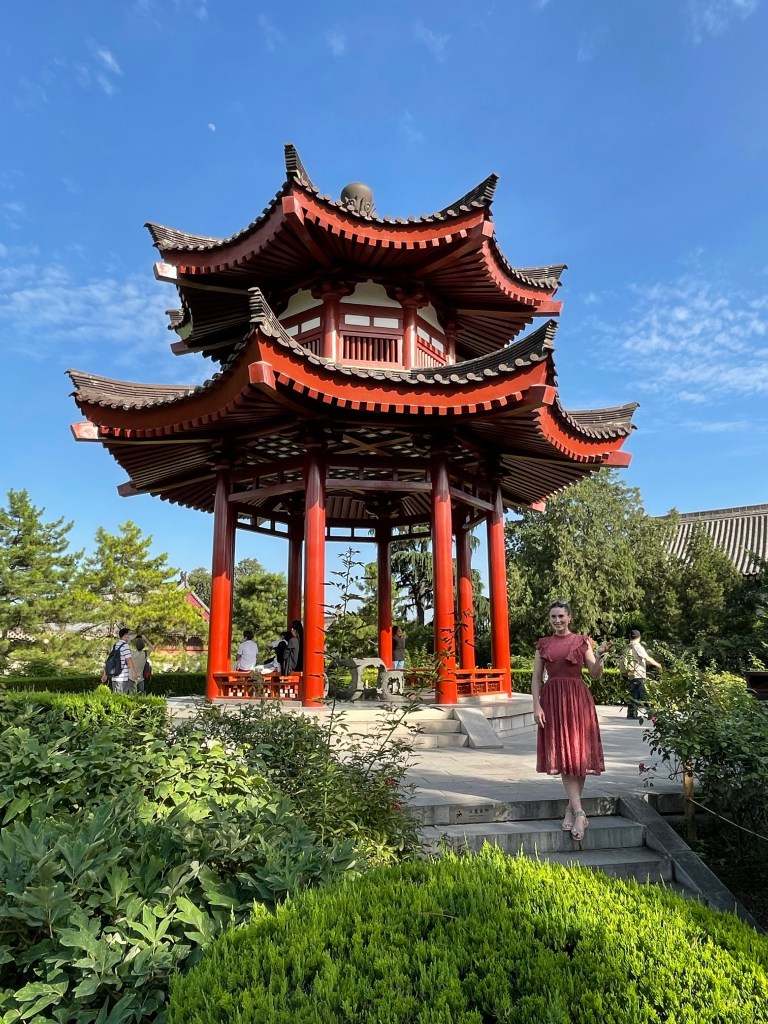
Traditional Pavillon inside the Giant Goose Pagoda area
Xi’an Ancient City Wall
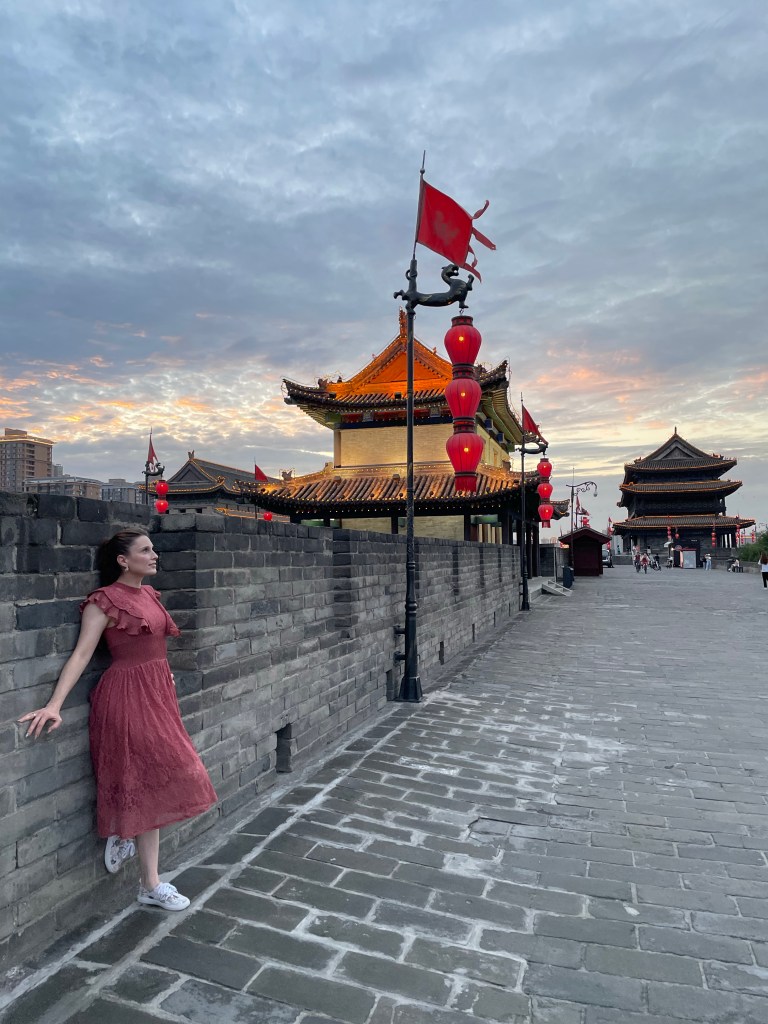
In the evening we went to the east inner city wall, walked through the area on the base of the wall and then took bikes on the wall (54 RMB entrance) and drove around (45 RMB per person). The drinks on the wall are incredibly expensive, we paid 63 RMB for a water and a juice, so better take your drinks with you before.
On the ancient city wall
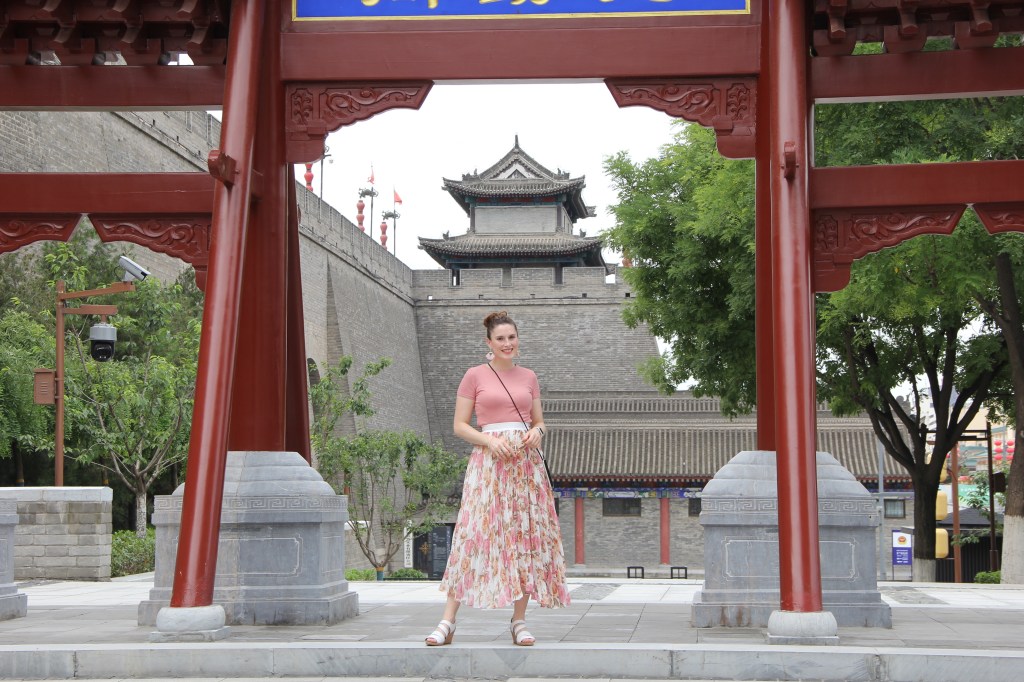
Pedestrian area near the city wall east gate
Day 2
We started after a rough night in our hotel, as the A/C did not work and the window was basically open and the noise level as if sleeping in the middle of the street, had a mediocre breakfast and then started off to go around just outside the city wall.
Later we decided to move to The Westin near the Giant Wild Goose Pagoda, which was magnitudes better and even slightly less expensive than our previous Hotel.
Outside the city walls
After breakfast, we strolled around on the outer side of the city wall.
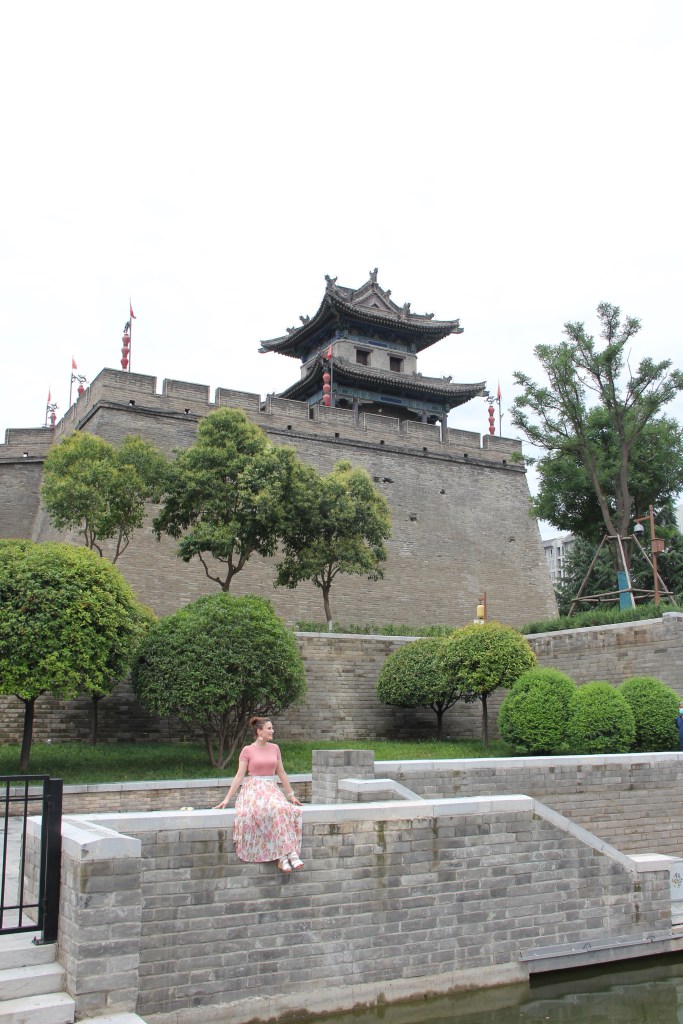
a corner watchtower as seen from outside the city walls
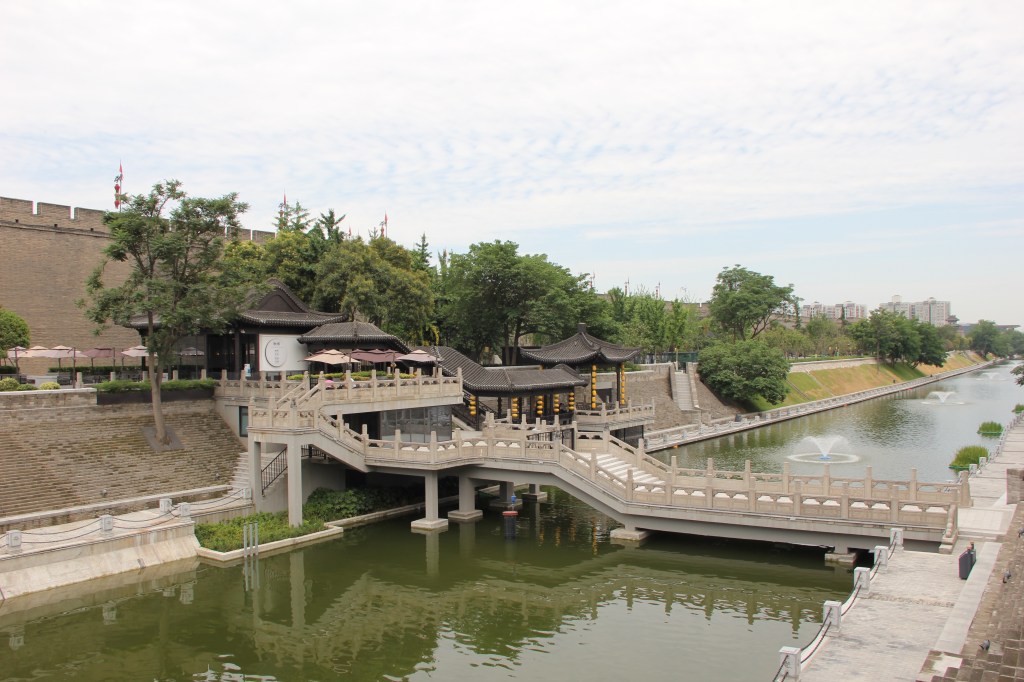
There are many nice cafes build in ancient chinese style along the way.
Daming Park
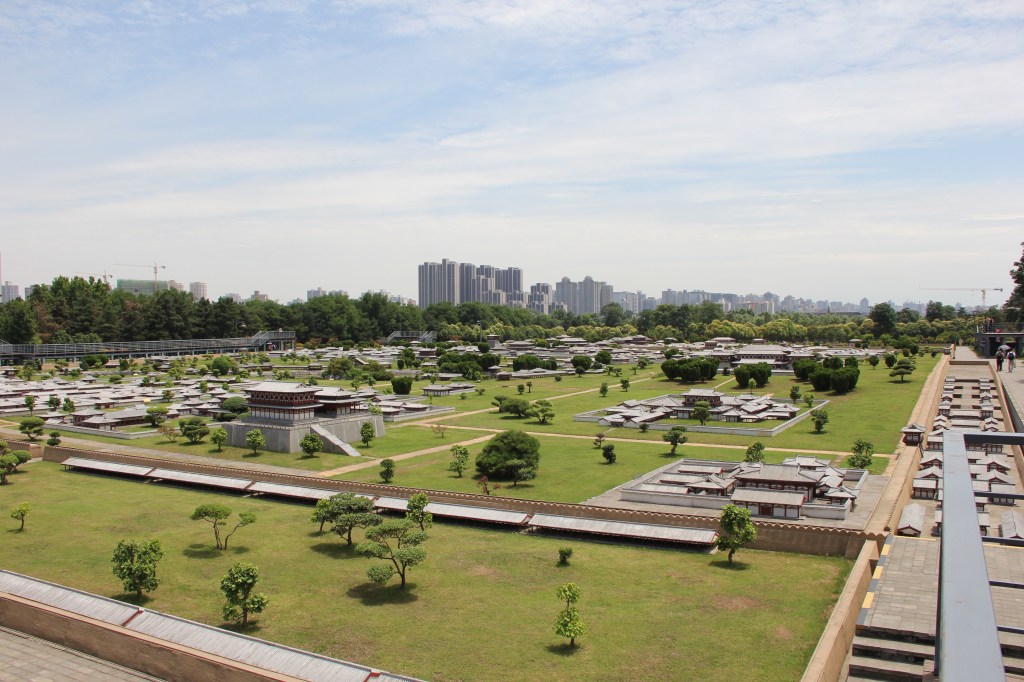
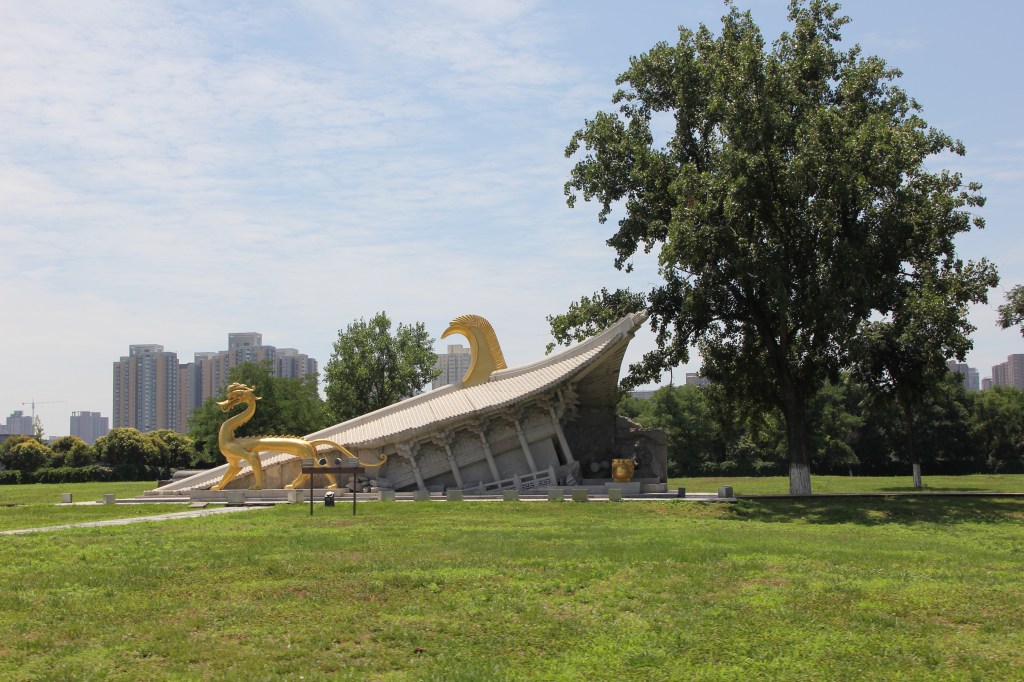
Around noon, we drove to the Daming Park. There are many ruins, basically only the foundations of old buildings from the Tang Dynasty in a huge, beautiful park. Next to each „ruin“, there is a small replica of how the buildings looked back then. There is also a complete replica of the area, however in a much smaller scale, but still very impressive how the „city“ looked in ancient times. The whole park takes about 2 hours to cross.
replica of the city how it used to look in former times
some nice replicas of collapsed buildings
Around early afternoon, we took a stop for a quick snack at the Starbucks (they are everywhere in Xi’an ).
Small Goose Pagoda
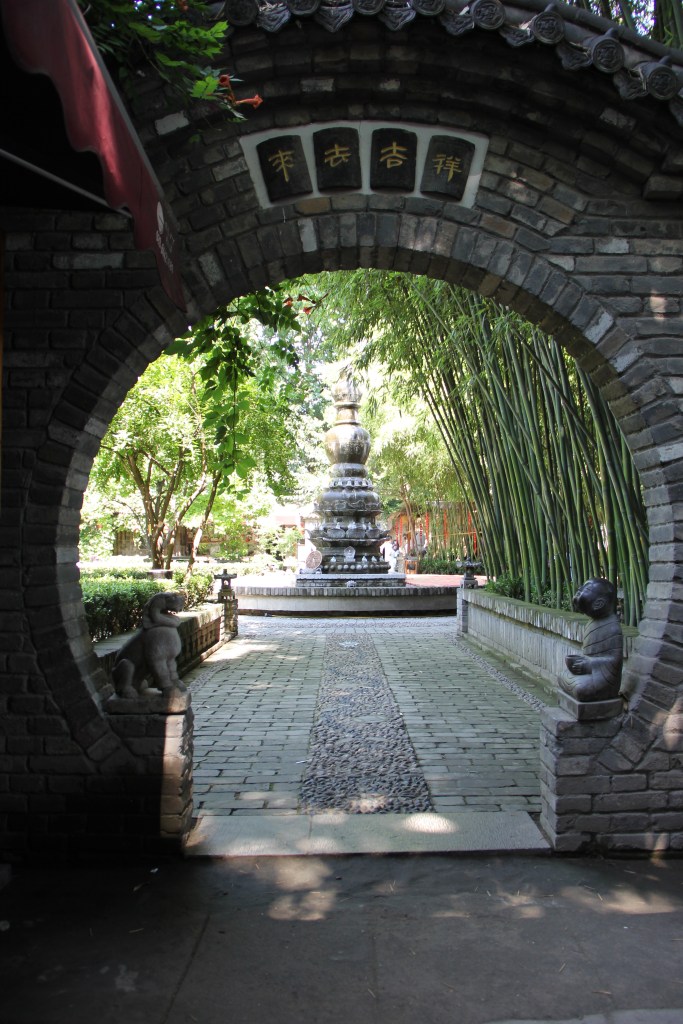
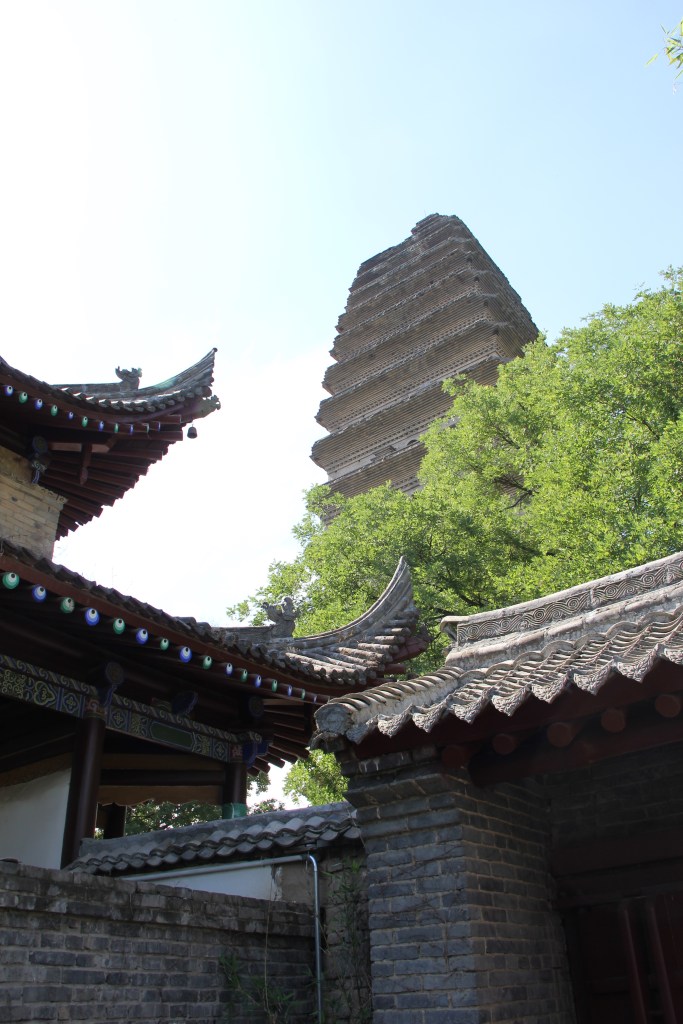
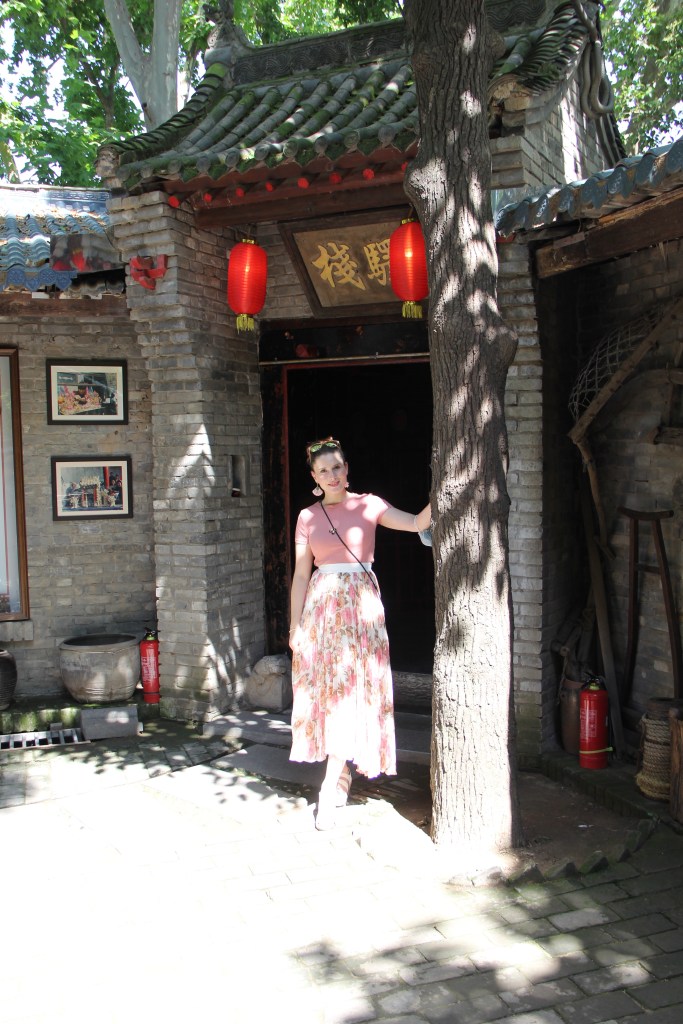
Then we drove to the Small wild goose pagoda, which turned out to be quite a surprise, there are a lot of small corners, stores and lush vegetation, you can completely forget that your are in the middle of a huge city.
small goose pagoda
After having dinner (again, the blue frog) we went to our new hotel.
Muslim Street and Great Mosque
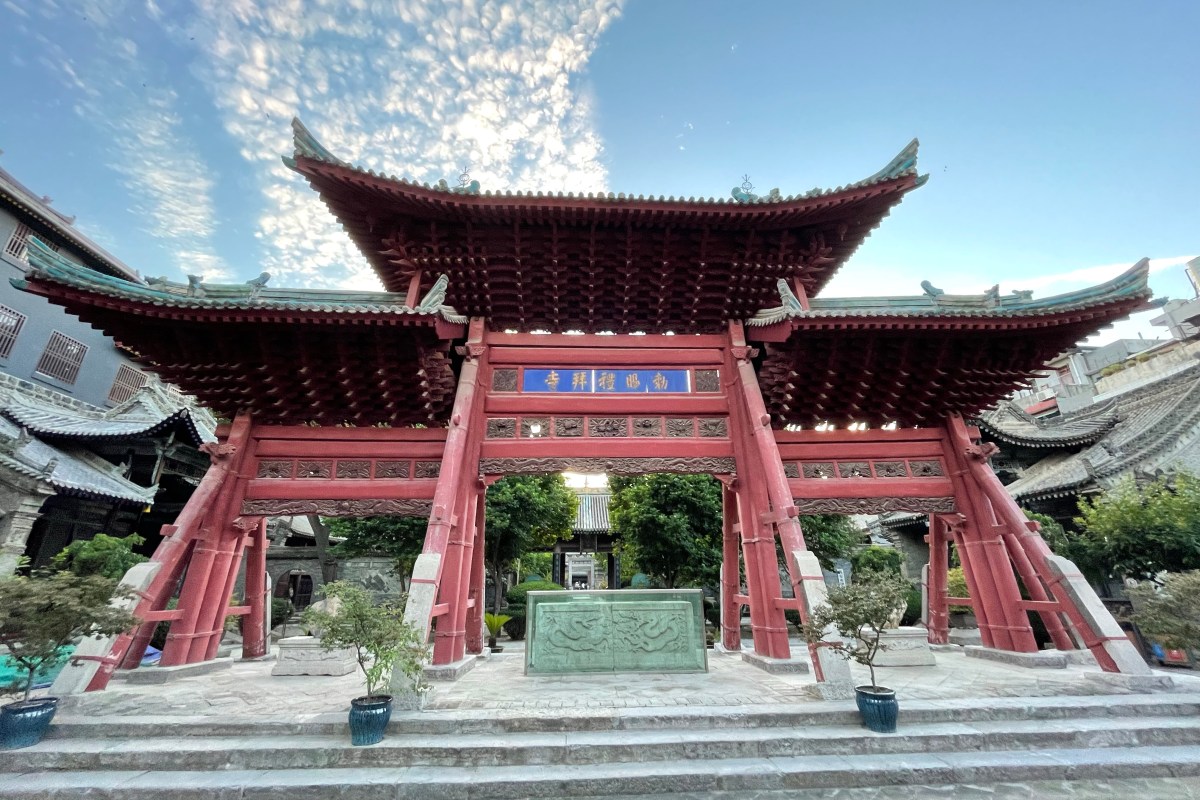
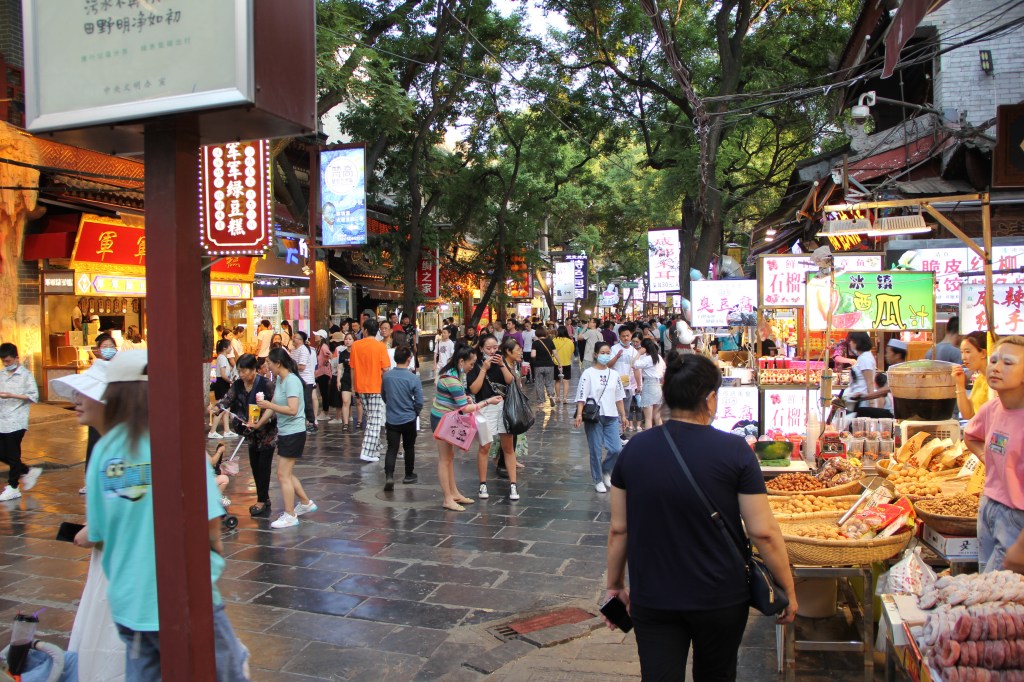
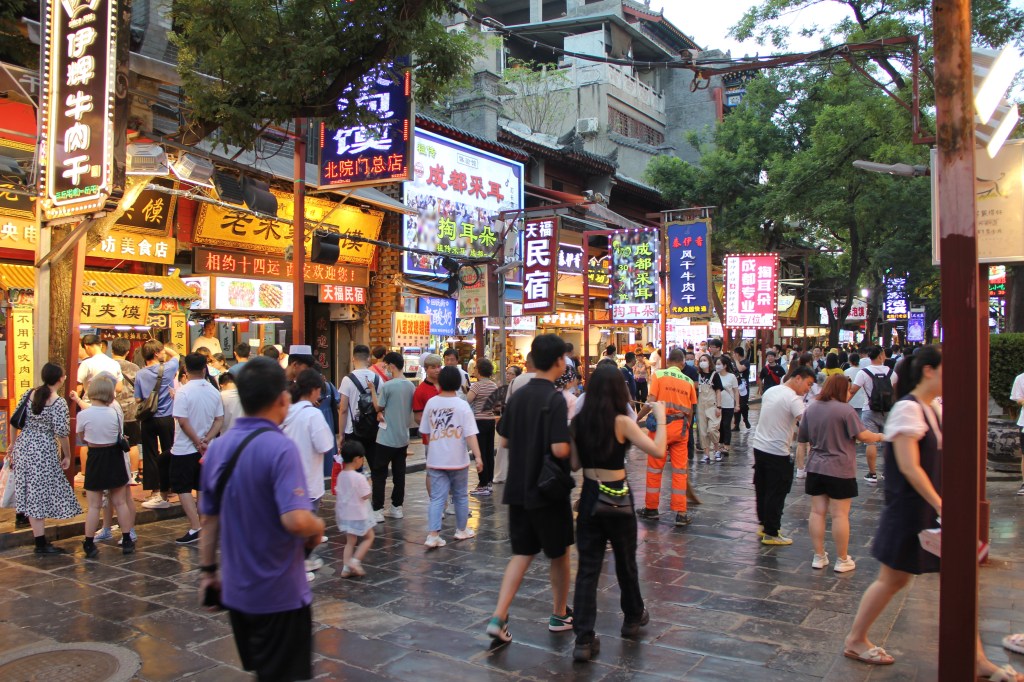
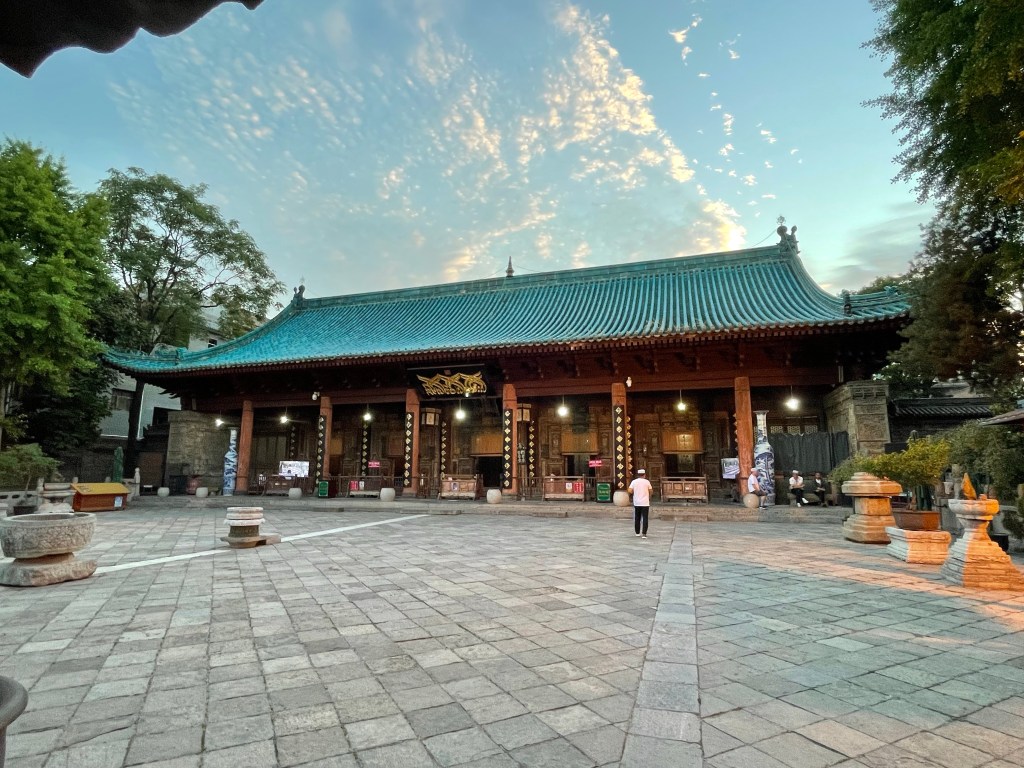
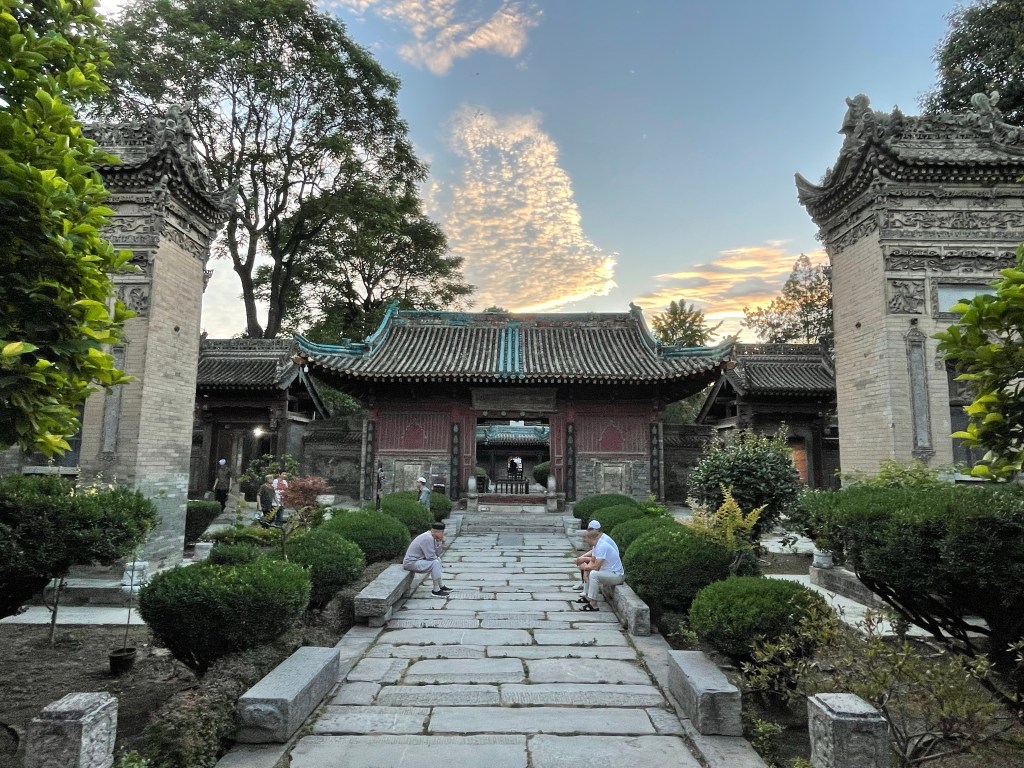
In the evening, we went to the muslim quarter. It is basically a huge area to buy streetfood, souvenirs and other touristy stuff. Hidden in a back alley (we thought we had a fake entrance first) there is „the great mosque“, which was a really strange experience. Why? Because the architecture is completely chinese, and yet, it is a mosque. The writings on the buildings are in simplified, chinese, ancient chinese and arab language. We asked some people there if they spoke arab, and yes, they do.
Muslim street
The great mosque
Garden in front of the great mosque.
Xi’an Belltower
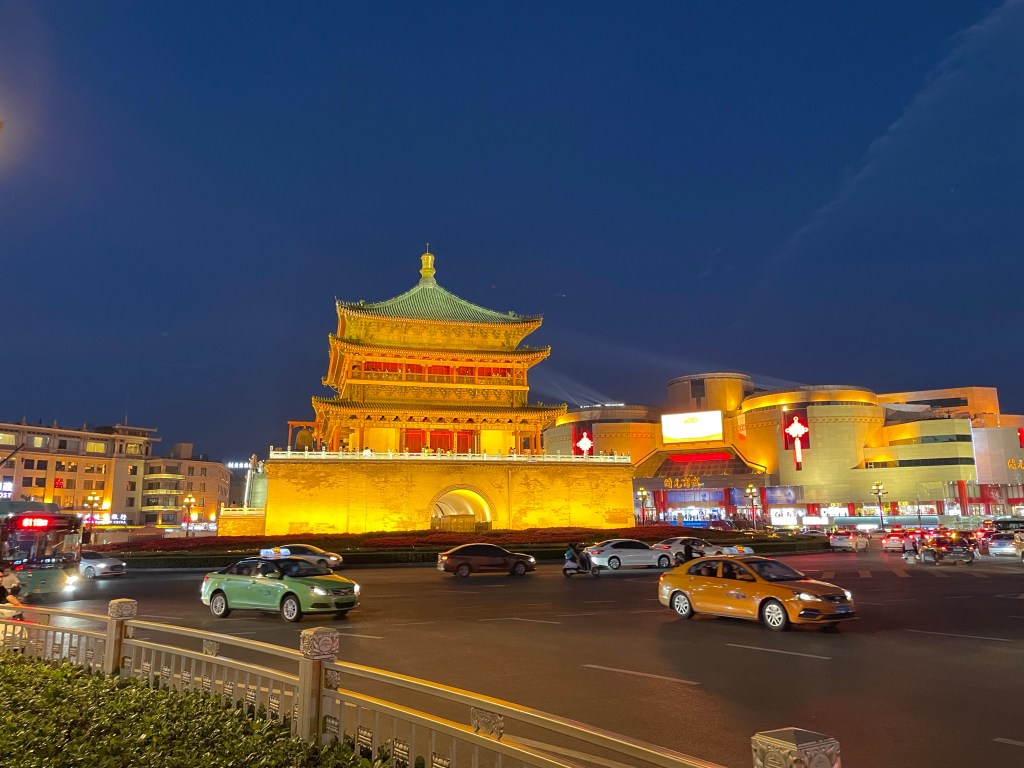
On the way back, we stopped briefly at the bell tower, its one of the iconic buildings in Xi’an right in the middle of the old town, you cannot miss it. (There is also a beautiful shopping area nearby, but we were too tired to continue.
The bell tower
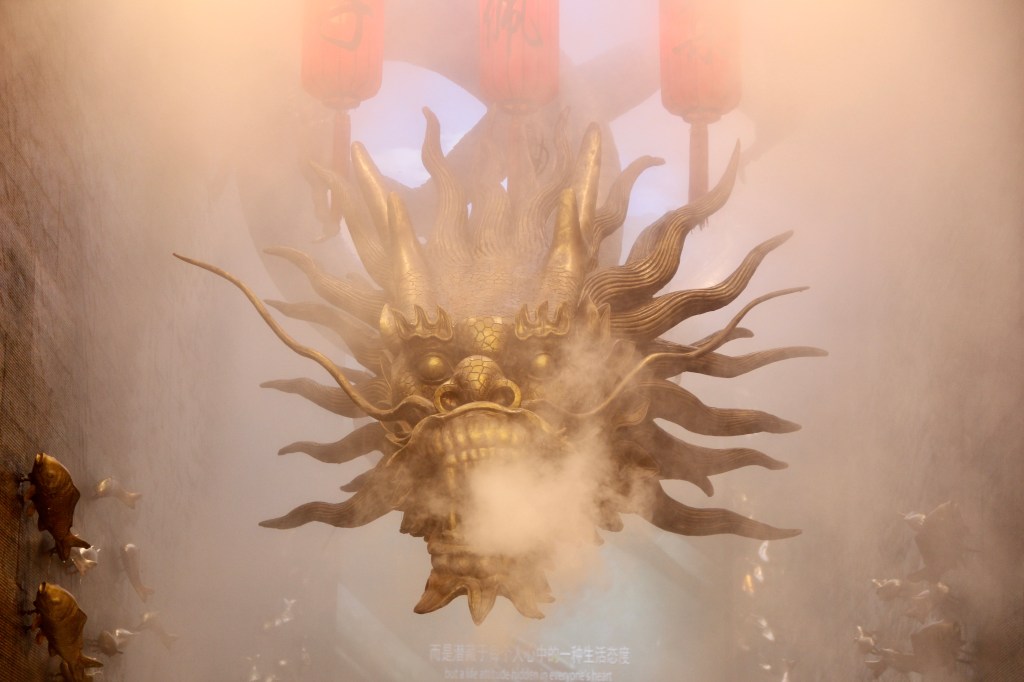
A dragon in the muslim street
Day 3
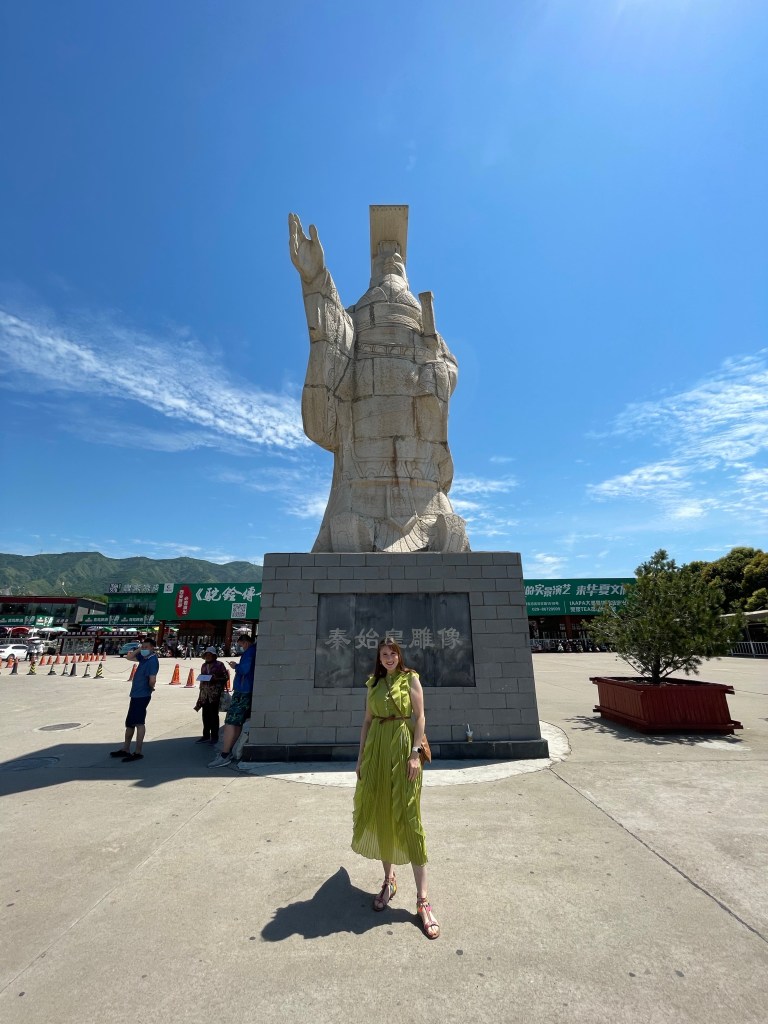
So this day we finally went to see the Terracotta Army or also known as the Emperor Qin Shihuang’s Mausoleum. We went there around 13:00, before we had a relaxed morning with some shopping and relaxing. We booked a driver for the whole evening, to be more relaxed and flexible.
Terracotta Army aka Emperor Qin Shihuang’s Mausoleum
First, we went to the terracotta army. Emperor Qin Shi Huang was the first emperor of China.
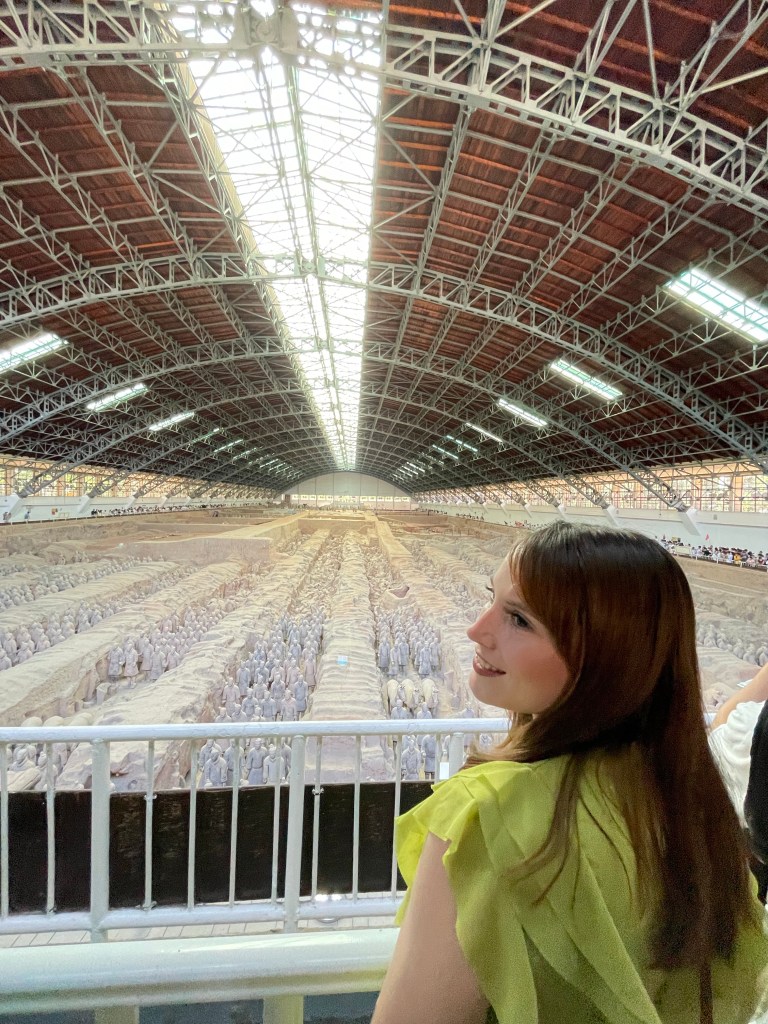
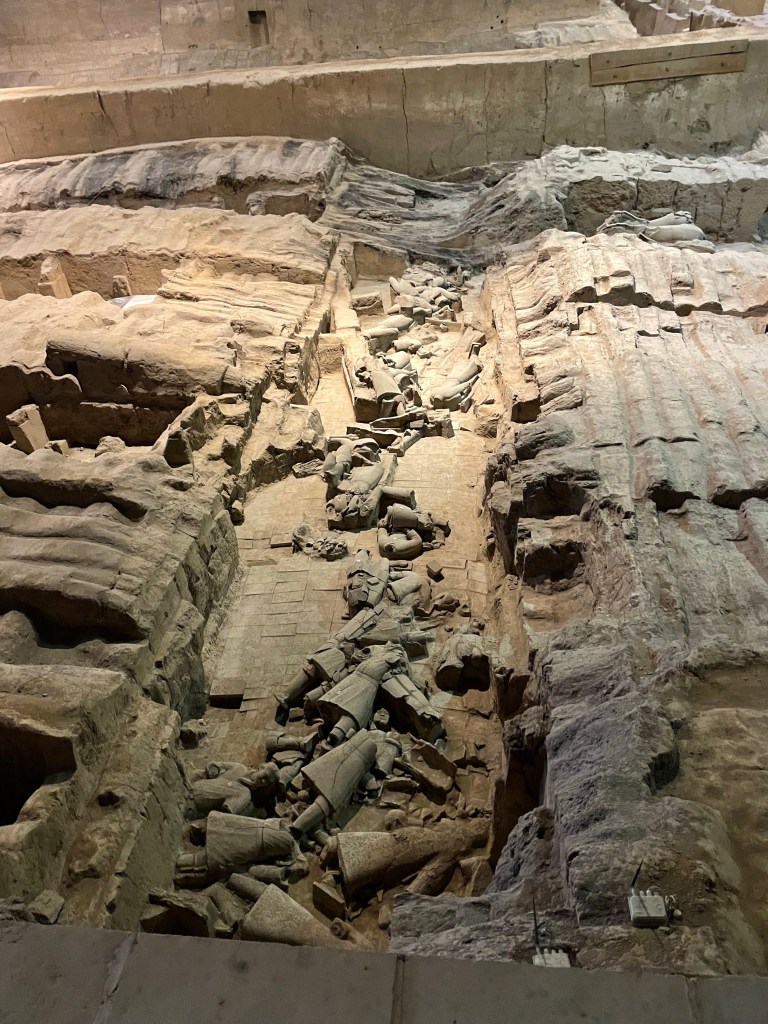
It is really stunning that it was first unearthed in 1974 by local farmers who dug a well. Ever since then, there are more figures dug up until today. Totally about 6,000 were found so far, including horses and military men. They are build in live size and every one is unique, with different faces, hairstyles, beards, cloth etc. There are „simple“ warriors as well as high ranking officers, basically a whole army, as the name suggests.
There are 3 „halls“ with different statues
That’s how the statues have been unearthed.
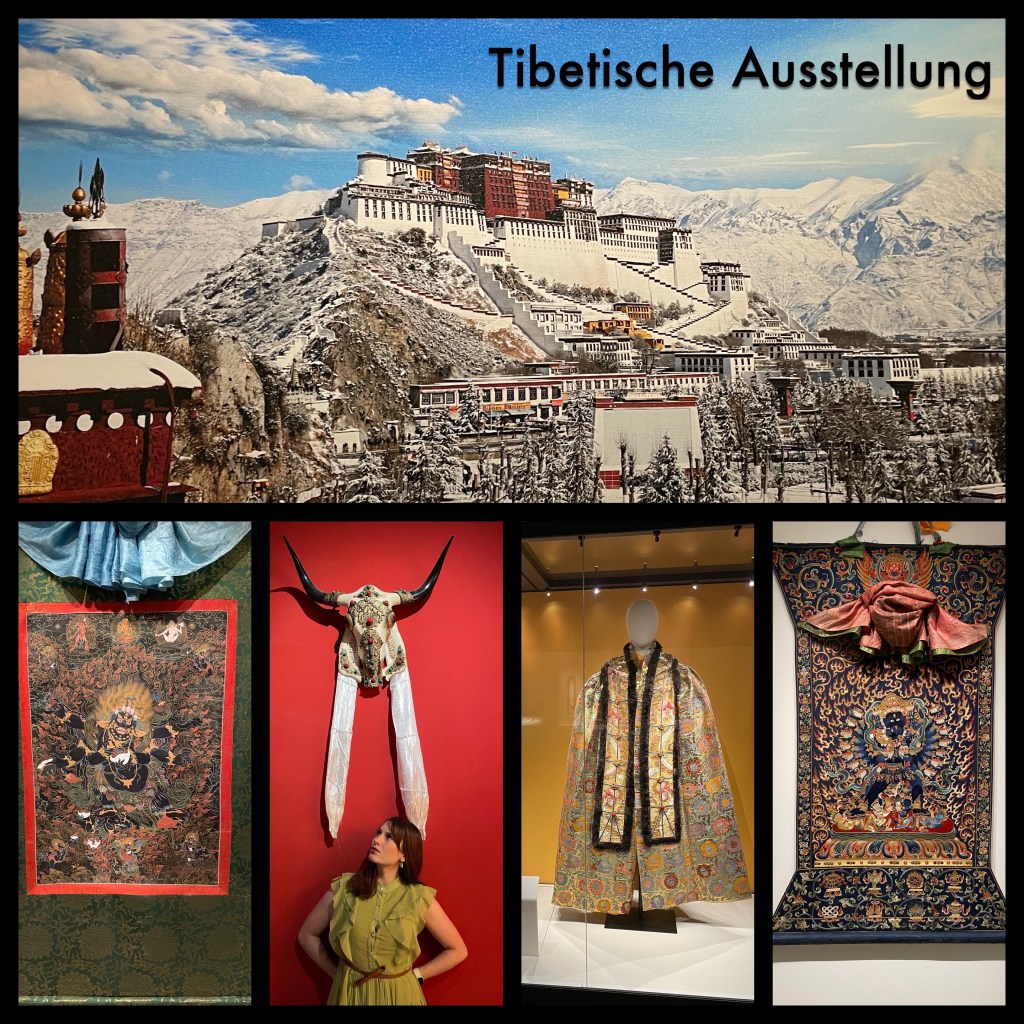
There was as well a time limited exhibition of tibetan culture, which was really very impressive. Especially the relationship to indian culture and indian buddhism was visible.
Later, we went for a specialty restaurant with local broad noodles which was delicious, but not too much.
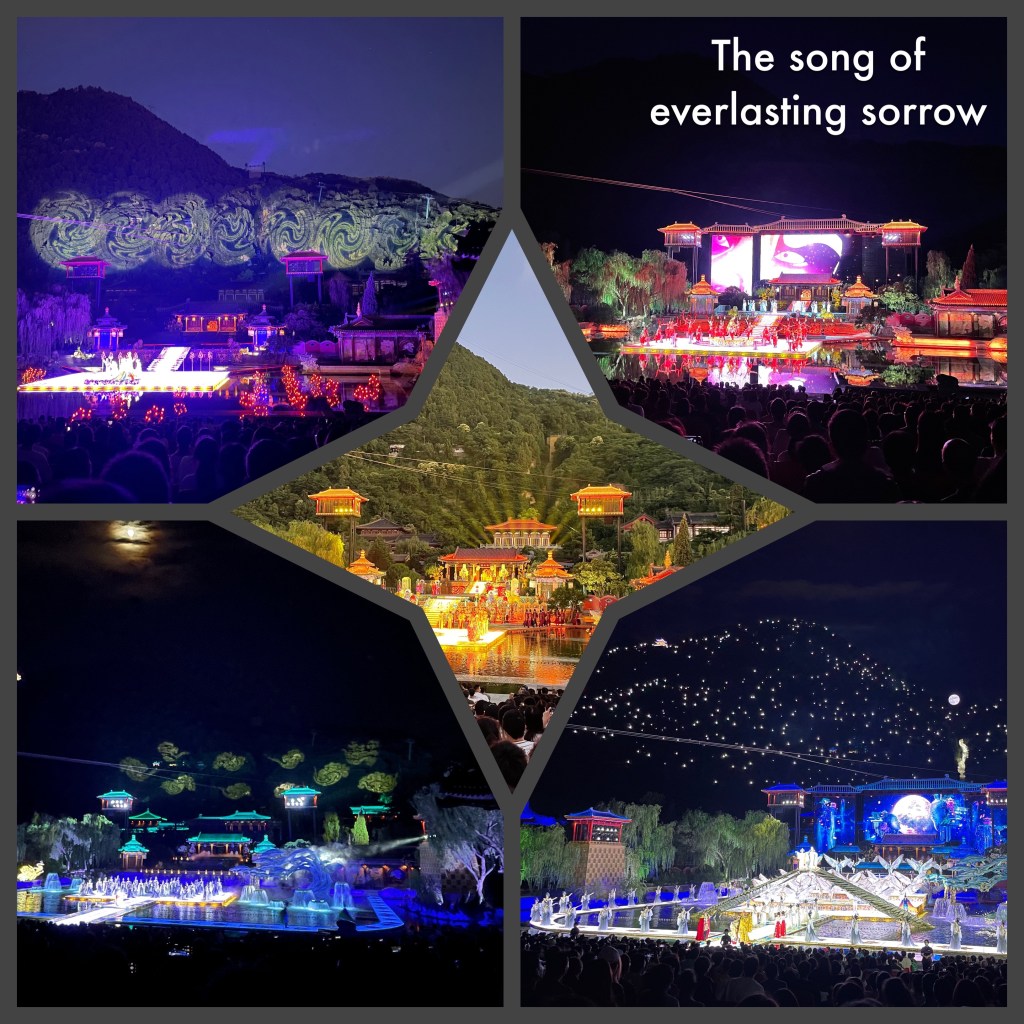
The song of everlasting sorrow (@Huaqing Hot Spring Palace)
In the evening, we saw „the song of everlasting sorrow“ within the Huaqing Hot Spring Palace. We had the tickets booked before by a travel agent, we took seats in the „A“ section (not center, but close, about 350 Yuan per person).
It was by far the best show we have ever seen. There were so many different costumes, light effects and special effects in a size that are just incredible (the whole mountain behind the show stage was part of the show). LED screens were driven out of the ground and whole buildings raised and lowered. Scenes with war were enriched with fireworks and flames, lightning and thunderstorms with real water etc.
The best show we have ever seen!
Day 4
The 4th day we relaxed in the hotel in the morning, and went into the nearby Tang Paradise park in the afternoon. There is also a show in the evening, which we didn’t see, but I suppose it must be great (the seats are on moving boats and there are multiple stages around the lake).
Tang Dynasty Park (Tang Paradise)
In the afternoon we went to the Tang Dynasty Park and later to the Joy City Mall. On 4F, actually the rooftop, there are many nice bars and you have a great view over the city. We went for a japanese all you can eat, it was „OK“ but not really that good. We still recommend to go onto the roof, there are German restaurants, American, and of course Chinese, so you will find something for your taste.
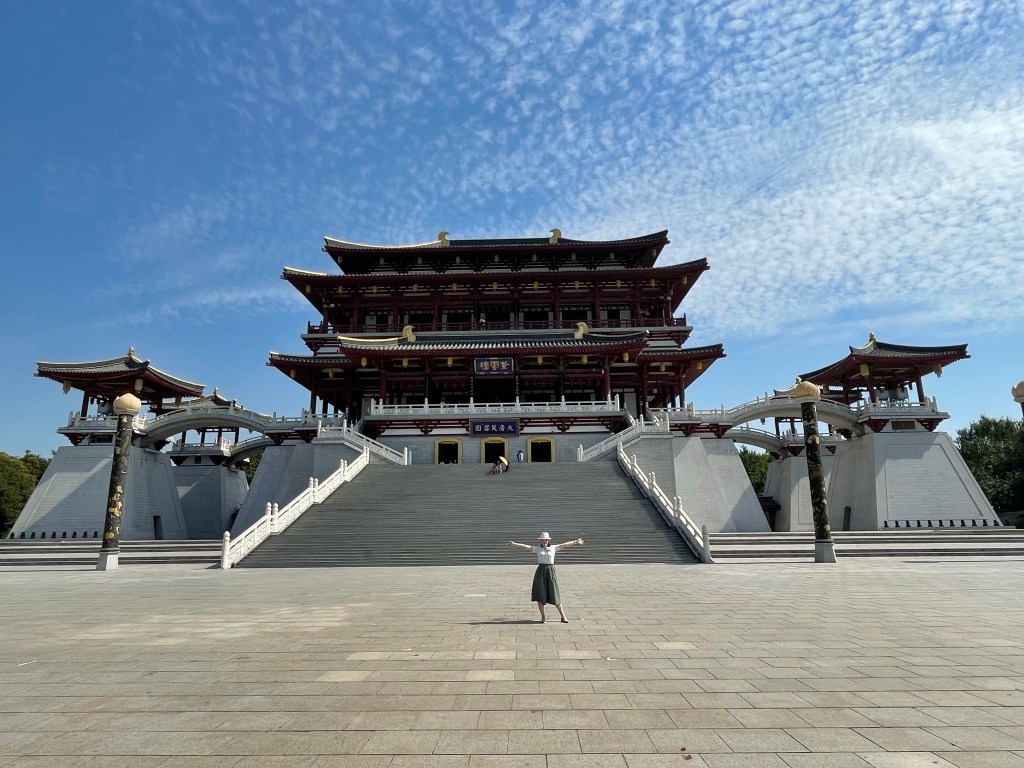
A huge building in the Tang Paradise Park.
Datang Everbright City from the rooftop of the Joy City mall
2 beautiful sections of the Great Wall north of Beijing
Tour Overview
Visiting any section of the Great Wall of China is surely on ever travelers list. We actually managed to stay in China for almost 3 years without every seeing a single section of the Great Wall. Finally, this April, i was in Beijing for business for a week and so we decided to stay the weekend.
The Great Wall of China is, depending on the sources, a network of fortifications with a total length of 10-20,000 km. Some sections can barely be recognized as walls anymore, others are restored beautifully. The main purpose was (obviously) to keep others out, especially the aggressive tribes from Mongolia in the north and west and the other tribes from Manchuria in the east.
The most known is probably Badaling, northwest of Beijing.
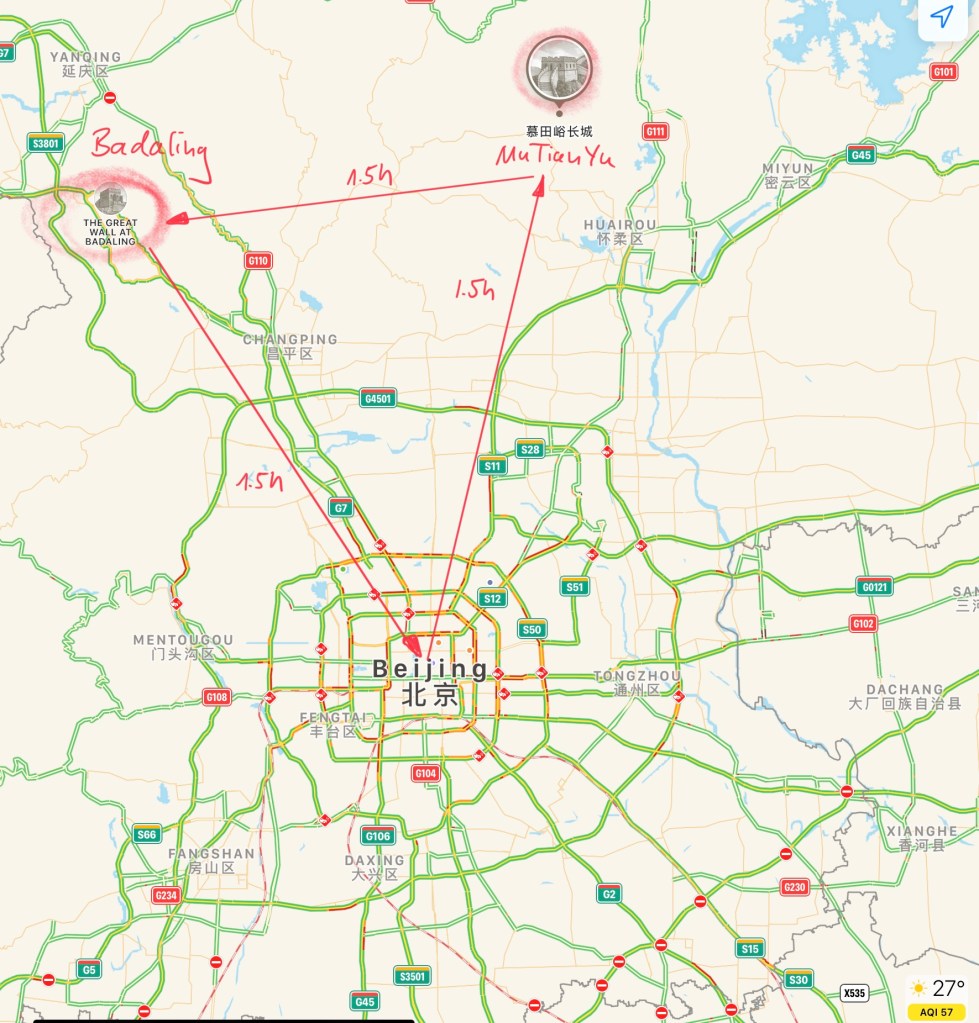
Our hotel was around downtown, near Tiananmen Square. It is not ideal if you have only limited time to see the Great Wall, there are some hotels near the Badaling section which would be a better fit. Since we wanted to see some other things as well, we chose a central location. If you want to see both sections, Mutianyu and Badaling, it will take you a whole day.
If you only have half a day and are struggling to chose which section to see from Beijing, it depends on your preference on what you expect (more later). A friend helped us to organize a driver who stayed with us the whole day, which made the tour much more convenient.
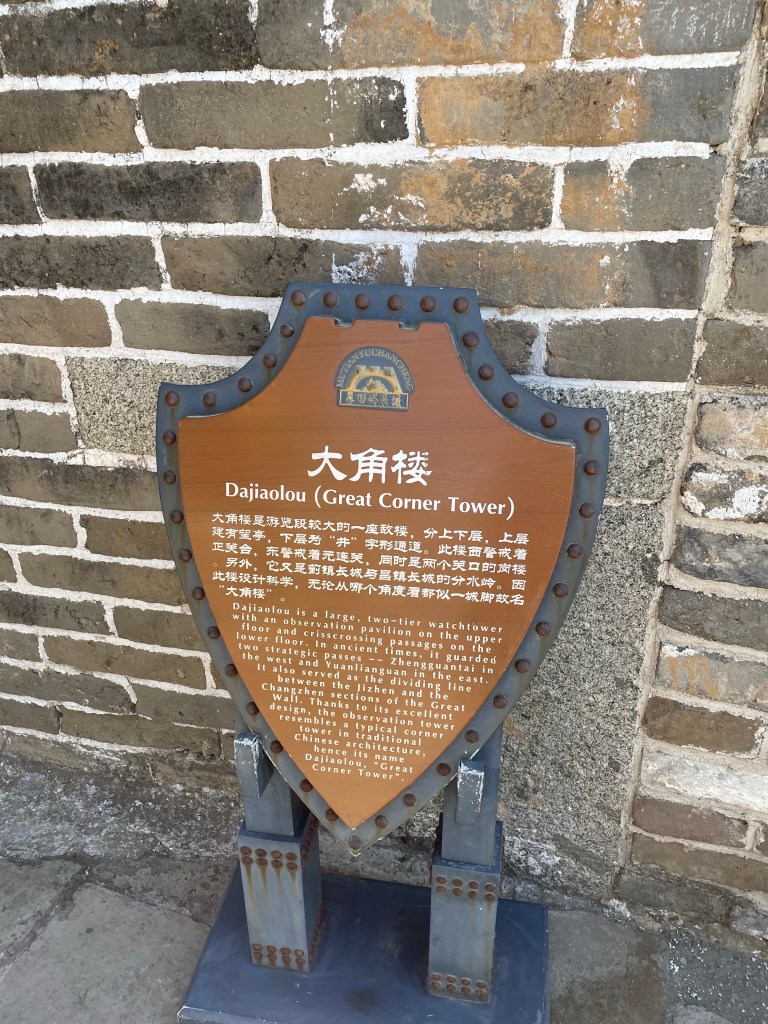
Mutianyu Section
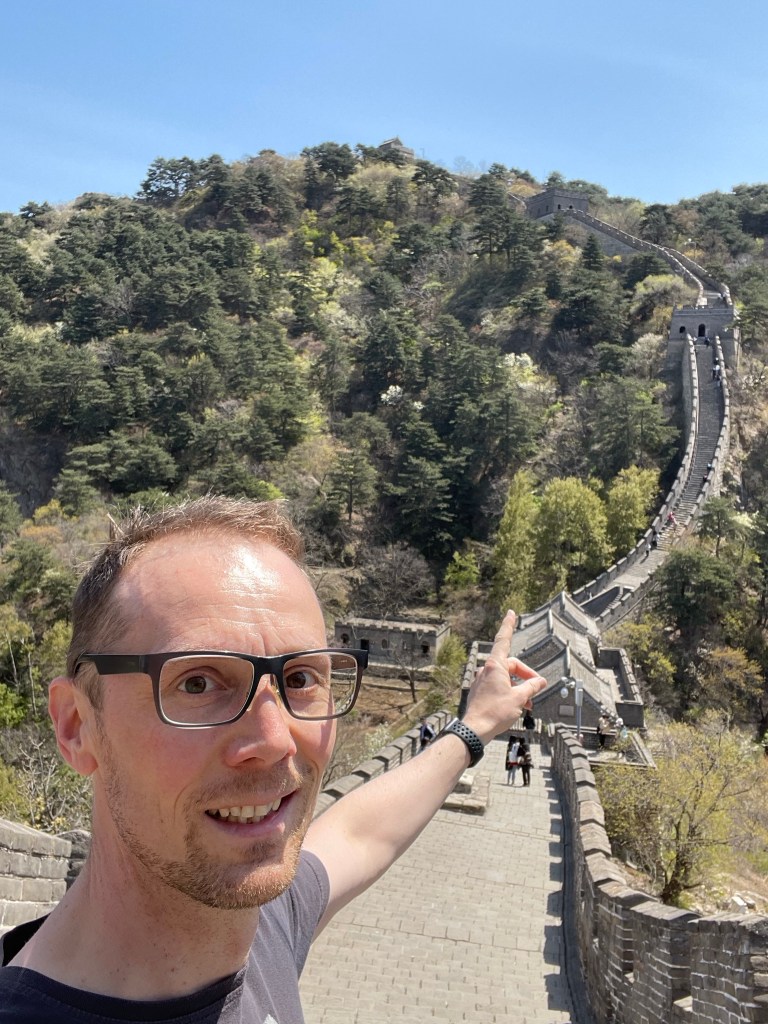
Mutianyu is the „non-touristy“ and more natural section and not visited by so many people.
We started around 7:30 at the hotel and arrived in Mutianyu around 9:15. We took the cable car up, but you can also walk, then you probably need the whole day. There is a „round track“ where you go up by cable car, walk a few kilometers on the wall and take a slide back down.
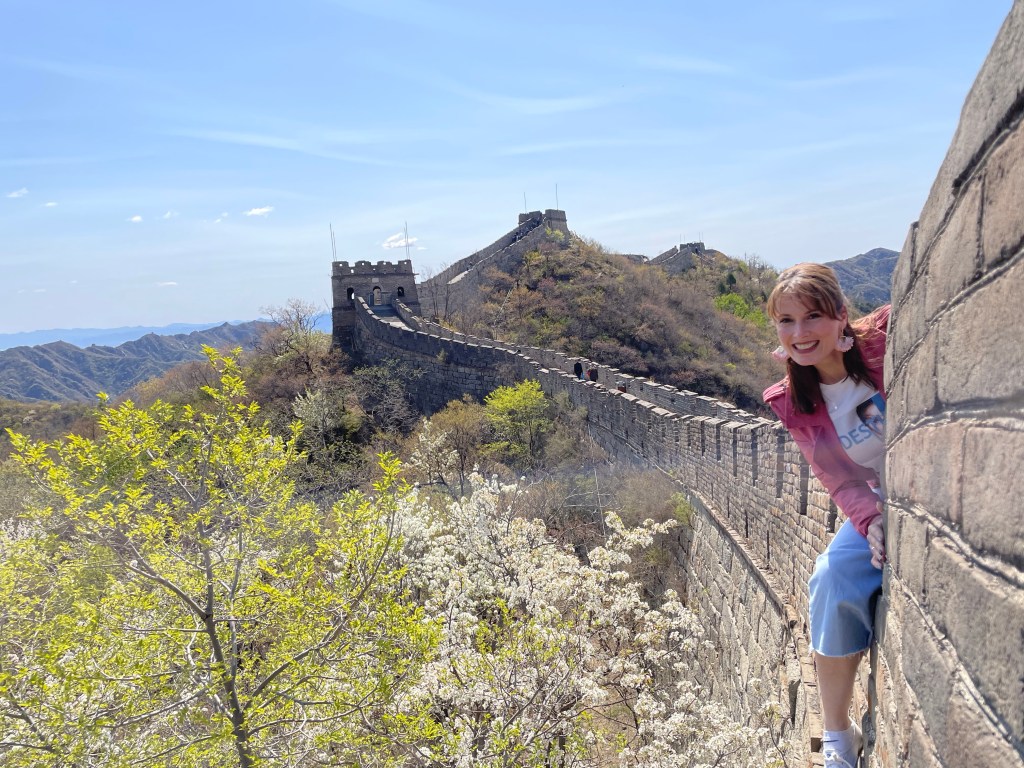
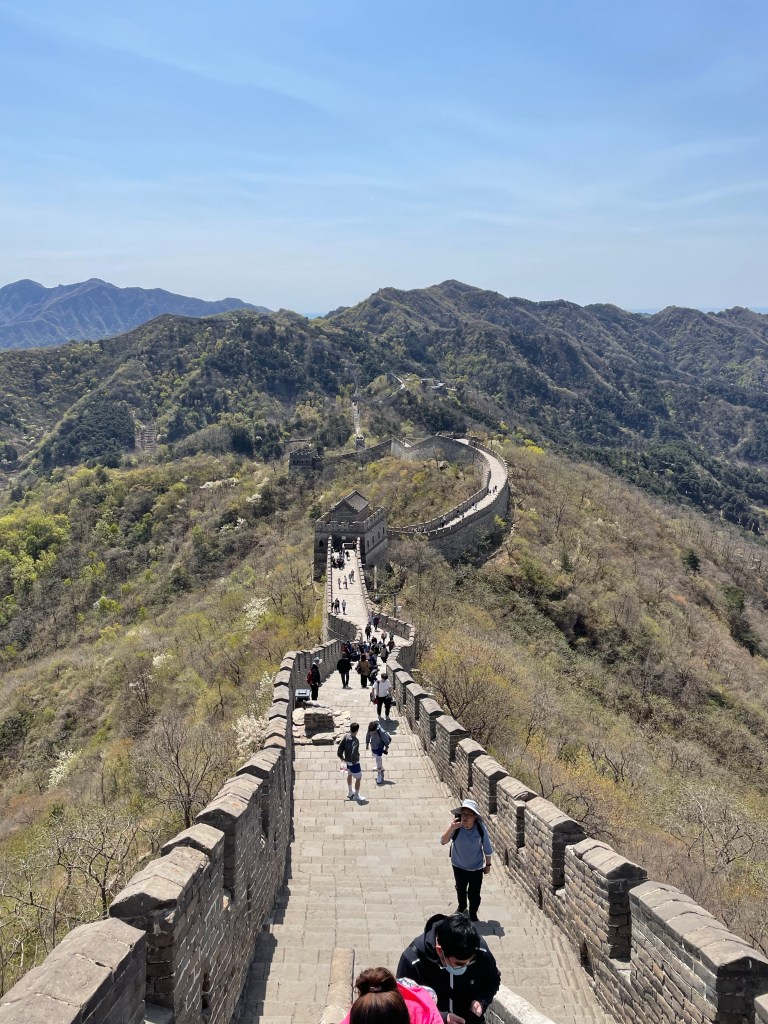
The „main walkway“ of the Mutianyu Wall
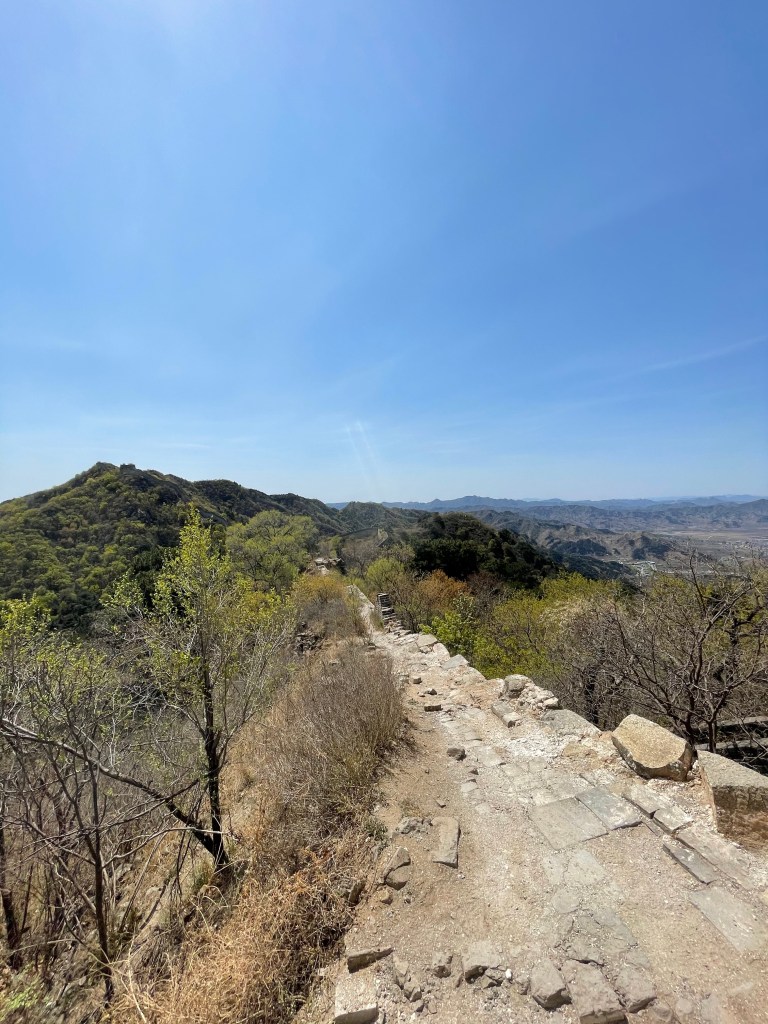
A „wild“ unmaintained section
The steps are steeper than it seems.
Firstly, we walked a bit west, for maybe 20 minutes and it looked like you can hike on forever. As we had a tight schedule, we turned back and after going through a couple of towers, there is a toboggan which leads you back down the wall.
I was tempted to hike up the next hill but it looked really steep, and it was. The steps were up to half a meter high and only very narrow, so first you will need a really good endurance to go up and a really good balance and coordination to go down. On the top, there is small „fortress“, from which there are 2 or 3 „wild“ wall sections, which are not open for walking due to risk of accidents. You can however climb through one of the windows and go on, although it is probably not allowed. I chose not to, since my wife was waiting at the toboggan station. It would have been much more fun if the people in front of us had figured out how to release the brake.
On the base station, there are several options for some fast food, but not any „real“ restaurant, so we just took a coffee, which was surprisingly good and surprisingly expensive.
Badaling Section
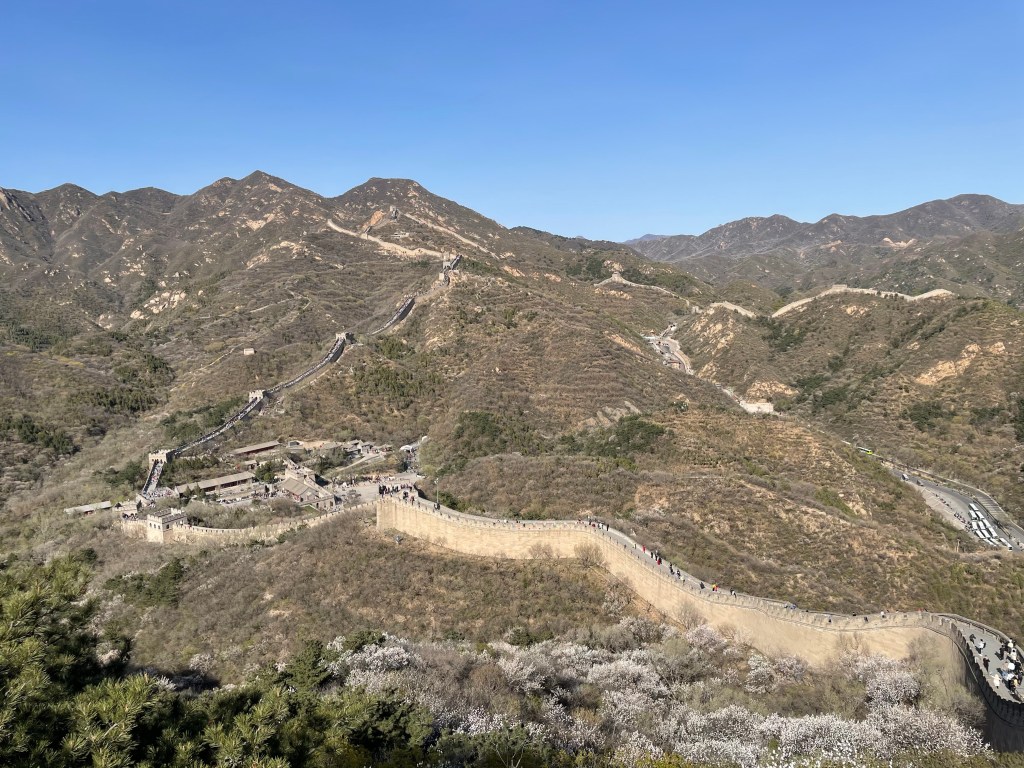
Badaling section is the most touristy part of the Great Wall and also the part which is restored and maintained best. It seems that at any give time, there are always many tourists.
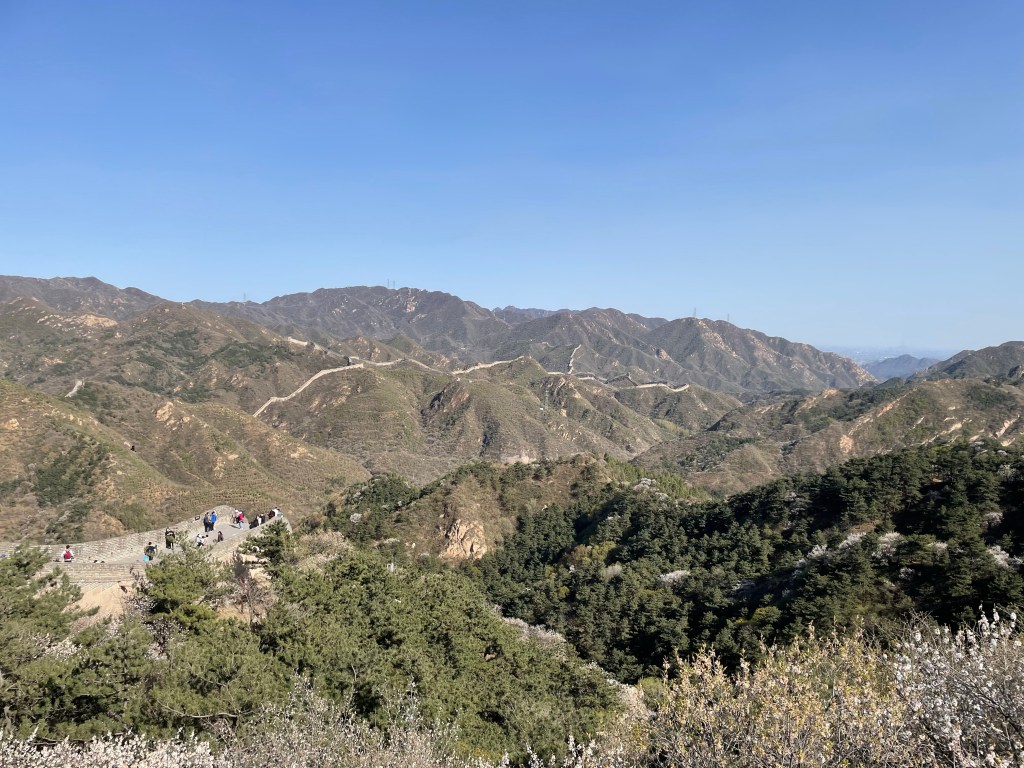
Around lunch time, we drove on to Badaling, which is another 1:30-2 hour drive. The scenery is breathtaking as you go through the hills and every now and then you can spot the wall as it appears along and between the hills.
We arrived around 15:00 and were a bit concerned that we may not have enough time left. At the main parking area, there were literally millions of people. Luckily, they all headed back home and we had an easy time going up.
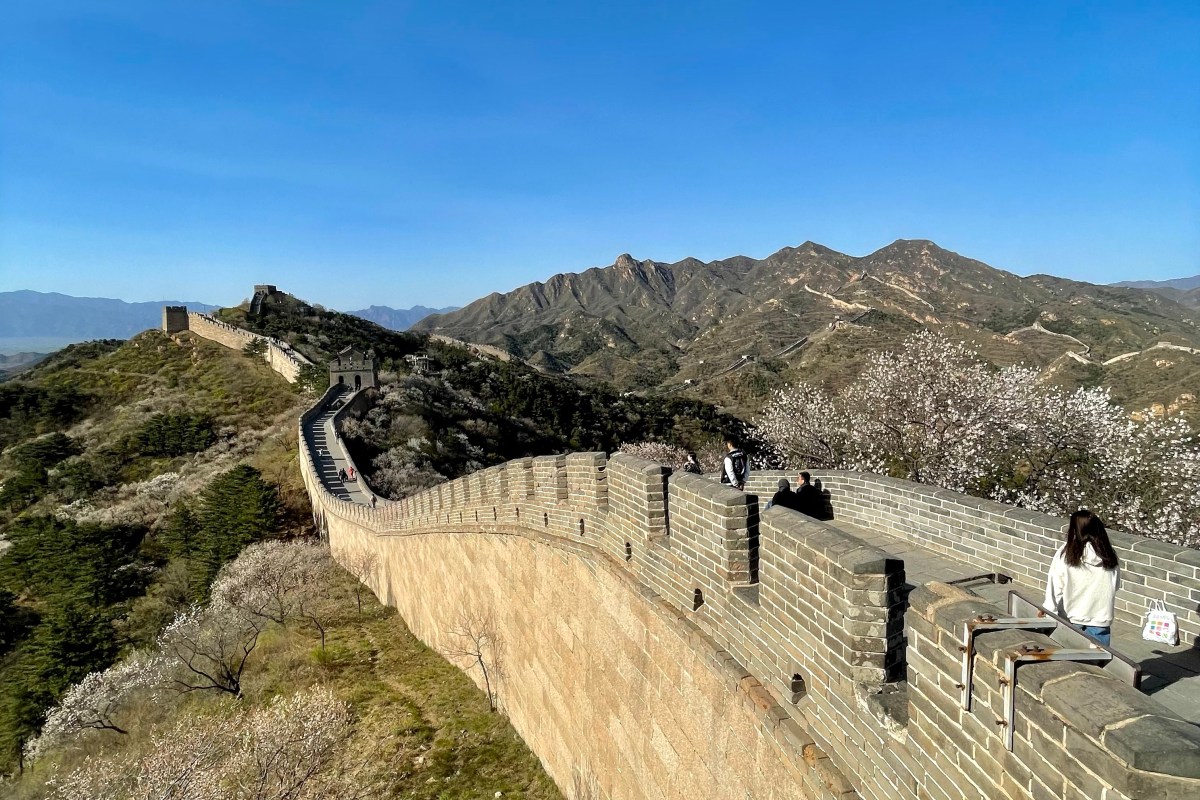
There is a cable car, which was closed due to heavy winds. We were able to get on a rack railway. The tricky part was that the last one headed down 16:30. So we had to hurry a bit, but it was still enough time to get a glimpse of everything. If you want to take the grand tour though it is not sufficient.
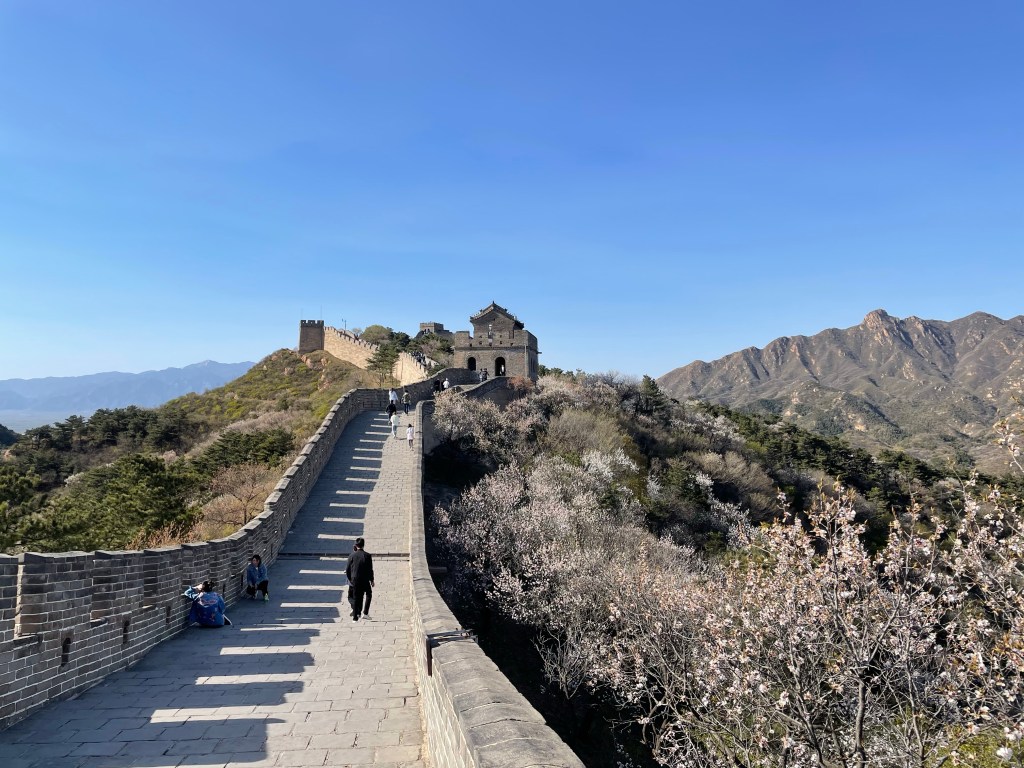
This was the greatest view
This is the „main gate“ which was used as entrance to Beijing.
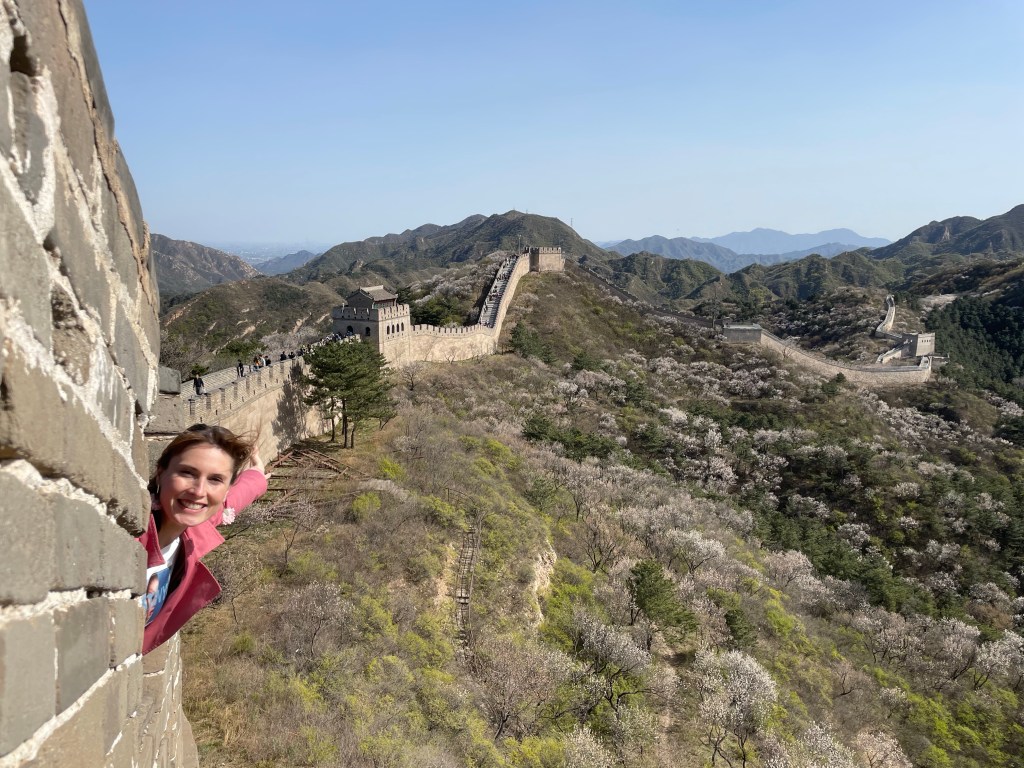
All the trees were covered with blossoms.
It’s just incomprehensible how the wall could be build back then.
Final thoughts
Seeing the Great Wall of China and actually walking on a thousands of years old man made marvel is just awe inspiring. My wife and I are both engineers and still we could not figure out how the wall could have been build back then just by logical thinking. It is hard to imagine how long a certain section took to build, how many people worked on it and how the logistics (e.g. getting stones and material there) worked. Even though there were surely casualties and probably forced labor as well, it is remarkable what a nation or humans can achieve if they are really dedicated to something.
Even thought the Badaling section was more beautiful, i like Mutianyu better. I would love to come back for a multiple day hiking on the more „wild“ sections (there are many).
If anyone knows any good literature about how the wall has been build, I would appreciate a comment or message. I hope you enjoy reading!
A beautiful city to visit with magnificent nature parks nearby, and of course the border to the DPRK.
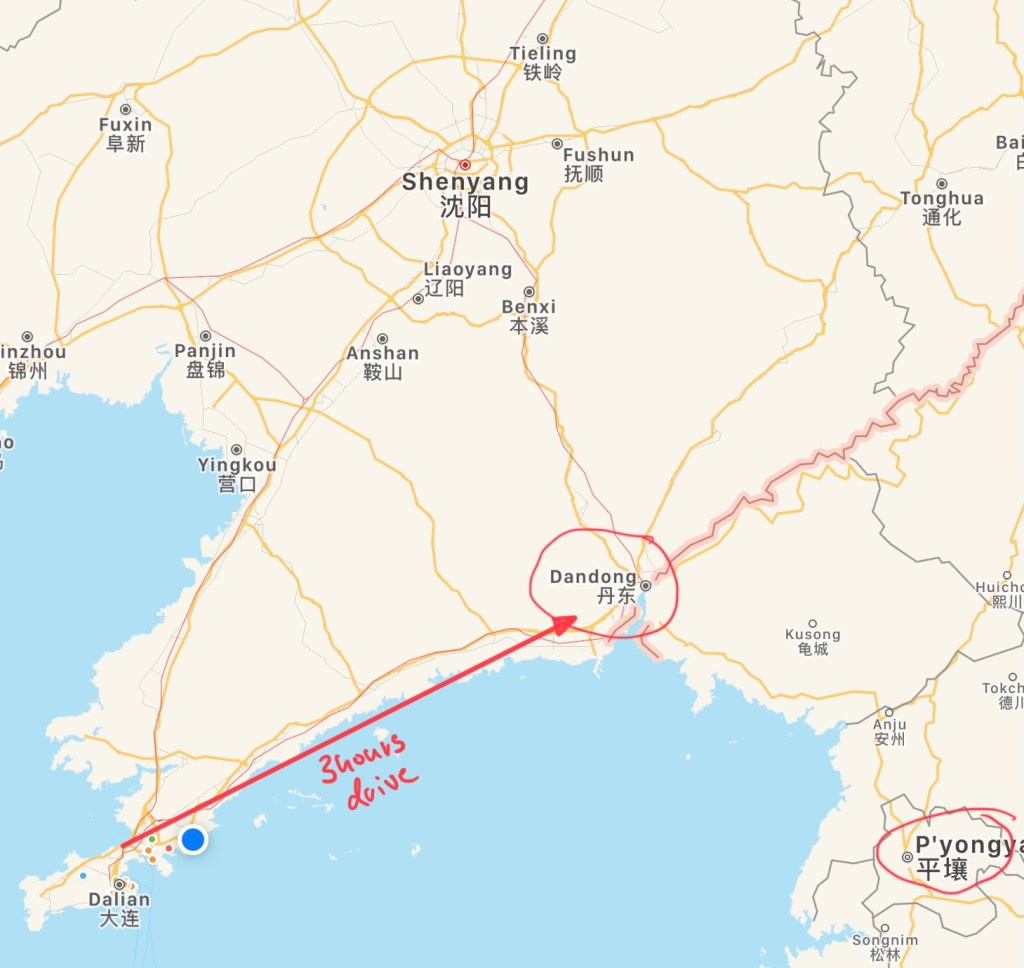
Dandong was on our travel list for a long time, for numerous reasons. One, it is only a 3 hours drive from Dalian, where we live. Two, it is a city which is located directly at the border to North Korea and three, there is a great national park called „Phoenix Mountain“ nearby. So finally we decided to take a drive there during the 5 day May vacation. We were a bit concerned that there may be too many people as usually during the longer holidays, many people travel. Fortunately, it turned out to be not as crowded as we imagined – perhaps because we travelled on the 3rd and 4th holiday, who knows.
We stayed in the „Wanda Realm“ Hotel, which is located directly in the city centre at the Wanda Plaza. There is also a huge mall, Starbucks, cinema and many restaurants nearby.
Map and Overview
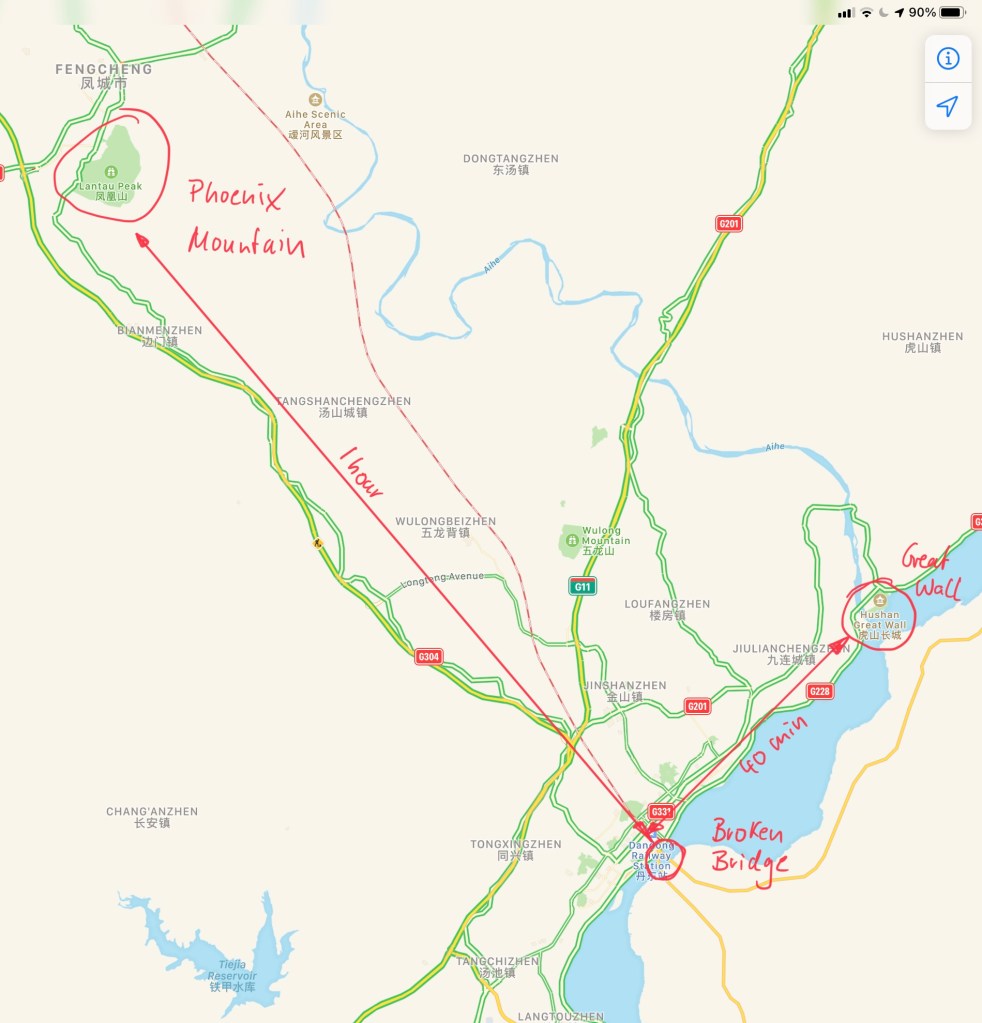
If you are wondering where Dandong is and how far it is to get to each spot, see the maps below.
Dandong in relation to Dalian and Pyongyang
Sights we visited in Dandong
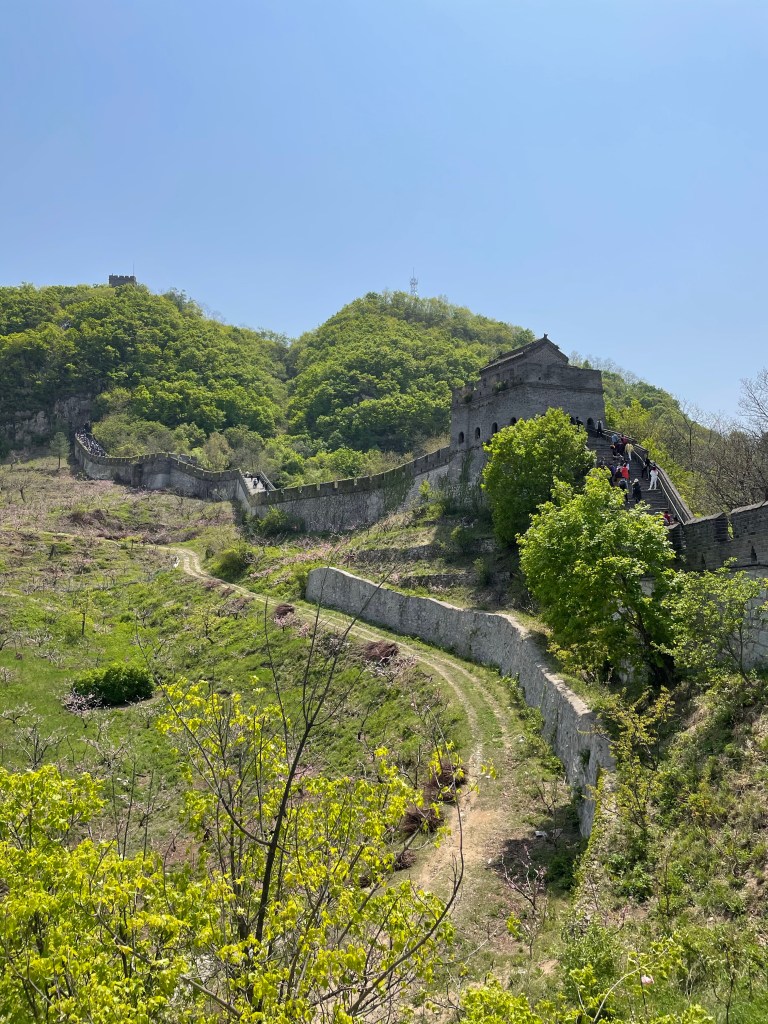
Hushan Great Wall and border to the DPRK
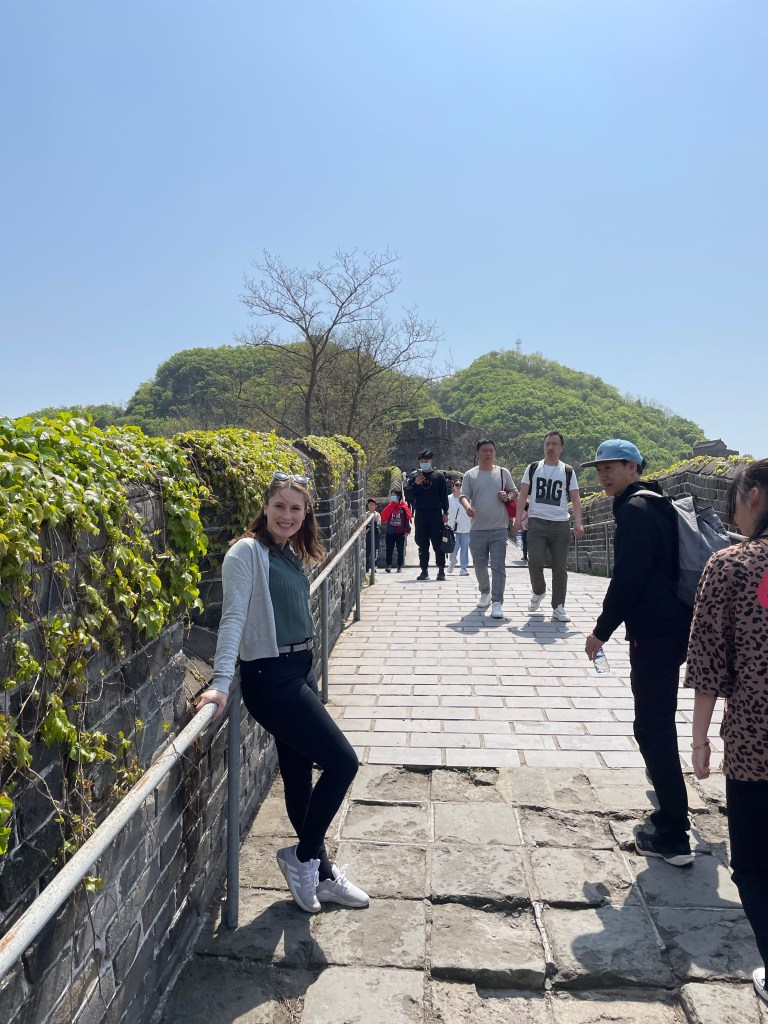
Before we checked in to the hotel, we visited the Hushan Scenic Area, where we could walk on a small section of the Great Wall. We are not sure whether it was a „real“ piece of the Great Wall, it looked not old at all and we heard it had been build for tourist purpose. In any case, it was a nice walk and the wall looked very beautiful.
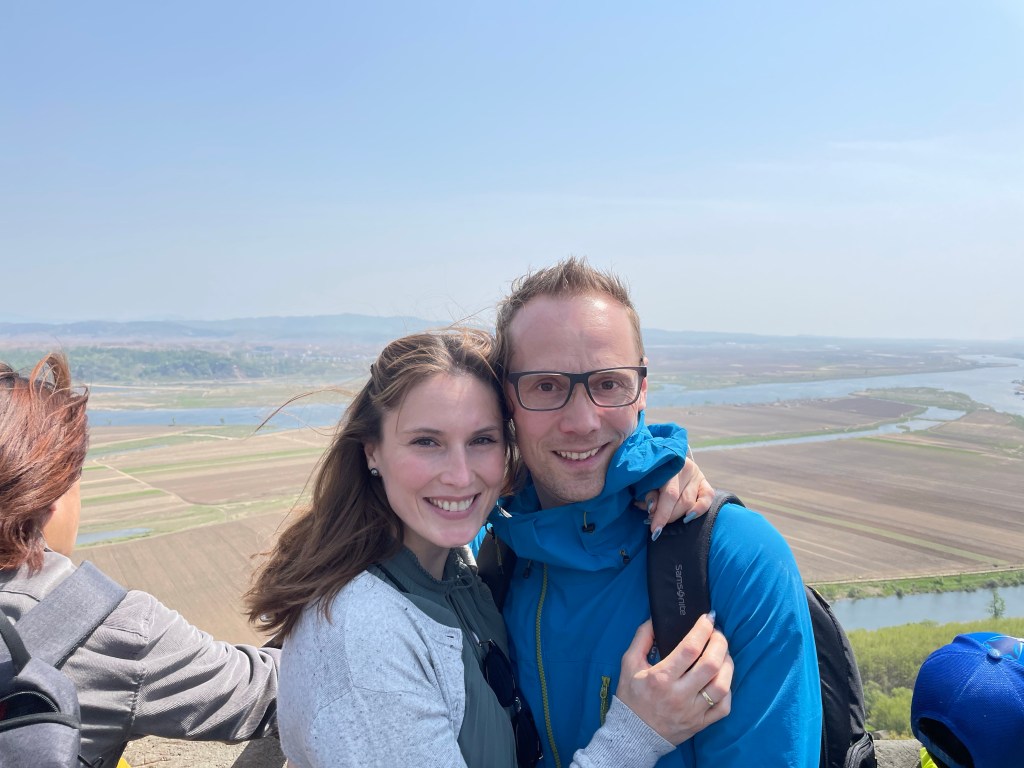
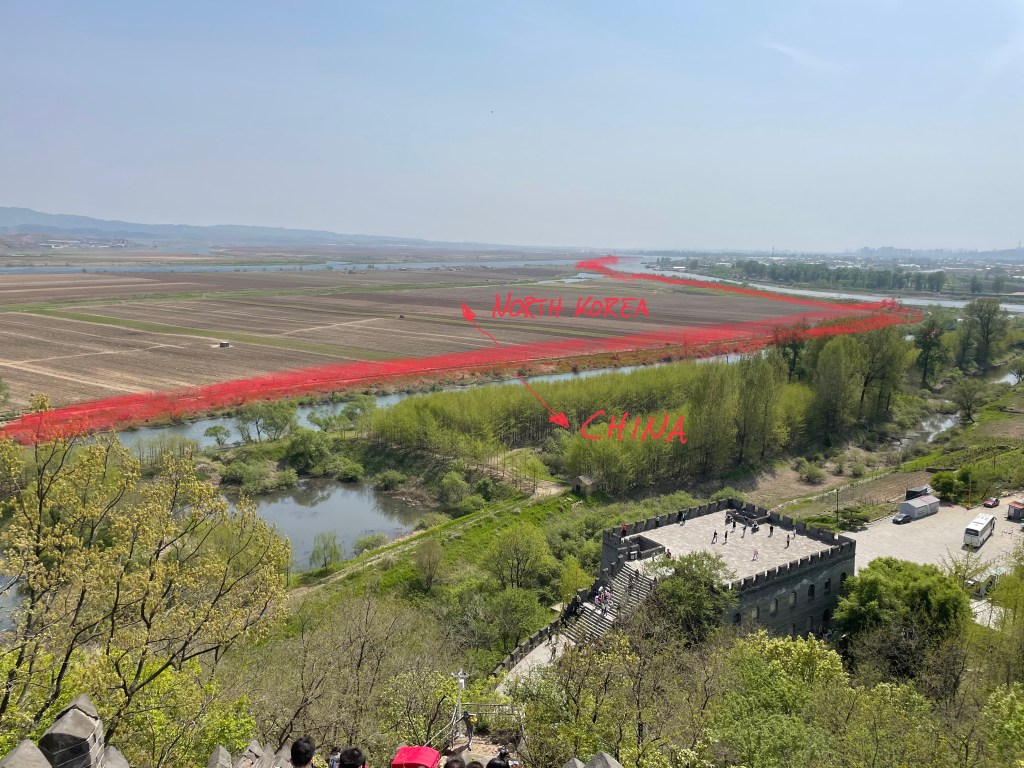
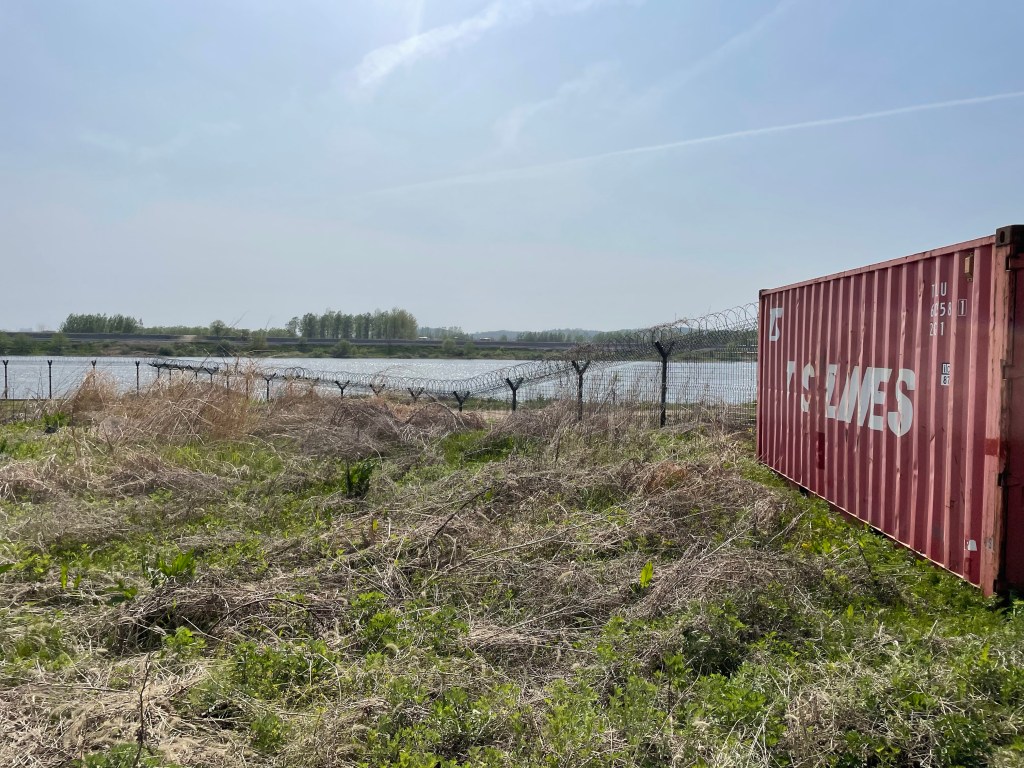
From the top of the hill, we could look directly into North Korea. It was not too exciting though, there was not really much too see except for some border patrols, a few farmers doing farm work and a few houses. later, we could walk on a small road directly next to the river which marked the border.
In the back, you can see North Korea.
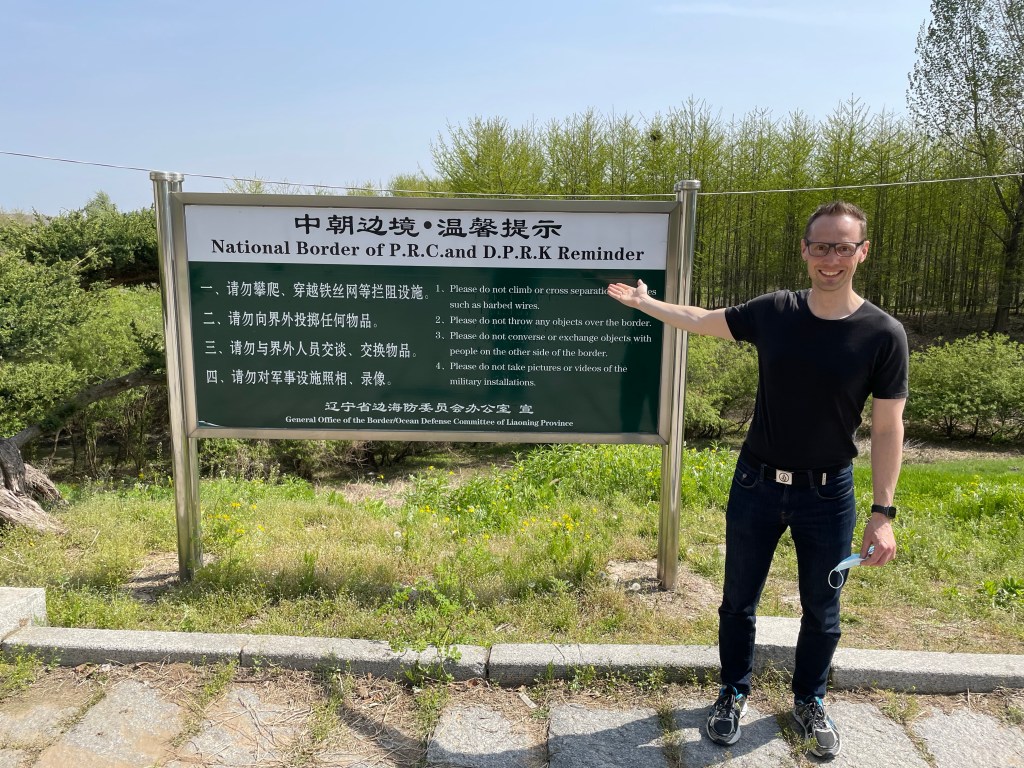
Official border sign
On the way back, we came across many small shops or stands where you could buy food and small souvenirs. The roasted nuts and dried (and fried?) fruits were the best, also they had fresh strawberries everywhere.
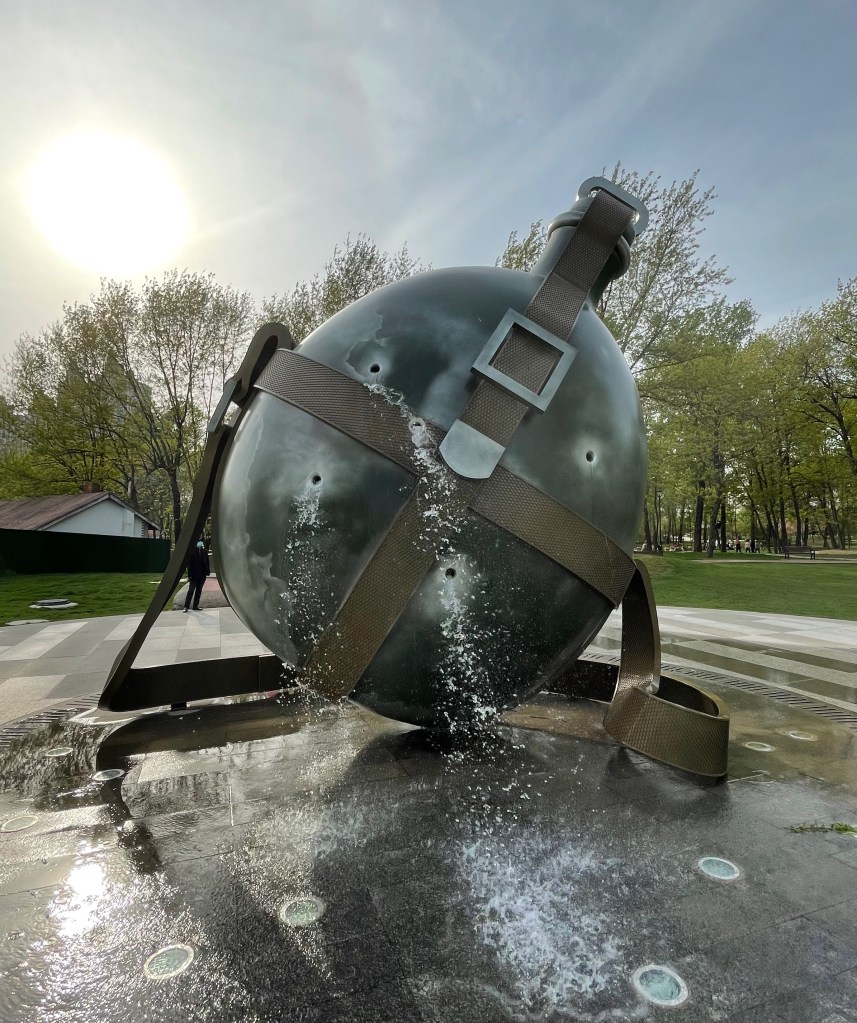
On the way to downtown, we stopped at a new park which was just recently opened and had a „Korean War Memorial“ theme. There were some really cool sculptures.
Broken Bridge
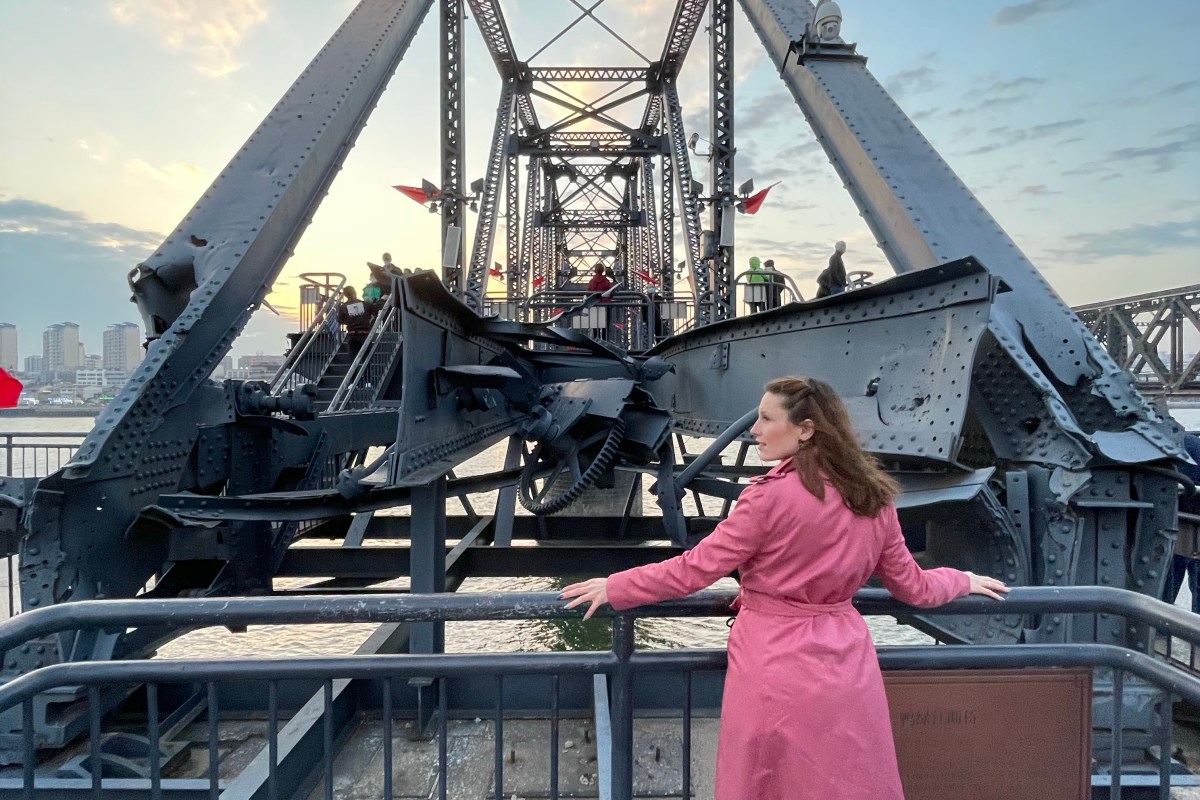
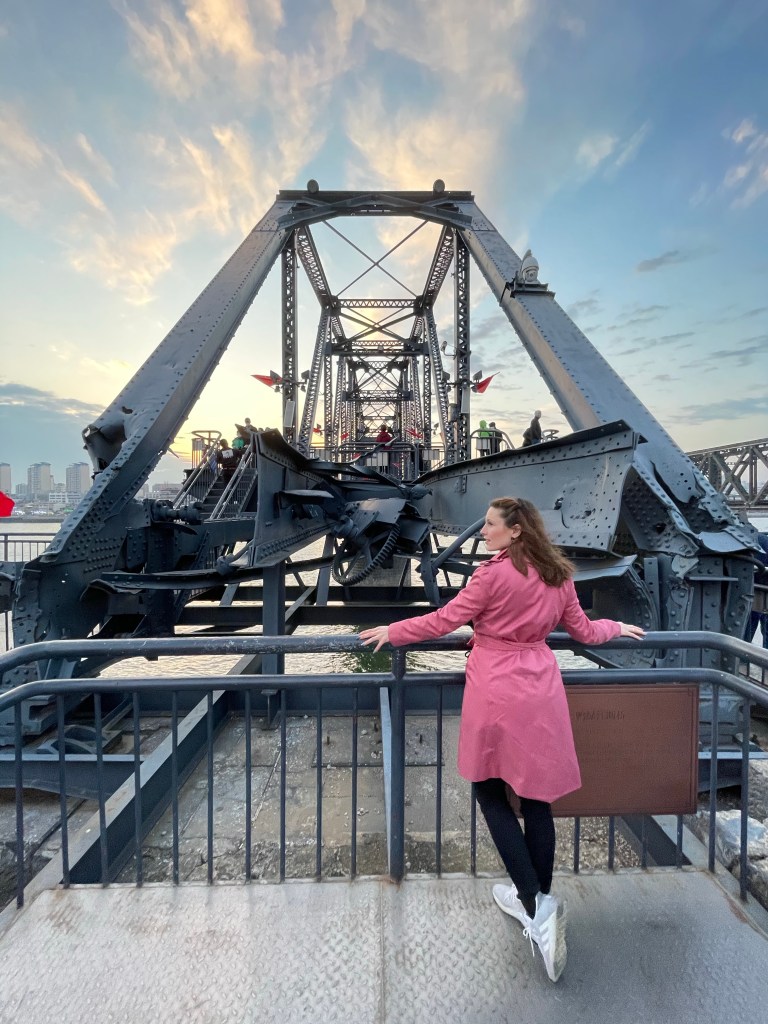
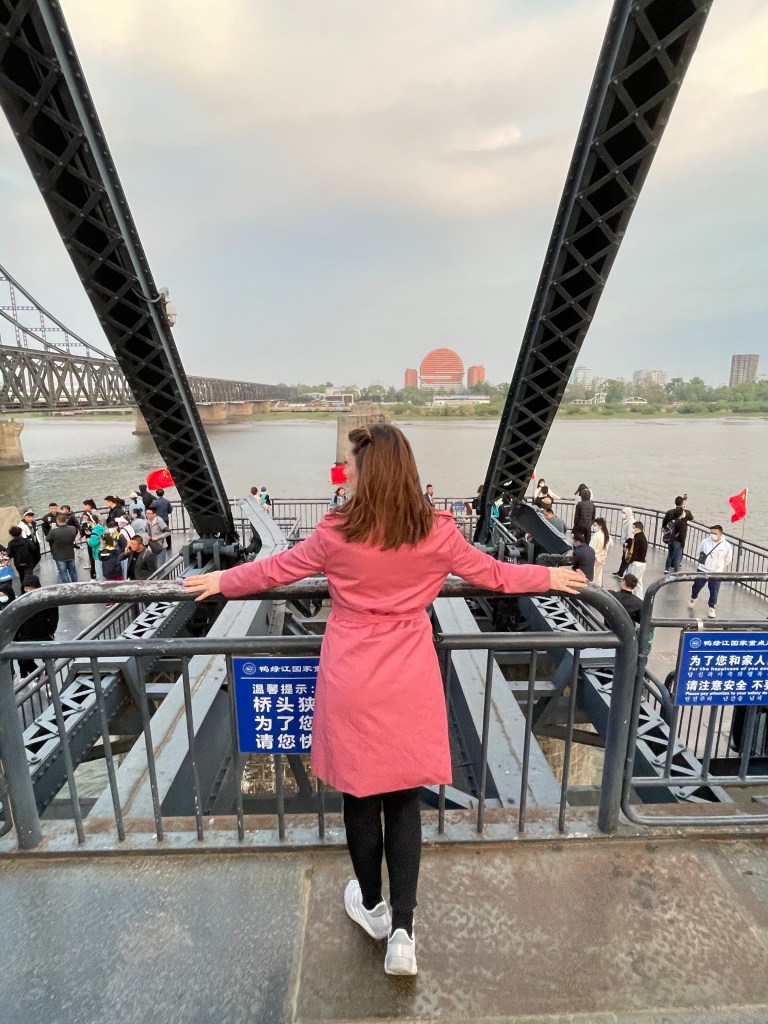
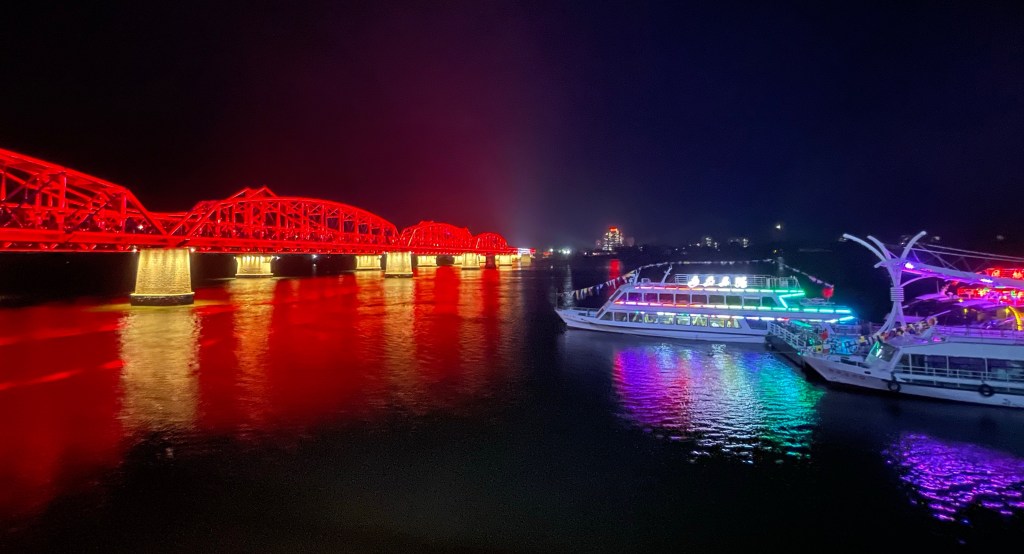
In the evening, we went to the „Broken Bridge“, the remains of a former bridge to North Korea which had been bombed during the Korean War.
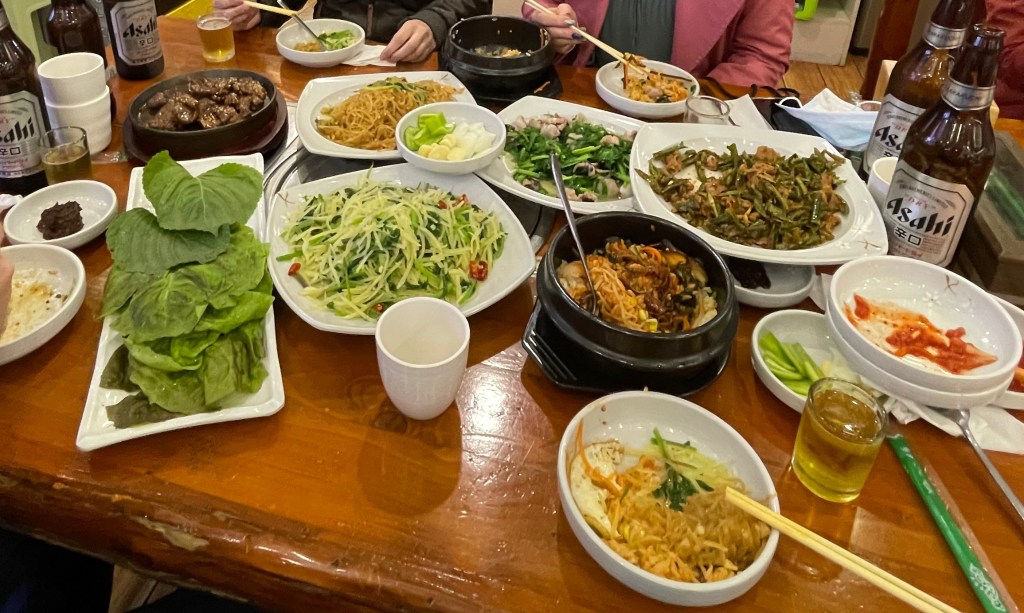
After seeing the brigde during a wonderful sunset, we bought a few souvenirs (North Korean Money) and set out to find a North Korean restaurant (there are many). We found a Restaurant, which was supposedly (according to Dianping) the best in town. We had to wait nearly 30 minutes, but were not let down. The food was delicious!
Broken bridge at night.
Delicious North Korean food
Phoenix Mountain National Park
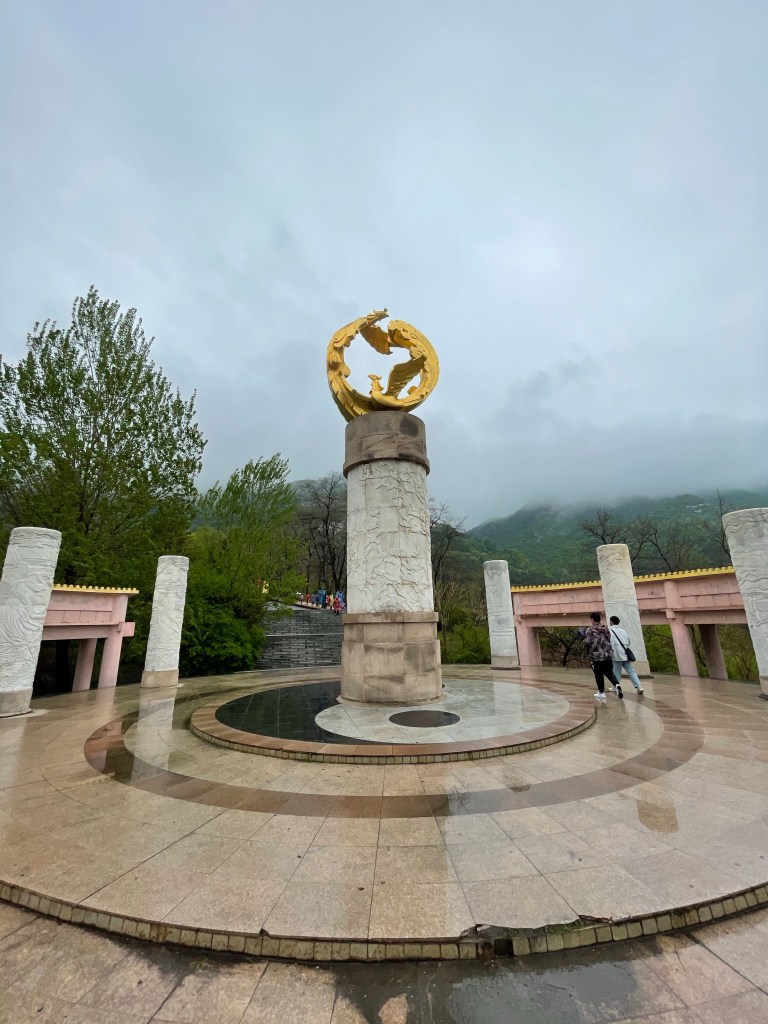
On the second day, we took a drive about 1 hour north to a place called „Phoenix Mountain“. It is sort of a national park / scenic area. The entry fee is about 80 Yuan, but there are some additional cost inside for buses, cablecars, glass bridges etc.
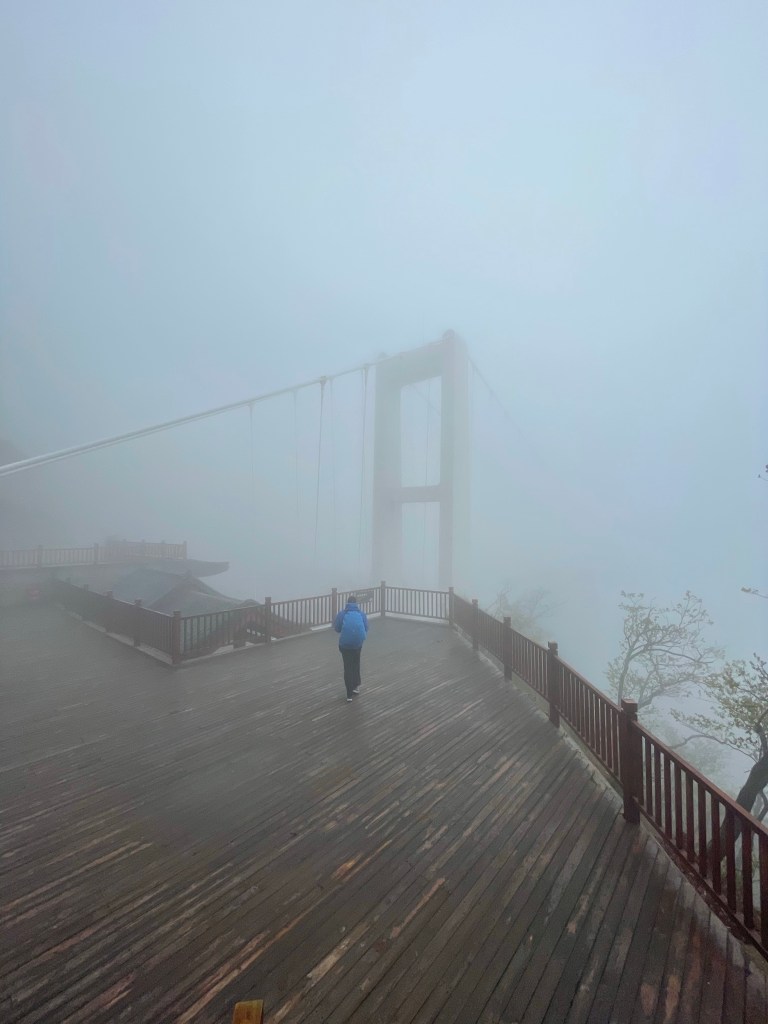
The weather was kind of foggy and a little rainy when we started, but eventually it cleared up.
We walked the first part up to the „real“ park. It takes about 25 minutes on foot to get there.
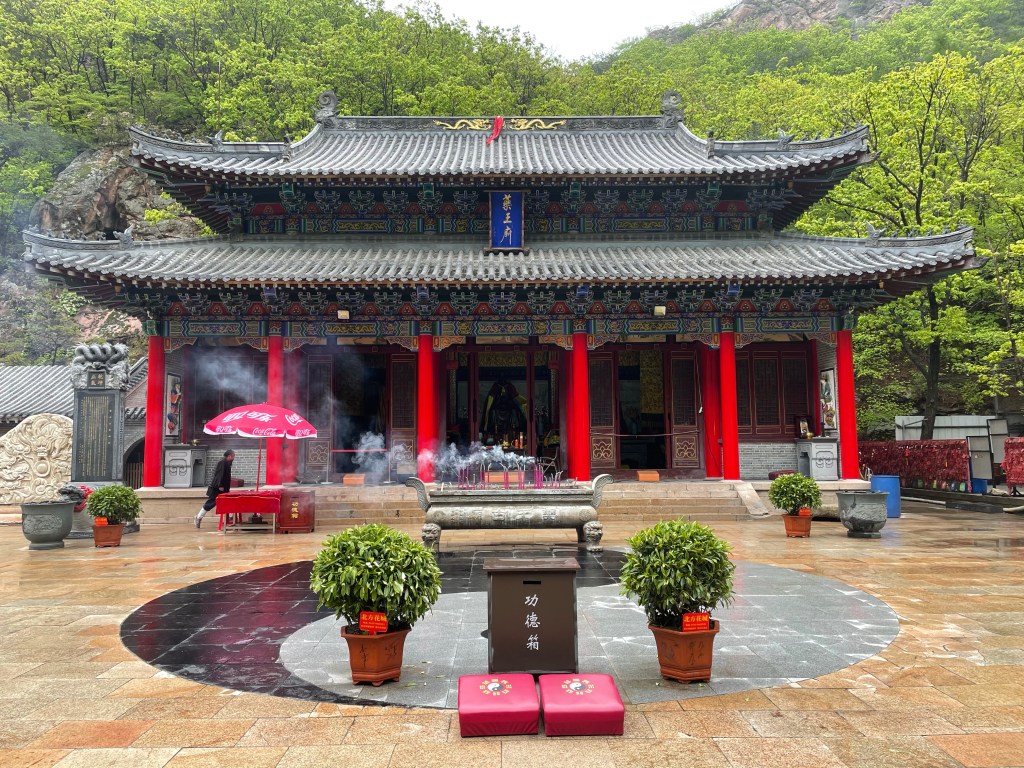
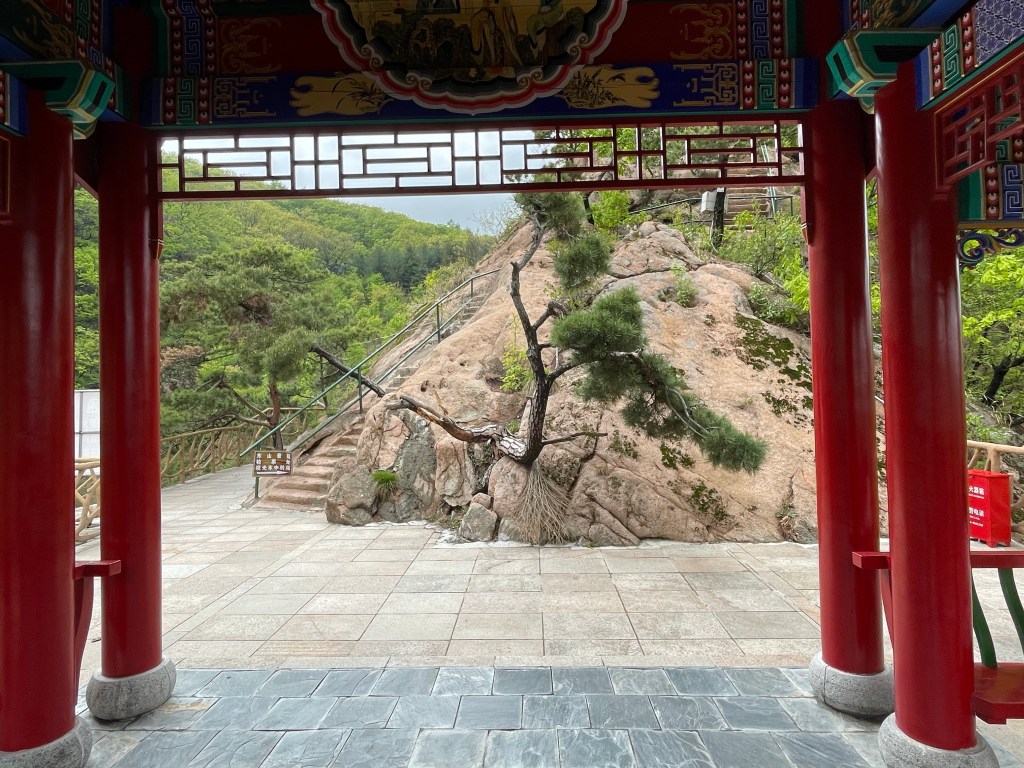
We saw a couple of nice temples and lakes along the way.
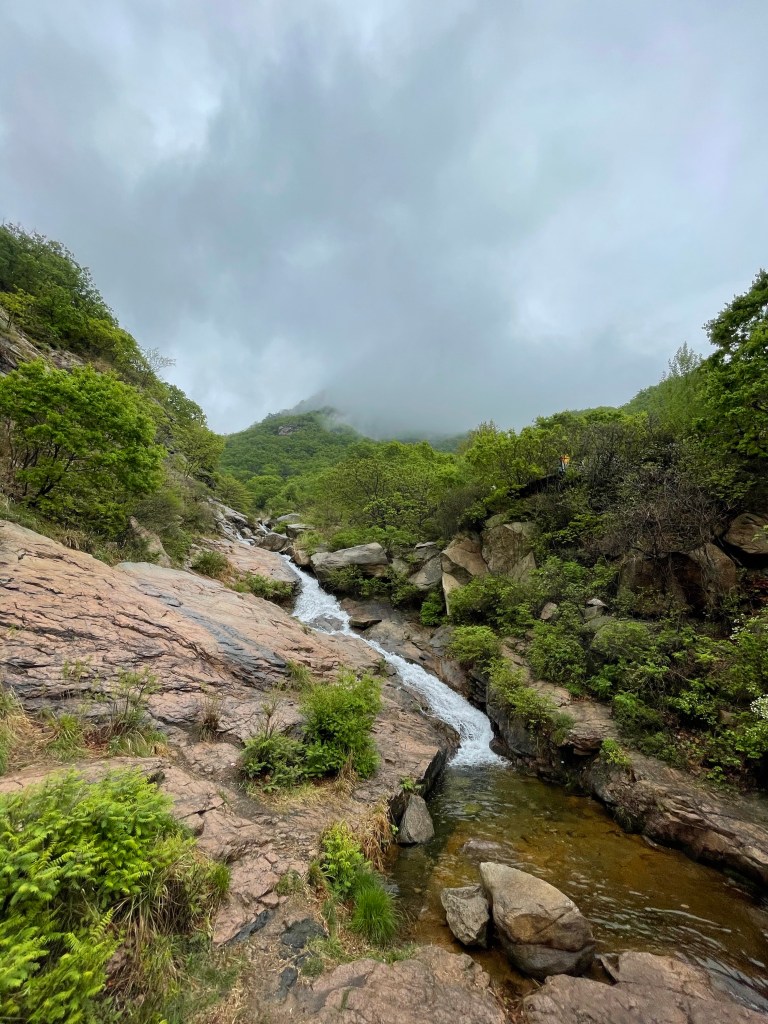
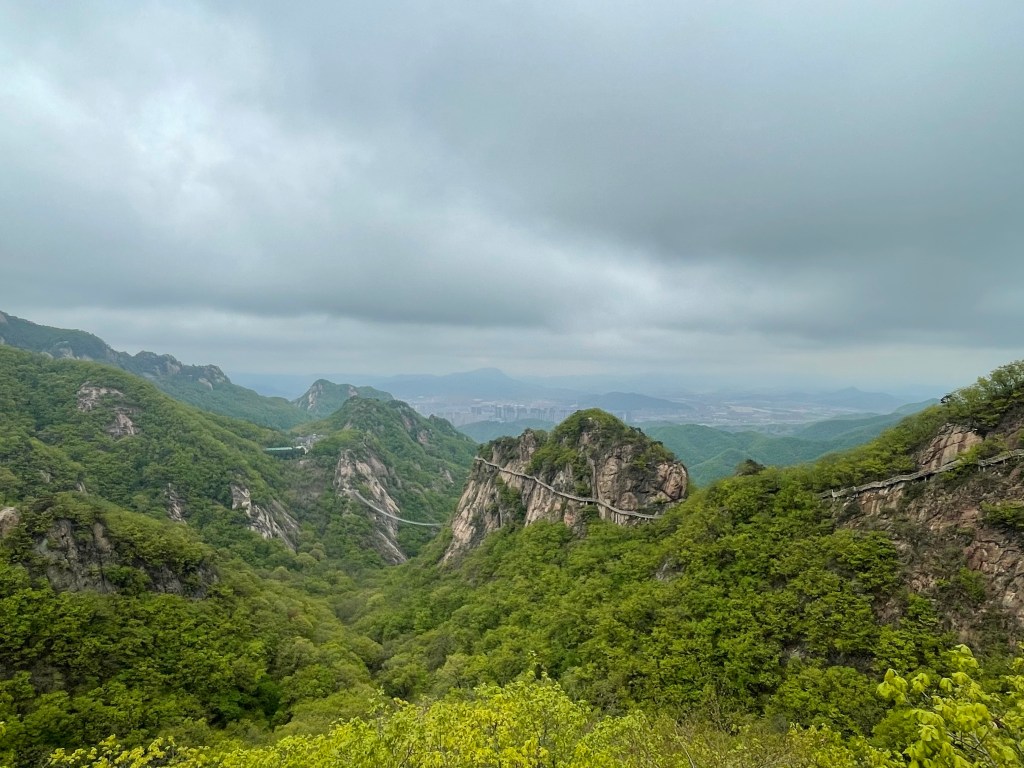
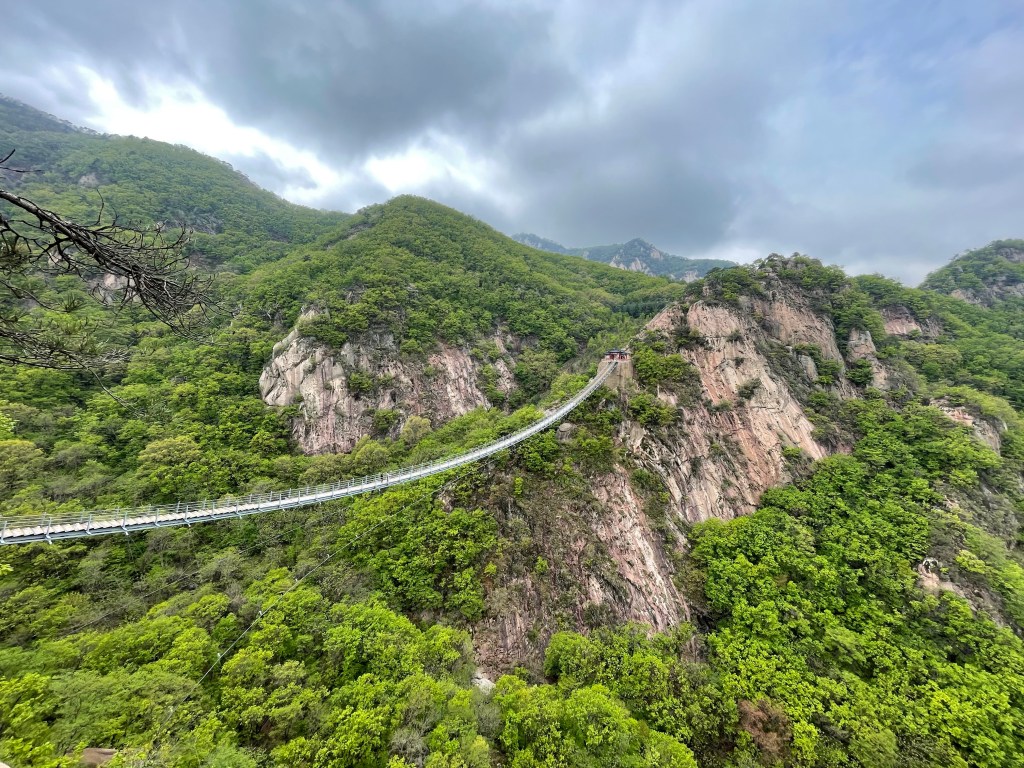
We went to the west part of the park, which was mostly nature. It was quite a long hike, around 2.5 – 3 hours. There is a big glass bridge and a rope bridge.
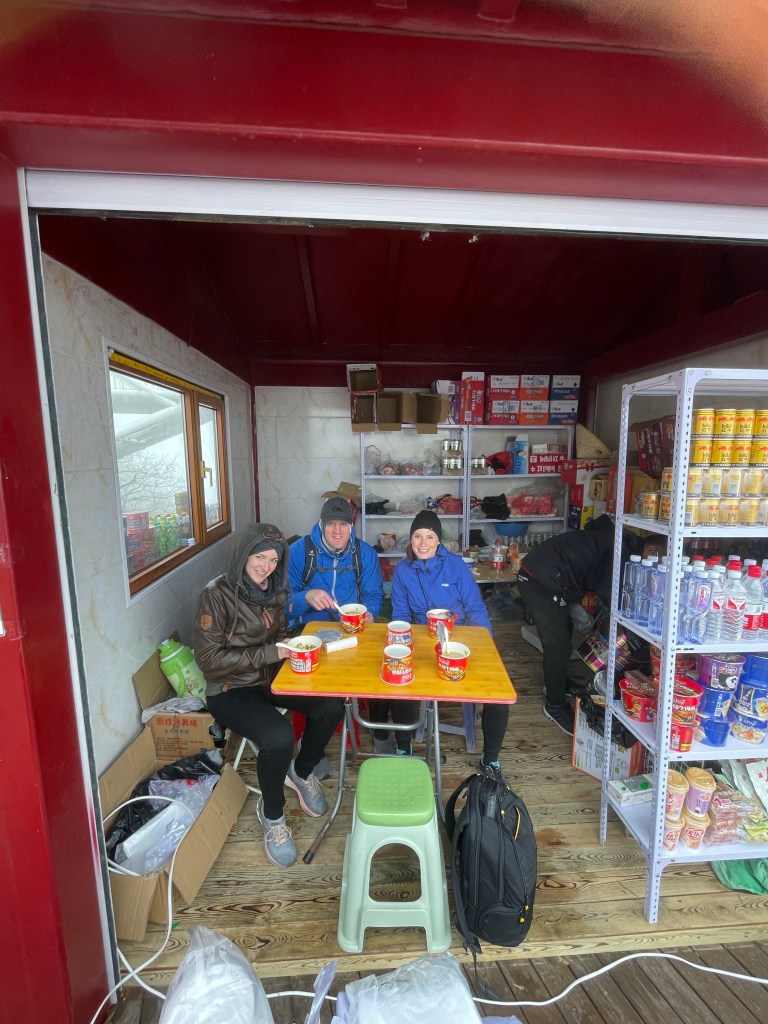
The best lunch we could get. It’s probably easy to see how cold it was!
Nice view 😀
We could have stayed at least 2 days in the park, there is so much more to see and so many more paths to hike. We will definitely come back one day!
On our last day of a 3 day trip to Hangzhou, we had only 2/3 of a day to spend, since our flights were leaving around 6pm. First, we planned to the Xizi Wetland National Park, but then we changed our plan to see the place where the famous Longjing Tea is grown.
The trip started a bit scary. After we got into the taxi, my wife mentioned to me if something is wrong with the car, because it was abruptly steering to either side from time to time. I told her it may be an old car and she should not worry. After a while, we noticed the driver was falling asleep for seconds all the time and was really not in a condition to drive. Since we were “in the middle of nowhere” and just about 2.5 kilometers from our destination, we tried to keep him awake by playing loud videos on the phone (this is normal in China). Finally, we went out of the car alive, sweating and a little shaking. (I have to admit in 95% of all cases, DiDi (Premier) drivers are really good, so this was an exception)
As explained above, we stopped a little earlier and walked down to the Longjing Village. On the way down, we went up a hill on the left side of the road, where we ended up on a cemetery (at least we believe that’s what it was) in the middle of a bamboo forest. It wasn’t too exciting, so we went back to the main road.
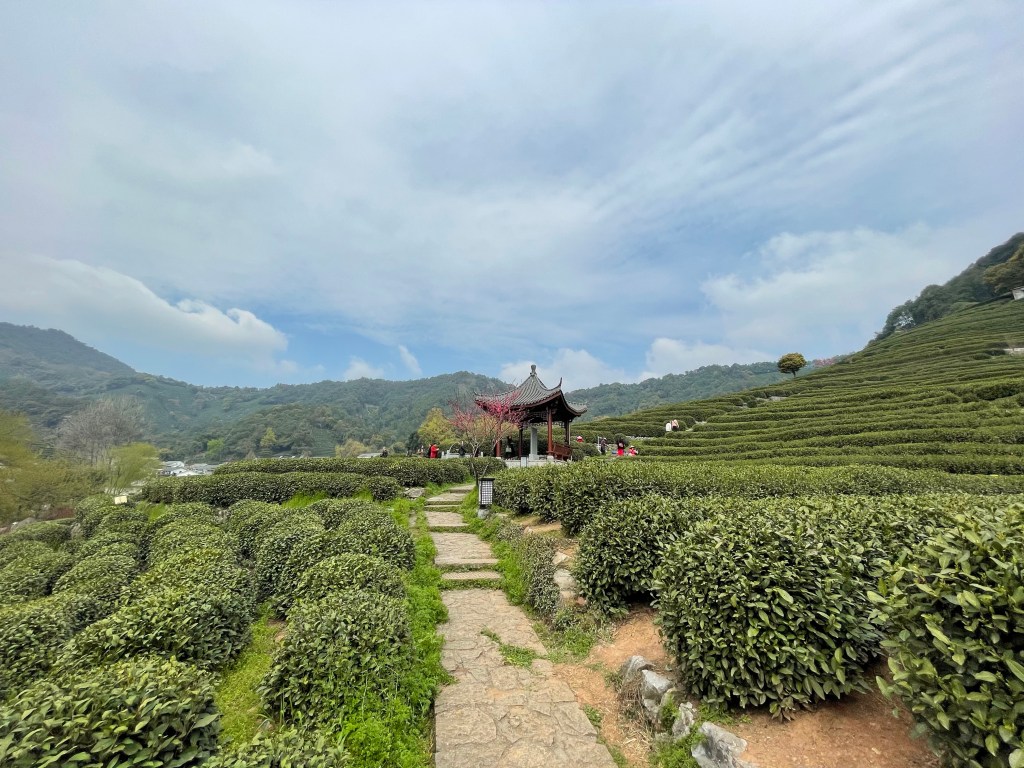
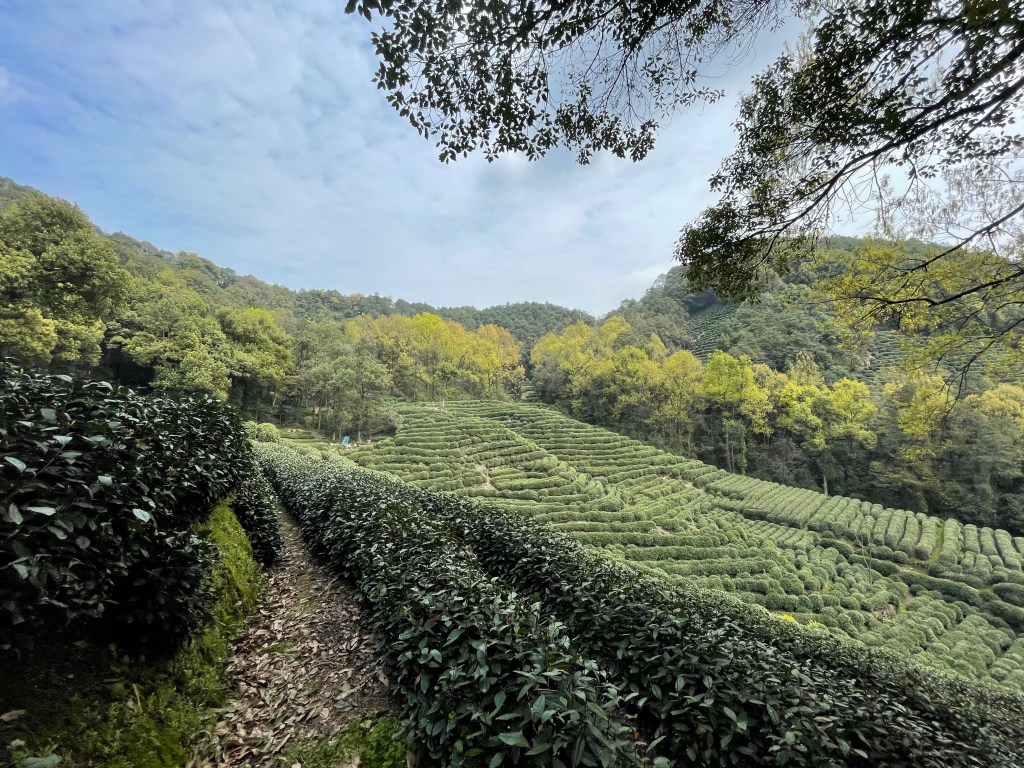
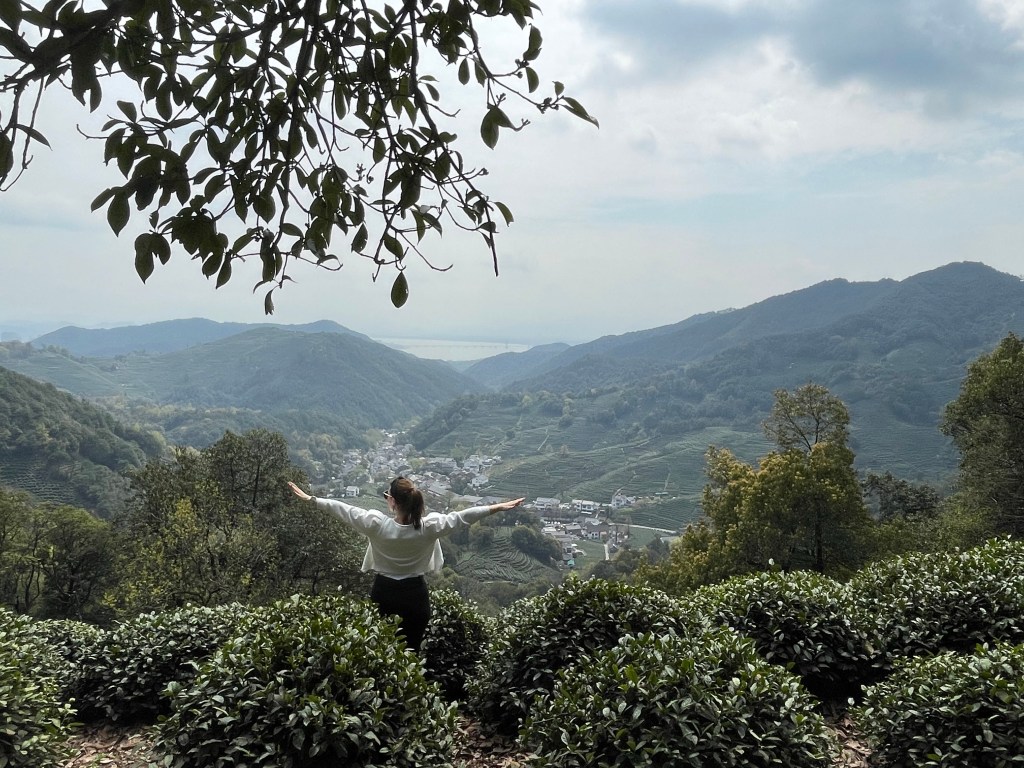
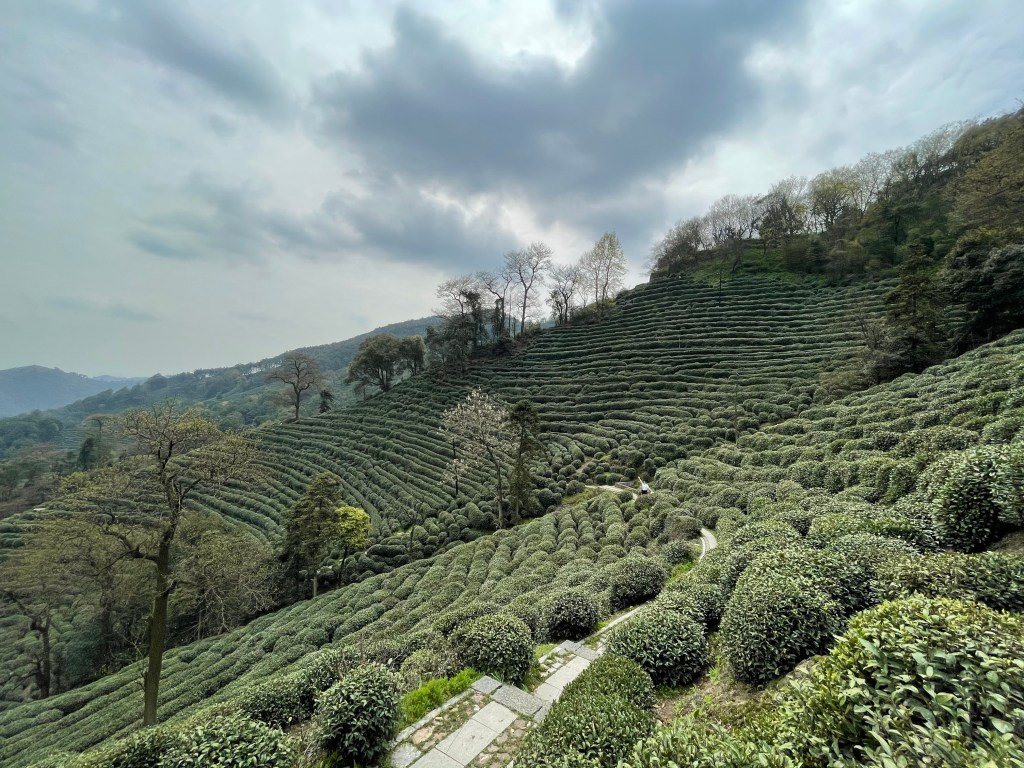
A few hundred meters further down the road, we arrived in the actual village. The village is in a valley surrounded by hills on which the tea plants are grown. There are several paths through the tea “fields”. We went up the first one and were already really amazed by the views. We went up to the top of the hill but there was a forest blocking the way.
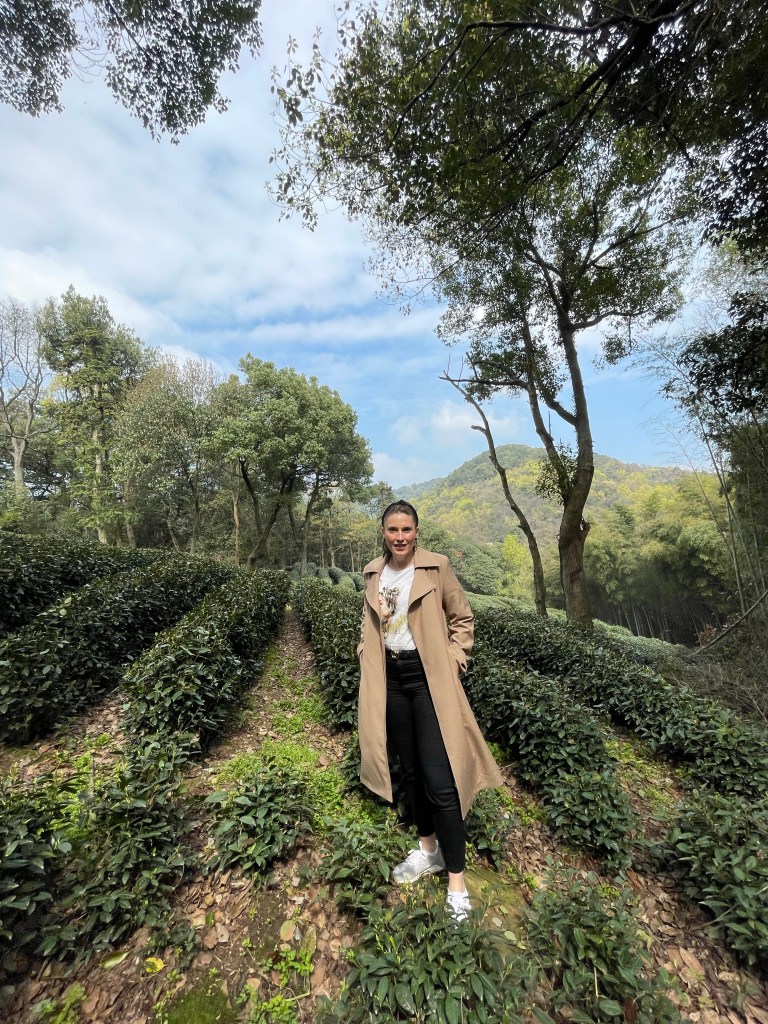
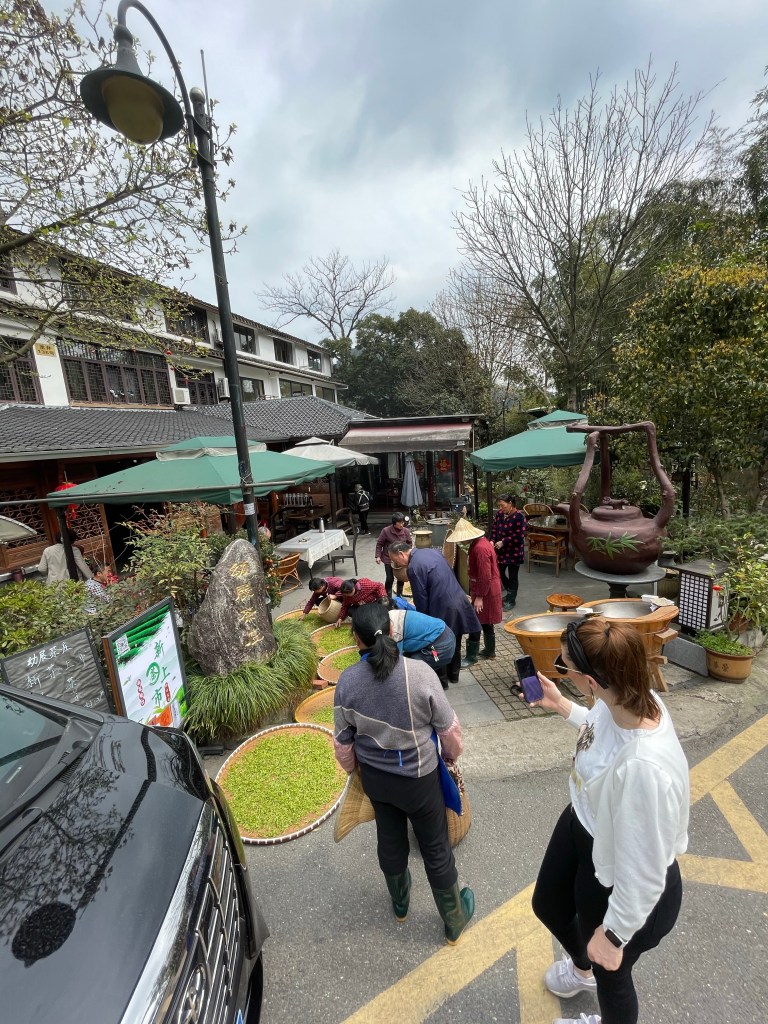
Luckily, March/April is harvest season, so we could see many women there harvesting the tea.
We went back all the way down and along the “main road”. Of course, on each side, there are small tea shops and places where the farmers dry the tea leaves. It was really interesting to see for us, but for the locals, it was at least as interesting to see us, as foreigners have become a very rare sight in China since COVID.
Tea leaves drying
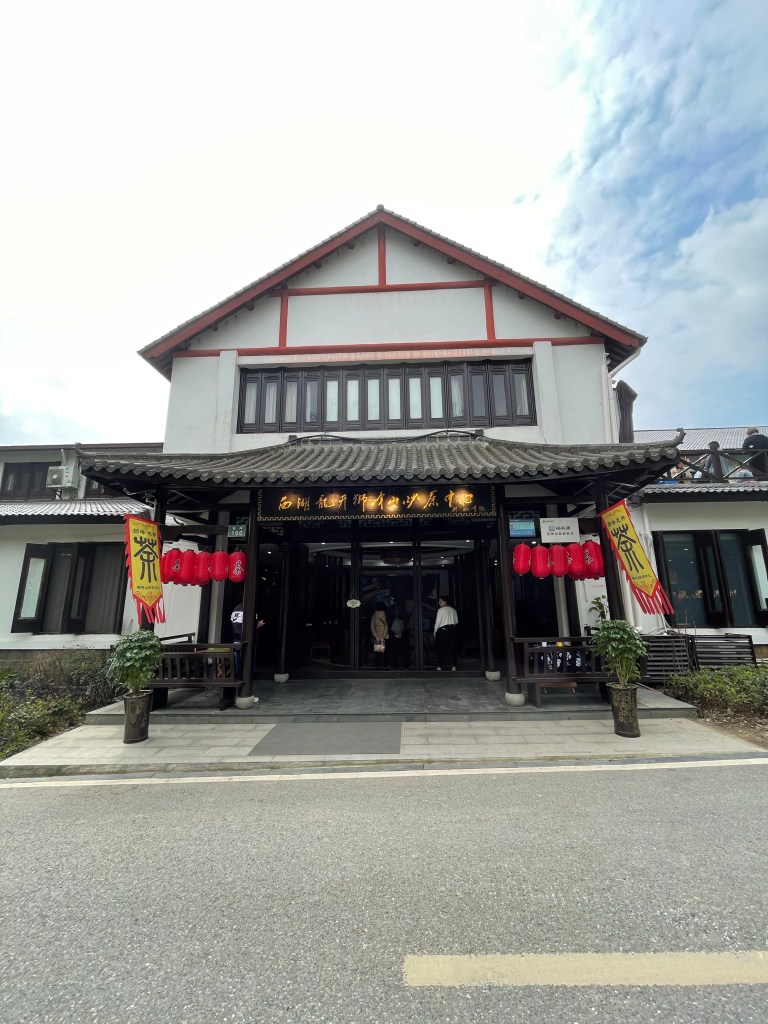
A tea shop
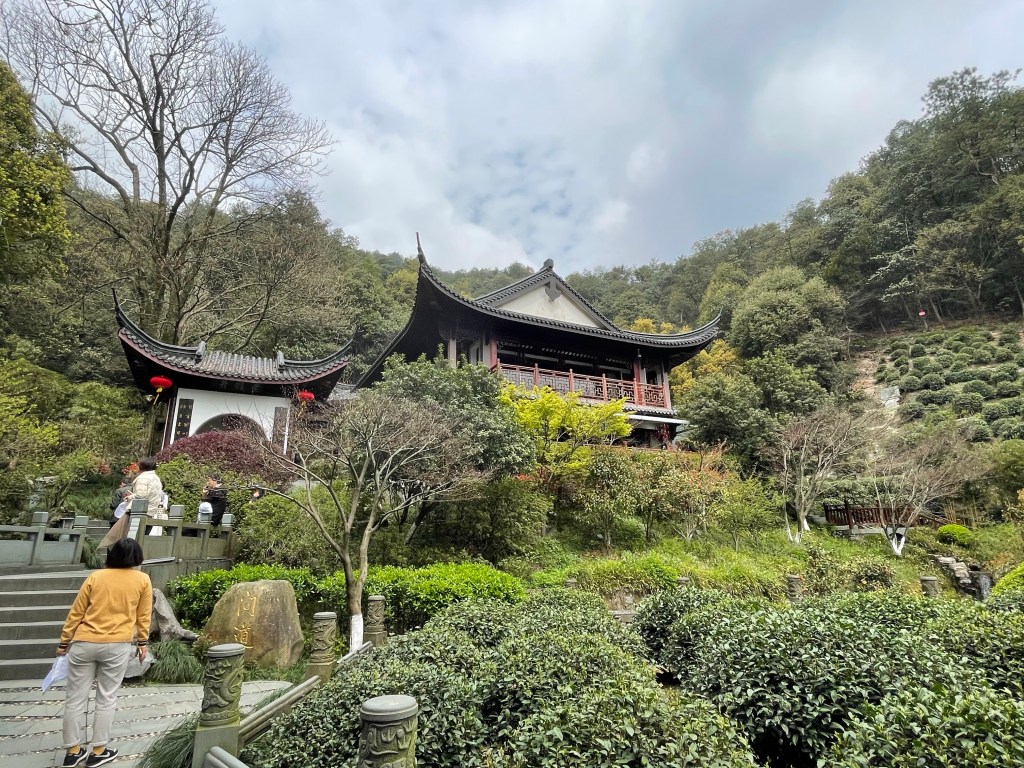
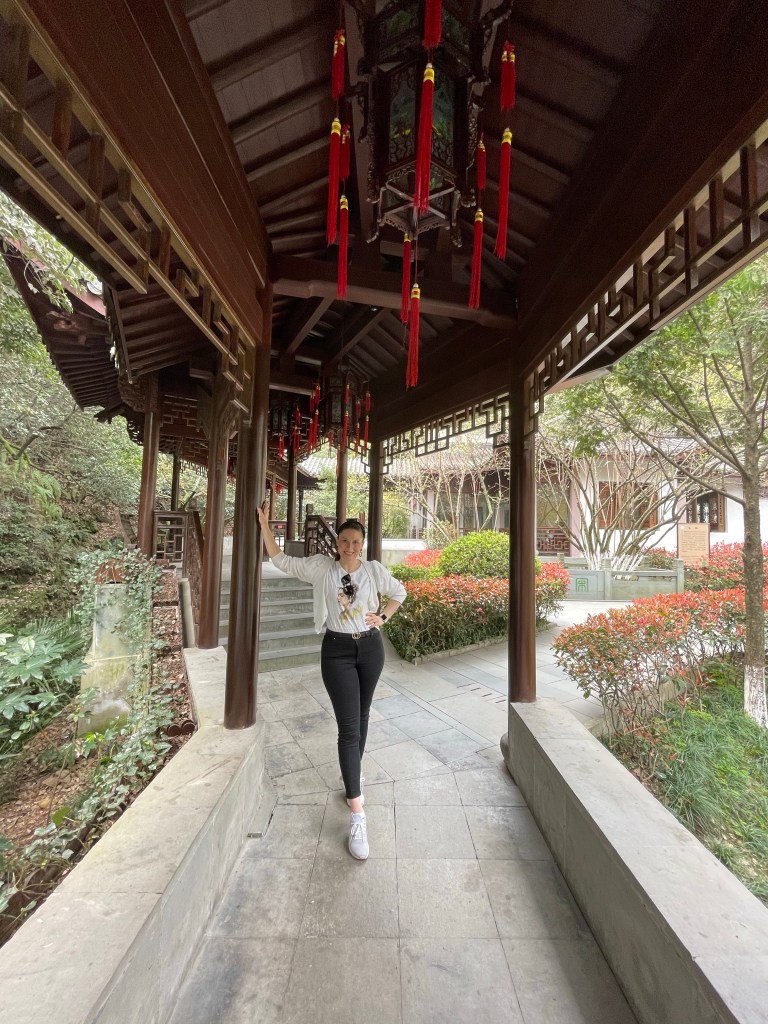
At the end of the road, we found the “Imperial Tea Garden”, an area with nice traditional buildings and some shrines. Hiking up the hills further, we eventually ended up on the very top of the hills where we could see the west lake on one side, the skyscrapers of the city on the other and the river on yet another side. The view was a bit foggy, but nevertheless, it was stunning to see nature and a futuristic city in one view.
Imperial Tea Garden and surrounding tea fields
We also met 2 girls with whom we had a very rudimentary conversion in chinese, but we were happy we could at least understand a bit and tell them were we live in China and from which country we are and how long we have been staying in China…lets hope in another year our chinese skills have improved further 😀
The hike took about 2.5 hours and we finally ran out of time. Before we headed back to the hotel/airport, we bought some strawberries from local farmers, which were really delicious.
A marvelous place about 1.5hours northeast of Hangzhou
There are several “Water Towns” around the area of Shanghai / Hangzhou. Wuzhen Water town is supposed to be one of the oldest. There is a East (东) and West (西) part, we only went to the west part, the east part is much smaller.
You can go by bus from Hangzhou main station, which is about 35 RMB per person one way. Since we did not have too much time, we took a taxi/DiDi. We heard you can also take the bullet train from Hangzhou to Shanghai and be there from Hangzhou in about 45 minutes. However, booking a train ticket in China is not too easy, especially if your chinese language skills are not very good.
The entrance fee for the scenic area was 150 RMB per person for the West Scenic area, i suppose it is another 100 RMB for the east area.
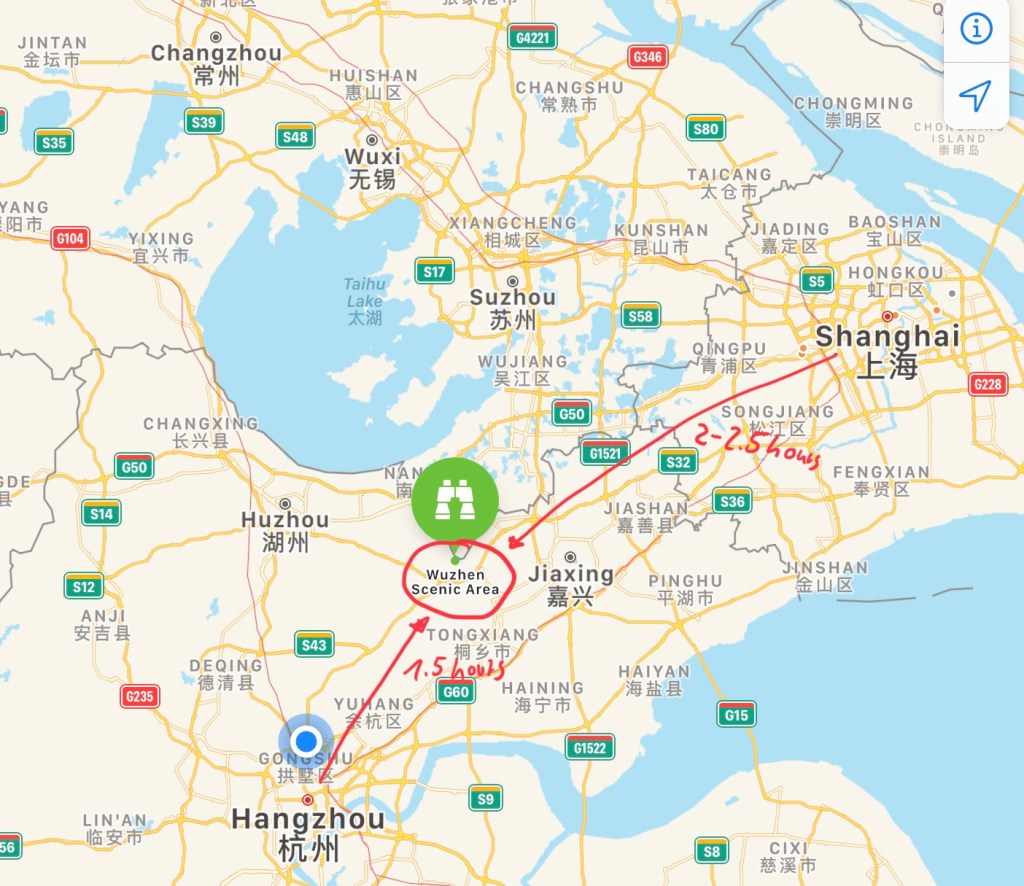
Wuzhen in relation to Shanghai and Hangzhou
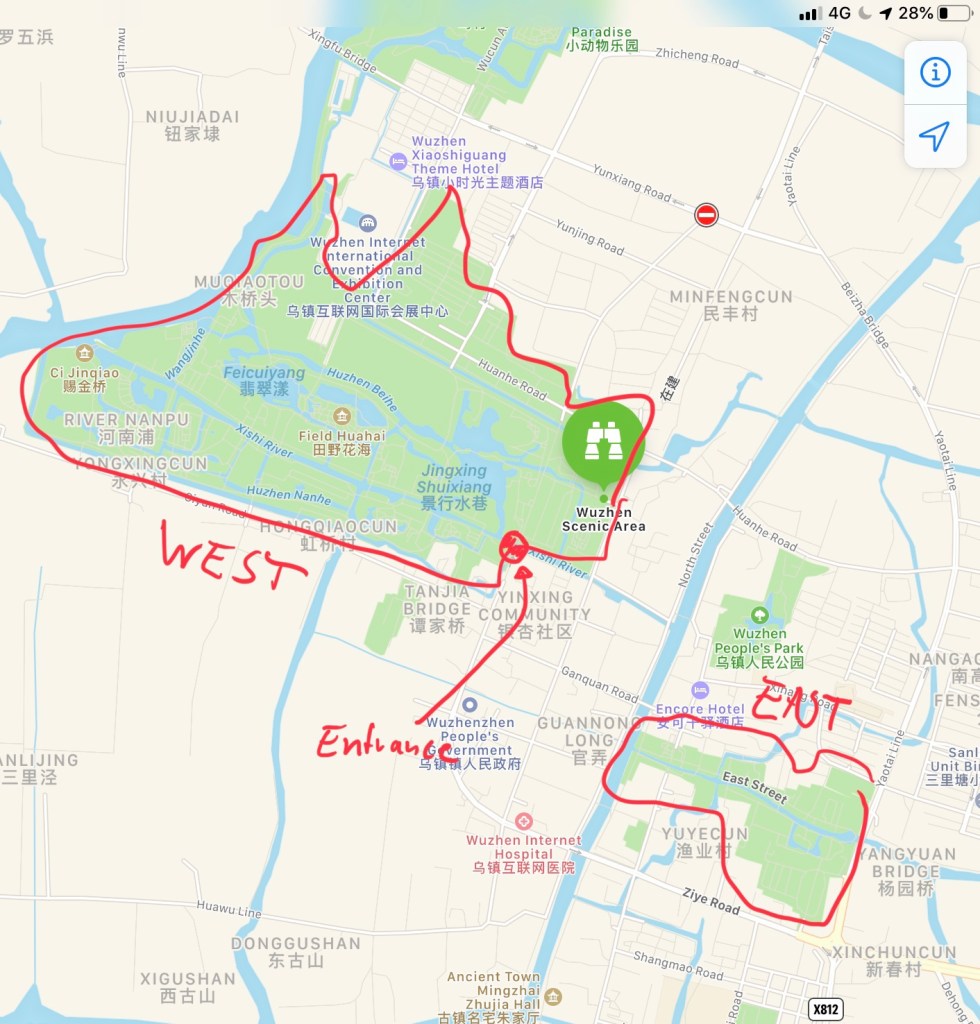
East and West part of the scenic area
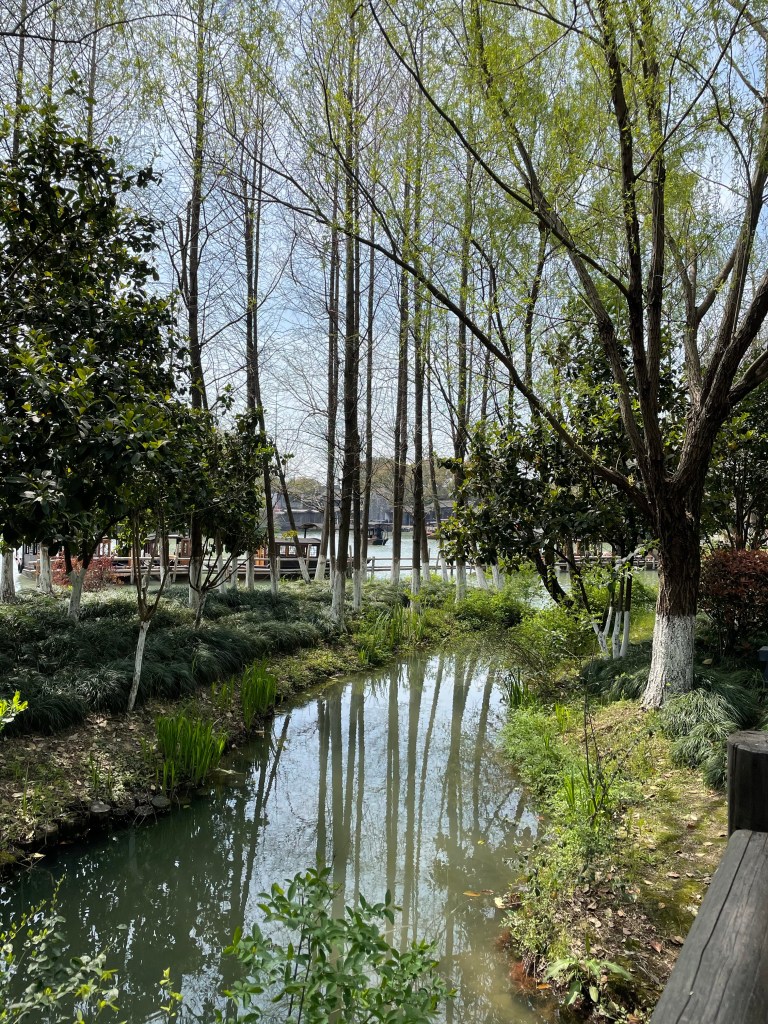
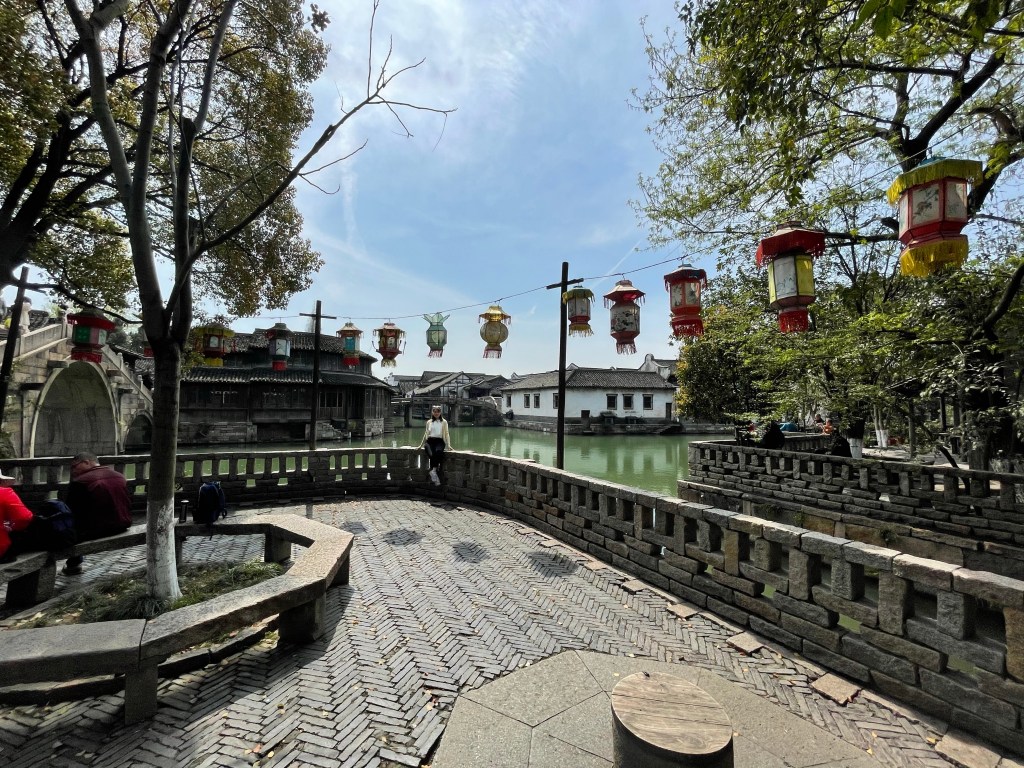
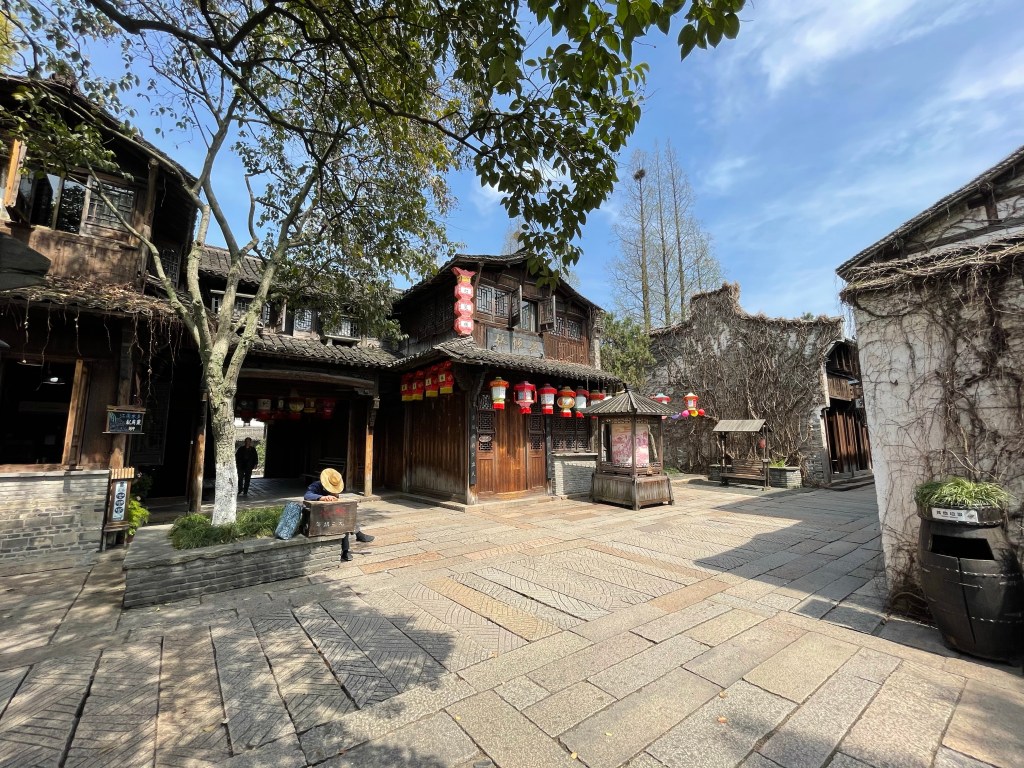
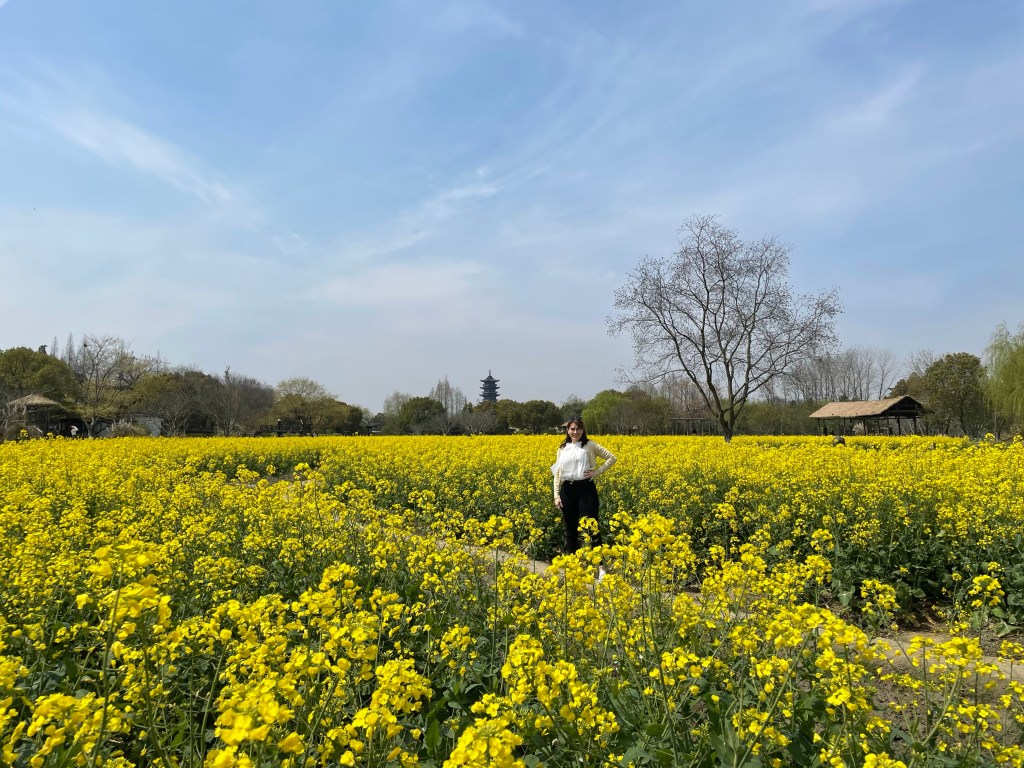
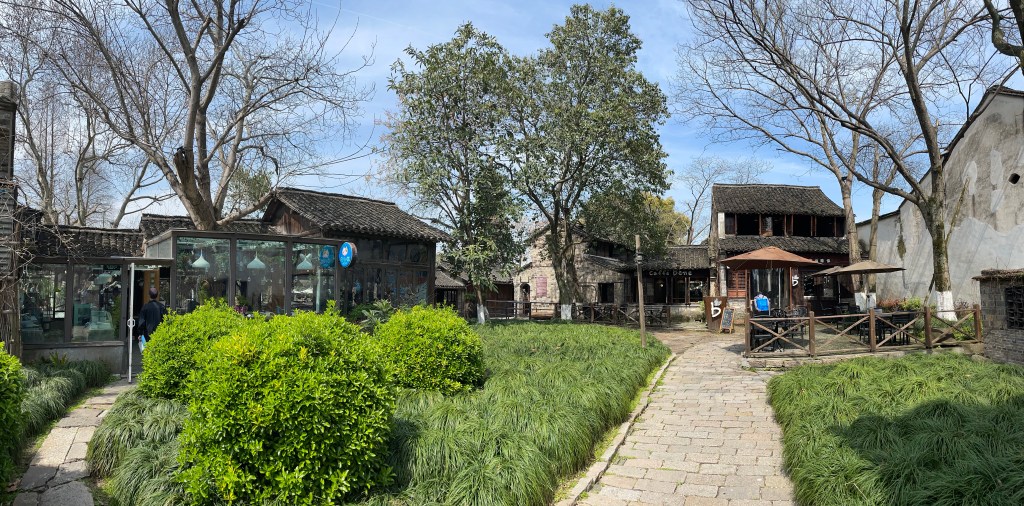
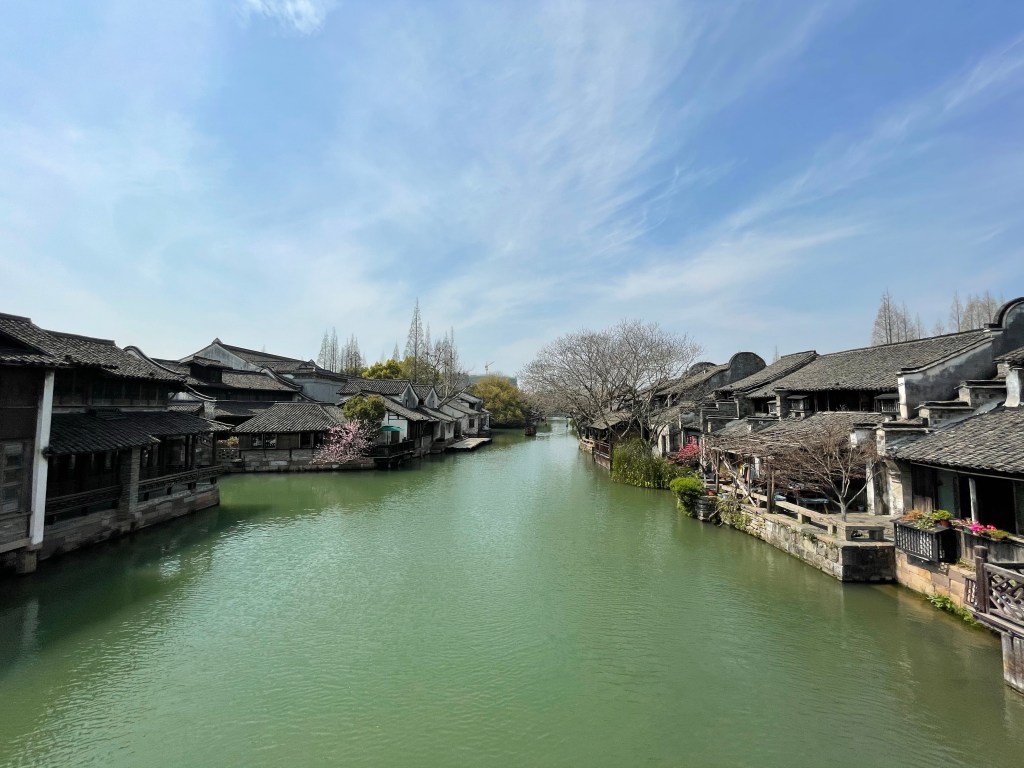
See some more impressions below, of narrow streets, nice plazas and even wide fields around the water town with nice yellow blossoms.
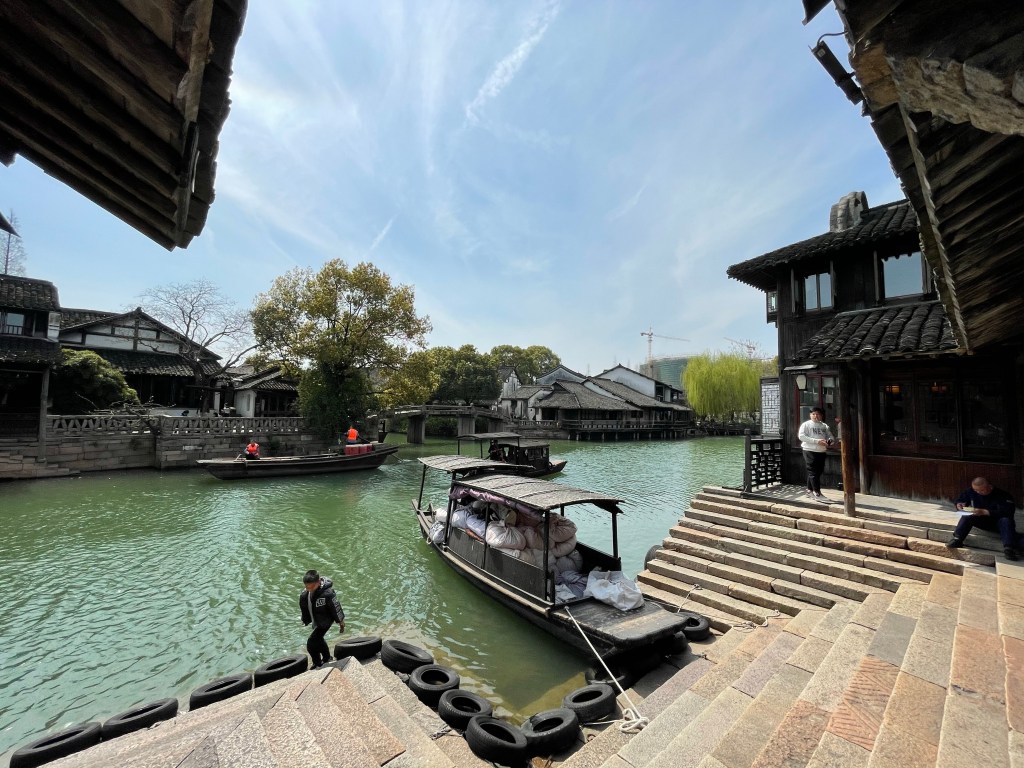
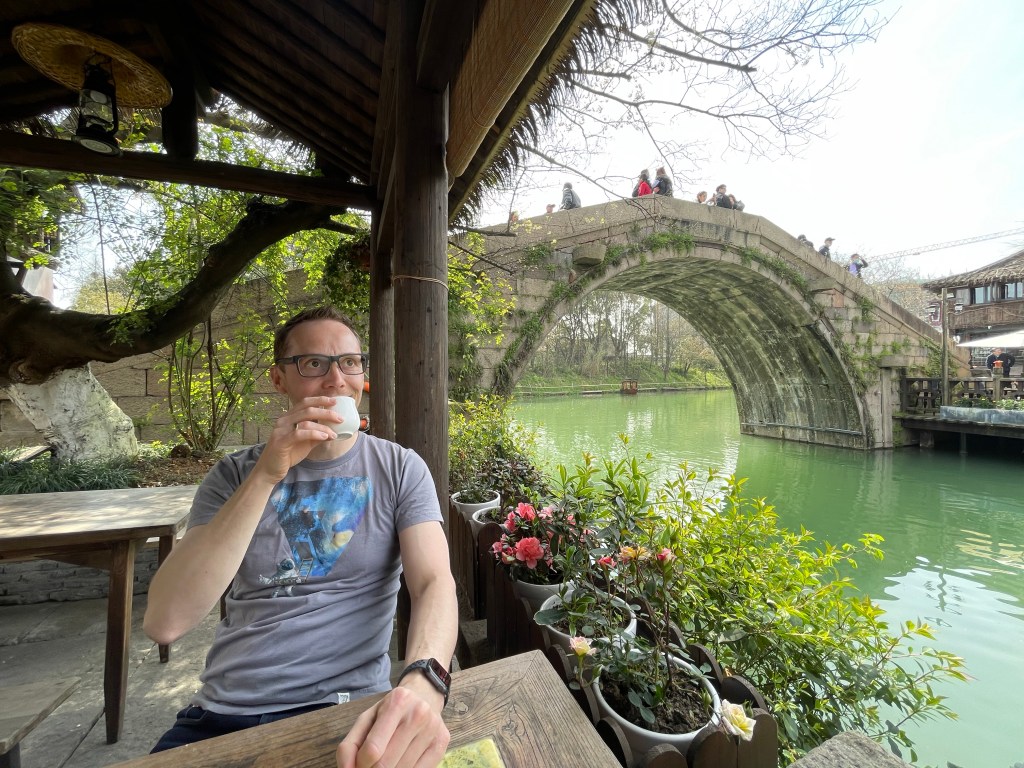
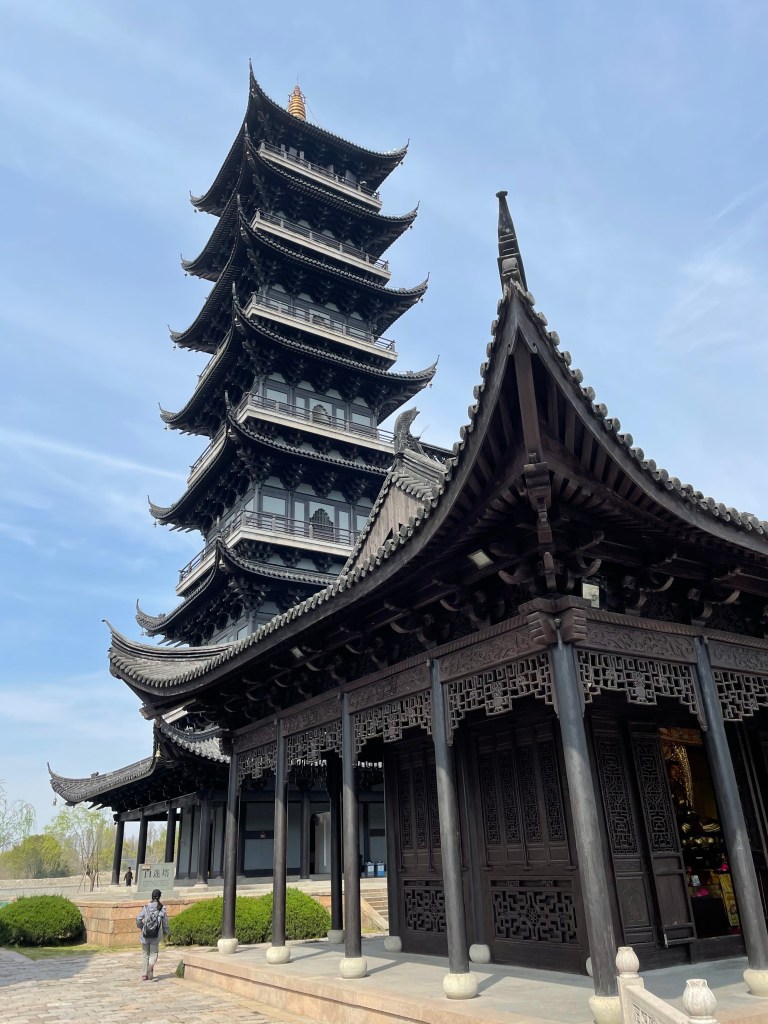
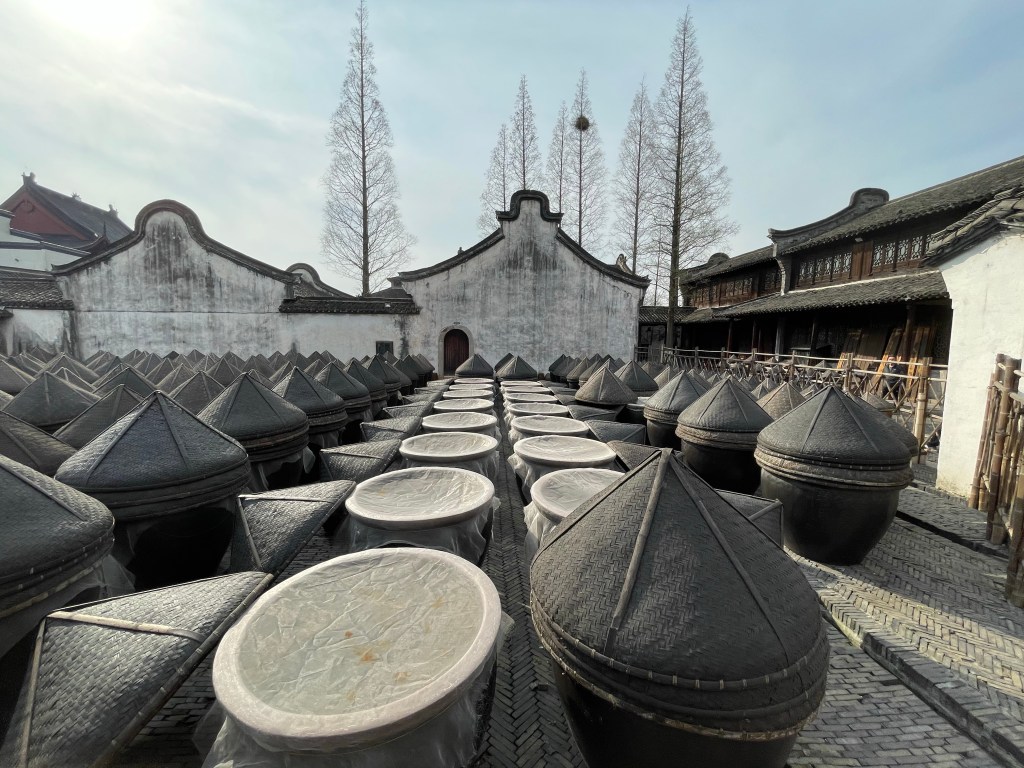
Those channels go through all the town. The water is so green, it almost looks unnatural.You can taste the famous local Longjing tea, which is only grown in the area around Hangzhou. It is really expensive, so a serving for 2 people cost 128 RMB (it was the cheapest type of the tea, for tea, there is really no price limit in China)The pagoda was the main sight at the far end of the park.Those jars contain soybean paste, which is covered by a silk sheet and a bamboo “hat”. The silk sheet protects the paste from insects, the “hat” protects it from rain. It ferments in those jars and is later the main ingredient for soy sauce.
Hangzhou is the capital of Zhejiang province, located about 2 hours south west from Shanghai. It is located in the Yangtze River delta.
Tour overview
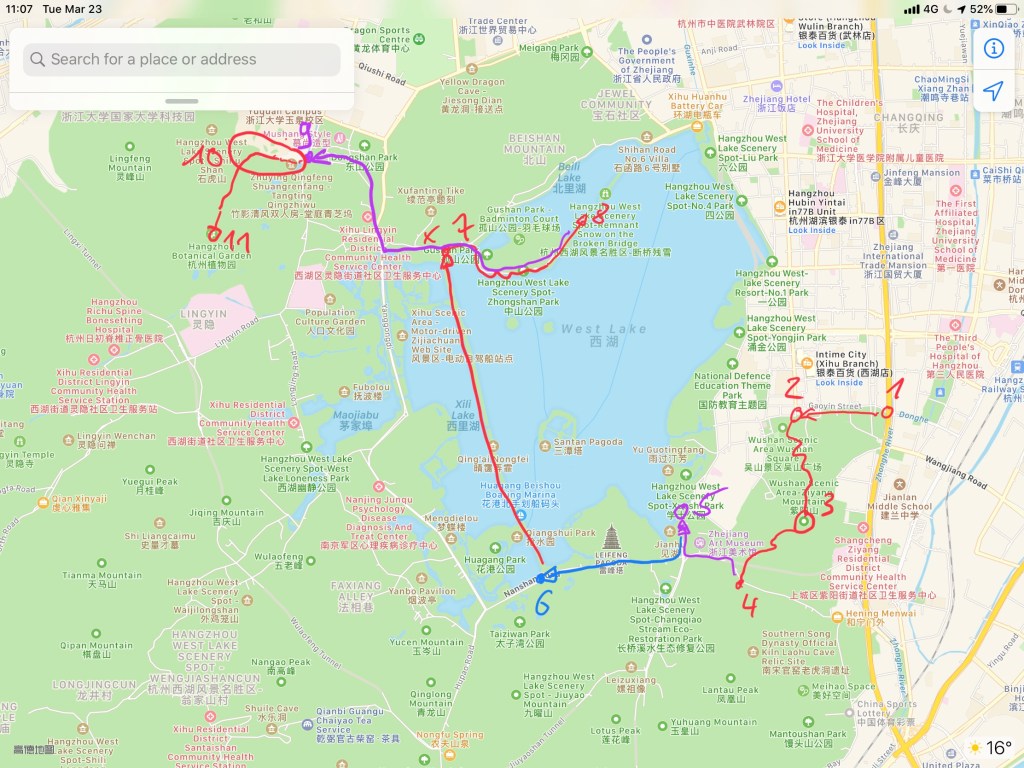
Our tour around west lake. Red = Walking, Purple = by car, blue = by bicycle
Our first full day in Hangzhou was dedicated to the West lake and surroundings. I am going to refer to the spots with the numbers indicated on the map, so it is easier for you to understand which pictures belong to which area.
You can walk around the lake, but it will take you a while. It is a probably a day trip and takes some hiking. We took a DiDi for some areas that are too far to walk and where there was not really anything too interesting to see.
It is also really easy to rent bikes (by WeChat or Alipay) so whenever we found a bike, we used it 🙂 Unfortunately, the way from (6) to (7) does not permit bikes, so we had to walk. There are however, “hop-on” electric vehicles (think of a bigger golf cart for about 12 people) which circle the entire lake. The fee is reasonable (20 RMB per person).
QingHeFang Pedestrian Area (1-2)
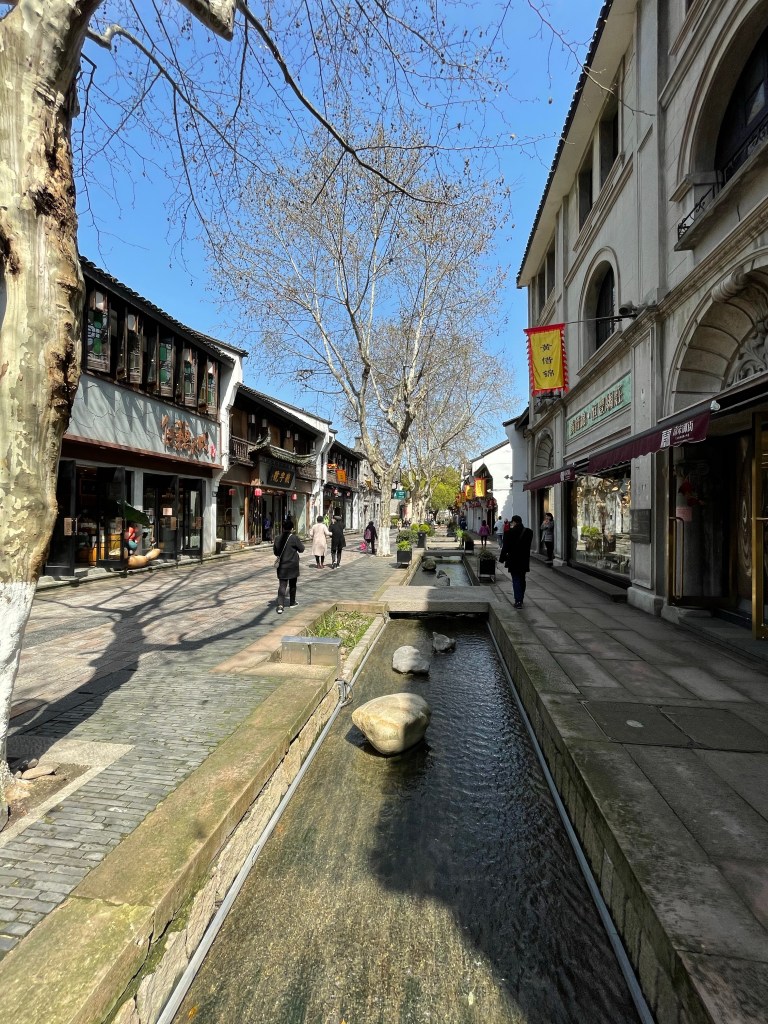
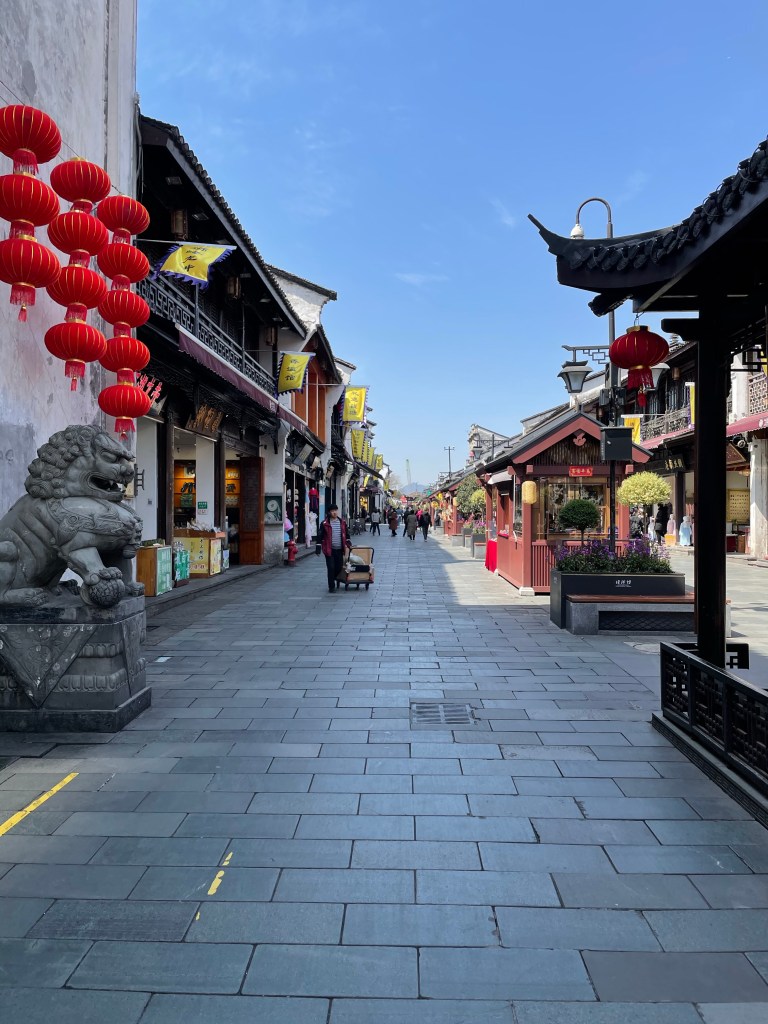
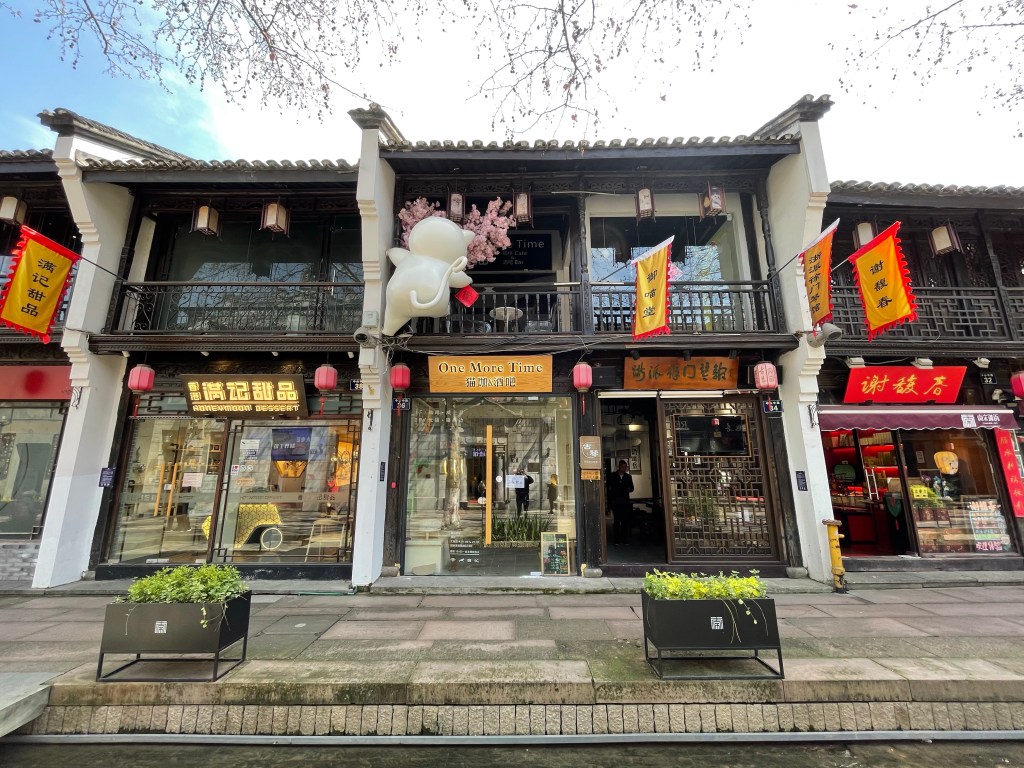
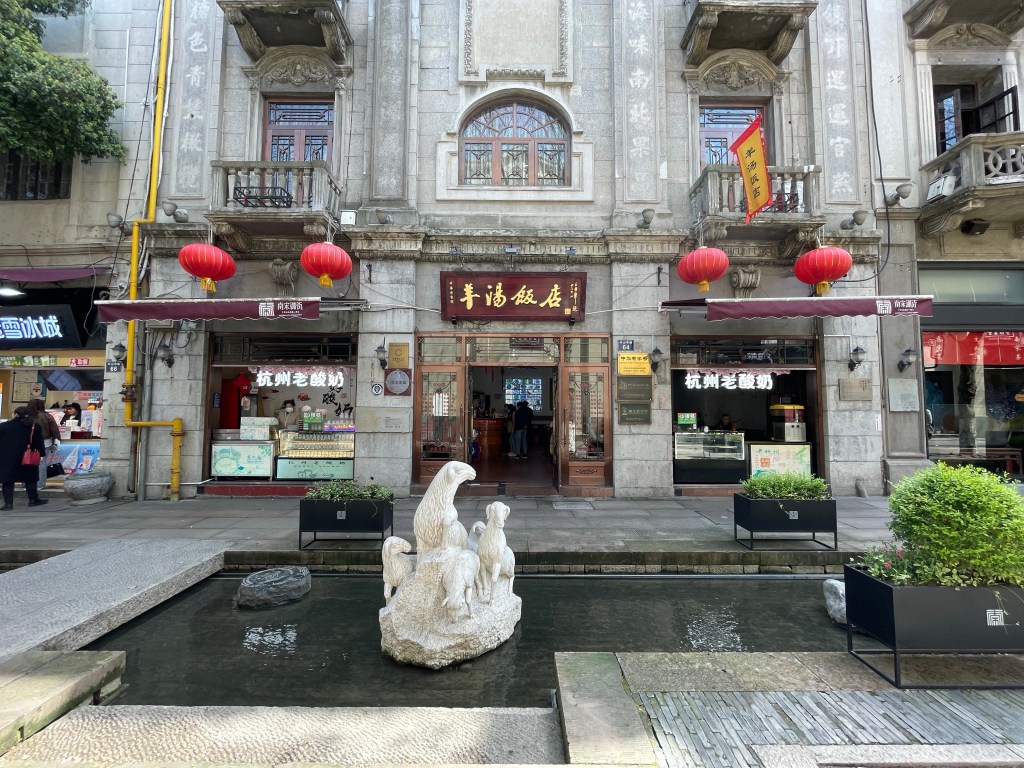
We started in this area (1)-(2). It is a small network of ancient streets with nice shops. We strolled around a bit and you can get a lot of touristy stuff. There are of course also restaurants, cafes, tea-houses and a Starbucks.
There were not too many tourist there as we visited on a Monday. The area is not too big, you can cover all the small streets within 1-2 hours easily.
One of the small cafes along the road
Typical small shop
WuShan Mountain (3)
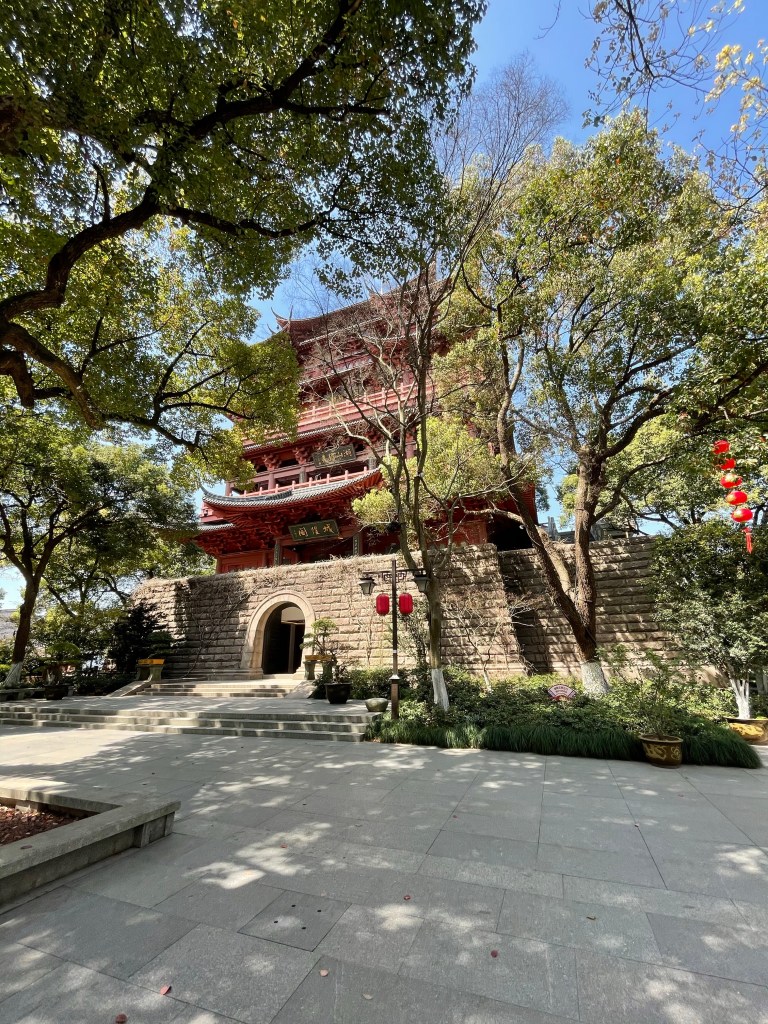
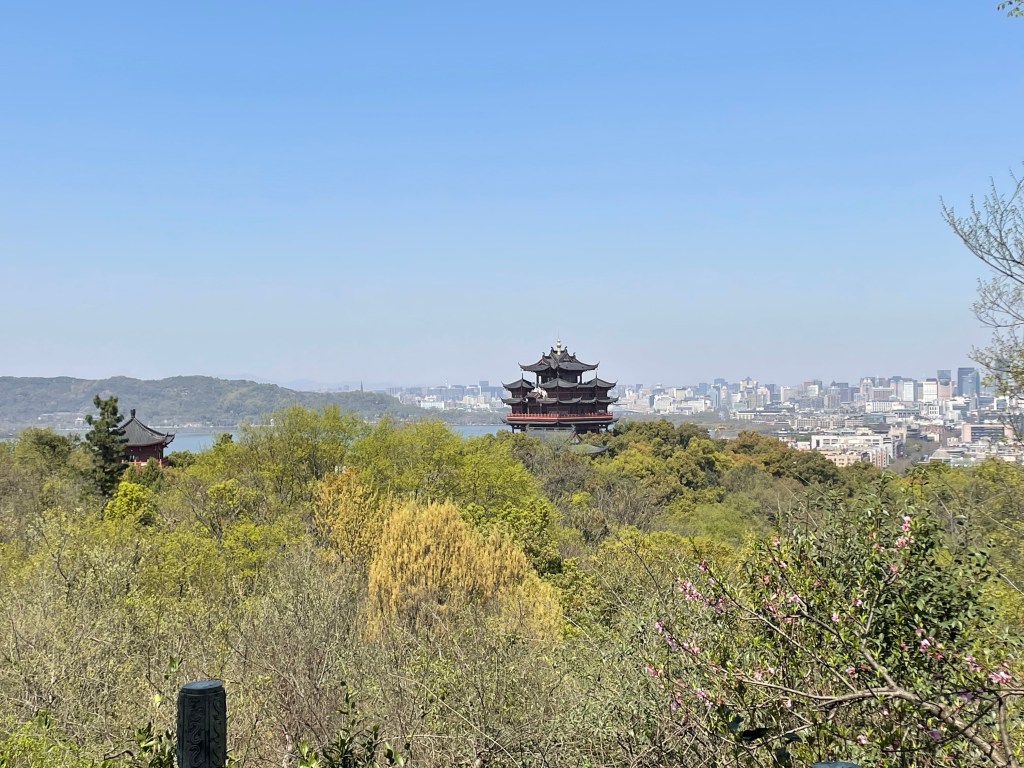
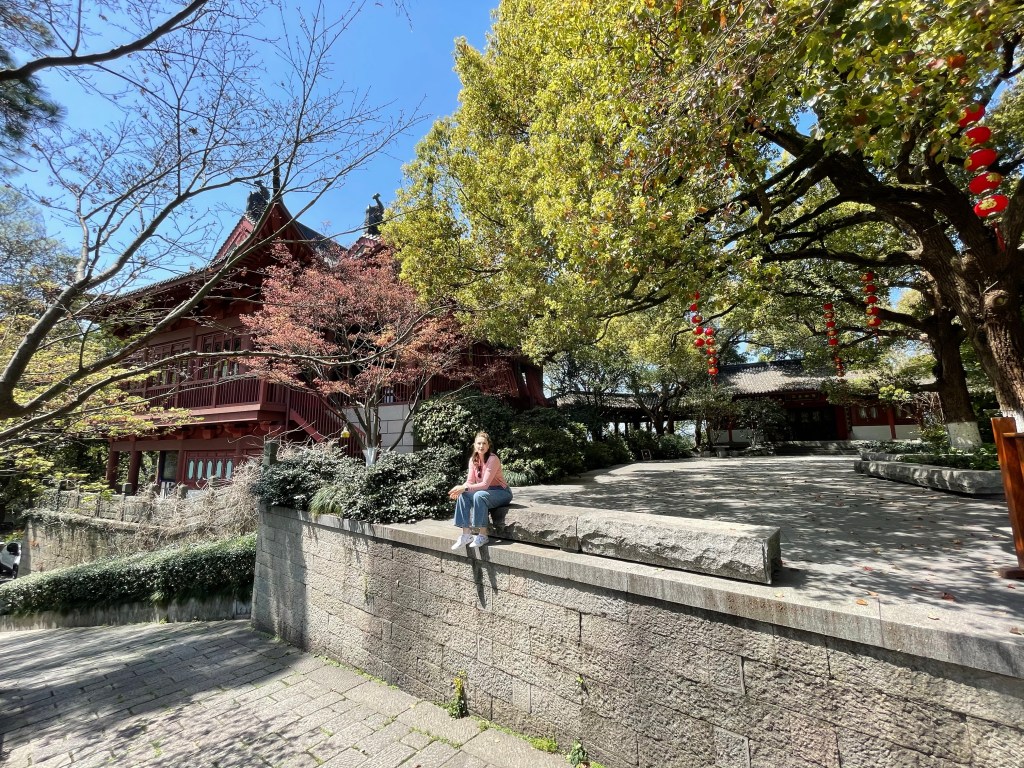
Further south from the QingHeFang area, there is a hill called WuShan. There are several Temples (or probably Fortresses) on the hilltops and you can overlook the west lake. The whole area is covered with woods and you feel fully immersed in nature.
The entrance fee to the areas with the building was 30 RMB per person. In the tower, there were 2 levels of a museum, but most of the things were only described in Chinese language. It showed the history of the city and the area.
After seeing all those nice buildings, we had to take a small hike (30-45 minutes) up to the top of the hill and then down on the other side (4)
West Lake
Hangzhou is famous for its beautiful West Lake. It is supposed to be one of the most gorgeous lakes in China.
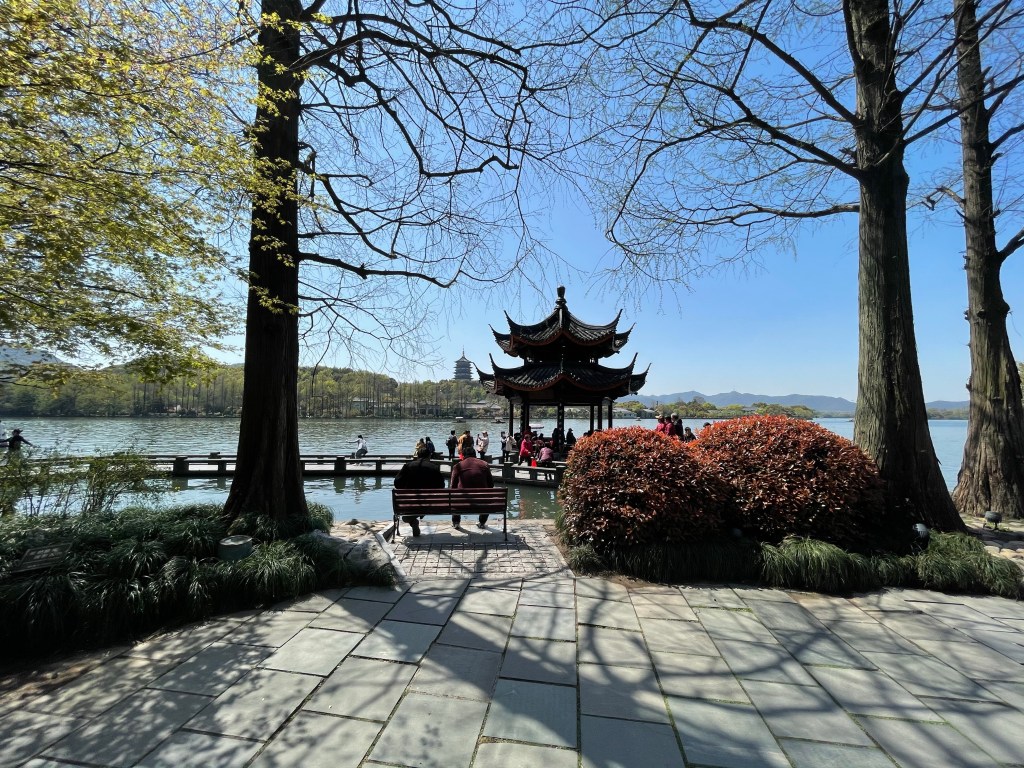
After ending up at a road (4) we took a taxi to get to the Leifeng Pagoda, however, on the way we saw a very nice area with hundreds of people, so we stopped there (5). Since the Pagoda and lake are visible in the background, it is a famous spot for newly married to take pictures there.
We stopped here (5), it seemed to be one of the top photo spots
At this place, there were also electric boats for hire, which we took. The price is 60 RMB for one hour, but the area where you can drive is quite limited, so 30 minutes is totally enough.
We continued on bicycle, although it was not very easy to get one at this busy place. Moving to (6) the road got incredibly busy, even the bicycle lane was completely crowded. You had to pay really good attention because there were so many people.
Our initial idea was to cycle along the “dam” (6-7) but unfortunately, bikes were prohibited in this area. So we went on foot. Again, there were so many people, it was crazy. And this during “non-vacation times”! We could only imagine how busy the place must be during vacation time or national holidays.
West lake
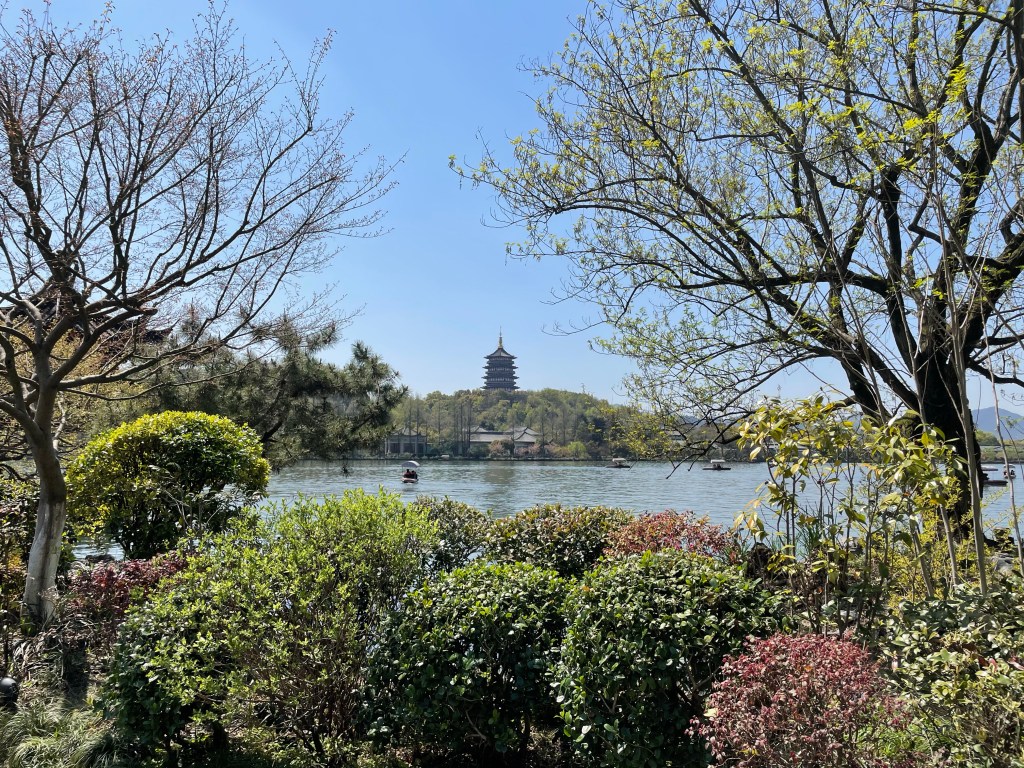
West lake with Leifeng Pagoda
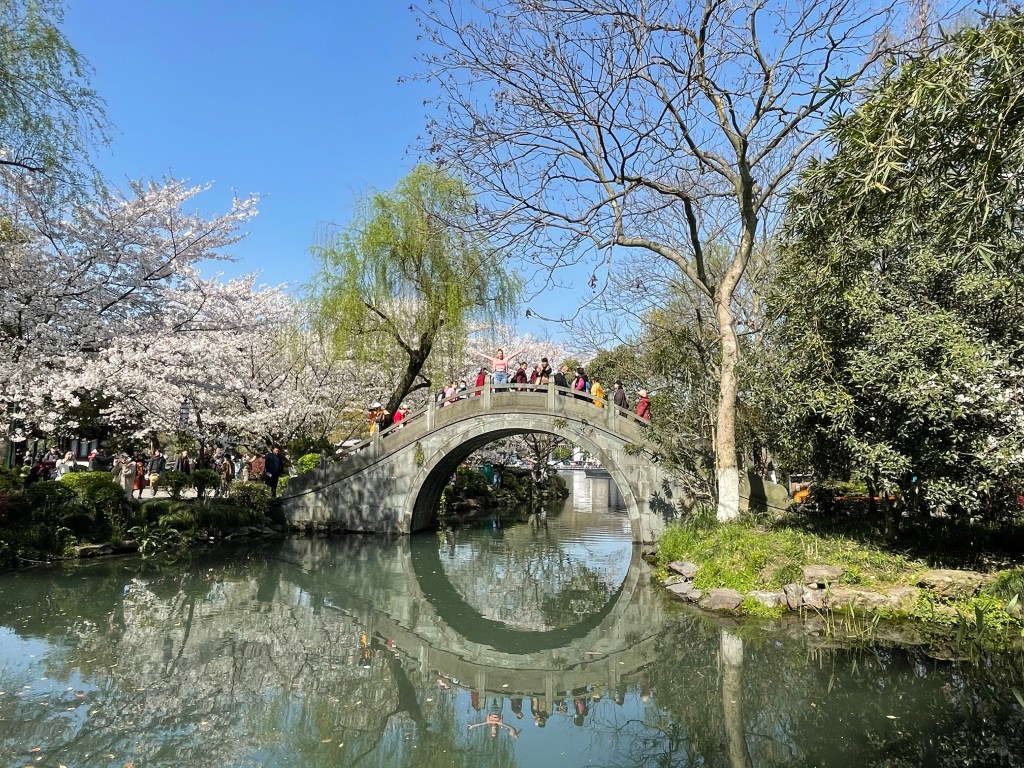
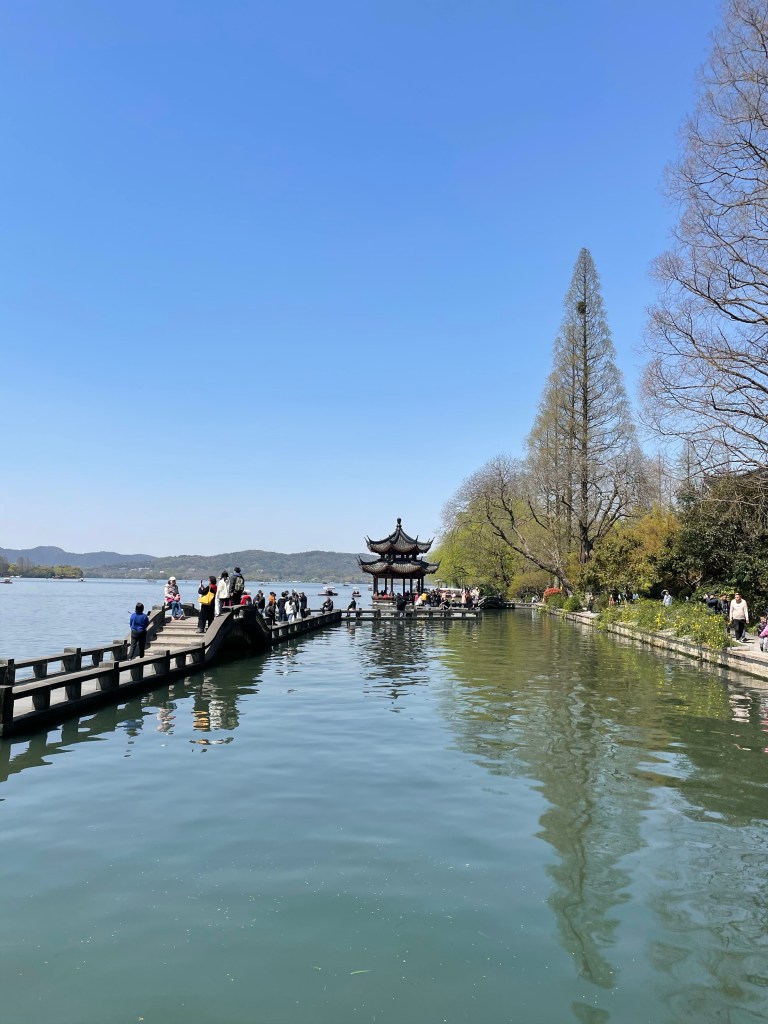
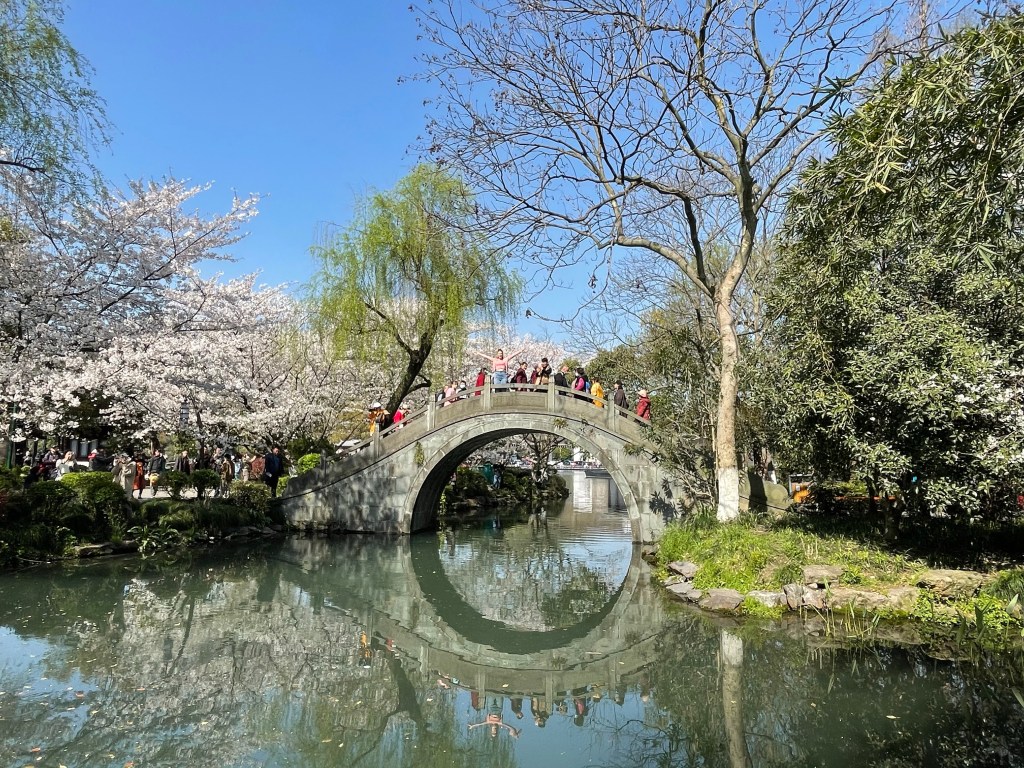
About half way on the “dam” we took an electric “bus” since we did not feel too much like walking anymore. At the end of the dam, there was an incredible area, full of blossoming trees, small bridges and small buildings.
After we fully traversed the lake, we found a very nice Starbucks (7), where we got a coffee, unfortunately, already at 3pm all the cakes had been sold out.
A Chinese Starbucks (7)
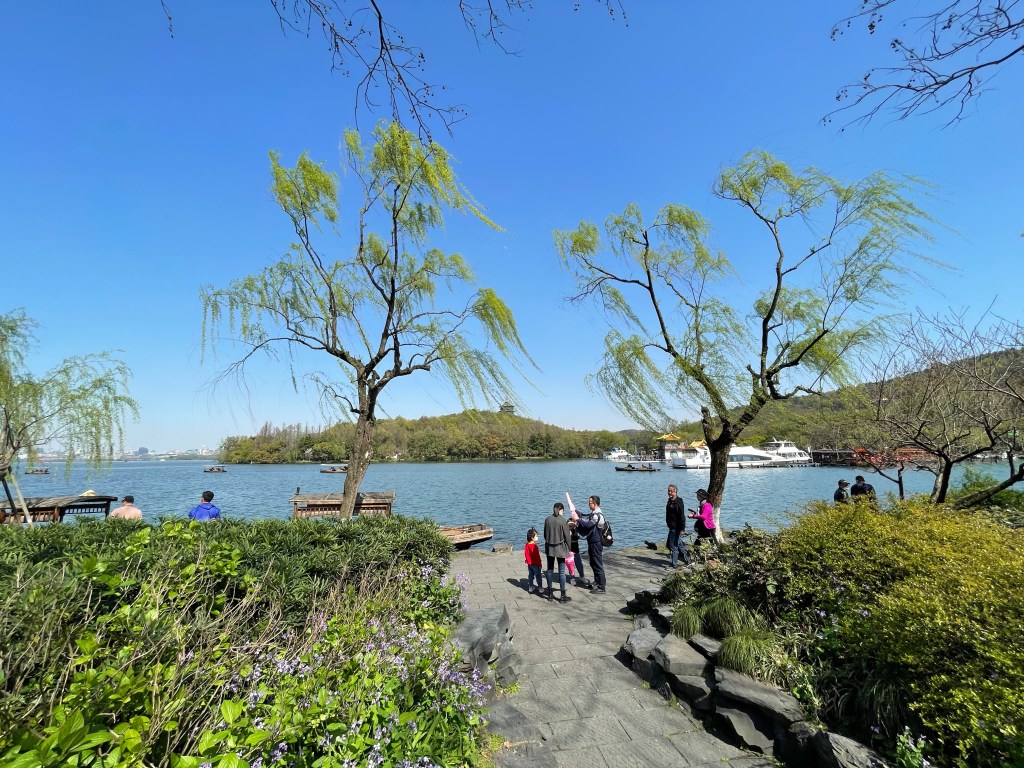
After our stop at Starbucks, we went further on the peninsula on foot up to (8). This is again a very nice area, with some small restaurants and tea house but it was so busy so we decided to take a rest and get some lunch/dinner somewhere.
QingZhiWu Area (10) and Botanical Garden (11)
We looked up a nice Mexican restaurant nearby (Meha Mohar) where we got some great Fajitas.
After that, more by coincidence than planned, we wandered around the area and realized that this is a really nice part of town. There were so many small cafes, bars and restaurant as well as really tiny streets (it felt like in any village in Germany) that we enjoyed greatly walking around there. After a while, we entered a nice “park” which turned out to be the botanical garden. As it was already 17:00, the garden was normally closed, but the guard let us in anyways.
As the park was about to close, we just spent maybe around 45 minutes there. Most notably, we found there were all kind of exotic birds.
And of course, the botanical garden itself was very beautiful, but even more quiet and peaceful.
We went to Hong Kong in Spring 2019. Our trip was an extended weekend, totally 4 days including arrival and departure day. It left us 2 full days and 2 half days there. Logically, it is not nearly enough to experience everything in this great city. So we focused on the main spots.
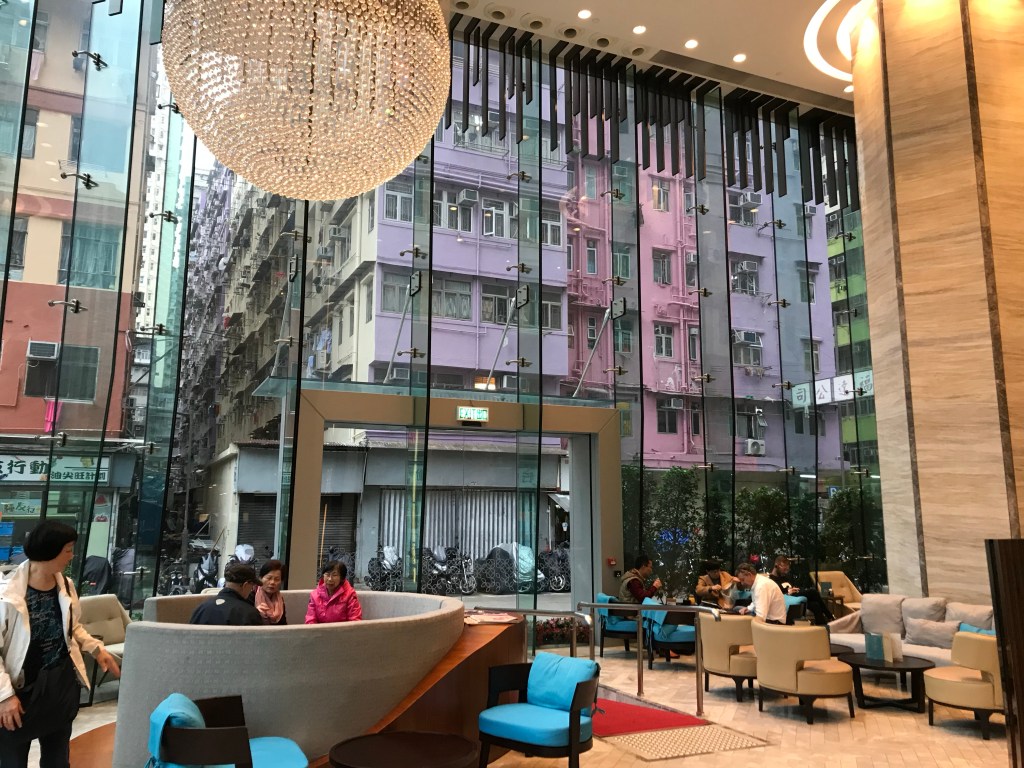
We stayed in the Mong Kok Hilton Garden Inn, which was really good value for money. There was an intense contrast between a world class hotel and the surrounding buildings.
Ladies Market, Mong Kok
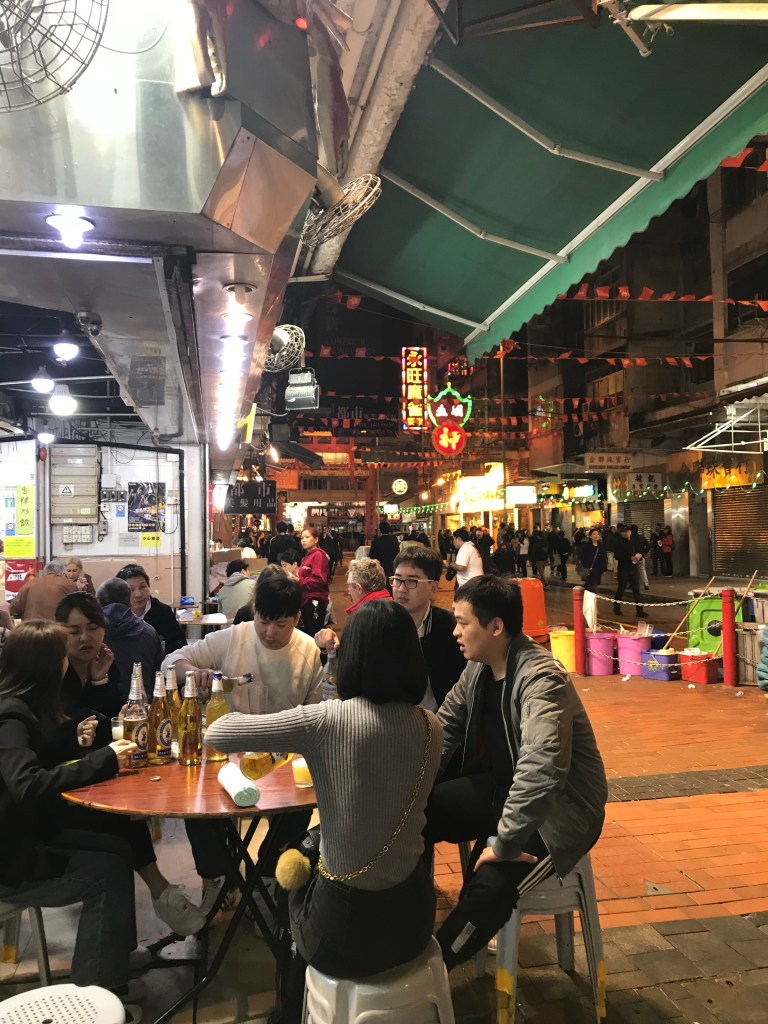
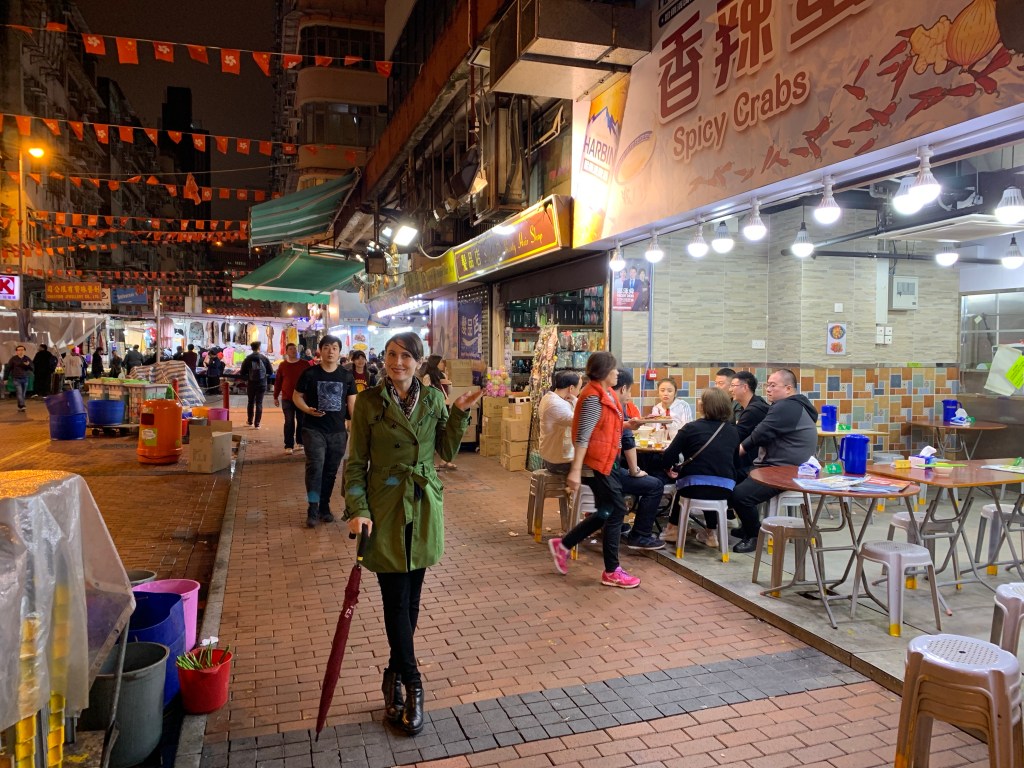
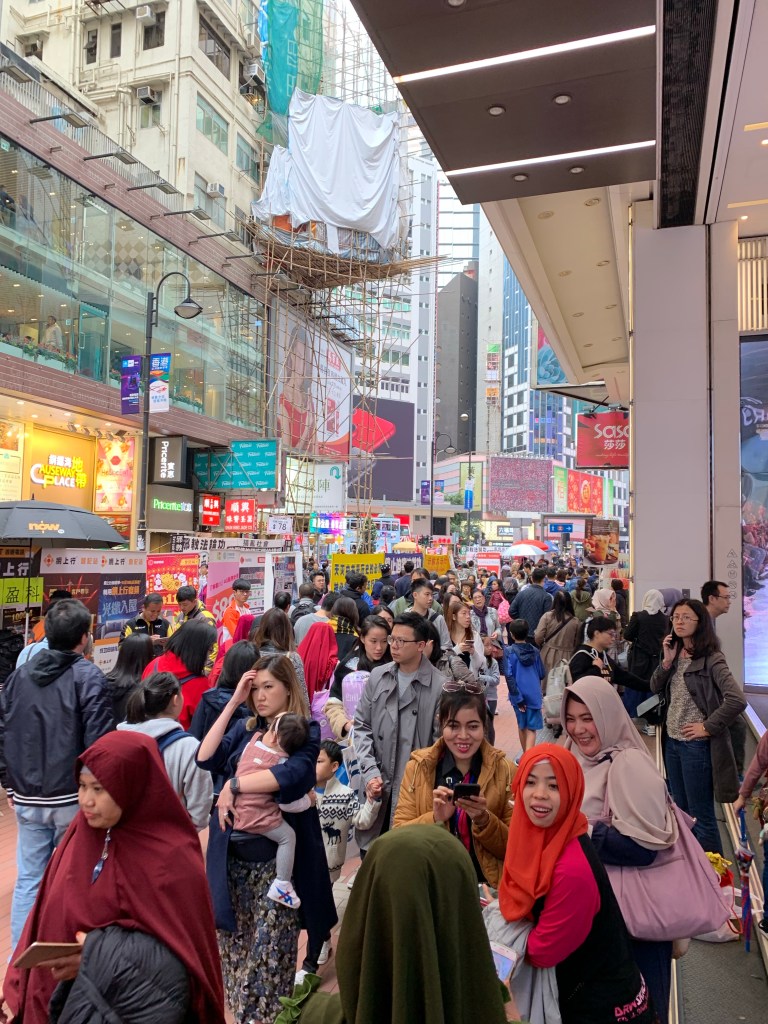
The first evening we just strolled through the streets near the hotel (Ladies Market), which was really a great experience of local markets.
You can have any sort of food and drinks in small restaurants and bars, most of them with outside seating (which was nice, since it was warm). See for yourself a few impressions below.
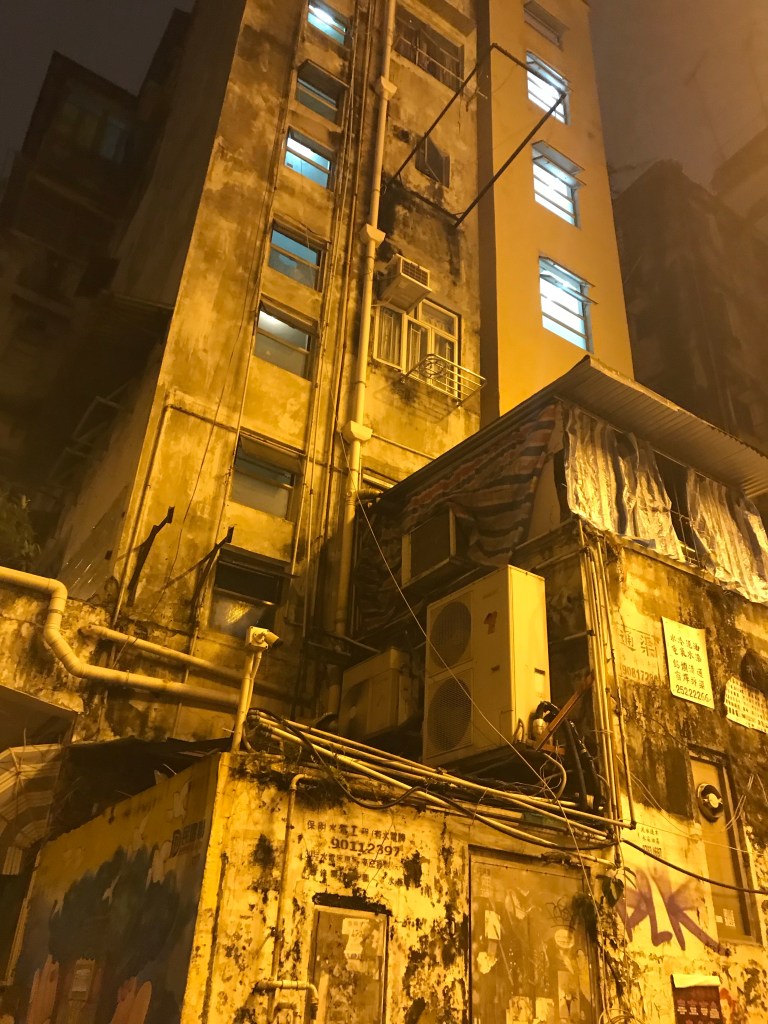
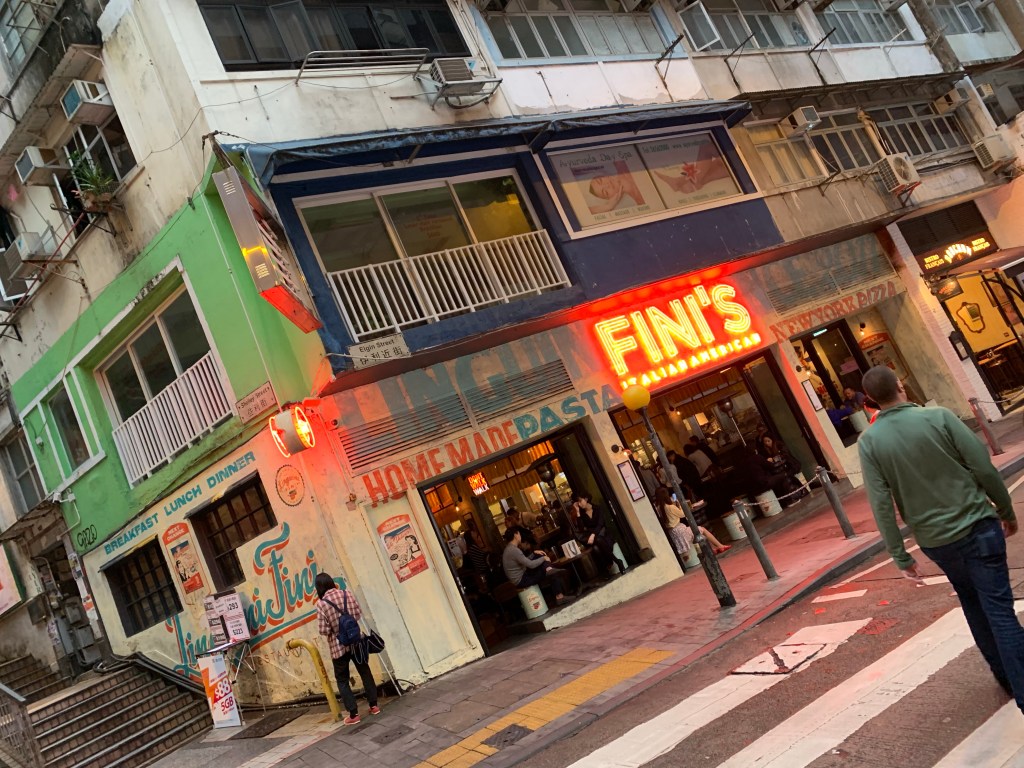
Typical living building
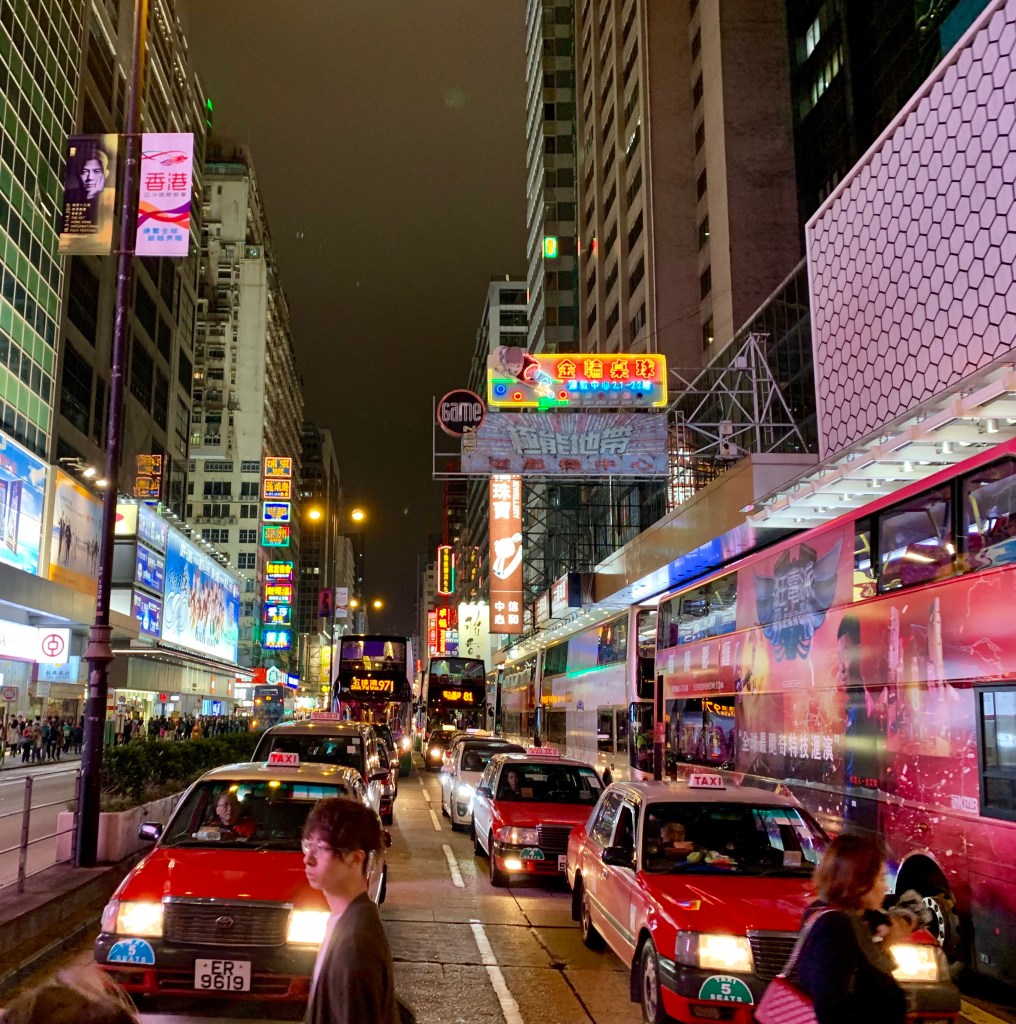
Street live during the night
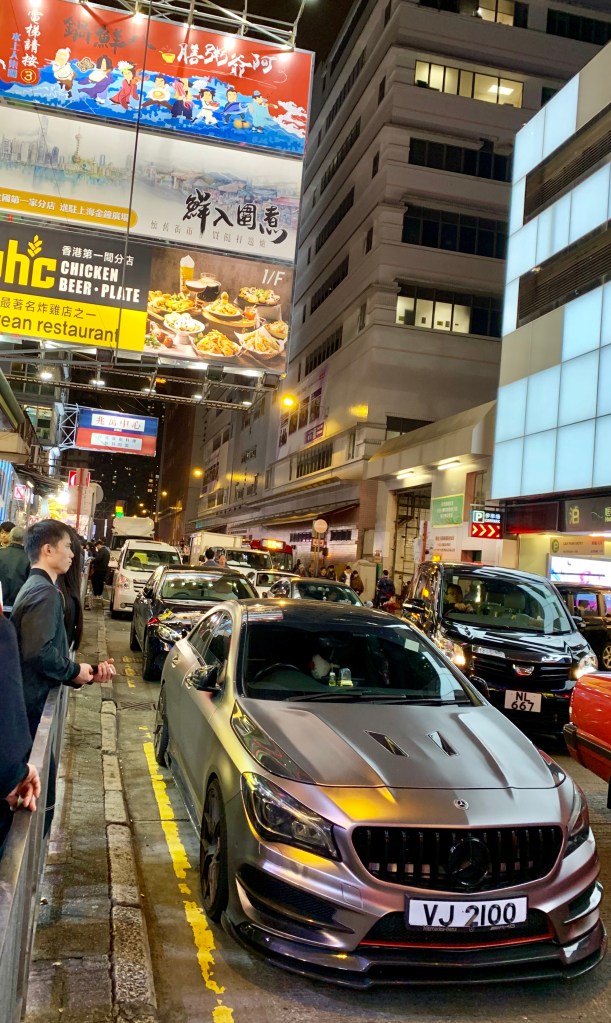
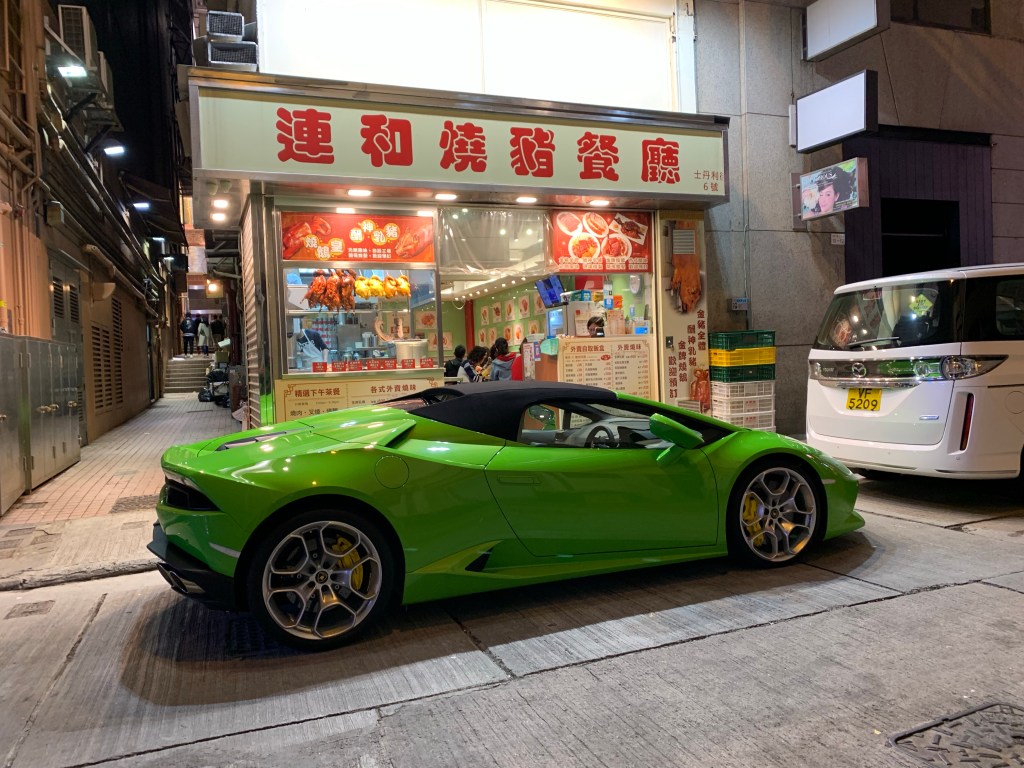
Expensive cars are not a rare sight.
City Tour/Central
The next day, we crossed over by a ferry to the southern district and hopped on a tour bus and took the „general tourist route“. The bus was very easy to find, just outside the ferry terminal.
The weather wasn’t too great, but you have to take what you get, right?
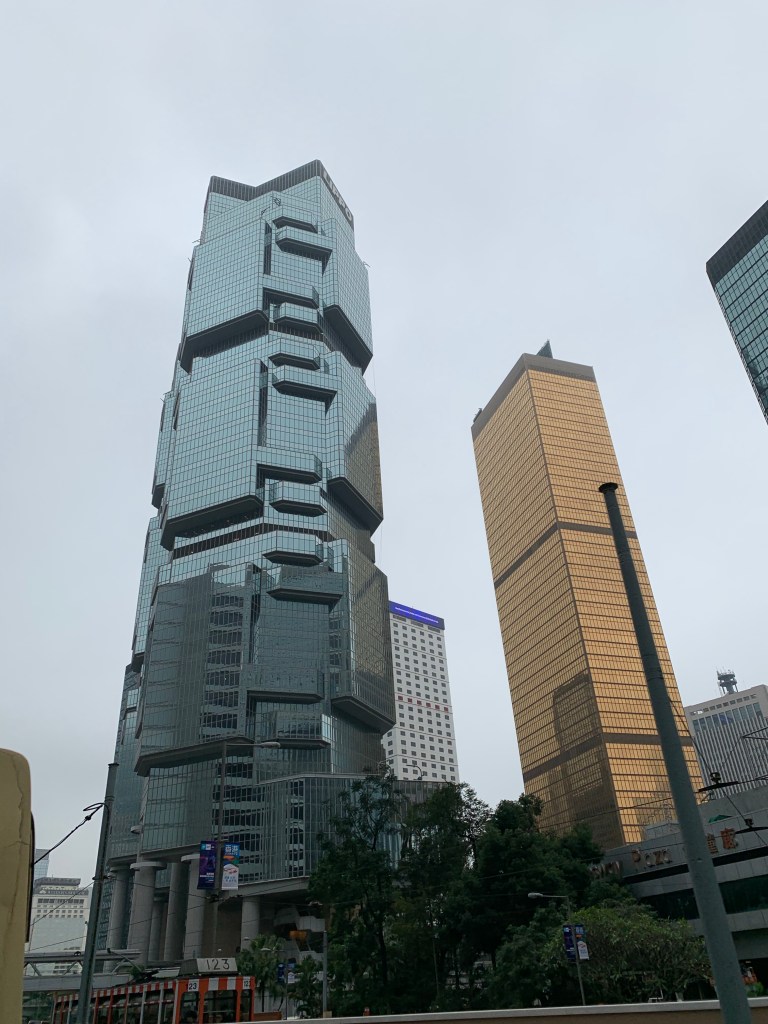
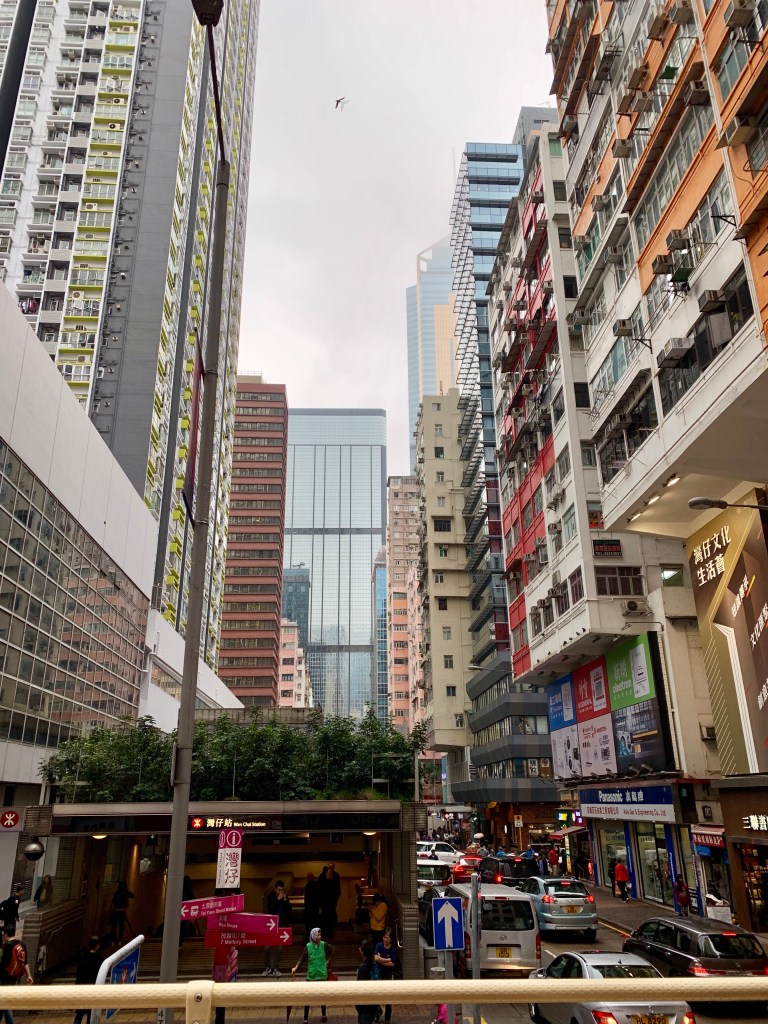
Extraordinary Scyscrapers wherever you look
A typical street.
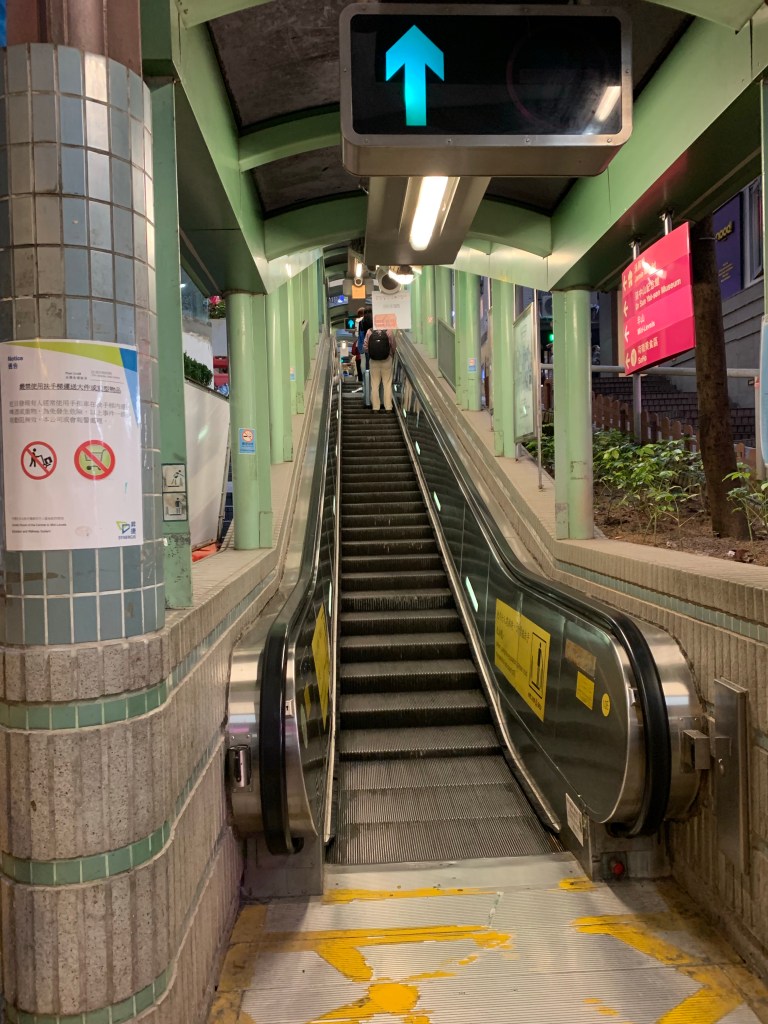
After the bus tour, we went around on foot in central. There are many shops and a famous street, with an escalator leading uphill.
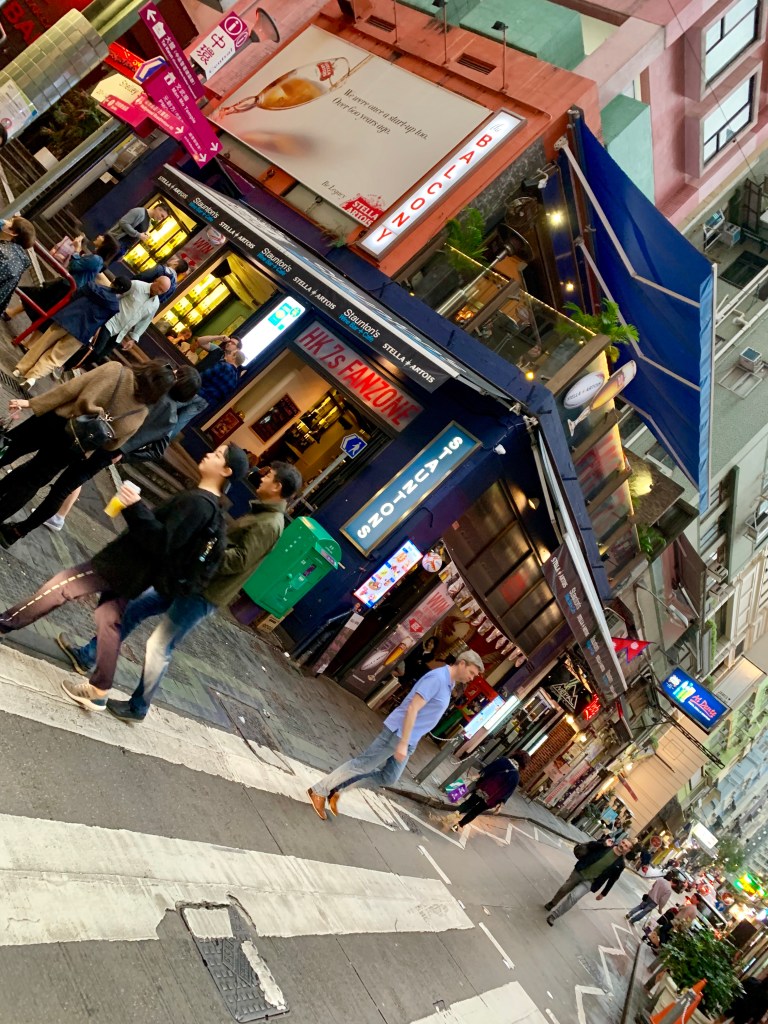
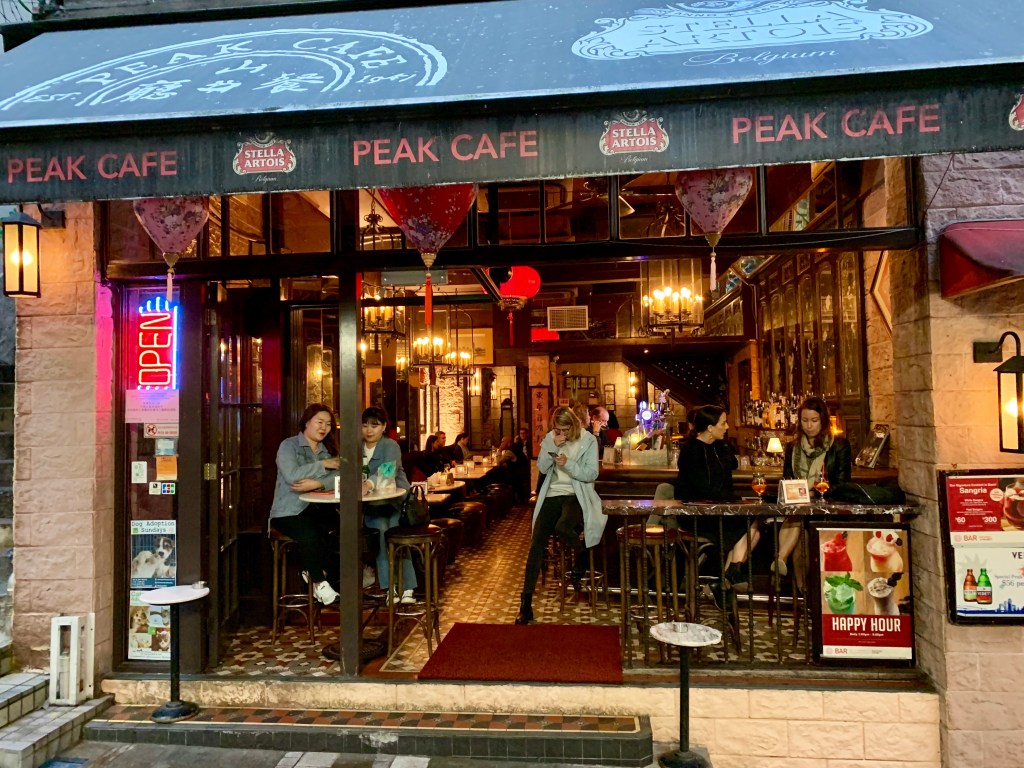
On the way up we found many small bars and restaurants
A city of crazy contrasts…$300,000 car in front of a $1 noodle soup store
The worlds longest escalator in central district
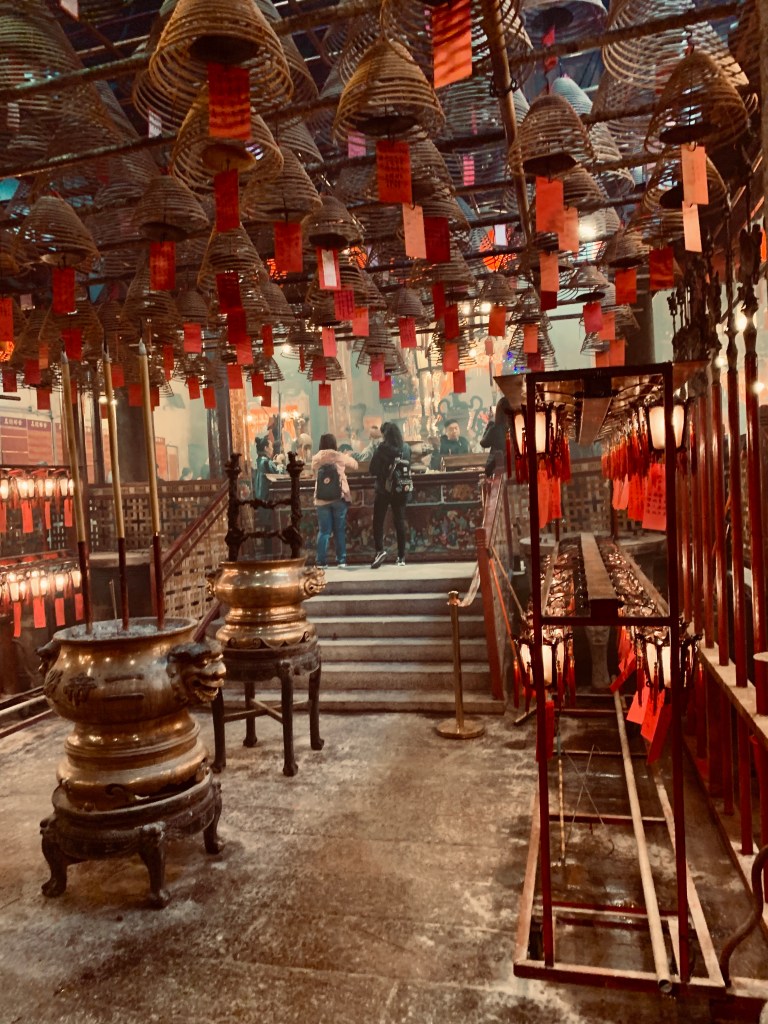
A temple along the way.
Victoria Peak
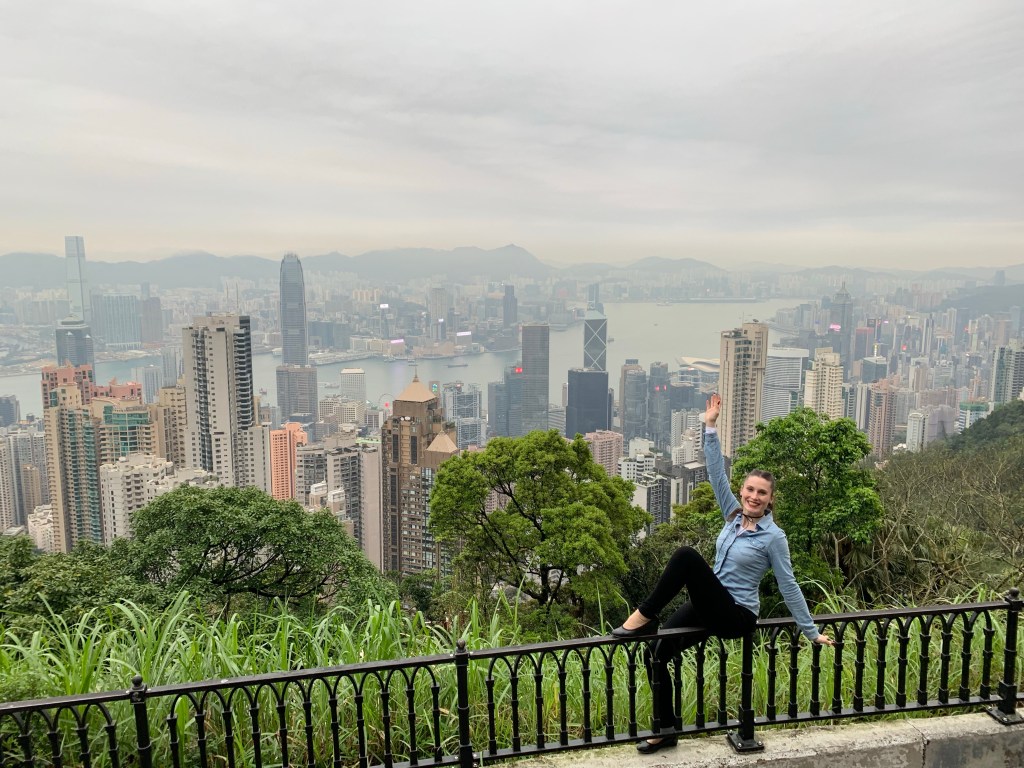
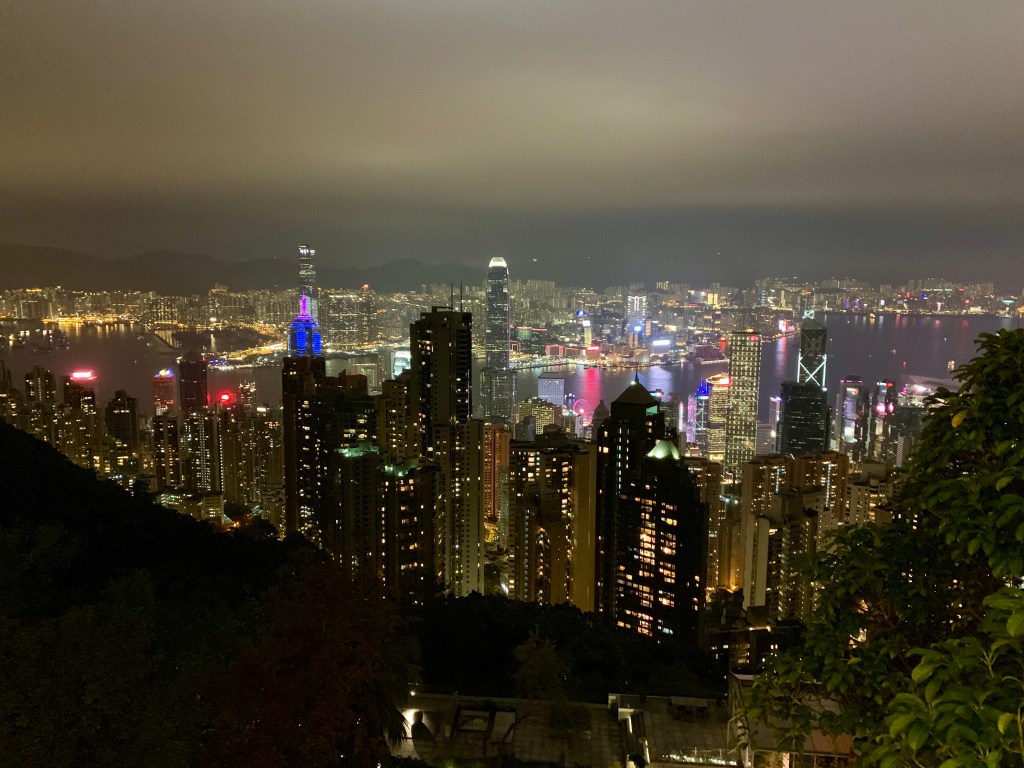
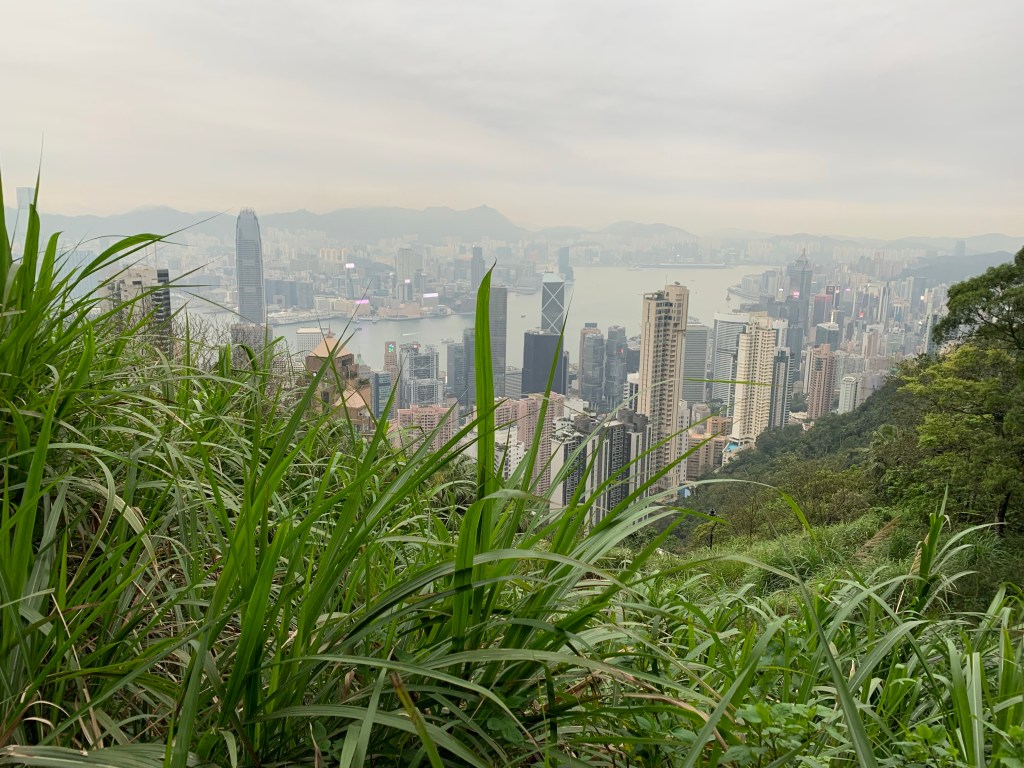
Later that evening, we went up (by taxi) Victoria peak to enjoy the view at sunset and night.
Night and…
…day, skyline as seen from Victoria peak.
Tsim Sha Tsui Waterfront
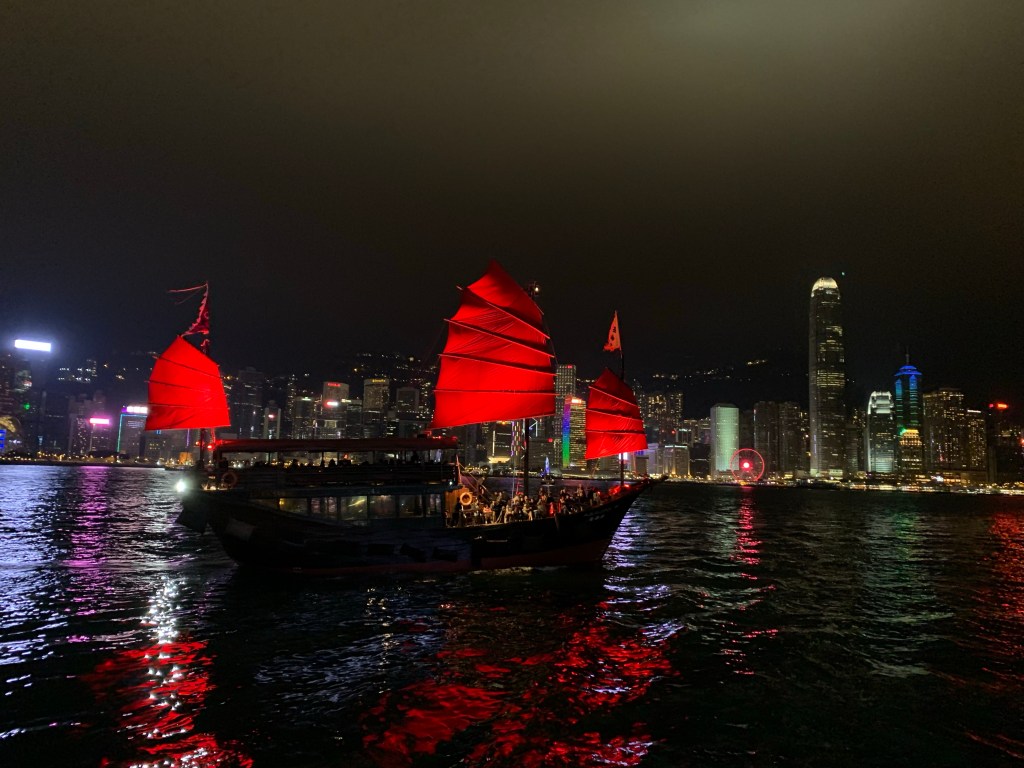
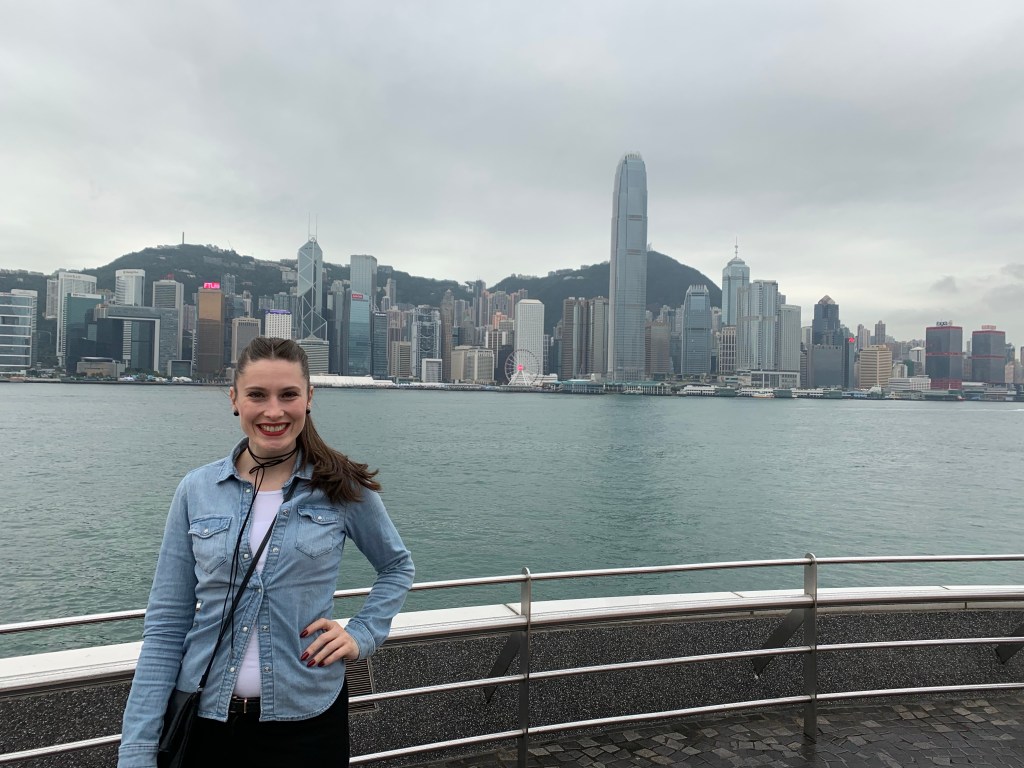
A must see is the area Tsim Sha Tsui Waterfront. You can see the skyline of Central district (if the weather is clear). Unfortunately, the weather was not too great the first day, but we could eventually enjoy the view later during the night another day. There is a light show every evening, which you should not miss!
VR-Arcade
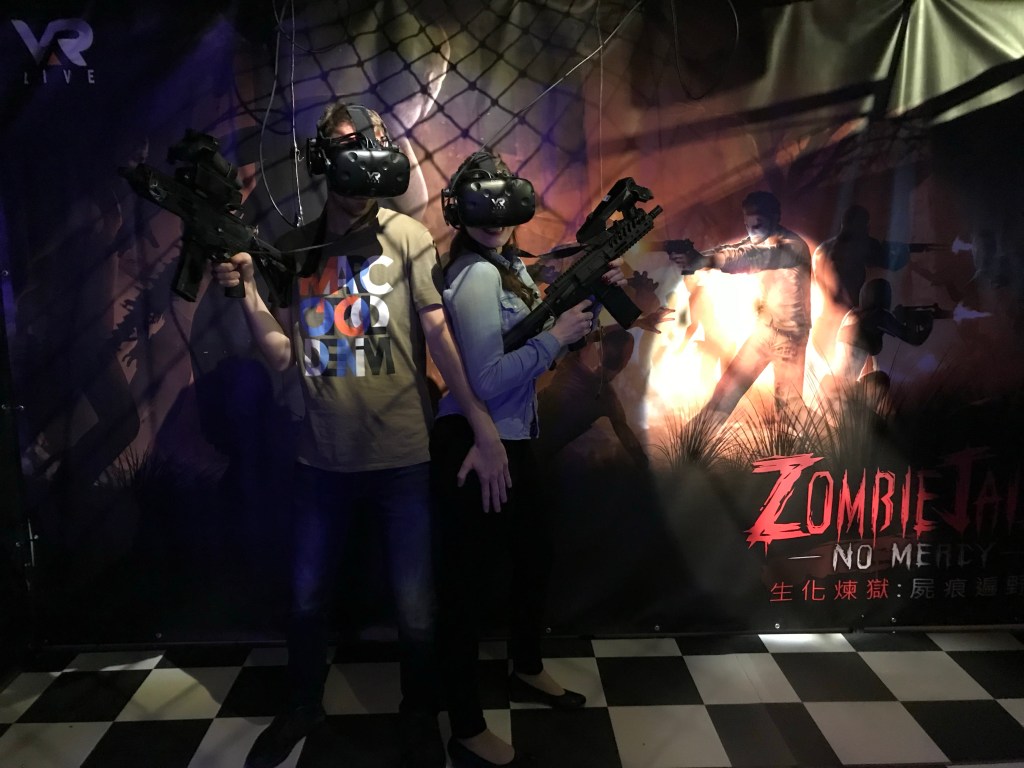
Another really, really cool place we went was a Virtual Reality Gaming place. The computer geeks among you probably know what it is, i will describe it nevertheless.
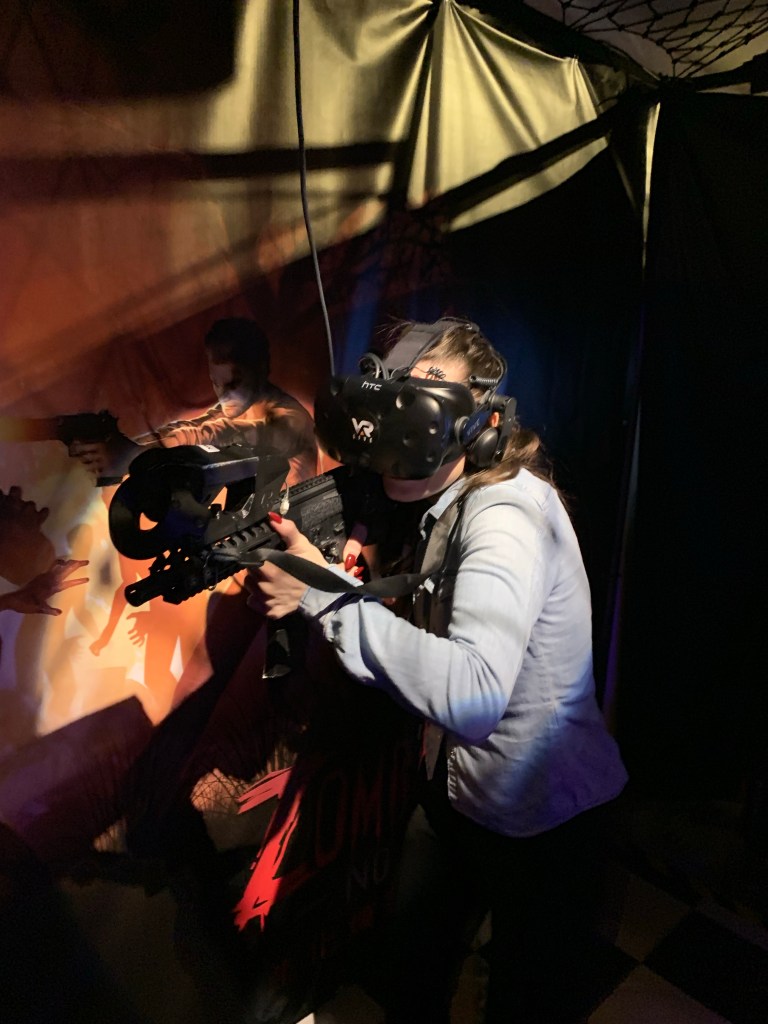
Firstly, there was really good equipment there, they had the latest HTC Vive. The place was separated into several „booths“ about 2x3m, in which you could play. The guns also seemed very „real“ it wasn’t just plastic, it was metal, like a real gun.
There were a lot of different games available, also some choices for kids. We went for a Zombie Apocalyse game and a rollercoaster ride.
I don’t remember the price exactly, i guess it was something around 30 bucks.
It was great fun and I can only recommend it to everyone to try this out when you have the chance.
We fought the zombies with all we got!
We hope to come back sometime this year or next year, there is so much more to experience. I hope you could get a nice impression about Hong Kong!




 2GIC
2GIC 