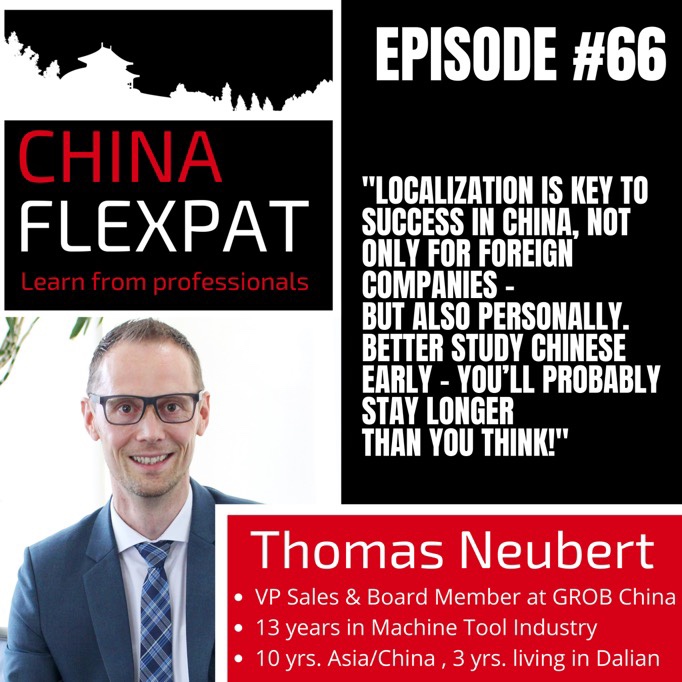
The definition of „flexpat“ is more or less „flexible expat“, e.g. someone living and working in a foreign country, but not in the typical „expat bubble“ (which consists of other foreigners, so you are kind of isolated from the local culture).
I had the recent opportunity to speak in this podcast. It may be especially interesting for those of you aiming to work or live in China.
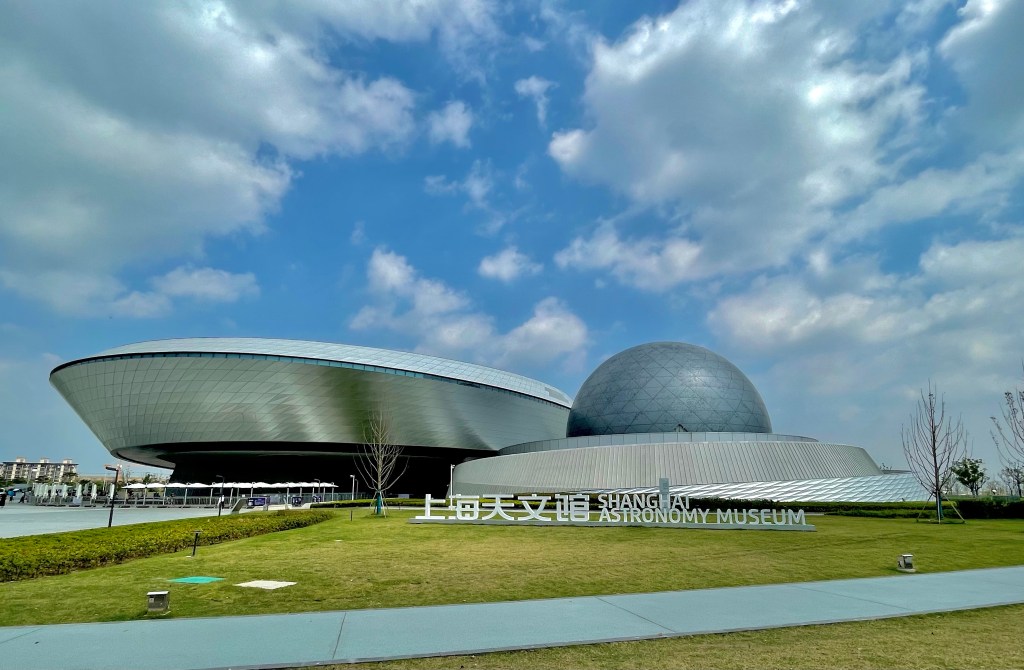
Opened in July 2021, it is the biggest and most modern astronomy museum in the world.
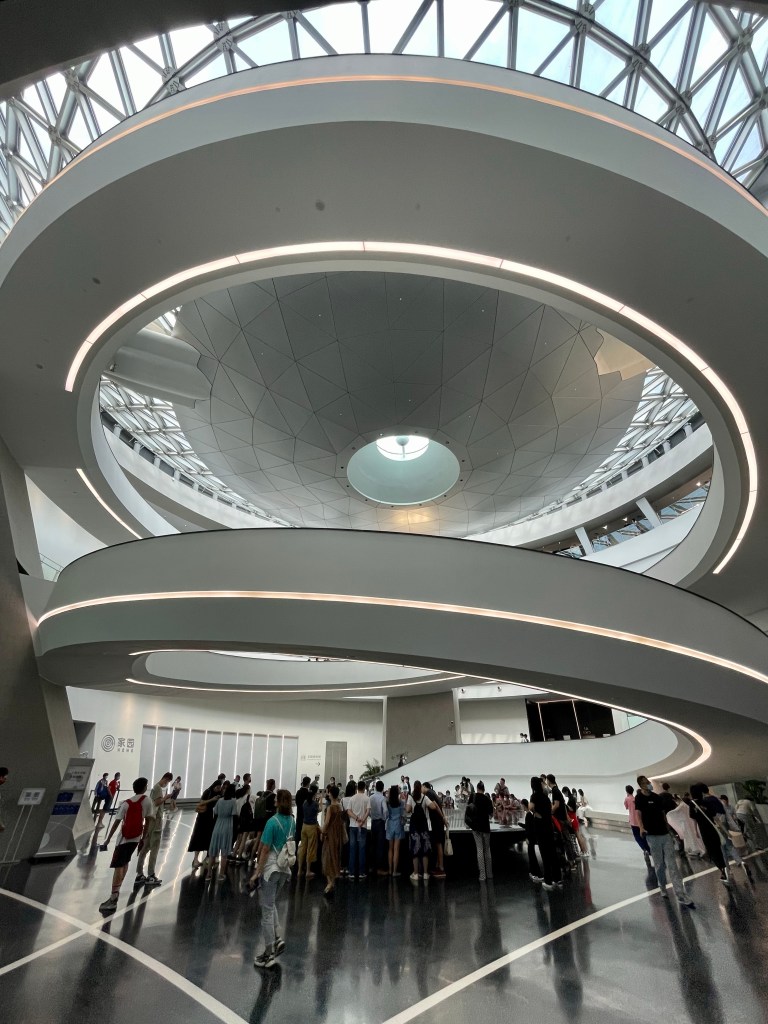
The architecture itself is stunning, even when viewed only from outside
The Shanghai Astronomy Museum (or Shanghai Planetarium) (上海天文馆) has been opened in July 2021. I was very lucky to get a ticket during the Mid-Autumn Festival. Normally, you have to book the tickets 7 days in advance and getting tickets on a major national holiday is nearly impossible.
The Shanghai Astronomy Museum is located in the Lin-Gang District, in the south eastern corner of the city. It takes almost 2 hours by subway/train from the city centre. I took line 16 which exits at the Dishui Lake. From the exit station, it is about 800m, an easy 10 minute or so walk.
As with all educational institutions, such as museums, the entry fee is extremely reasonable (30 RMB). You book your online ticket through WeChat and just show it at the entrance. You also need (as usual) both health codes, the Shanghai Health Code and the 14 day travel history .
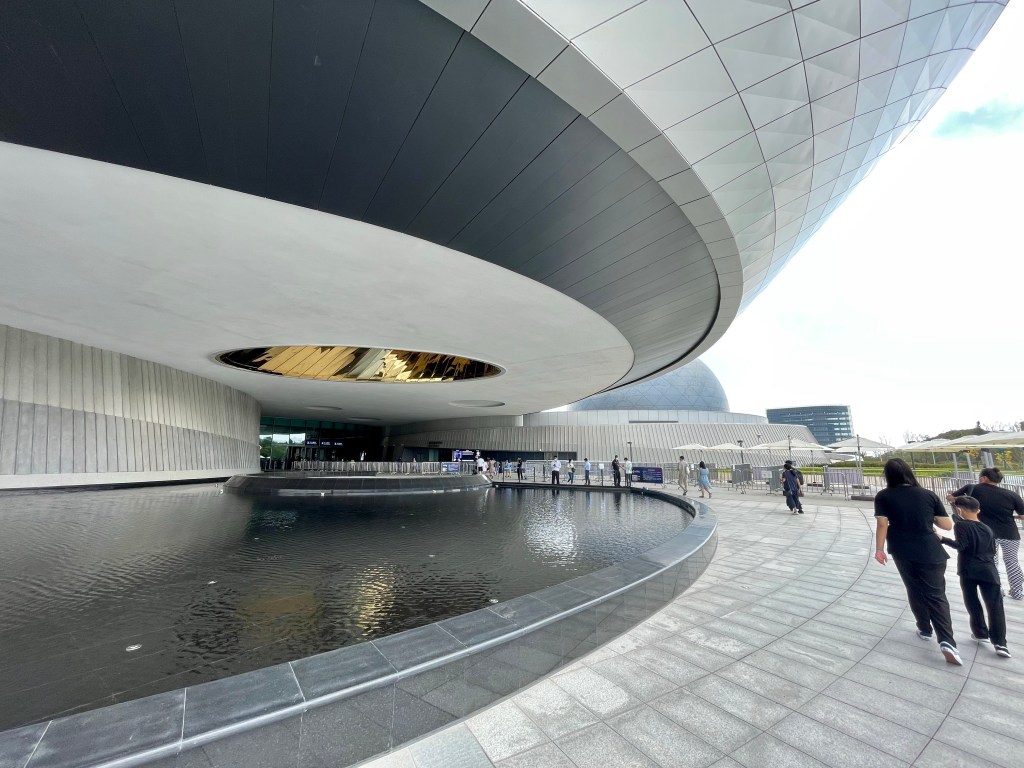
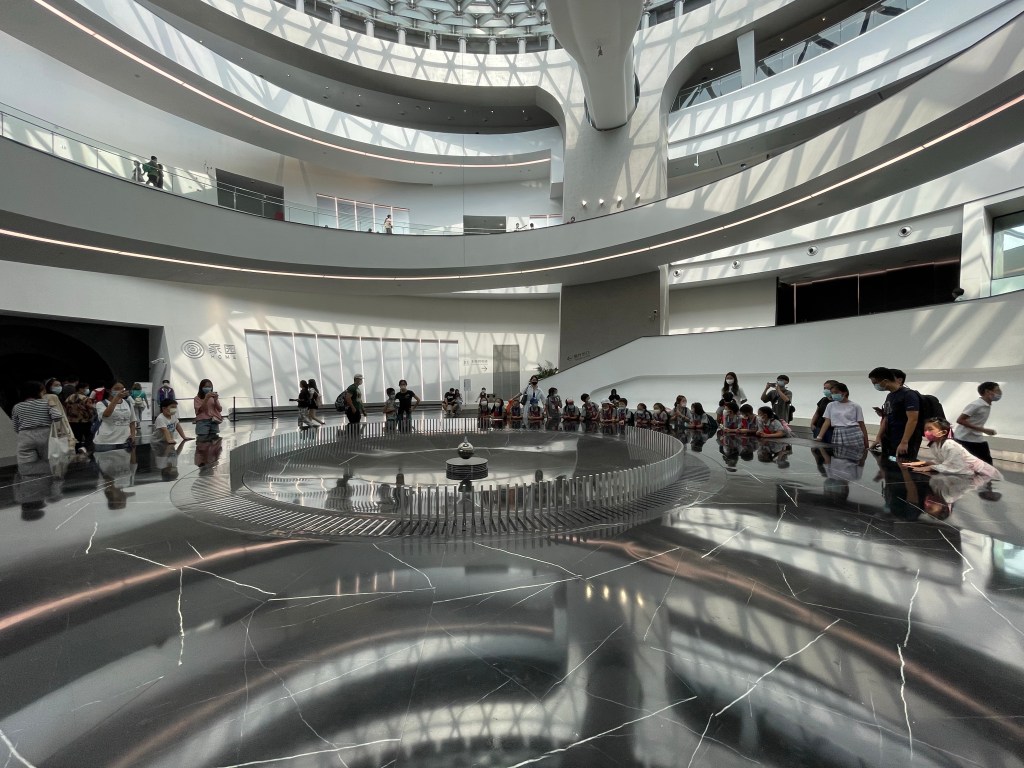
The entrance is an impressive piece of architecture and once you are inside, it gets even better.
The entrance hall
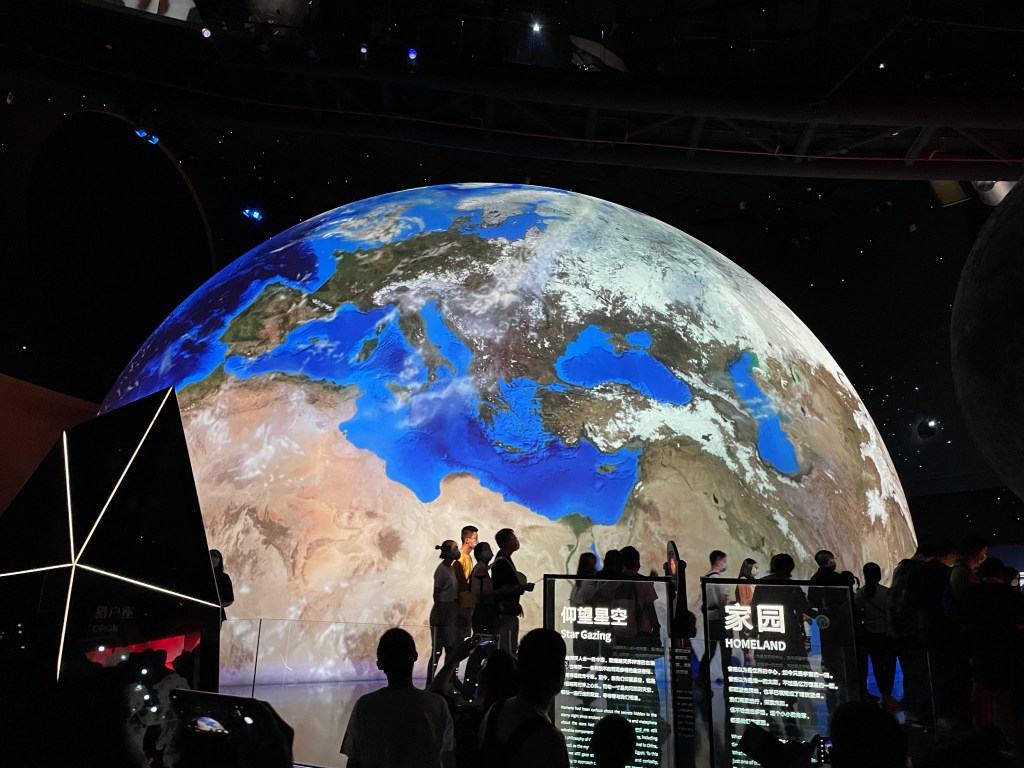
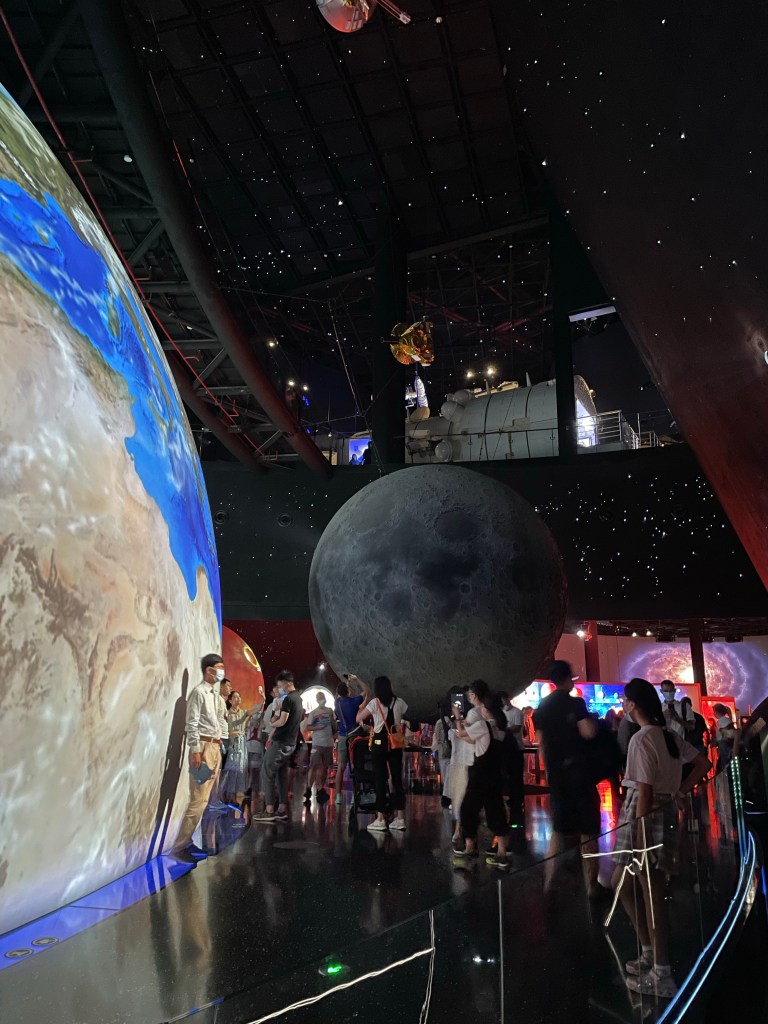
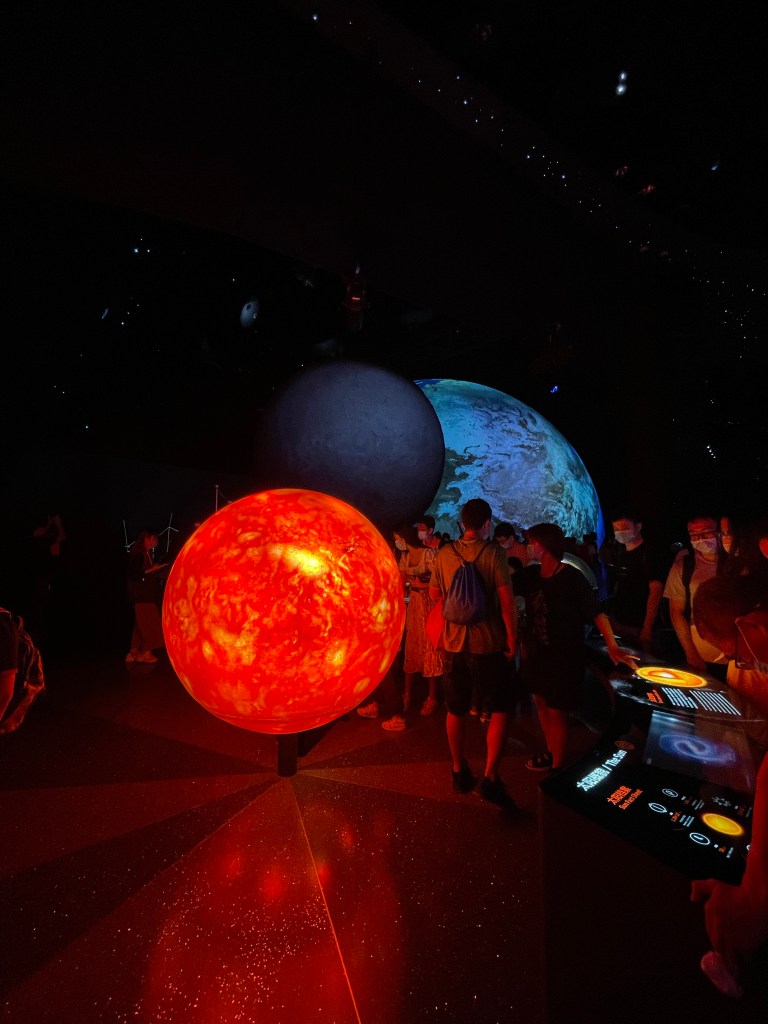
The first exhibition is dedicated to our solar system. The biggest focus is on the earth, with a huge animated sphere. Earth and moon are to scale compared to each other, it was quite impressive how big the moon actually is. I would consider myself an astronomy nerd, but i never quite realized this size.
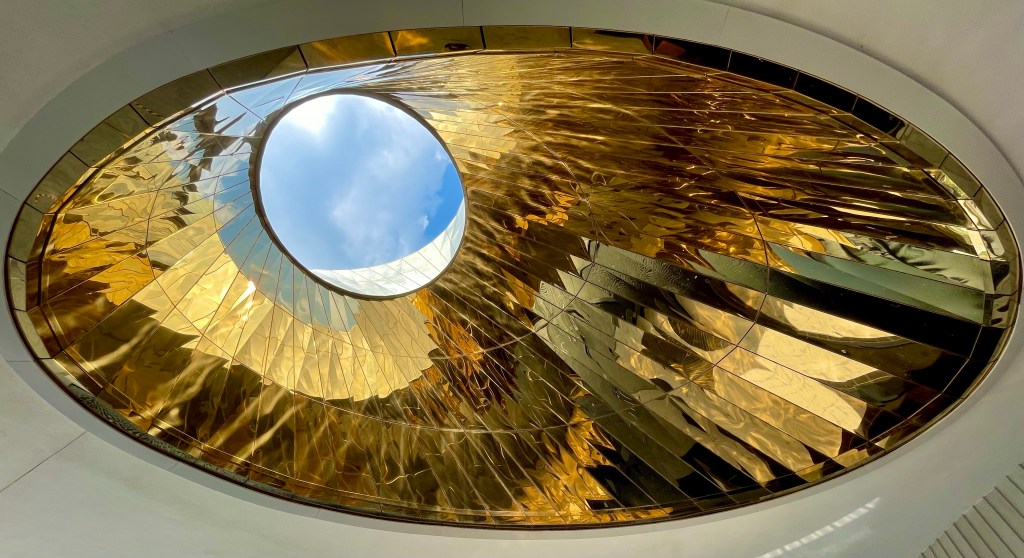
Clouds in motion
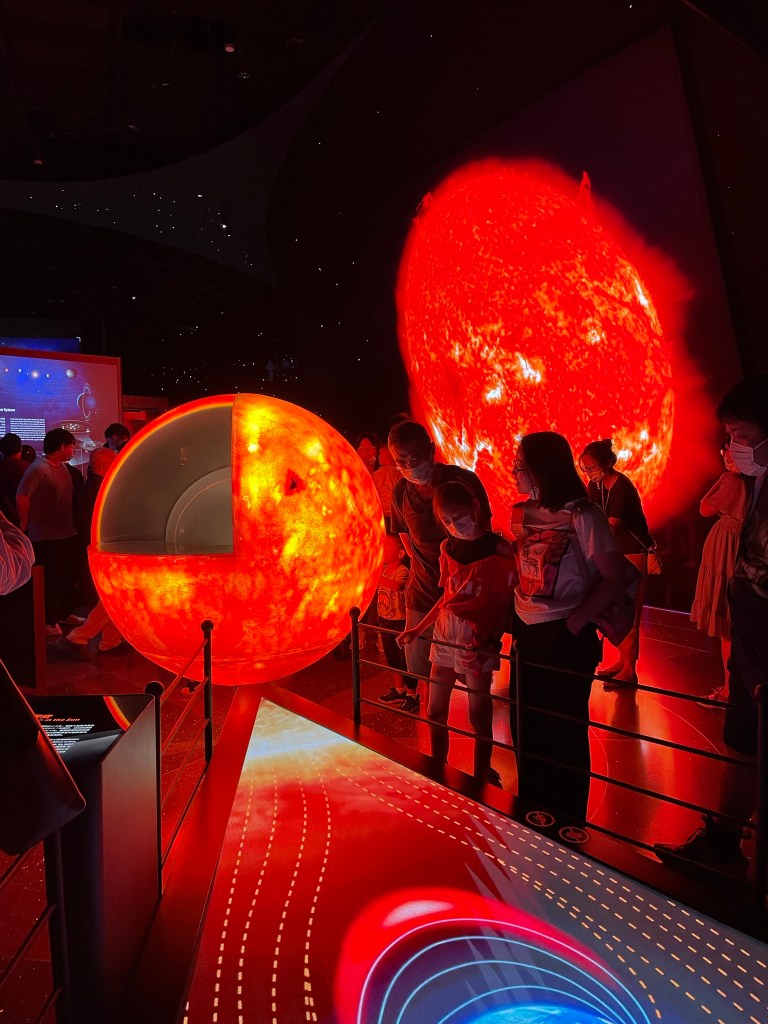
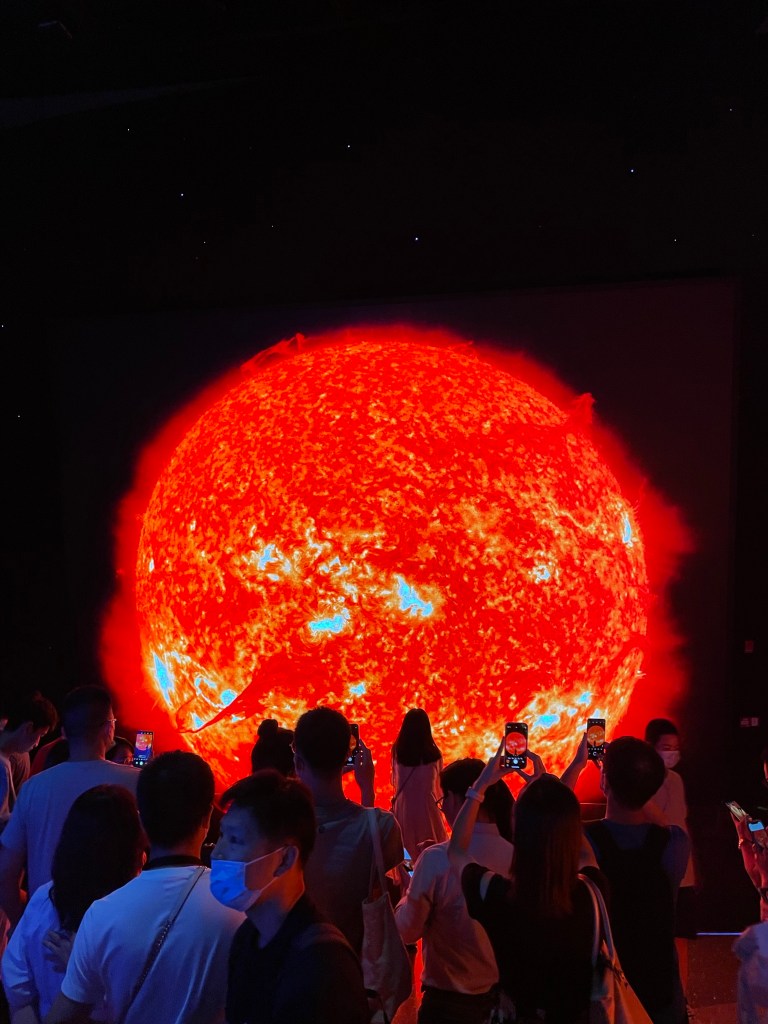
The second largest focus was (logically) on our sun. Details like how the internal fusion process works were explained very clear so even children can understand it.
The display and facts about the other planets was not less impressive and all based on the latest information.
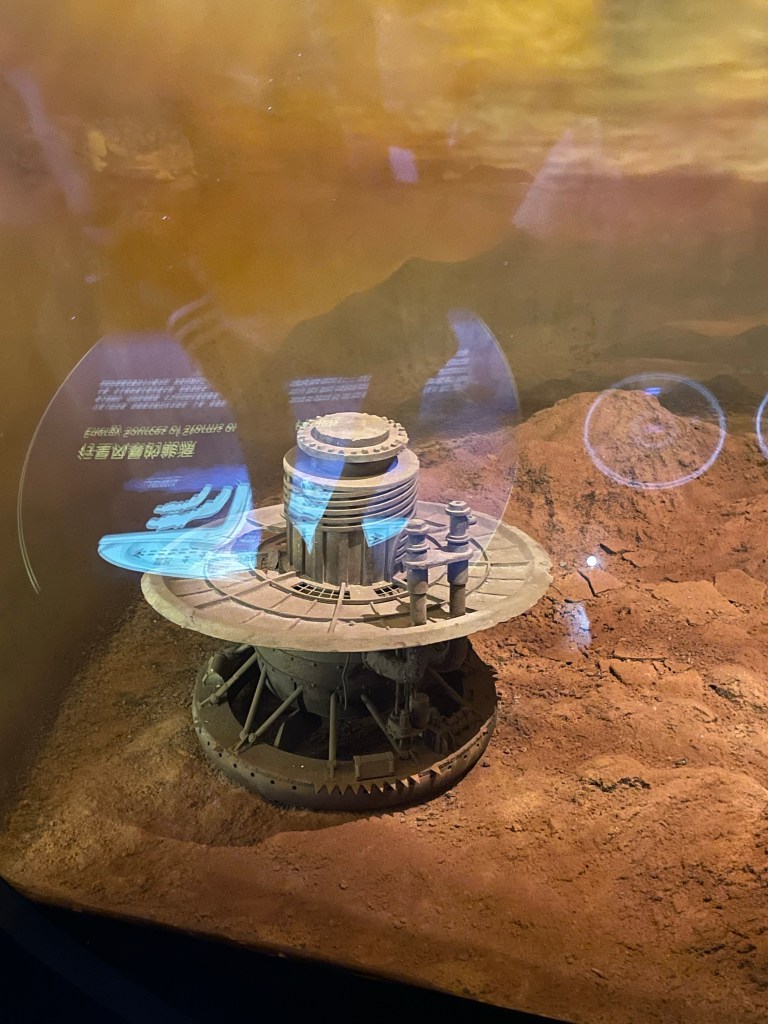
replica of a Venera probe which landed on Venus in the 1960s and 70s
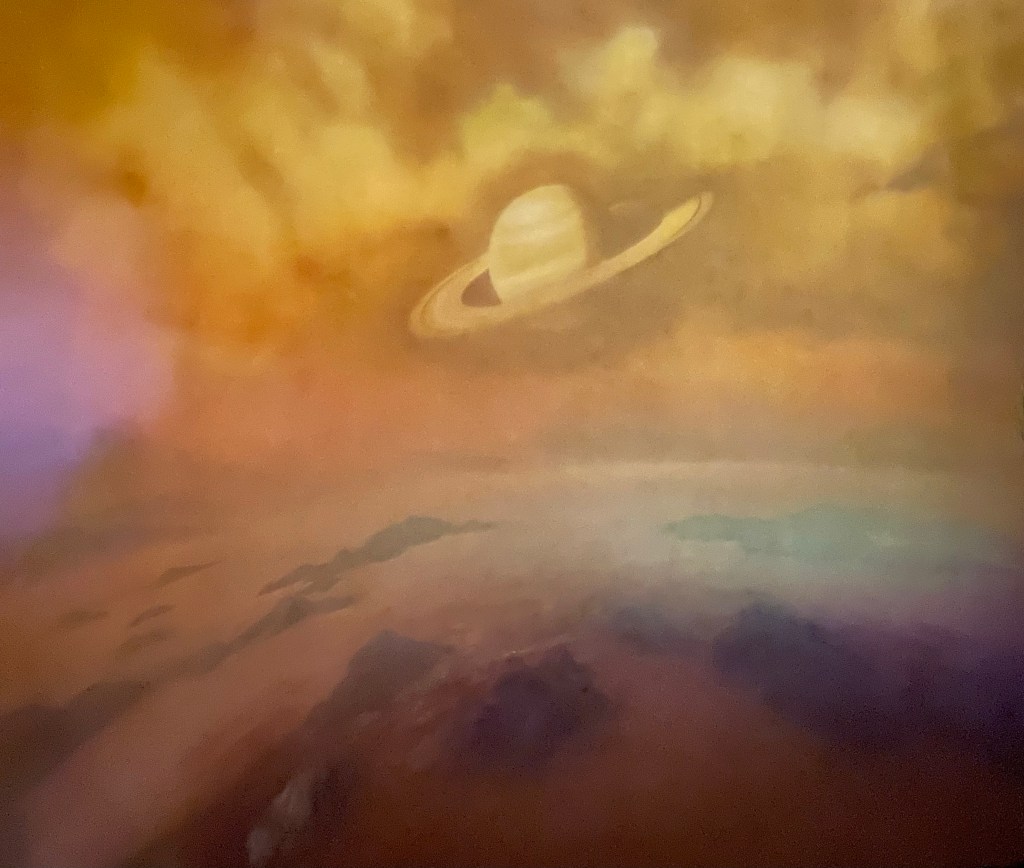
A artists impression on how it looks on Titan, on of the large moons of Saturn.
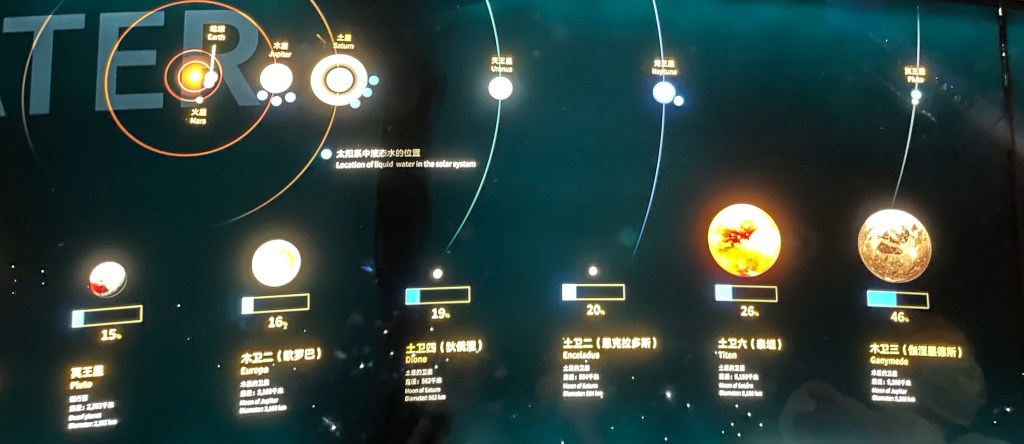
A display of where in our solar system liquid water can be found and in which amount
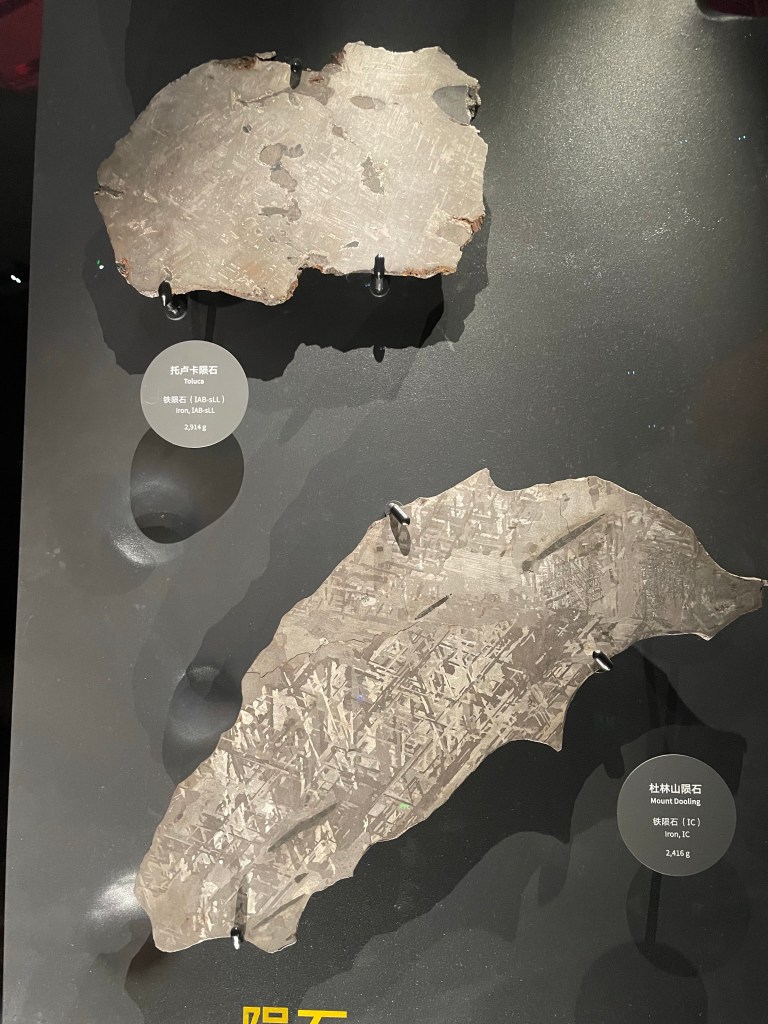
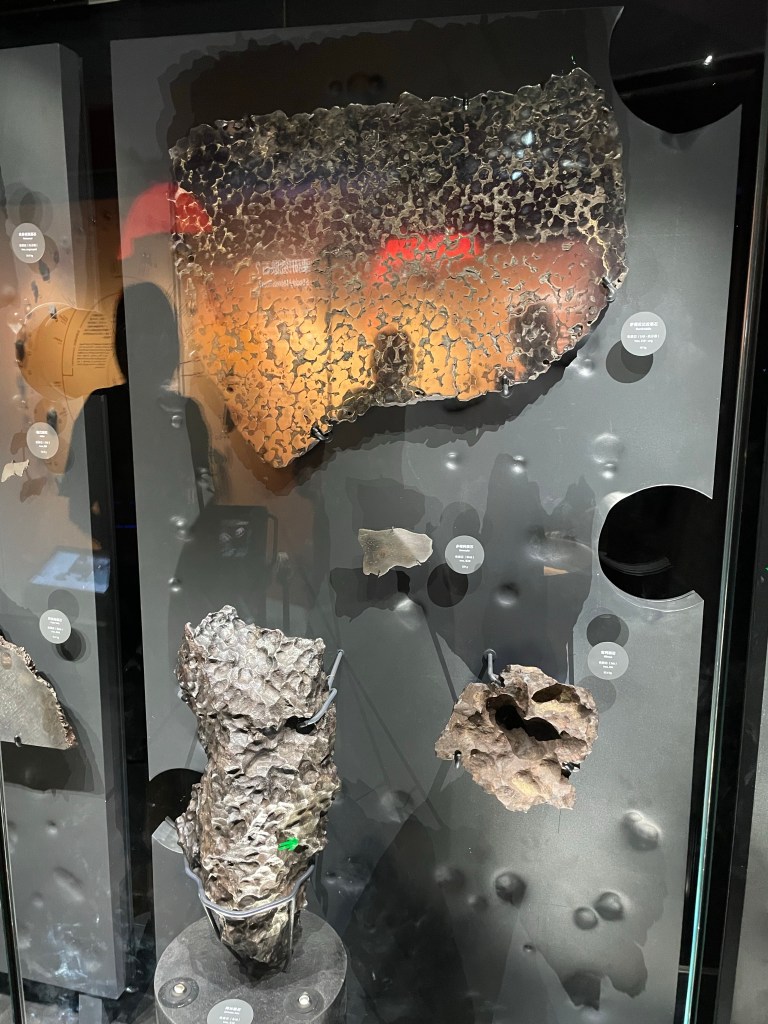
There were some amazing and huge meteoroids displayed as well.
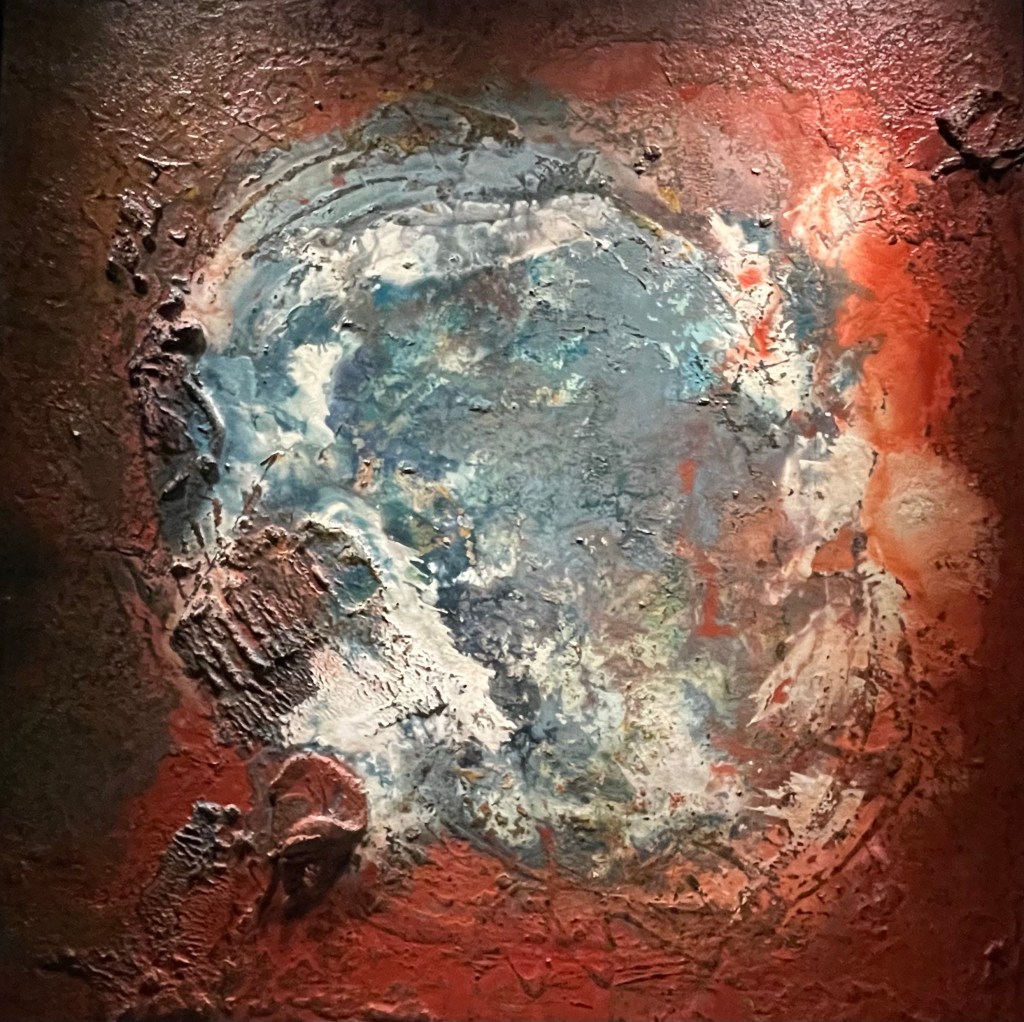
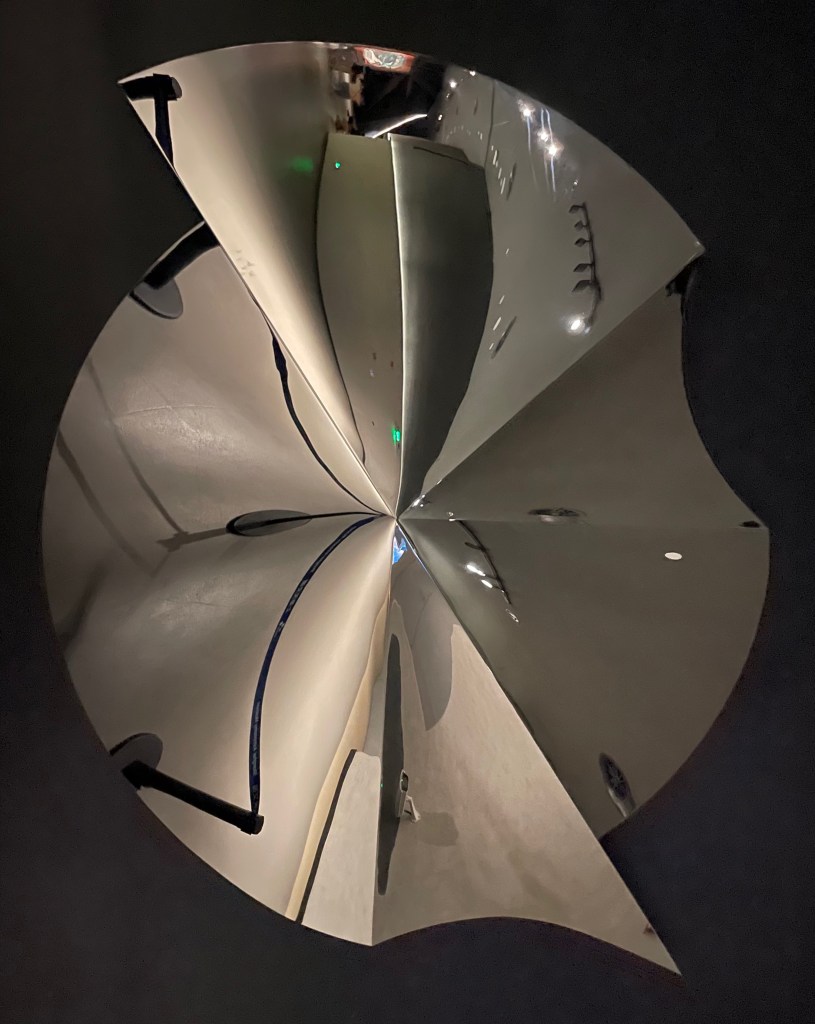
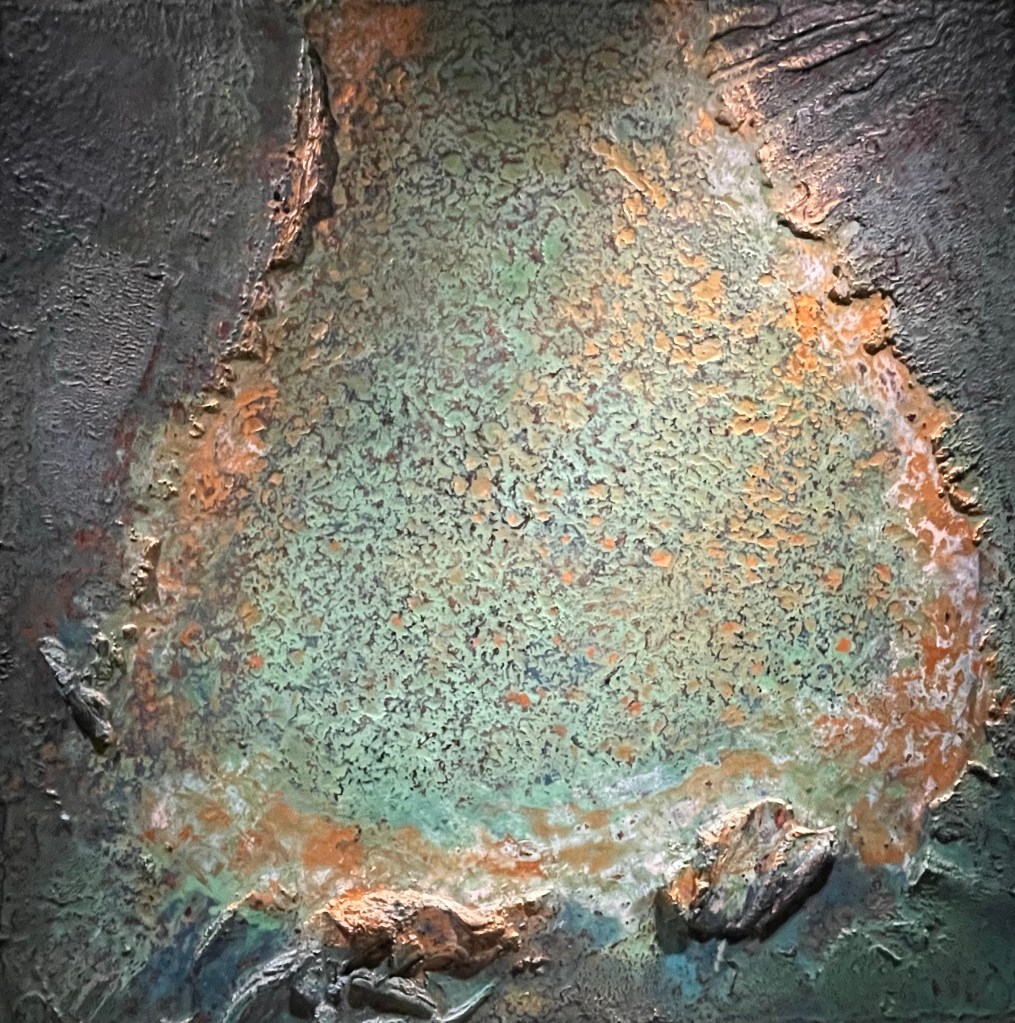
On the way to the next exhibition there were a number of photographs and art related to the universe. I am not a big art fan, but most of them looked great.
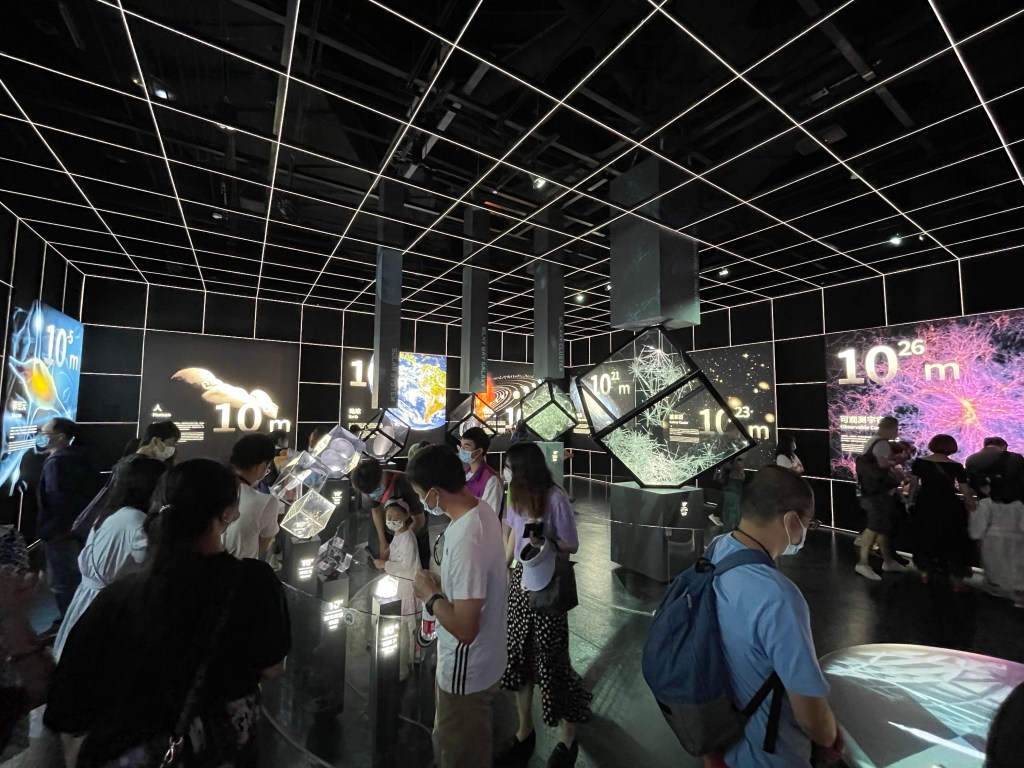
The next part of the exhibition was dedicated to scales in the universe, from the smallest to the biggest, as well as the believed timeline from the big bang to now.
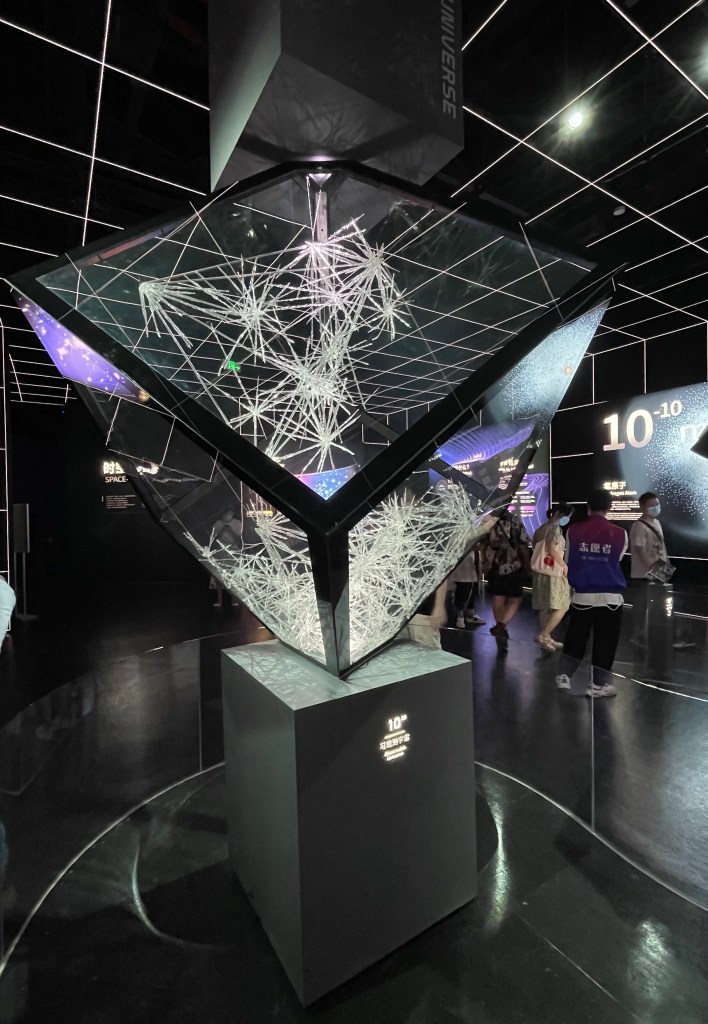
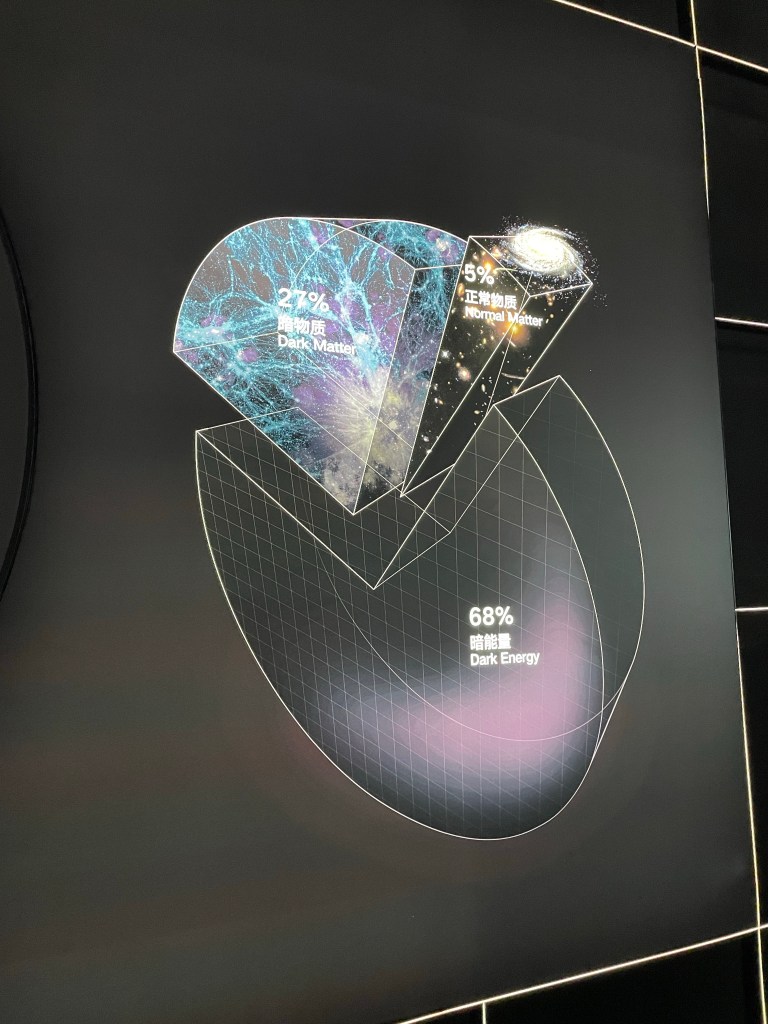
The largest scales in the universe (simplified)
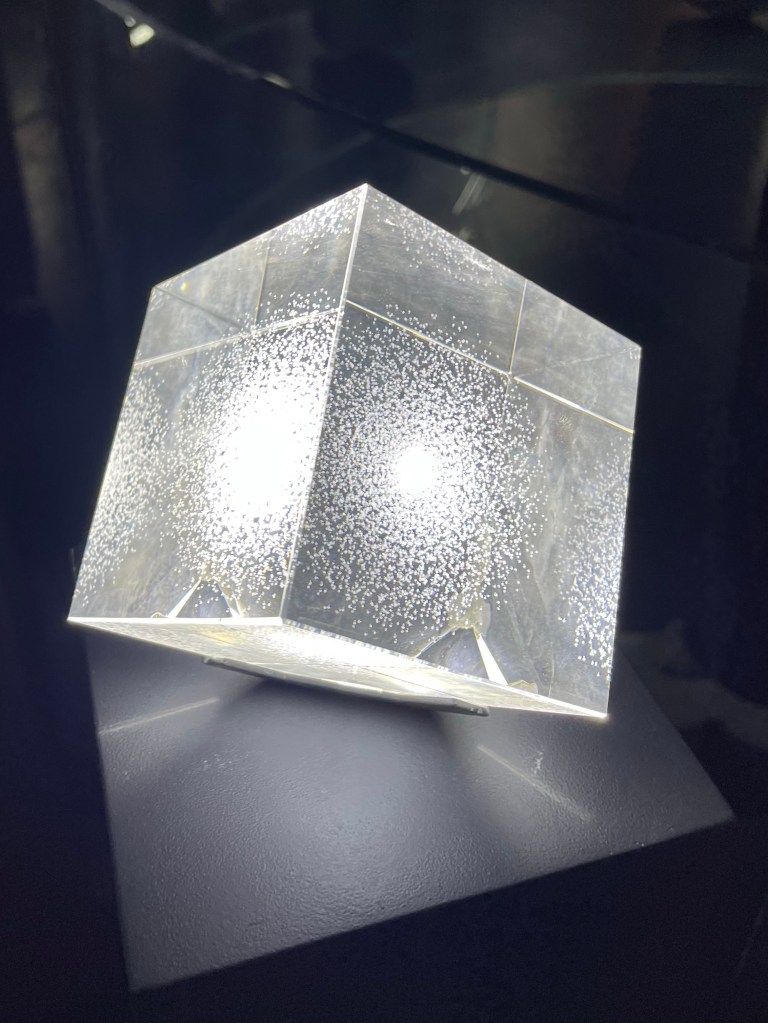
Model of a hydrogen atom
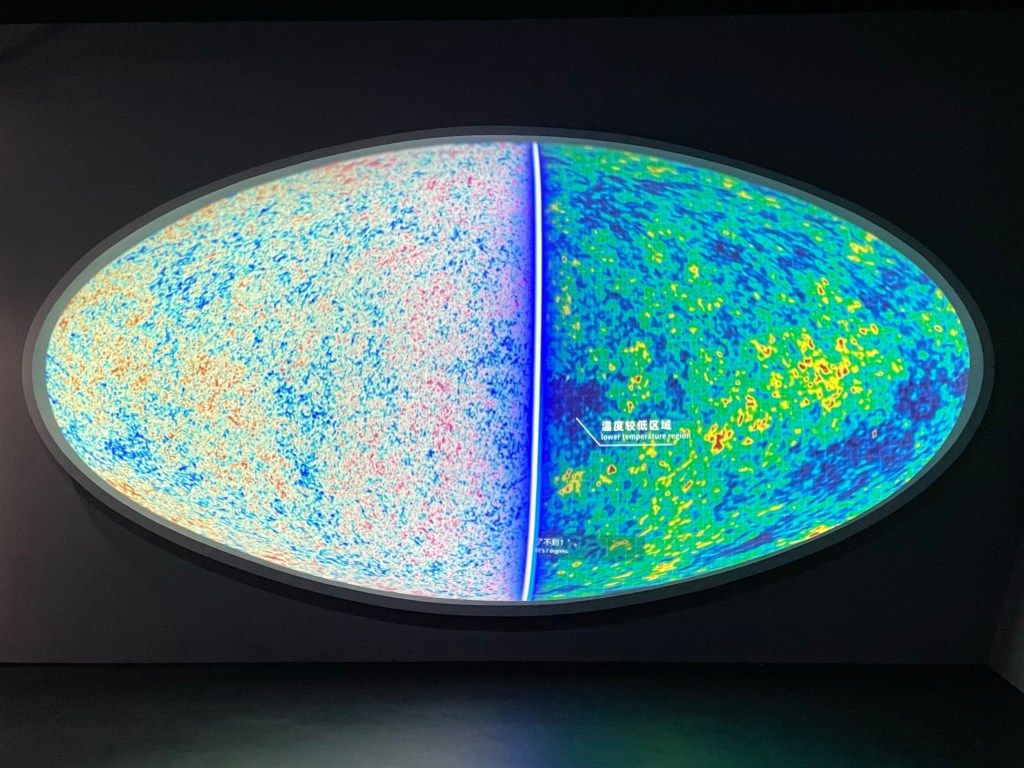
visualization of the cosmic background radiation
from the smallest objects to the largest
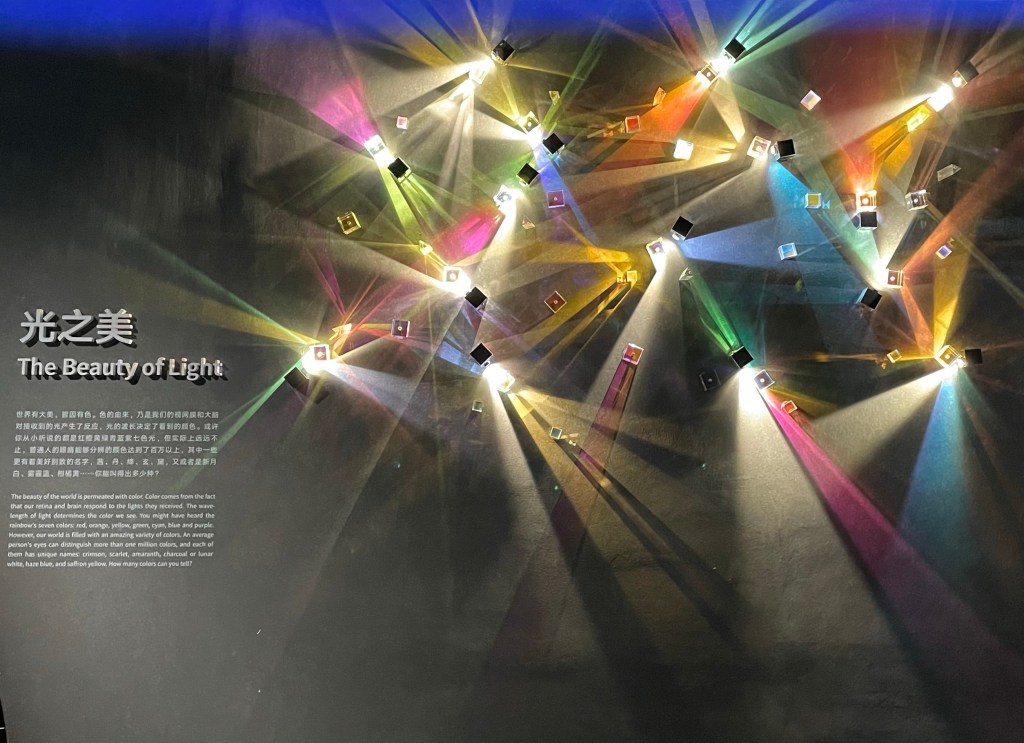
There were some more sections about light, history of different theories (such as particle physics, quantum theory, relativity, black holes etc. There were no really distinct pictures there, so i leave this up to your imagination or feel free to lookup at wikipedia.
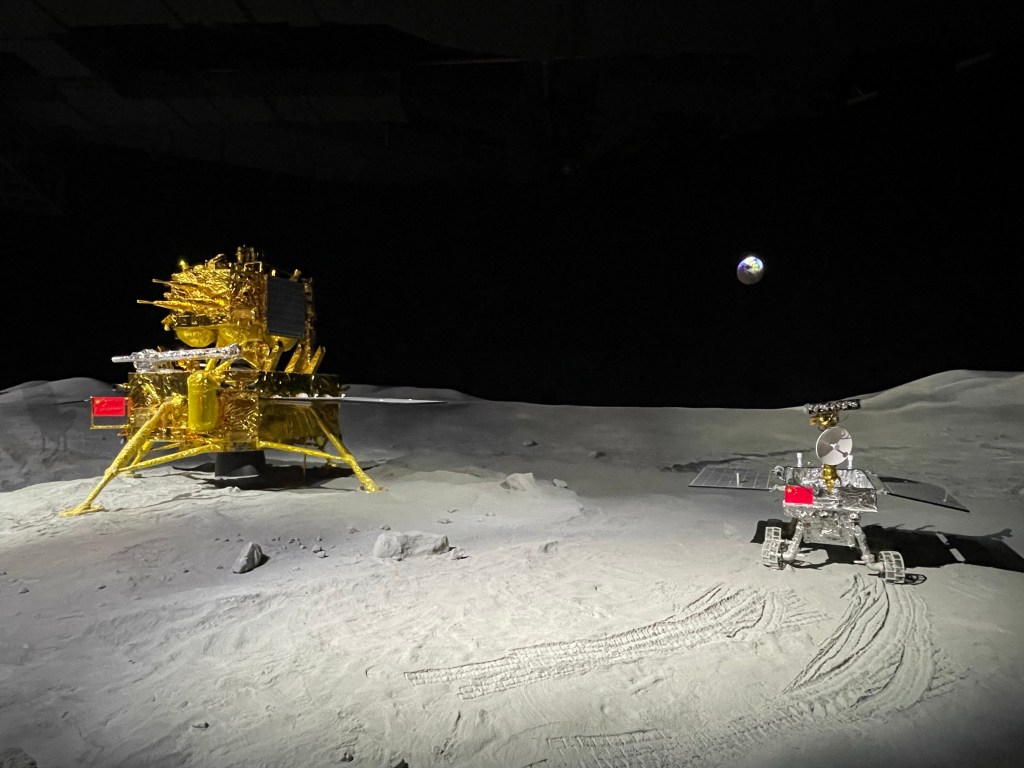
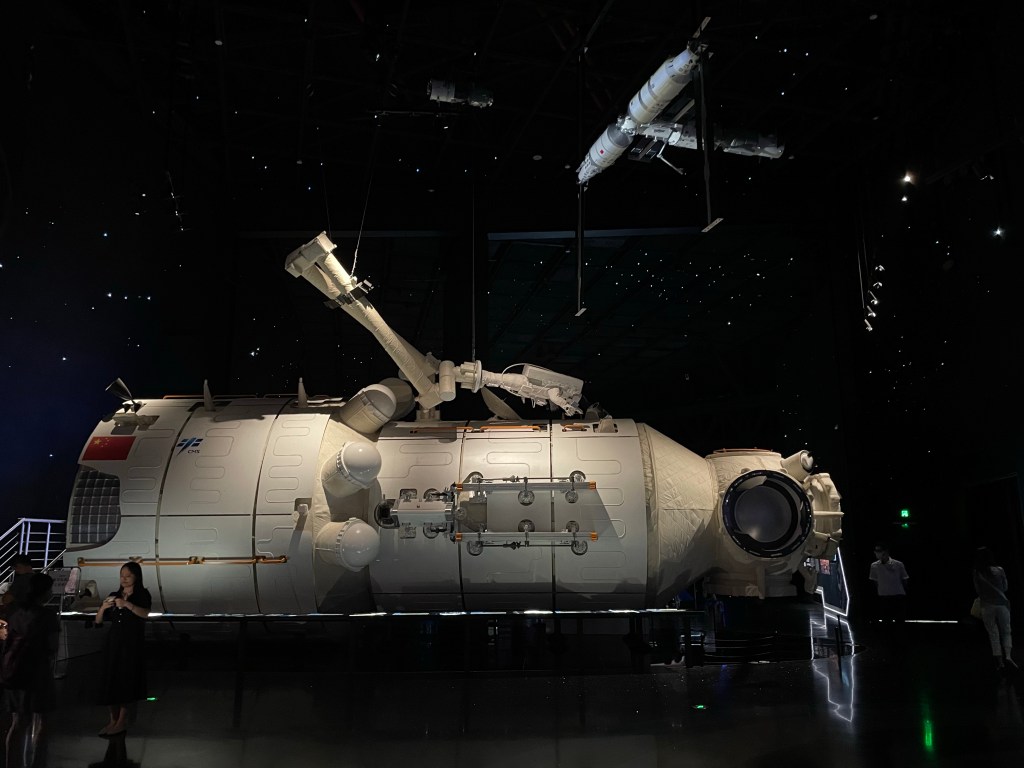
The next large section was the exploration of space and the image people had about space from about 6,000 B.C., the Egyptians, Copernicus etc. The most impressive and interesting part was of course the modern time, with all the different robotic probes , manned spacecraft and rovers. It was and is especially impressive what China achieved in the last 20 years, with rovers on the mars, the moon, a manned space station and countless other spacecraft and related achievements.
A life sized model of the Chinese moon landers and roversA life sized model of a part of the Chinese Space Station
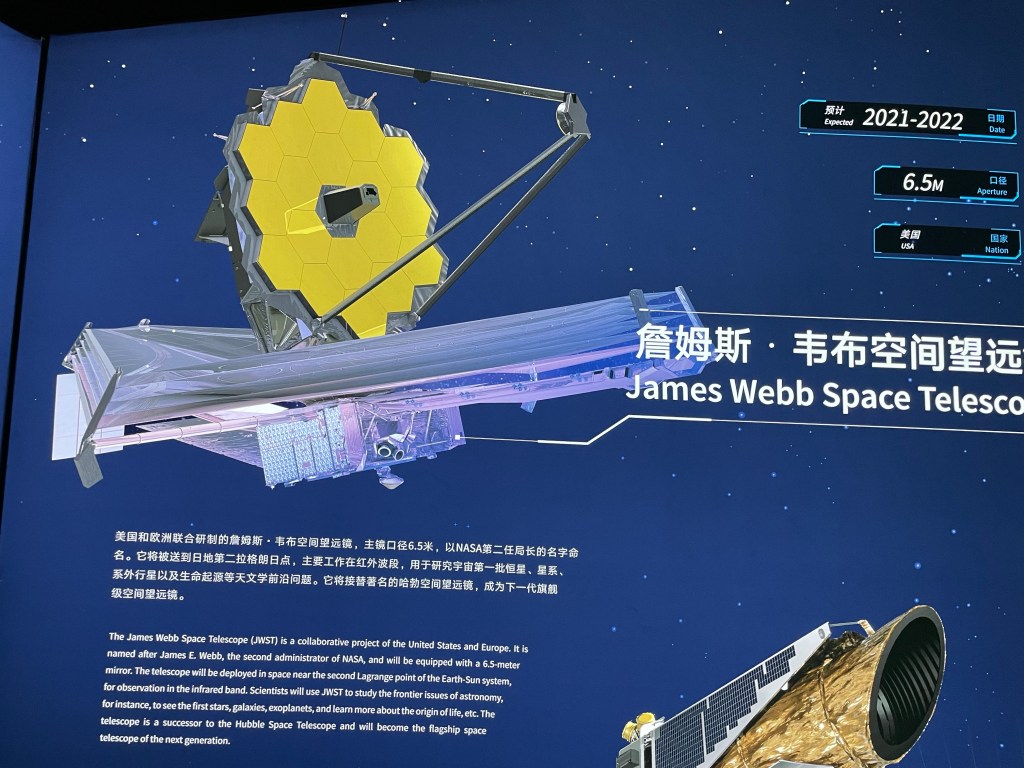
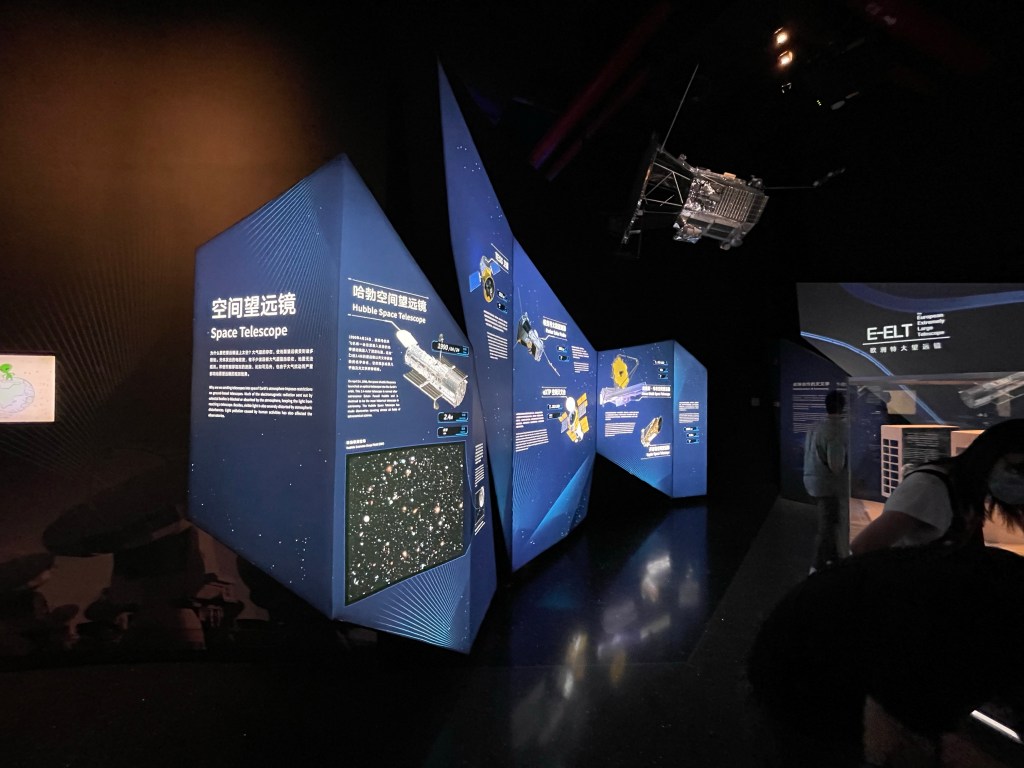
Another extremely interesting part was the „telescope“ part – with pictures and data about the latest space and earthbound telescopes. Also, the upcoming new telescope projects of the next 10 years were shown.
The JWST, hopefully launching this year.
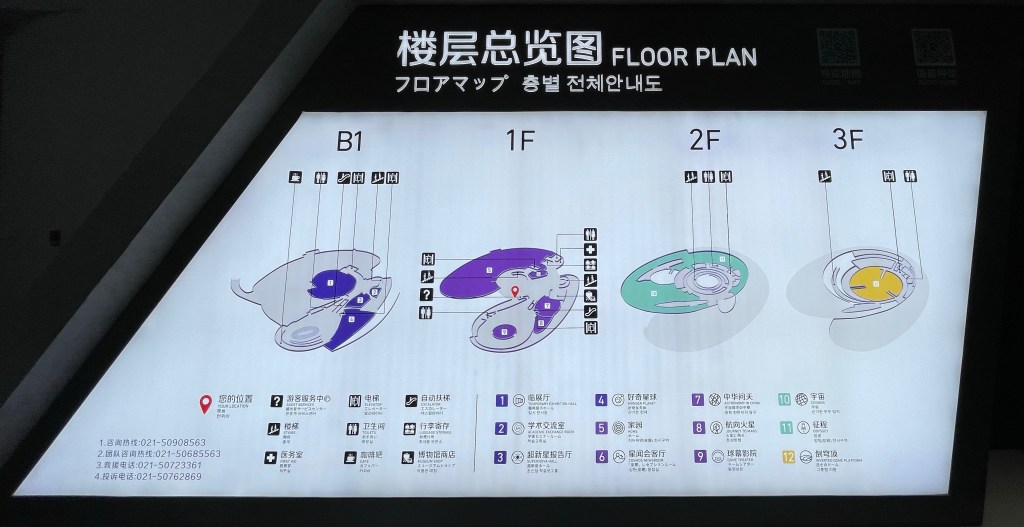
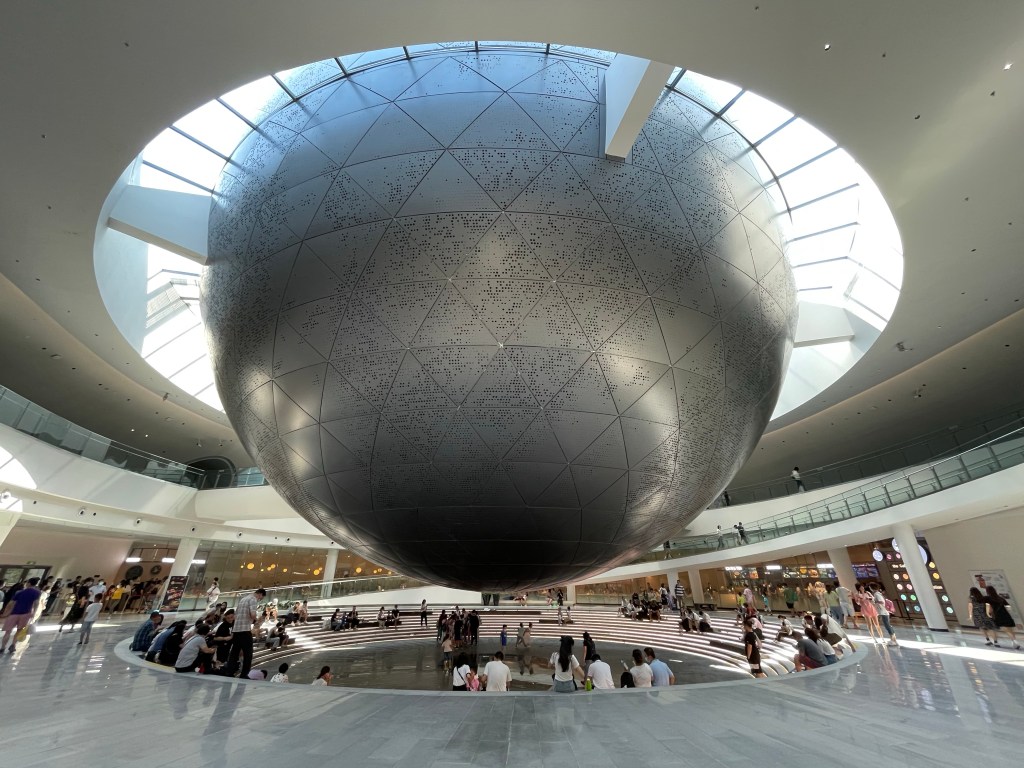
In the B1 floor, there were a few restaurants as well as some cinemas. Also, you could rest or eat beneath an enormous floating globe.
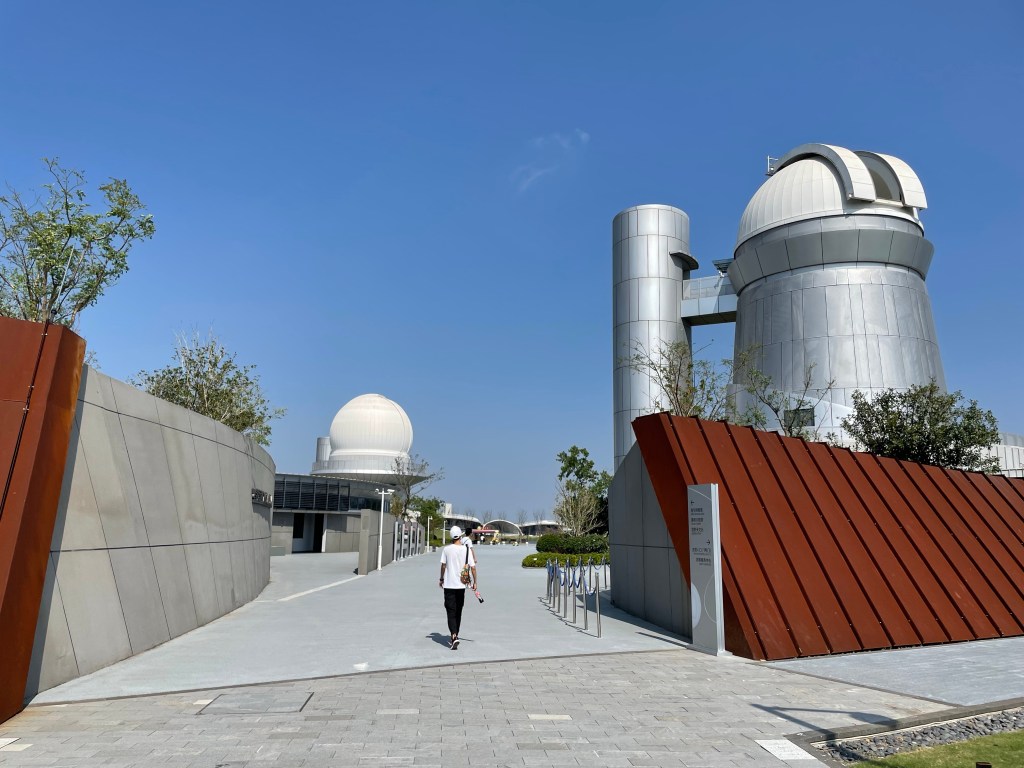
Outside, there are a few observatories, which open to fixed hours only. There are also some other „space themed“ spots in the adjacent park, it was however too warm to visit all of them.
I hope you enjoyed reading this article and hope you can enjoy the museum yourself soon! Or have you been there already? Feel free to share your impressions!
What’s the idea behind getting corrective eye surgery – for me it was getting rid of my glasses, which i wore since the age of 16 or 17, meaning 23 years. It’s just annoying for sports, when sweating, when watching TV in bed etc. So i decided to wear my glasses for the last time on July 30th, 2021.
Finding the right hospital
First I thought – Eye surgery in China? What am I, crazy? Then i thought, wait a minute. If anyone in the world has the most quantitative experience in surgery of any kind, it has to be China. Also, there are so many top level surgeons, doctors and hospitals in this Country. So my second thought was, ok no problem – but where to go?
Shanghai and Beijing come to mind first, but for some personal reason, i like Shanghai better than Beijing, so I started looking for hospitals in Shanghai.
I found 3, which seemed to be top level and by asking some friends living in Shanghai, I finally went to the „Shanghi Ai‘er EYE hospital“. It is a chain with over 500 hospitals in Asia, and basically every bigger city in China has one.
Shanghai Aier Eye hospital (they are moving into a new building in September)
The pre-examination
Before the actual surgery, I went to the hospital 2 weeks earlier to do the pre-checkup. It takes about 2 hours and involves all kind of devices and test, such as but not limited to:
Visual test
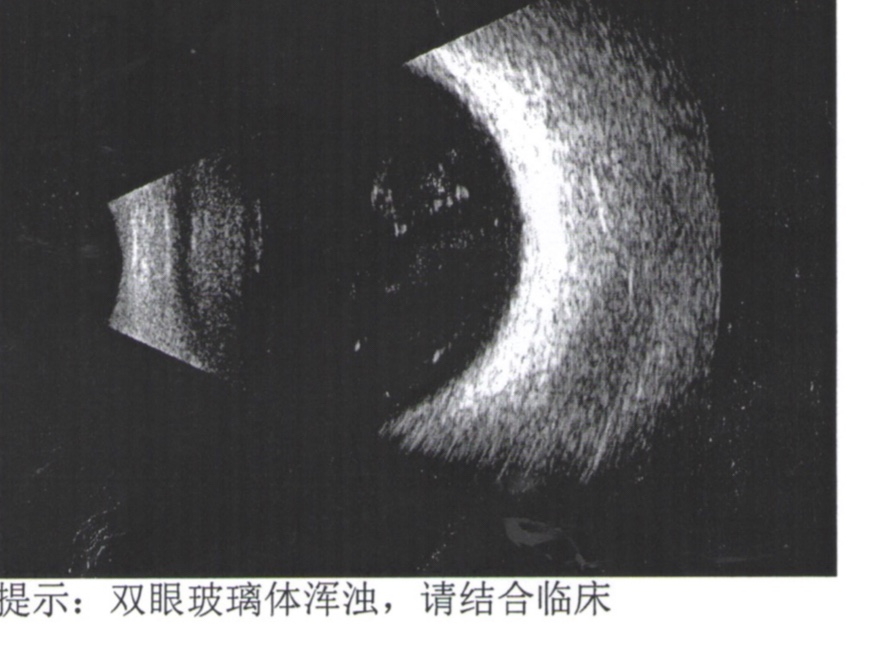
Ultrasonic
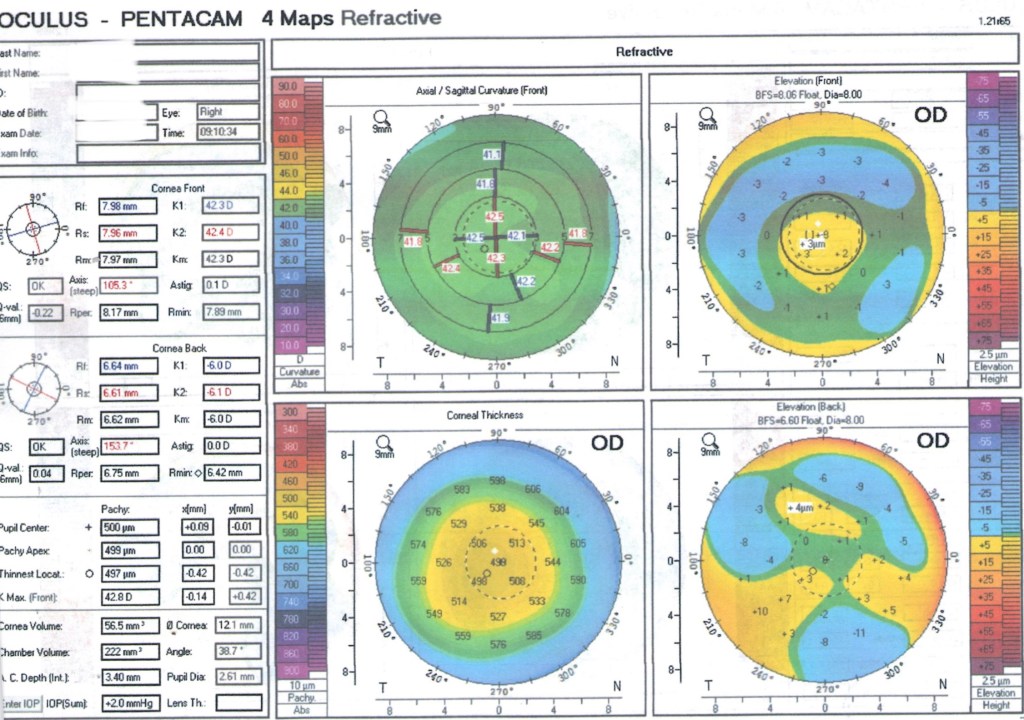
some sort of 3D measuring of your eyes
many others, in total about 10-12 test.
The craziest was a „tear production rate“ test, where they stuck a small piece of paper into each eye and looked how long it takes until it gets fully wet. Looking back, this was more uncomfortable than the actual surgery.
Blood Test
The blood test is only good for 30 days, so you have to come back during this time.
One of the test results, looks quite scientific to me.
Ultrasound pictures of one eye
Additionally (logically) you need to show a COVID test done max. 7 days before the surgery.
The day of the surgery
I had to come to the hospital in the morning, 8:00am. There have been some pre-checks to verify the values from the pre-checkup and some additional ones to (I suppose) determine the exact parameters for the laser. The examinations took about 30 minutes. Then you get a medical armband with your data written on it, just to make sure the surgeons can double check the data later.
After that, there is a short talk with the surgeon who will do the surgery. She explained the whole procedure so i knew what will be happening and further remarked that there is no need to be tense and I should relax.
After that, I had to wait for a few minutes, the surgery was scheduled 9:00. I had to leave all my belongings at the reception area (you don’t need it in the surgery). The nice nurse led me to the surgery waiting room and as per my request, i got some pill for anxiety relief. After about 5-10 minutes, i got a surgery „coat“ a hair cover and plastic covers for the shoes and could enter the surgery area.
At the first „station“ I got my eyes cleaned with some liquid. They put really a lot of liquid into your eyes to make sure it is clean and mostly sterile. Then you get some anesthetic drops to numb your eyes.
After this step, I was ready to go into the surgery room. I had to lay down. Left and right were some sort of robotic laser machines, which looked futuristic and not scary. The surgeon then covered my eyes with some medical sheets and washed or disinfected them again.
The doctor explains every step of the procedure, so there is no surprise or anything. The first thing is, the surgeon puts some clip into your eyes to prevent you from blinking and to keep your eyes wide open. They do this each eye at a time, the other is covered.
Then, the machine will center over your eyes and you see a set of bright led lights around your eye and some kind of crazy looking tunnel centered over your eye. You need to stare into it (it looked to me like some sort of interdimensional wormhole). Then, the device lowers down until it touches your eyeball and applies some pressure on it. It is slightly uncomfortable but not much. I suppose the device is a cylinder that makes sure your eye is locked in the exact right position. Supposedly this procedure also cuts the flap by a femtolaser, but you can only feel the pressure, nothing else. This step takes about 10 seconds. Then, same thing for the next eye.
After both eyes were finished, there was a small pause, where i could close my eyes. the surgeons double checked the parameters (i suppose, i could only hear them talking about some numbers).
Then, stage 2 starts, and the surgeon inserts the „spreader“ into your eye again to keep it open. Then, the flap is flapped away from the eye, which is a bit weird as you can see your vision distort and bend. Then, you see the green laser but only ver fuzzy. You have to keep staring into the laser. The laser fires for about 3 seconds and you can smell something like burned hair. That’s it. They leftover dead cells are being washed out and the procedure repeated for the next eye.
There is an optional step next, where I could choose to get a „bandage contact lens for about 250 RMB each applied, which is supposed to help the healing process. I opted for it and in hindsight, i think it was the right choice. No point on saving money here.
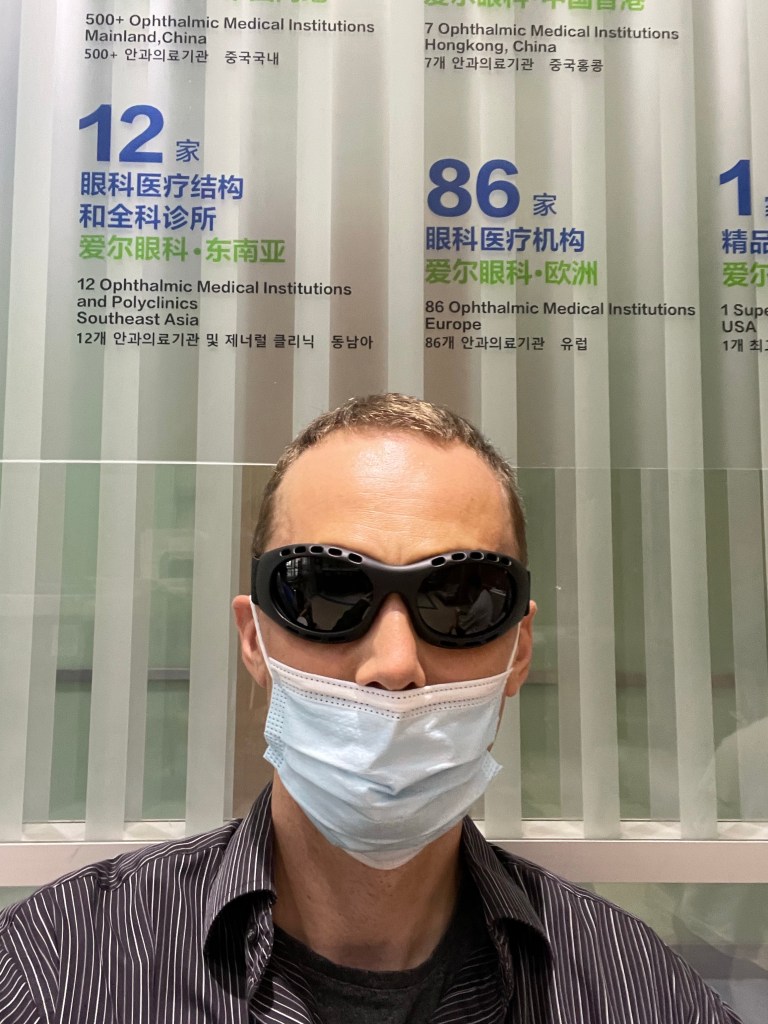
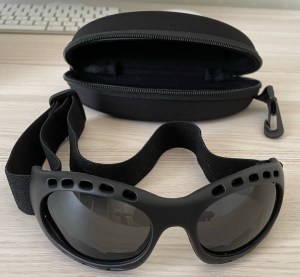
After about 1 minute later, I was able to get up and had to go to the post-surgery waiting room, where i got another 3 times of eyedrops every 5 minutes. After 15 minutes, i got my protective googles and was ready to go home!
Ready to go home
Recovery – First 24 hours
Immediately after the surgery i was able to see quite well. My eyes felt a bit scratchy, but that was it. I had someone pick me up and drive back to my hotel (you are not allowed to drive in this state and should not attempt to either. Was not sure whether or not i would be able to call a taxi on my phone, remark: I was able to).
I stayed in bed the whole day and kept my eyes closed and the goggles on. There was a feeling of dryness, but my eyes didn’t hurt or weren’t really scratchy. It was a slight discomfort, at most. After the first night, my sight was much better, only the left eye was not very clear.
Recovery – 1 day after the surgery
You get a follow up appointment within 24 hours, in my case, 10am next day. The bandage contact lenses were removed and with it, immediately everything was crystal clear and the scratchy feeling was gone. I got a eye check and was over 100%. Then i was good to go home again.
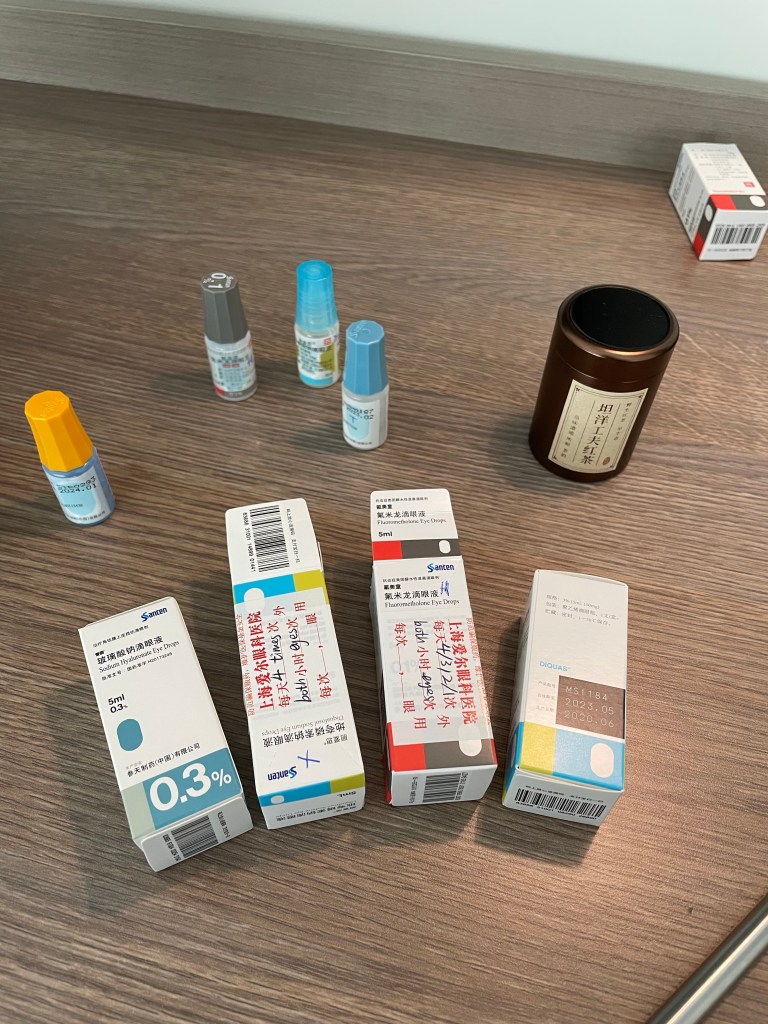
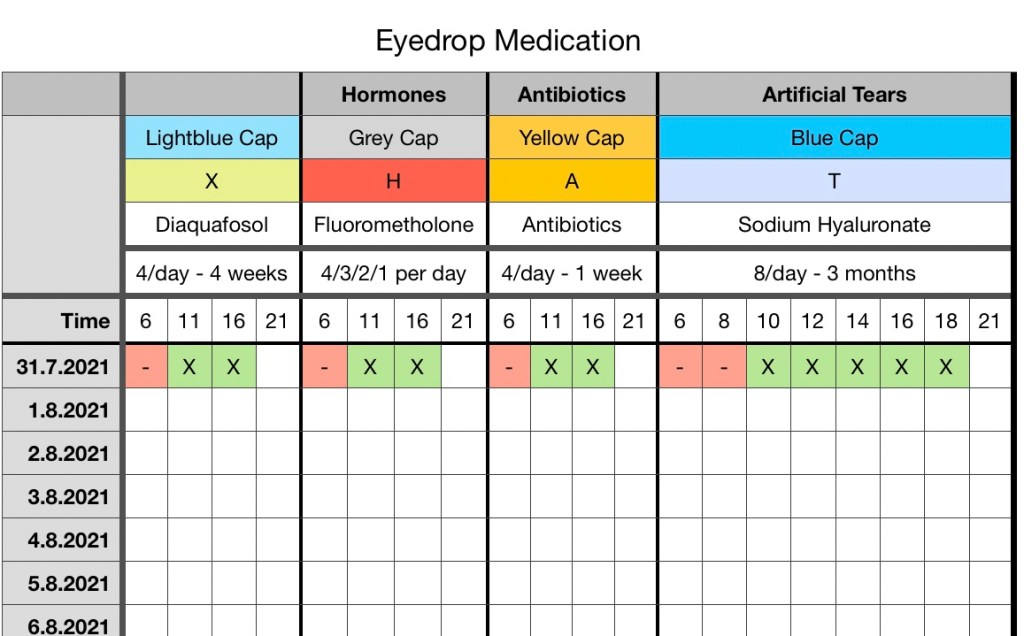
From now on, there is a strict plan for 4 different kind of eye drops:
Antibiotic ones – 4x per day for 1 week
Some hormone stuff, 4x per day the 1st week, then 3x the 2nd week, 2x the 3rd week and 1x the 4th week.
Some other stuff i don’t know what is is, 4x a day
Artificial tears for up to 6 months, 8x a day
Since this was WAY to complicated for me to keep in mind, i built a spreadsheet to remember it…
My medication calendar
1 week after the surgery
During the first week, i was really careful not to touch my eyes and not to get any water into the eyes either. It sounds more easy than it is, but perhaps i was just being overly cautious. The first day, I did not dare showering at all. The following days, I only showered with my „scuba googles“ (the prescription googles you get from the hospital), which makes quite sure you don’t splash any water into your eyes. (you also need to sleep with those on)
What’s more annoying was, because it is summer, it is natural to sweat, also in the face. So you cannot just splash water into your face. I used some wet tissues to clean / cool my face, it works, but still not very comfortable.
The next thing are you eyes themselves, as you cannot wash them. There is some residue collecting on your eyelashes and the corners of your eyes, especially overnight from the eyedrop medications, so I had to remove it very carefully with a tissue.
Healing Process
The healing process itself is quite good i suppose. I was really light sensitive and kept the window shades down in my office at work and still wore sunglasses. I looked like a mafia boss or some weirdo, but OK, what to do.
Some days (day 4 and 5) i had a really blurry near vision (e.g. computer) so i had to scale everything up to 150%, but it still was not comfortable. It got better in the afternoon and while wearing sunglasses.
Looking at screens or books is sometimes still not 100% clear, but this is supposed to be normal and clear up after about 4 weeks.
Driving is OK, also at night, but the head- and taillights of other cars or traffic lights are really bright. I use to drive with sunglasses, especially at night.
Sports and other ativities
The doctor told me not to do any sports for at least a week. This was hard for me, because normally, i workout every day. I started on day 3 with light walks on the treadmill and it was totally OK. Just have to look out that no sweat is getting into the eyes.
Yoga was a bit more difficult, especially Asanas where you have your head down, there i felt some pressure behind the eyes and quit. Also, I use to sweat a lot during Yoga, so that’s perhaps also not the right sport during recovery.
I usually do strength training, but was told not to do that for a long time. I tried training with only half of the weights, but it still didn’t feel right, so i did not continue.
On day 7, I had a long hike about 10km, which was also totally fine. I guess I will start running again next week.
2 weeks after the surgery
Looking at screens or reading is now back to normal. I have a dry eyes to a small extent, especially when looking at a screen for a longer time.
I started a good habit to teak a 20 second break every 20 minutes to relax the eyes and also to focus on something far away. There is a really good APP for it.
I will keep you updated about the healing progress!
Luckily COVID is in the past and as we could not travel outside China, we got to experience Chinese New Year first hand.
This year is the year of the Ox. The Ox is known for his endurance and consistency.
Chinese New Year is not just a day, such as New Year’s Eve in the west. It is a time period of over one month, in which the new year is celebrated.
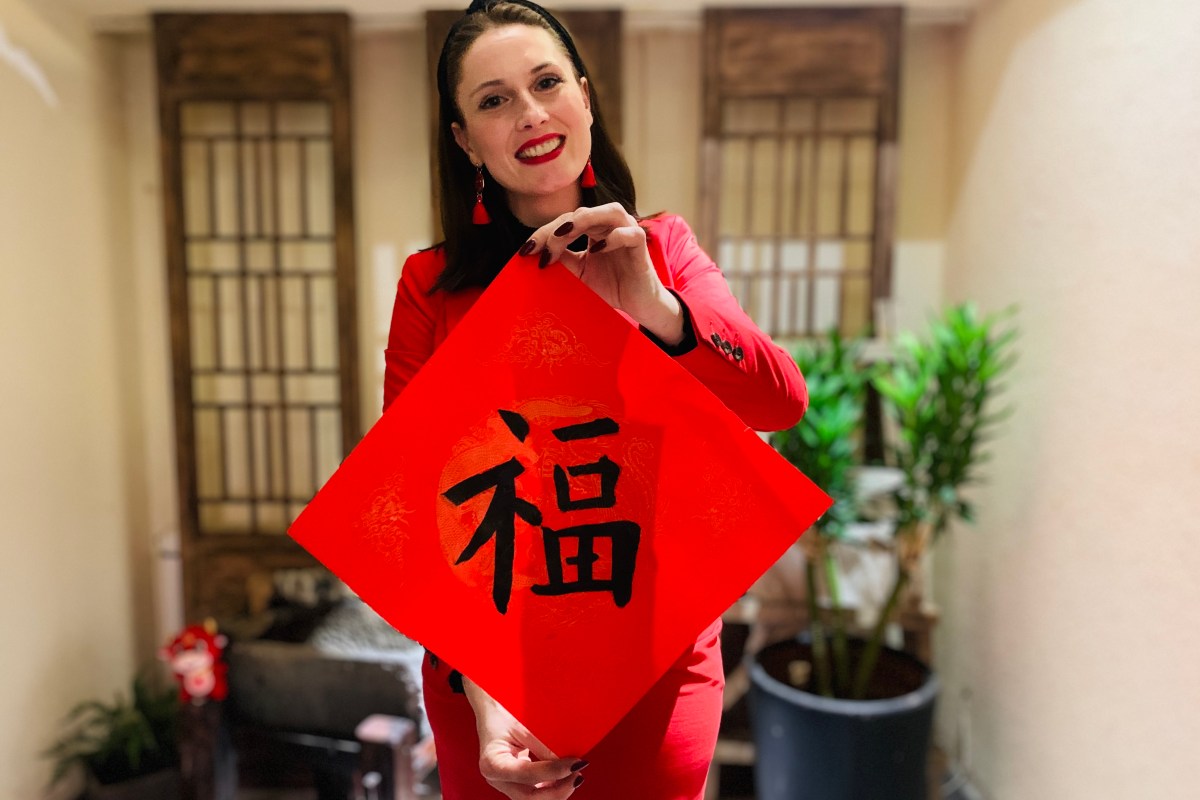
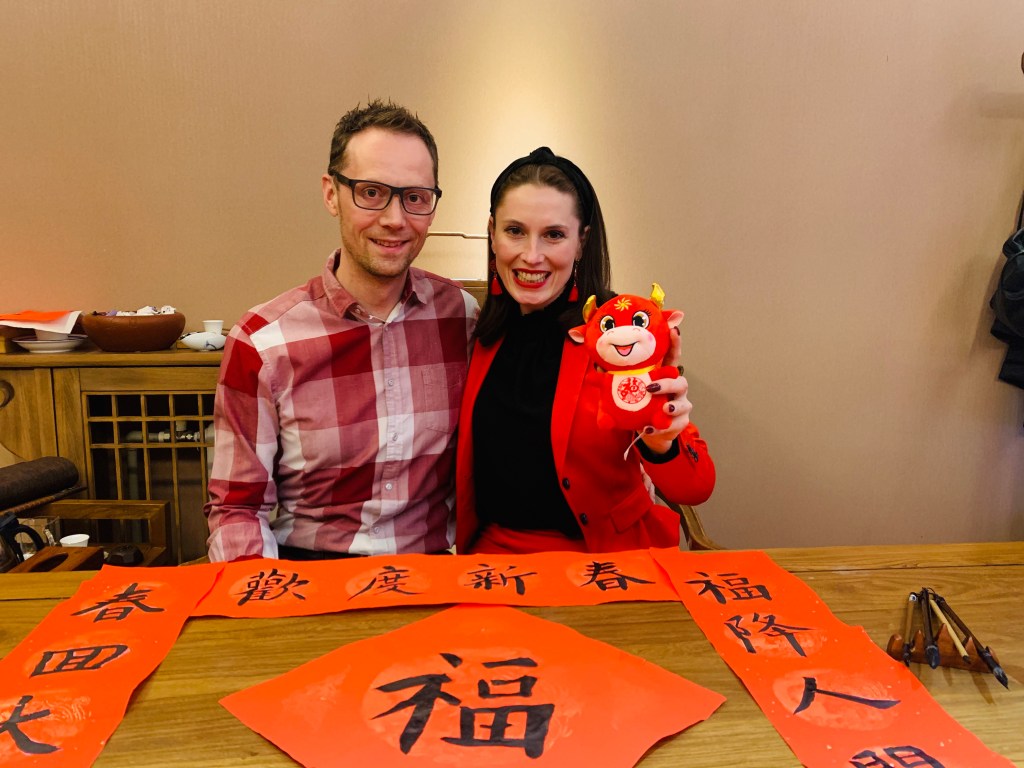
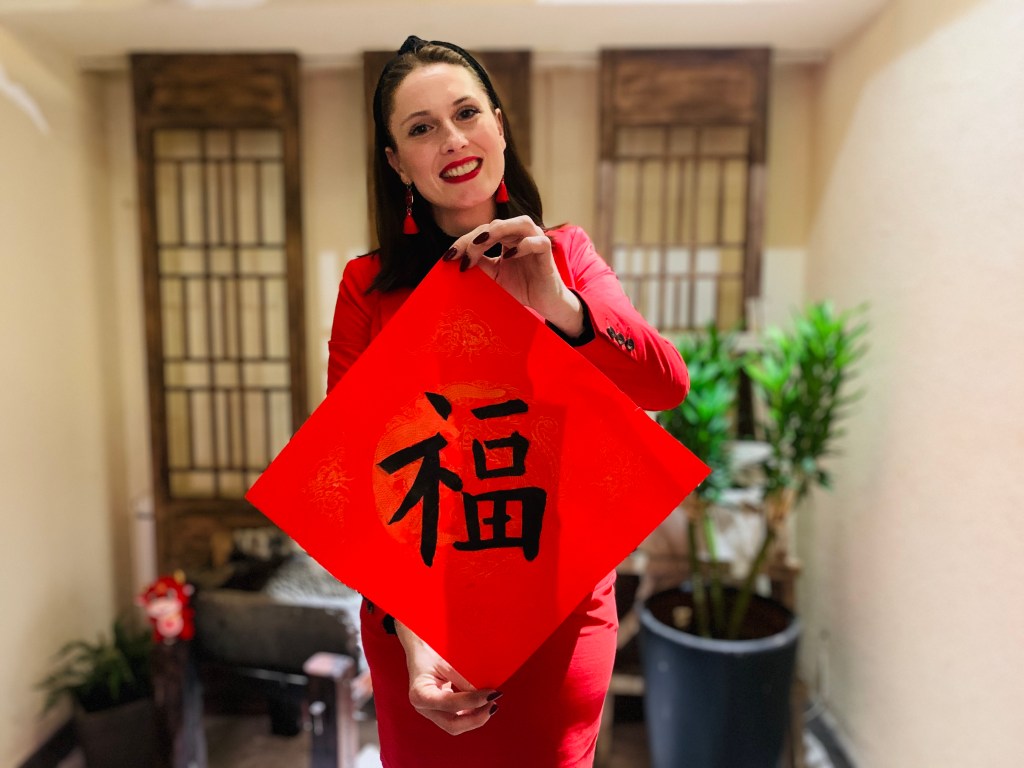
It starts with the decoration of every entrance door with „good luck charms“ so there will be a lot of good luck in the new year. Thanks to my wife’s Chinese teacher Amanda, we got the chance to write the signs by ourself.
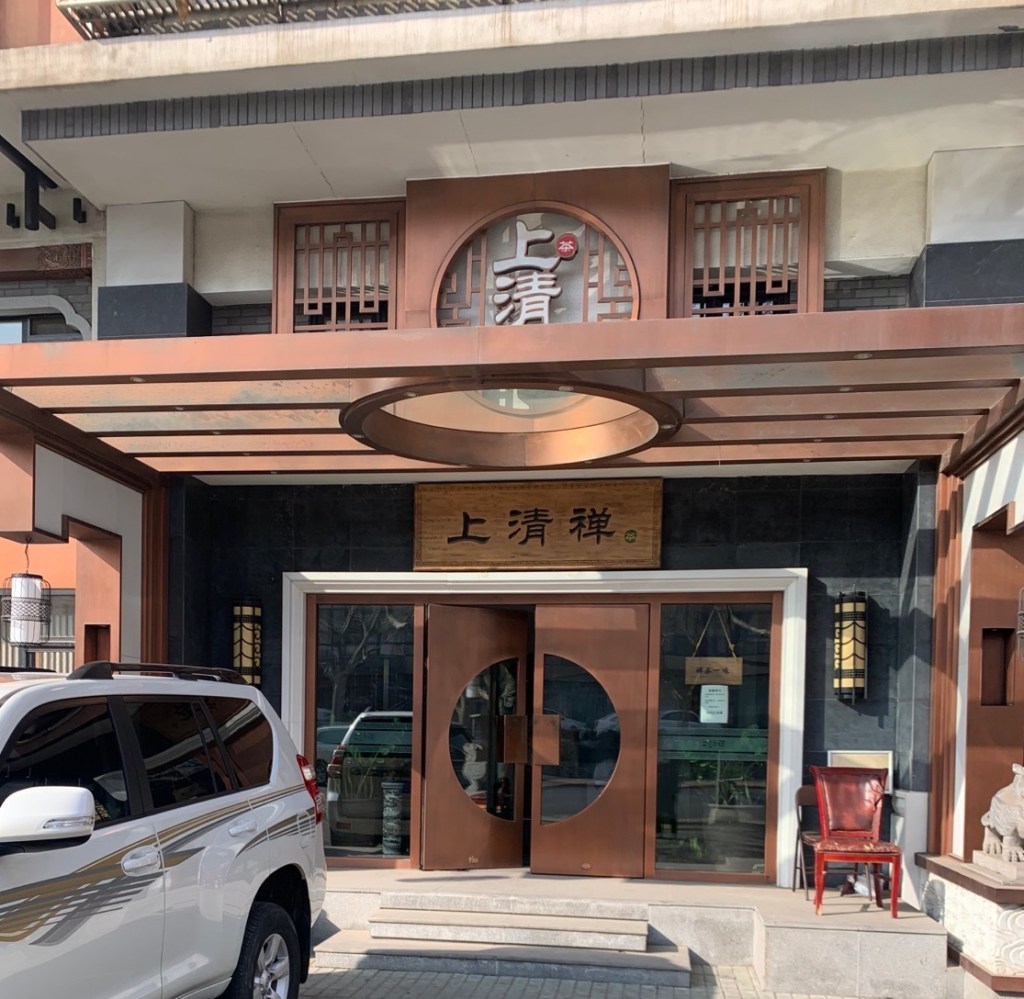
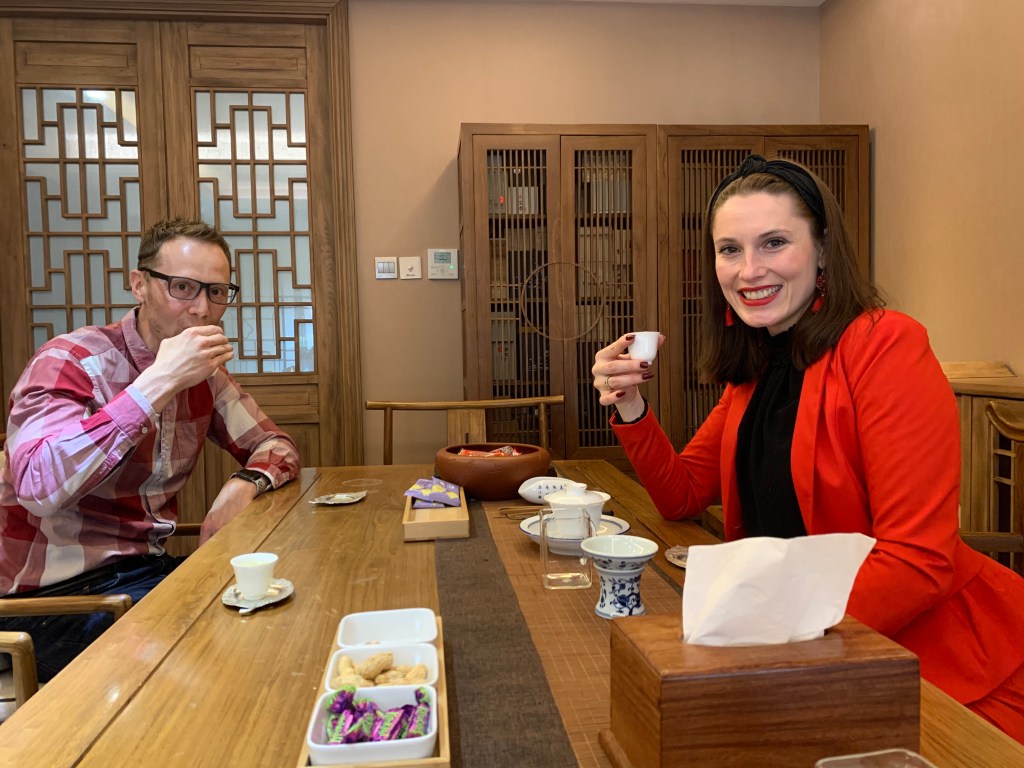
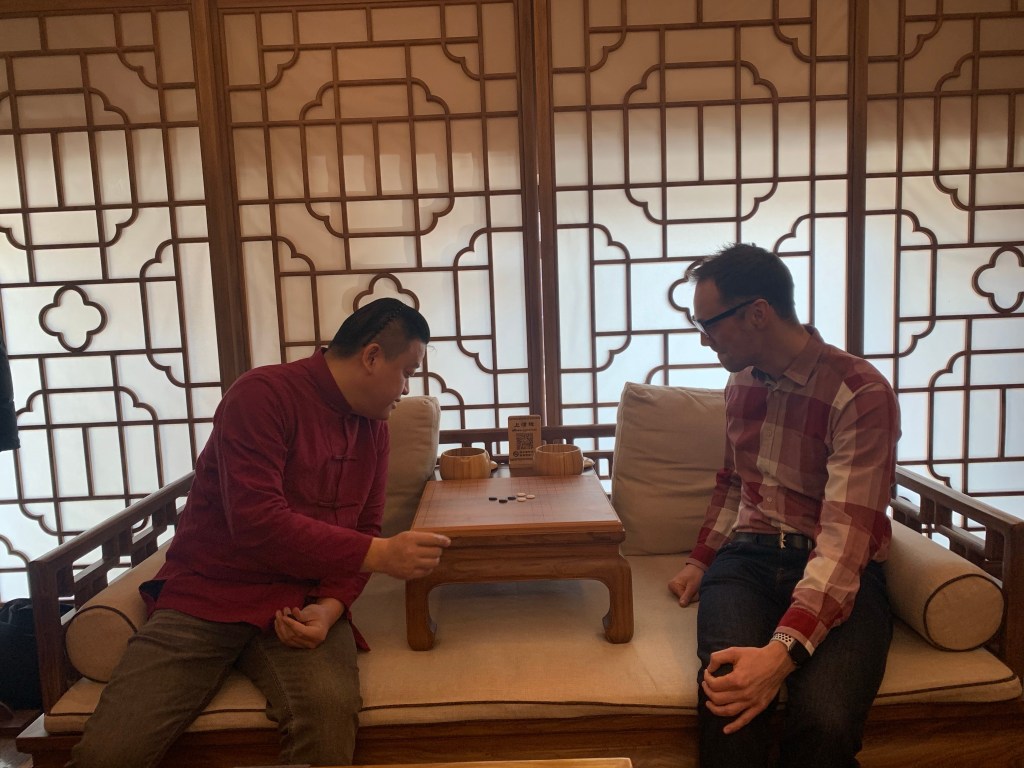
We did this in a typical Chinese tea house in Dalian downtown, where we also experienced a original tea ceremony. We also learned how to play „Chinese chess“ which is now one of our favorite games.
Chinese chess
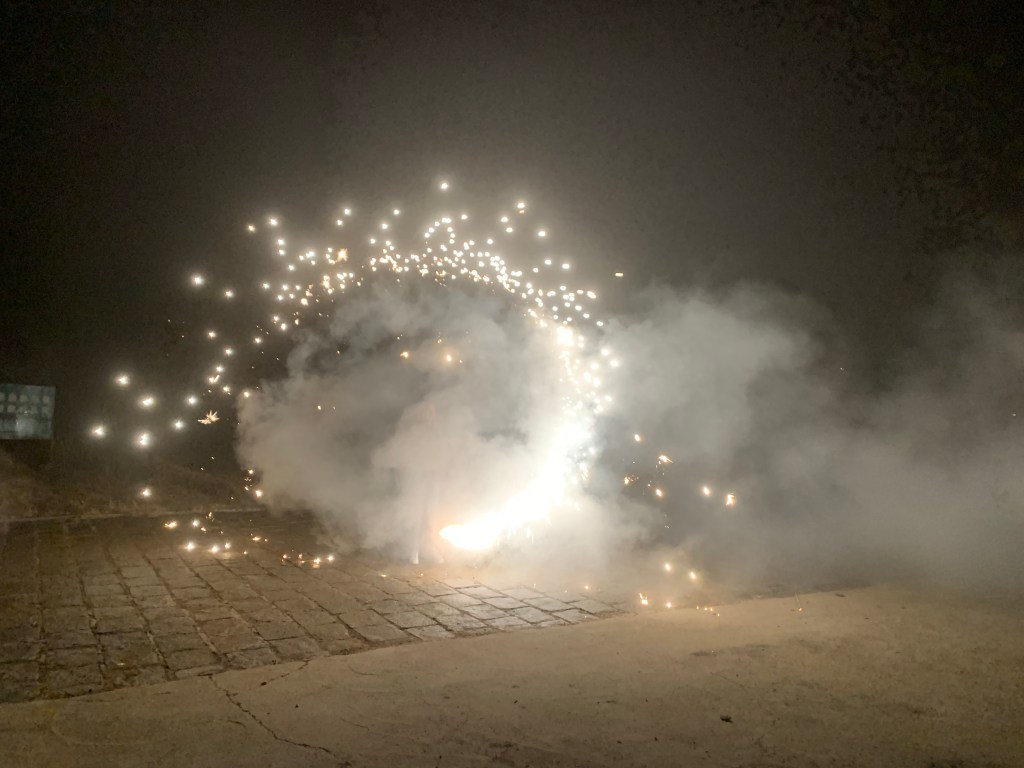
Of course, fireworks are also a big part of the Chinese New Year festival. In many cities, fireworks are prohibited, due to noise and air pollution and fire hazard. In Dalian, there is no such rule and we experienced fireworks for about 40 days straight. There is not really any rule to it, it seems any time of day or night is fine. The first 3 days are really crazy, it is like living in a warzone. Then the fireworks slow down a bit, but it is still a bit annoying after a while.
We also did some fireworks on our own.
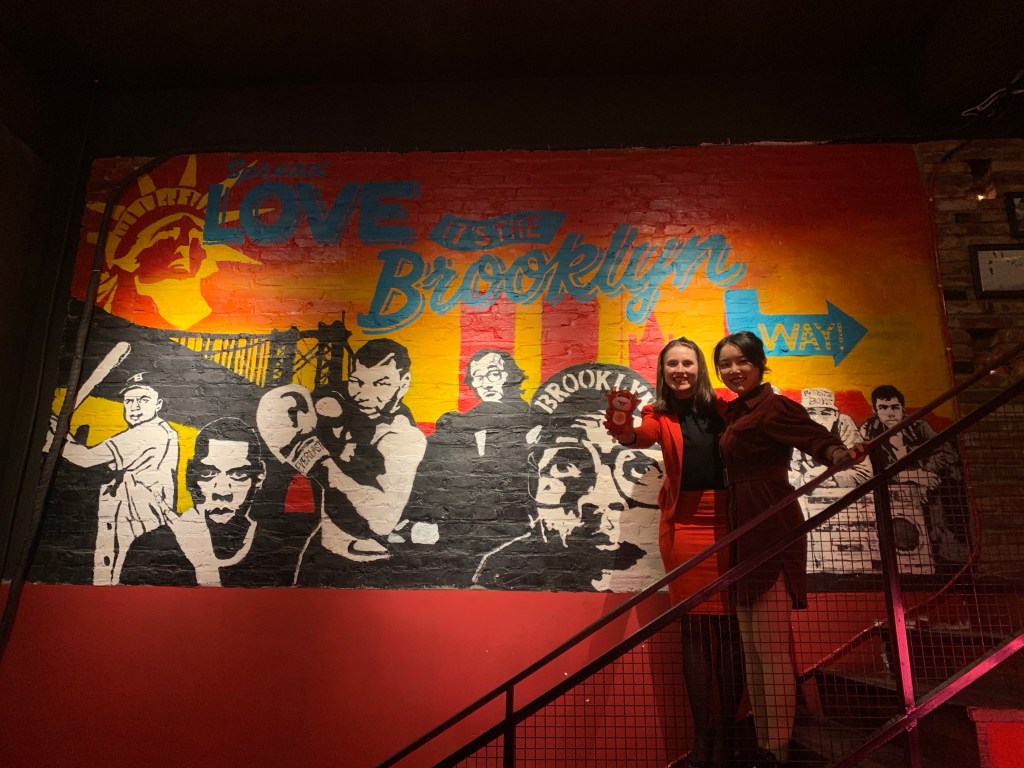
Brooklyn Bar and Restaurant, our favorite western restaurant in Dalian downtown.
Safety regulations anyone?
A magnificent instrument (and player!)
This is how crazy it gets with fireworks, any time of the day (or night)
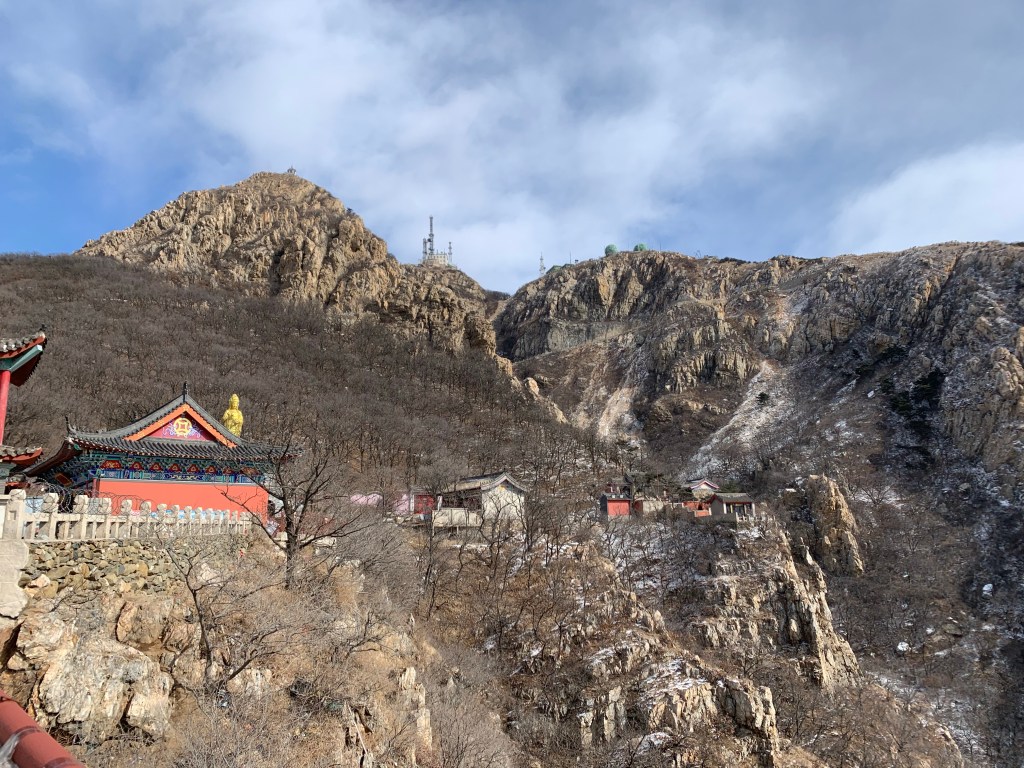
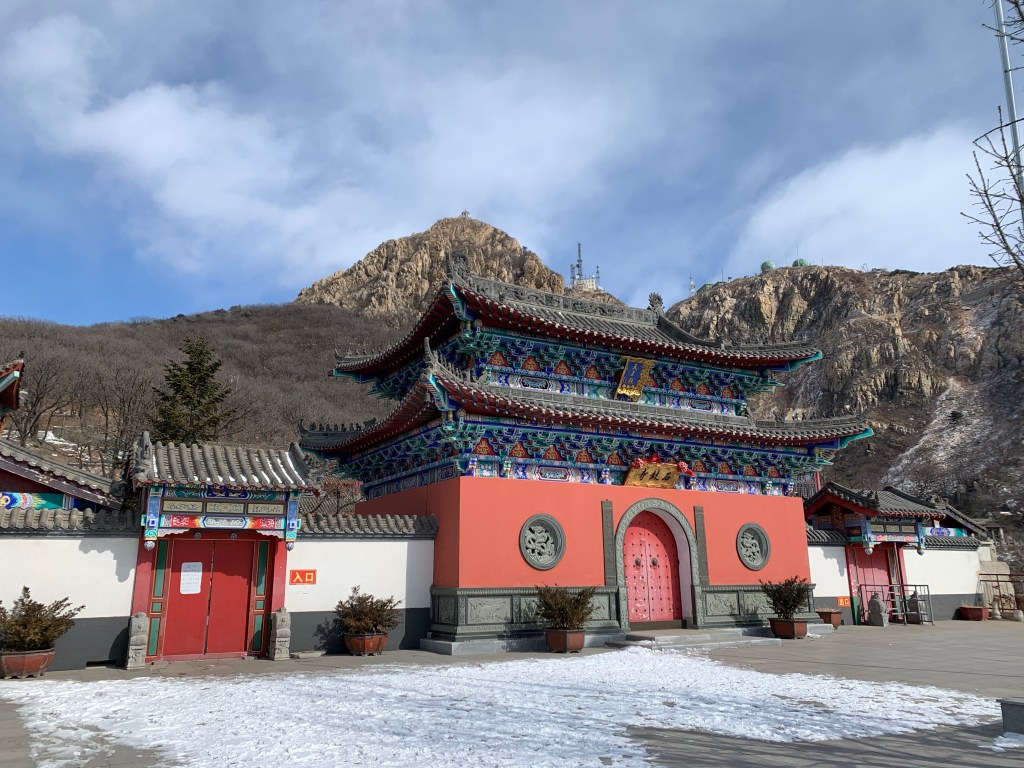
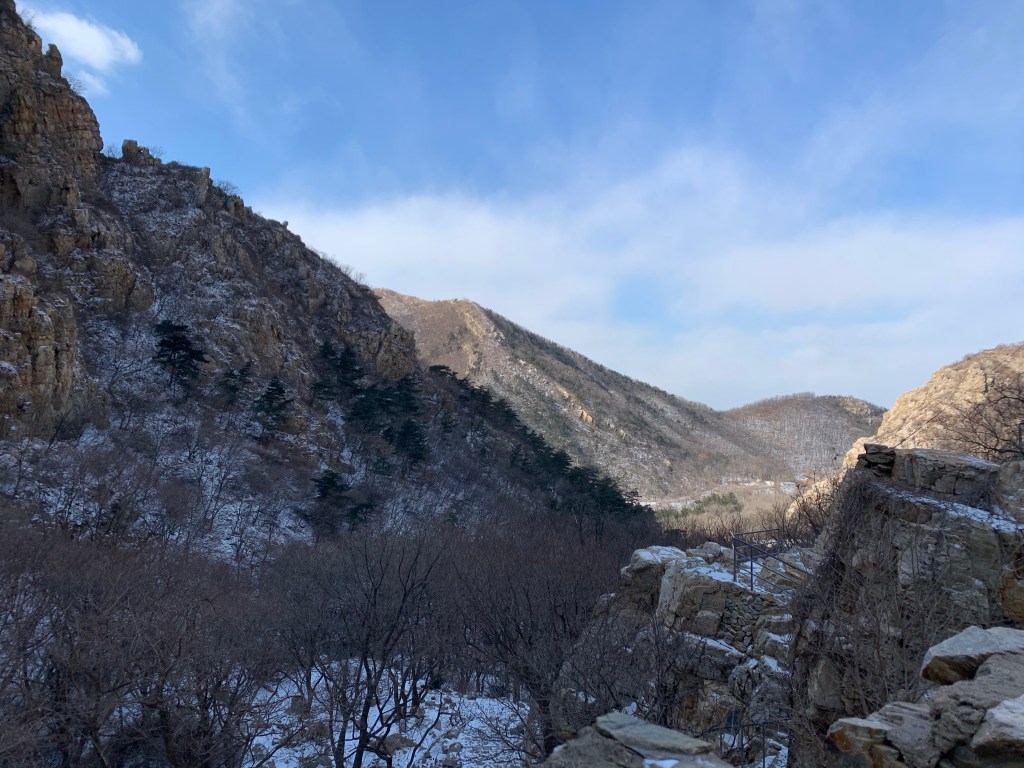
Dalian Big Black Mountain
During the holidays, we spent one clear cold winter day (it was around -15 degree centigrade + windy) to go up a prominent hill in the Kaifaqu district, called big black mountain.
About two thirds to the top, there is an actual monastery. It takes about 1-1.5 hours to go up and down to and from the monastery. During summertime, it is possible to go up to the very top, but for some reason in winter you cannot go further. The view was breathtaking and it is a real gem of nature in the middle of a beatiful city.
Finally I have to post a picture of the beach during winter. I suppose many of you have only been to beaches for summer vacation and probably not in winter. For me at least, the sight of a beach with snow was a strange, yet beautiful thing to see.
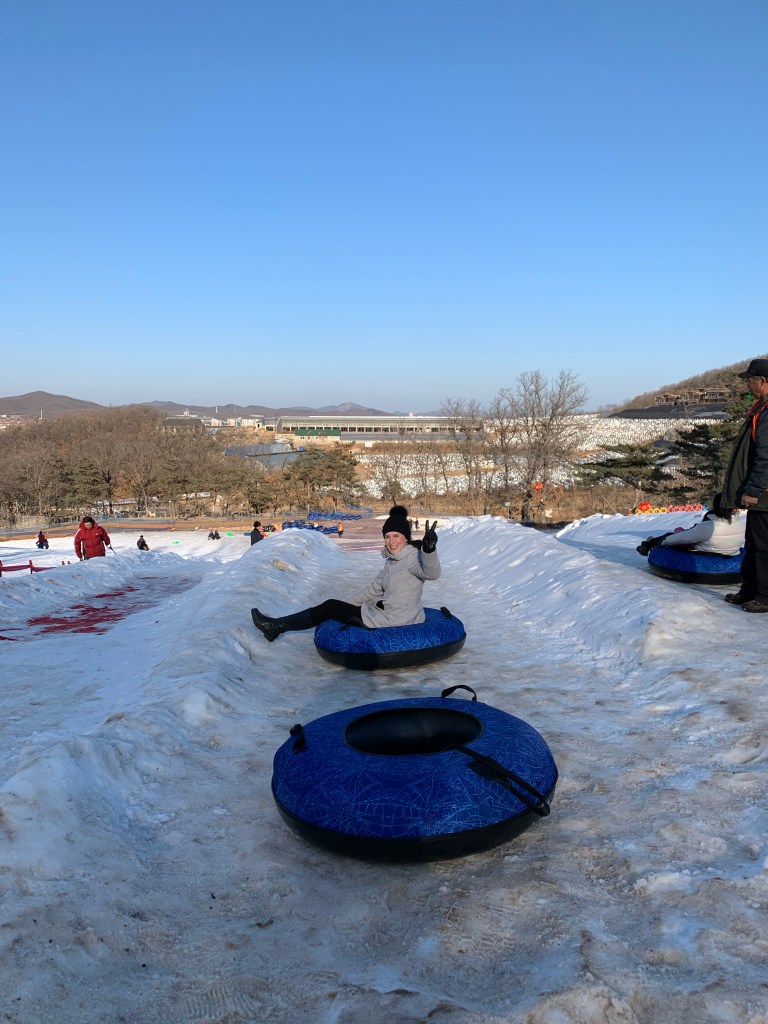
This winter season, it was the first time for us to stay in Dalian. In past years, we used to travel back home to Germany to see our family and go skiing in the alps. This year, as you all know…well COVID kind of got in the way.
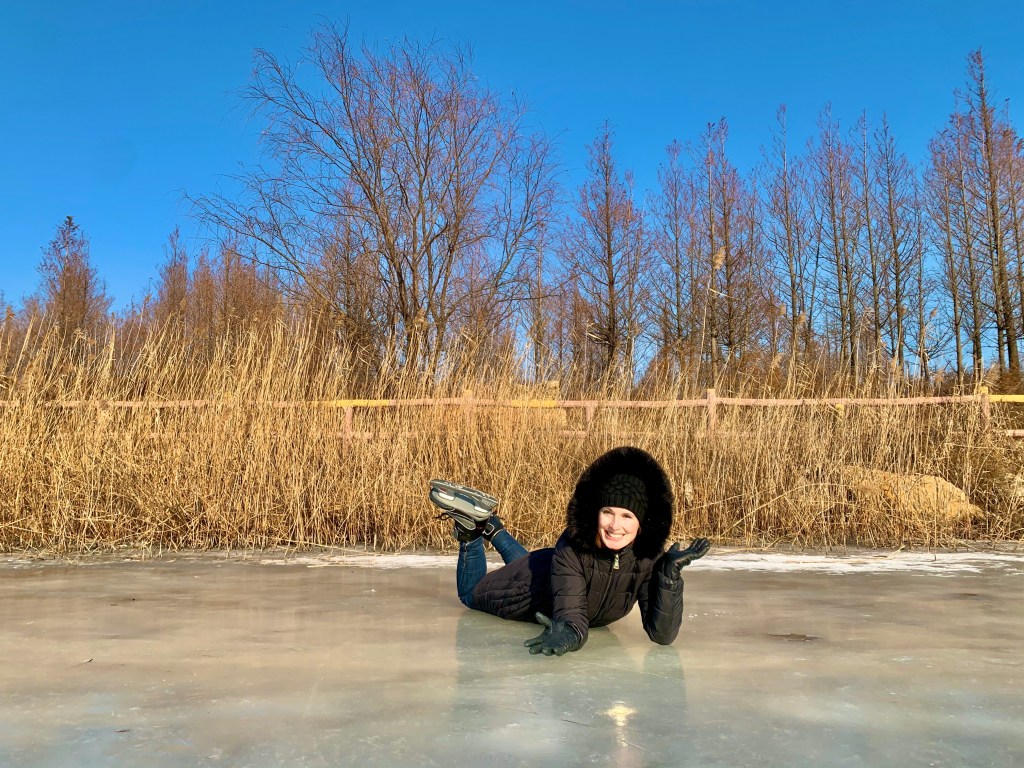
Dalian isn’t the typical city you would think of for winter sports. It is usually very dry in winter with little snow. On the other hand, temperatures drop to as much as -20 degrees centigrade or more, also for a long time. That’s perfect conditions for ice skating.
Even though we did not have proper equipment, we had a lot of fun skating on many small frozen lakes.
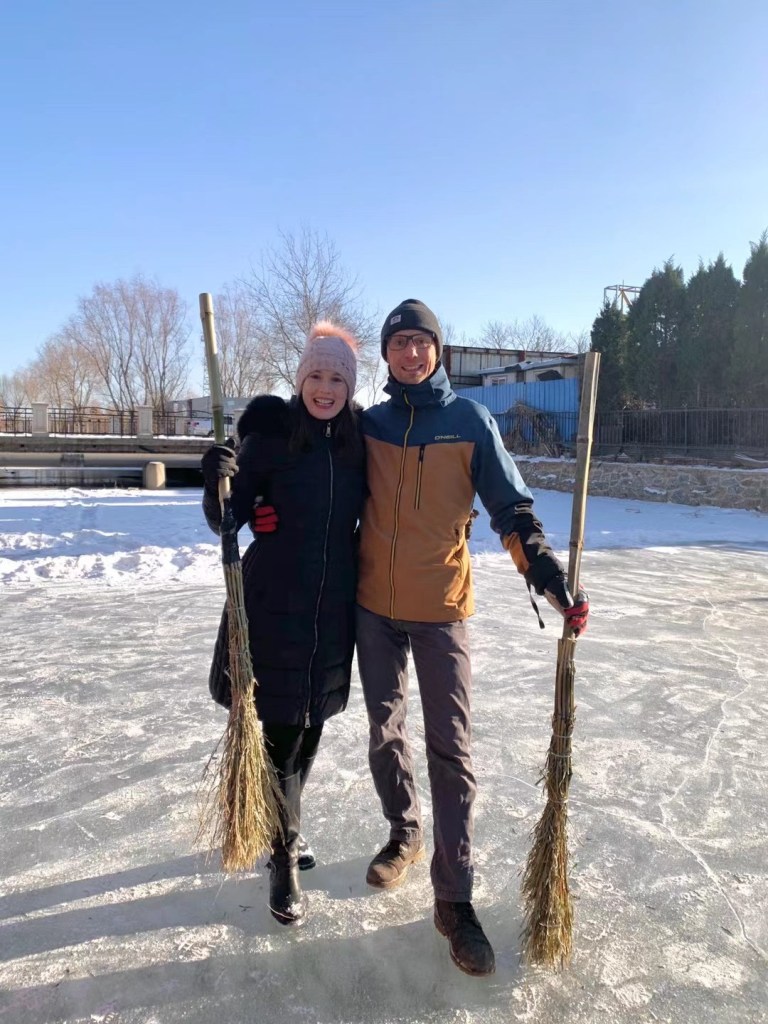
Another fun thing was „broom ball“, a very funny variant of ice hockey. You basically hit a ball with a broom and everyone is trying to move on the ice with „normal“ shoes instead of skates. It was enormous fun and we can only recommend it to anyone, anywhere.
A well deserved snack and hot chocolate
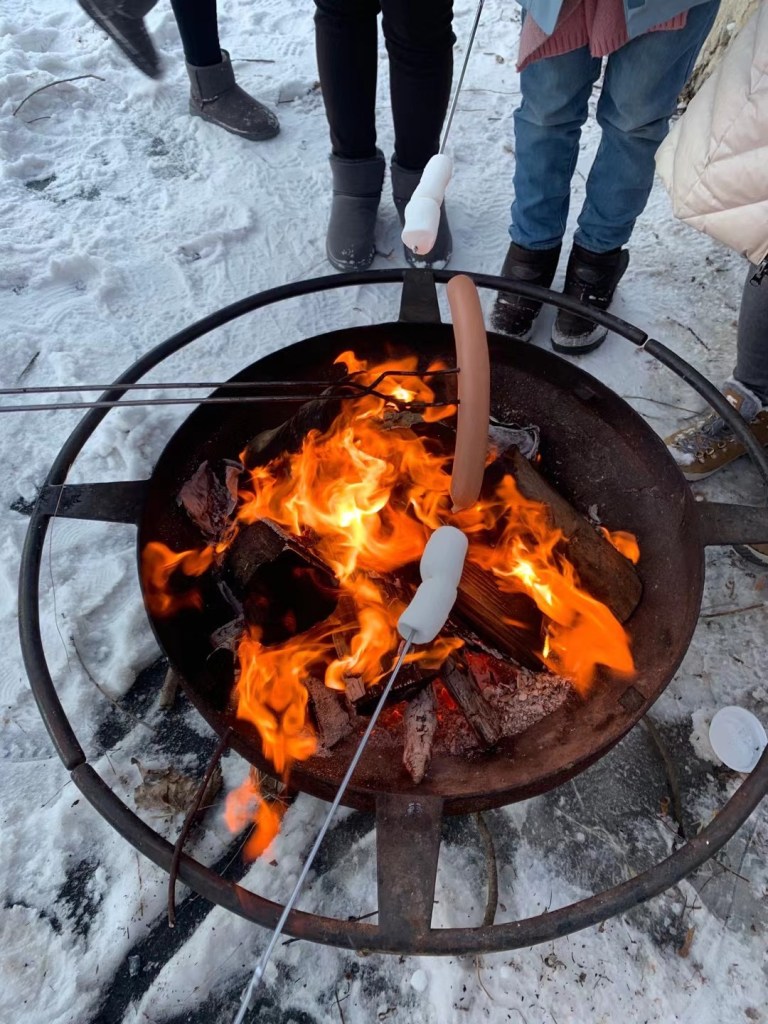
Hot dogs and marshmallows
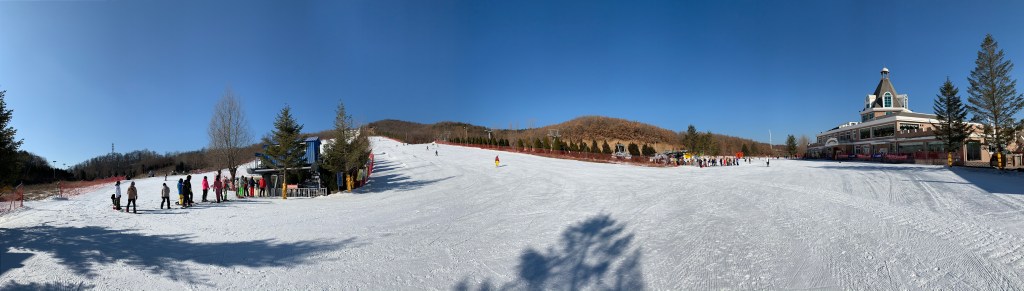
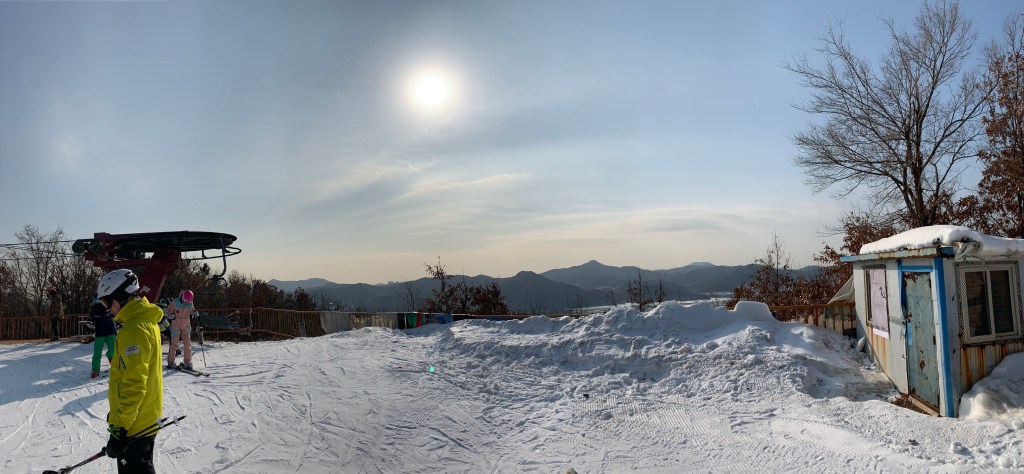
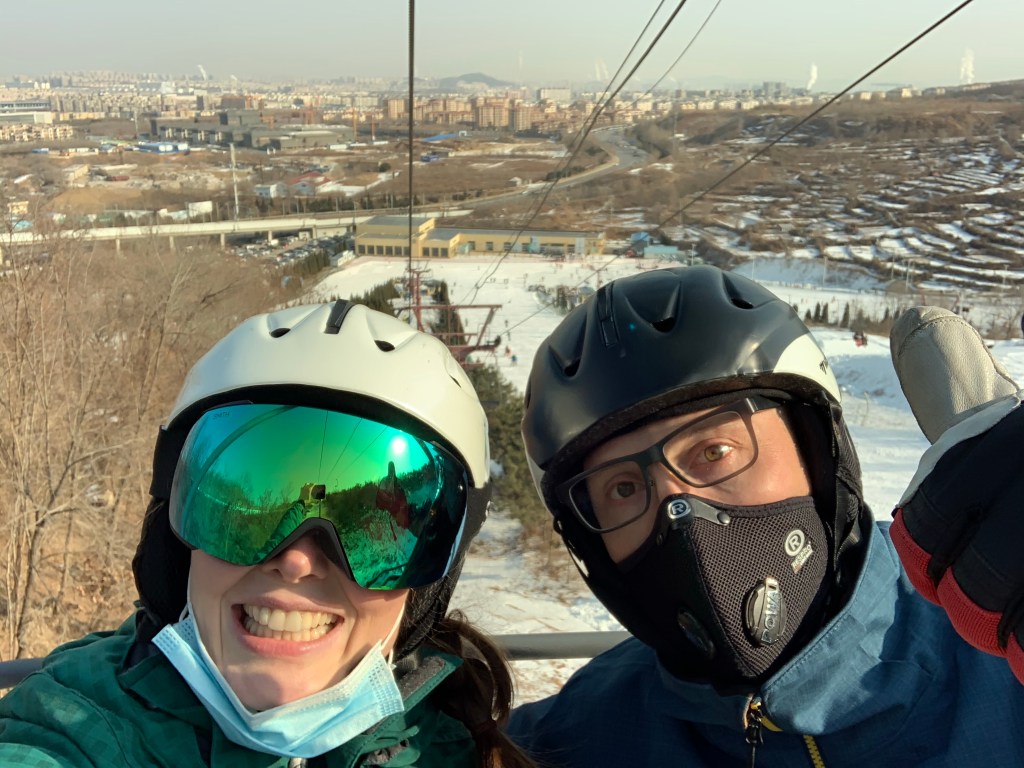
Dalian Happy Snow World
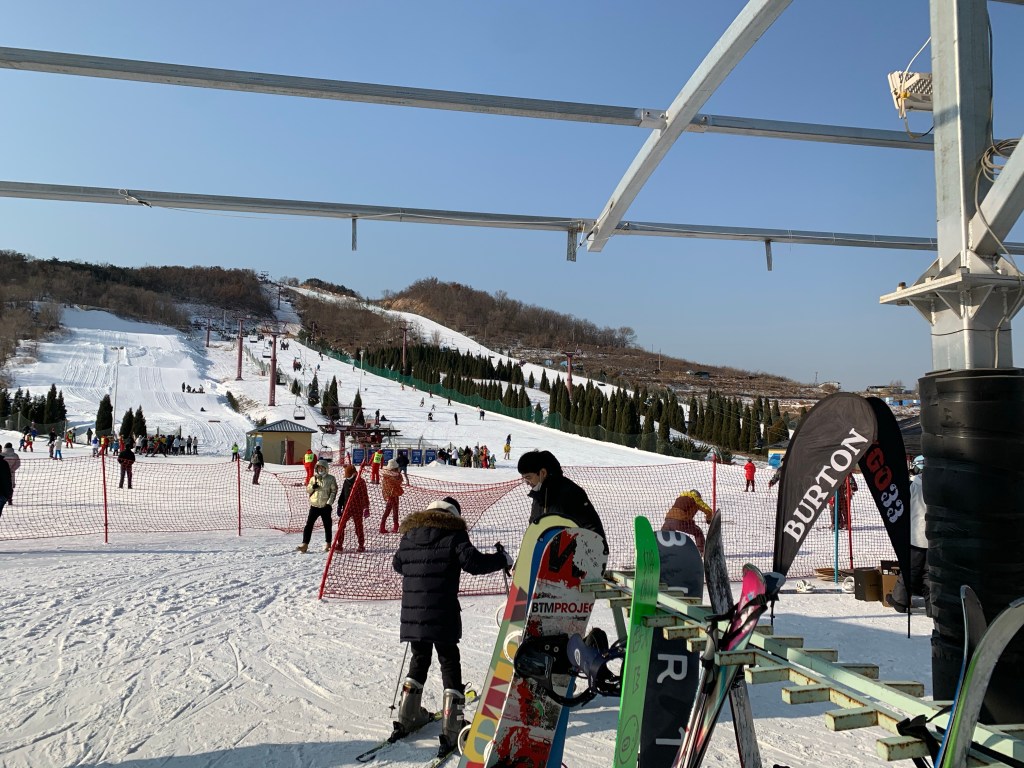
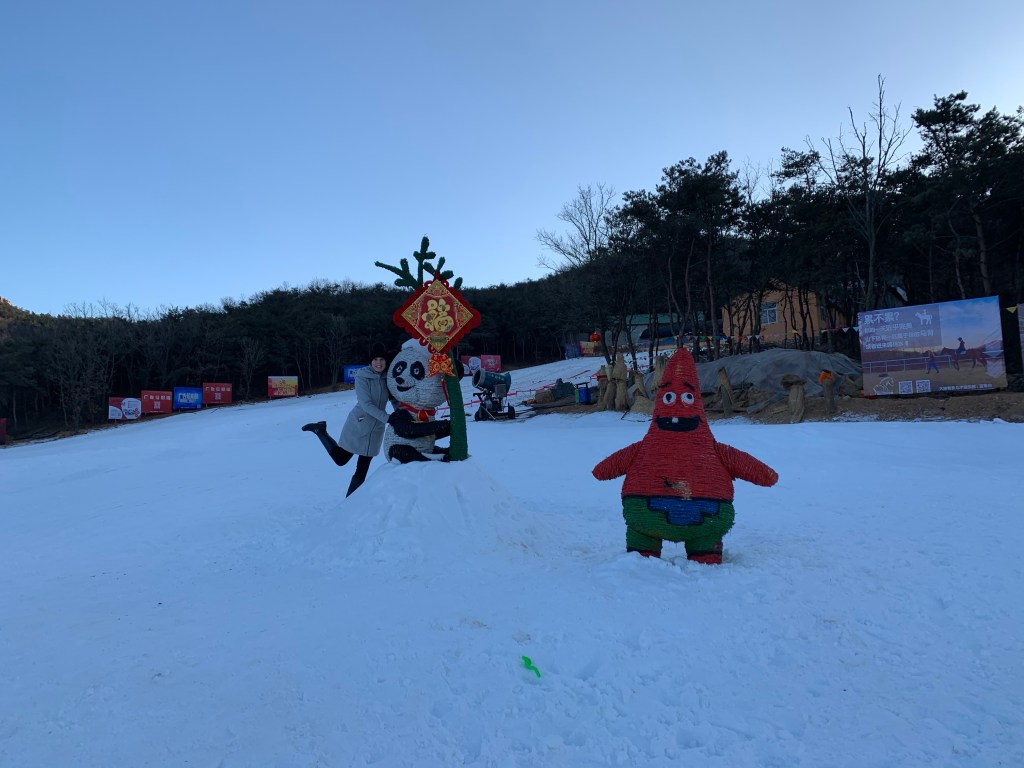
Dalian Happy Snow World is quite near to the airport and should be easy to find. You will find everything you need in regard of equipment there. From ski to snowboards, helmets, boots you get everything there. The equipment is quite good, only top brand equipment (Völkl, Atomic, Burton etc.). We paid around 500 RMB for a whole day ticket including rental fee for everything, for 2 persons total.
There are 3 tracks, a beginner, intermediate and pro track. The beginner track is almost flat, but i guess that’s what you are looking for as a beginner. The pro track was OK, long enough and fast. It’s about 600m long, i cannot really tell the vertical height difference.
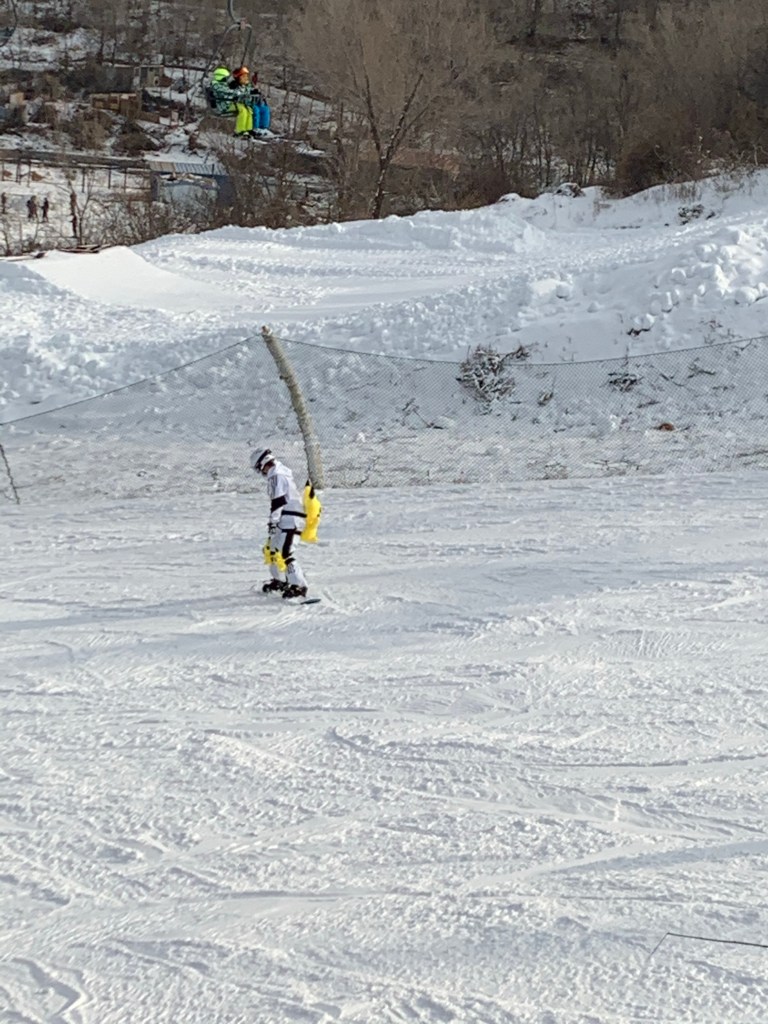
Pikachu keeping you safe!
Pictures above: A funny thing we saw first here in China, kind of „buffers“ for your back and knees in form of stuffed animals. They come in all kind, Pikachu, pandas, turtles, pigs. A practical thing for sure!
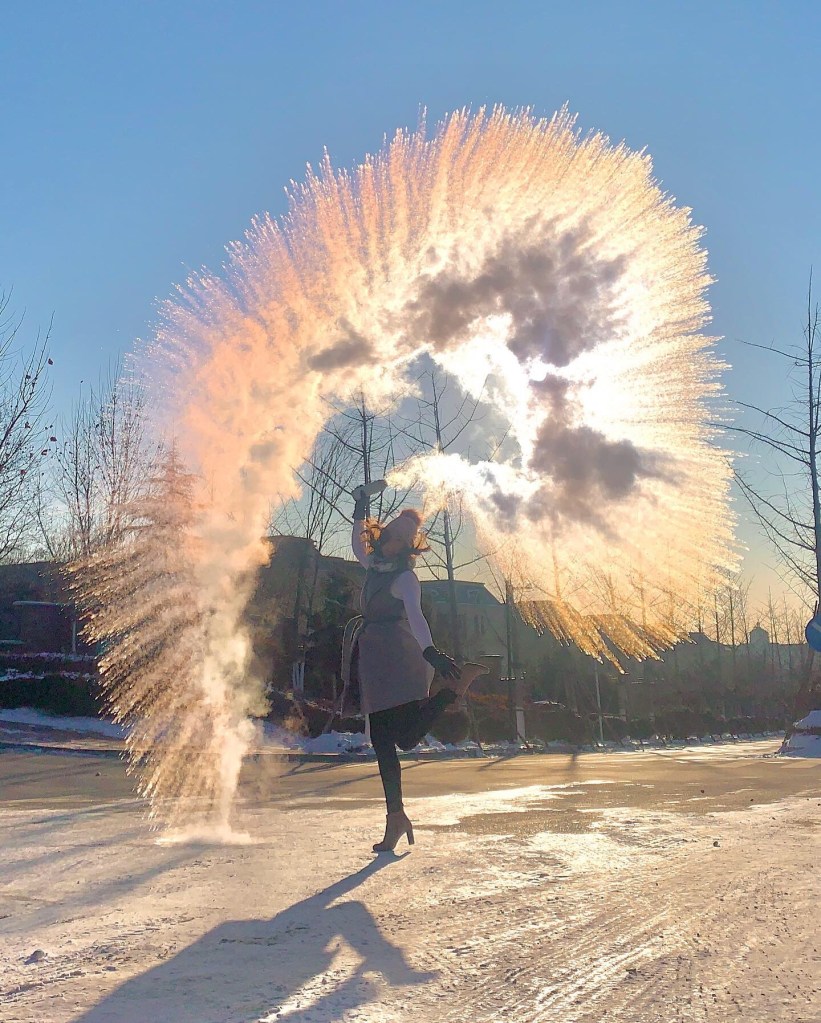
Another fun thing to do is…not so obvious…throwing boiling water into the air, which, if it is cold enough (lower -17 centigrade) somehow directly converts to water vapor (its called Mpemba effect, feel free to look it up). I have to say i wasn’t too amazed to take pictures 8am in the morning on a weekend at -20 degrees, but it returned some nice pictures and my wife being happy 🙂
Mpemba Effect
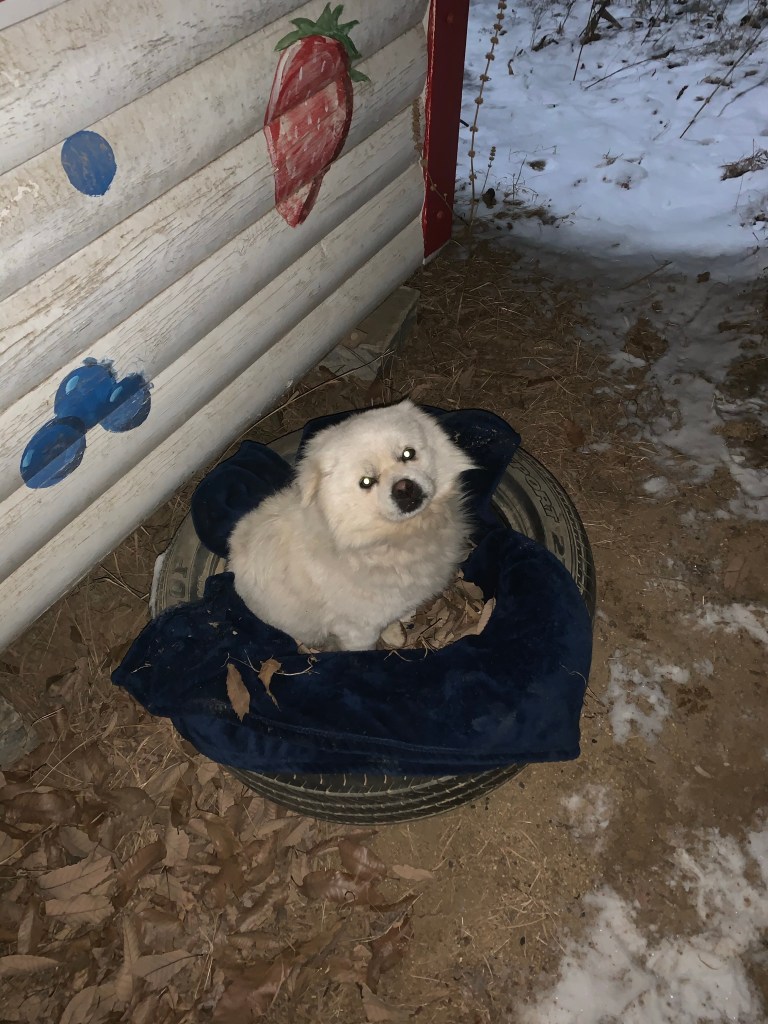
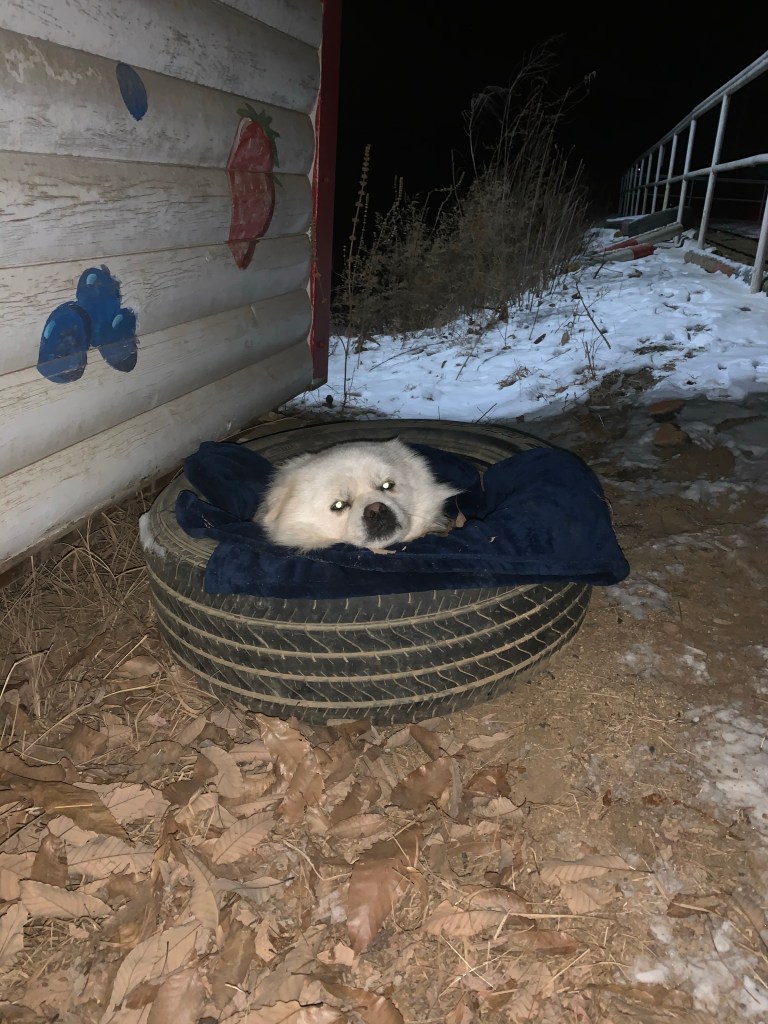
Below: My wife build a bed for the poor farm dog Bo who had to stay out in the cold. He didn’t like it at first, but then seemed to feel cozy in his new home. Those two pictures are so cute, i had to post them.
No matter how you arrive in China, you will most likely appreciate some tips to get started.
Today I am writing this guide to give you some information for your first days in China. I remember my own time about 2 years ago. Everything is new, different and you most likely do not understand the language. It can be confusing and sometimes frustrating (even if you had been traveling to China and Asia for almost 10 years, like I did).
What is not covered in this blog?
To avoid confusion, I am purposefully not going into official procedures. I may dedicate a future blog for this, as it is also quite an experience to be shared.
All official procedures required before you enter China, such as how to get a work visa or residence permit.
Your first official steps in China such as registering at the nearest police office (you need to go there within 24h after your entry to China and register). I was lucky enough that this was largely done by the company I am working at and I suppose it would be similar for other expats.
Physical examination and health check procedure in a local hospital (takes about 1/2 day and is mandatory)
Any procedures related to COVID-19, such as quarantine when entering China, since the regulations are different in each province and change frequently.
What does this blog cover?
Essential APPs and how to set them up and use them.
Which websites / western apps work in China, which don’t and what workarounds are there?
Essential APPs
Yes, in China apps are called APP (A-Pee-Pee). But first things first. What you need to download Chinese APPs is a Chinese Apple account (for Apple users). I don’t know what you need for Android, but I guess it is the same. You may even be able to download certain apps through the German, US or whatever store, but they are mostly different to what is offered in China. All you need is a Chinese email address and Chinese phone number.
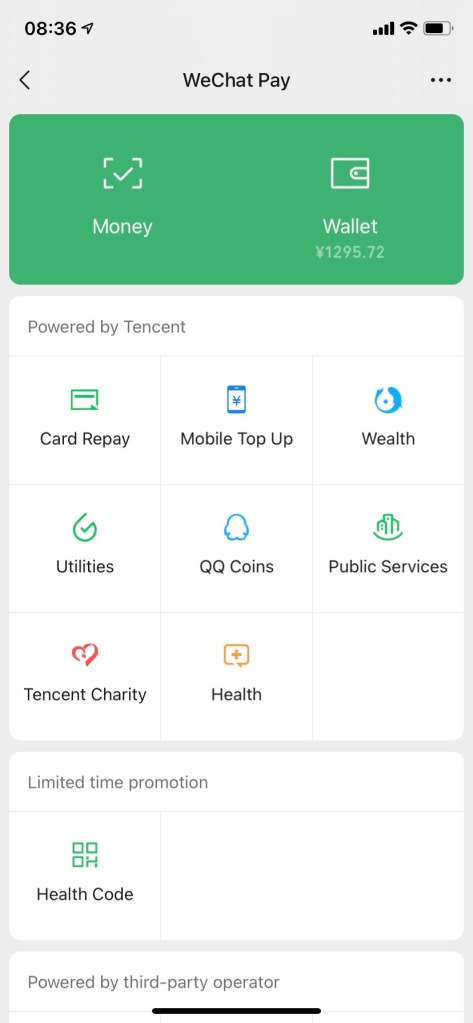
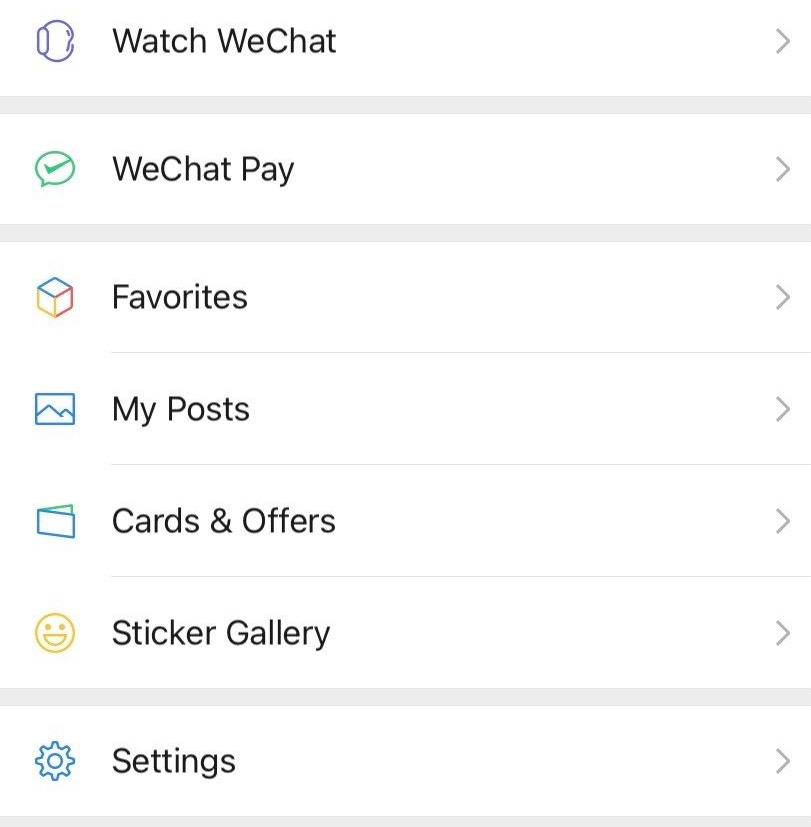
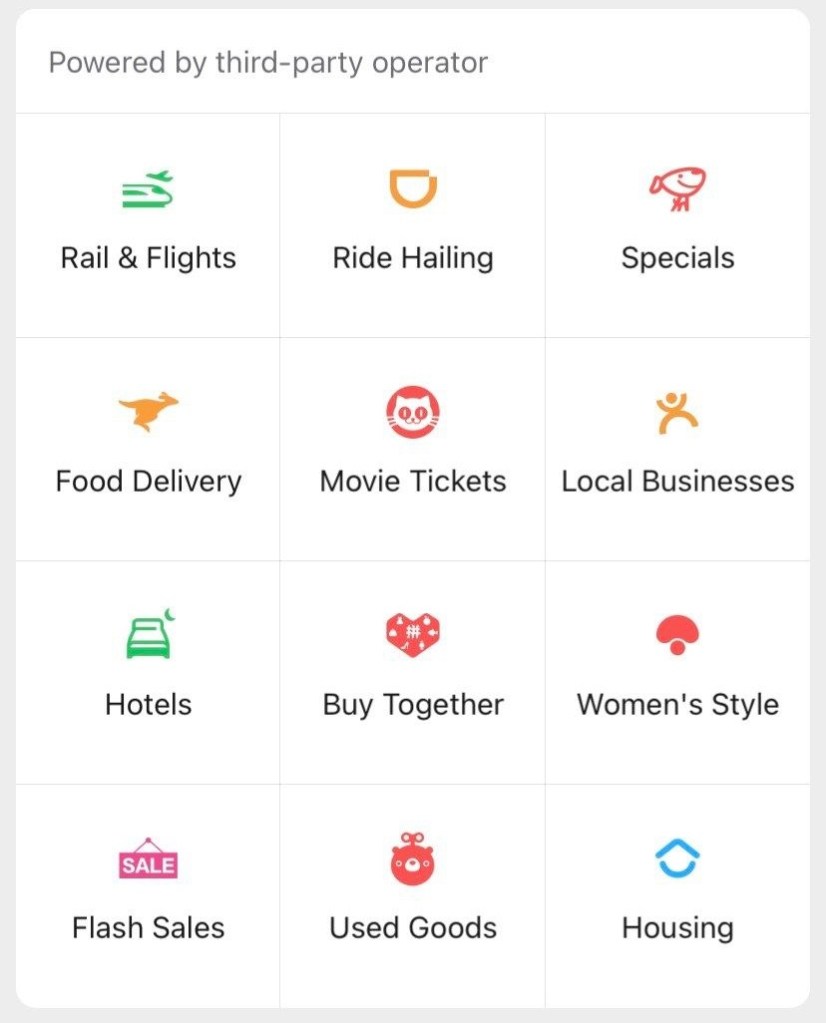
WeChat is possibly the most important APP you will need in China. Yes, I don’t think there is any way to live without this app.
Most obviously, it is used for chatting/messages as well as voice and video calls. But there is so much more you can do with it:
Pay (you need a linked chinese bank account)
Health Code (incl. travel history, you will need it almost everywhere to get in, e.g. in malls, airports, train stations etc.)
Social Media (similar to face book)
Pay your electrical / water / gas bills
And much more.
Most of other apps will automatically link themselves with WeChat, so you do not need to do any registration, it will just use your WeChat data. It is very convenient. Most websites accept WeChat as well.
For registration you will need your passport number, personal details, Chinese bank account and Chinese phone number. There may be further verification steps required, such as facial photo etc.
Note: Almost nobody pays with “real money” in China. It is very rare to see anyone not paying by phone.
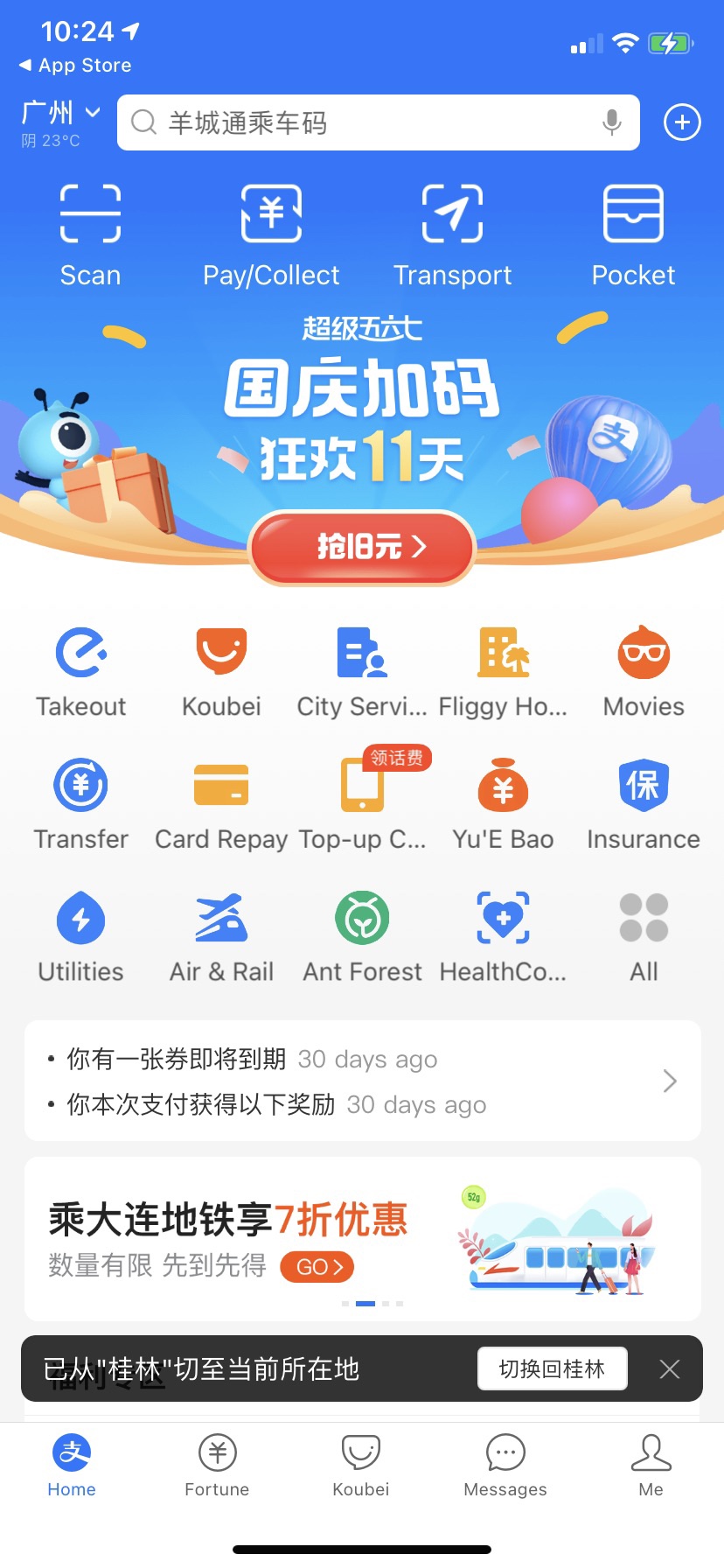
Similar to WeChat, Alipay is another widely used APP for payments, but also health codes. Some APPs/Websites do not accept WeChat as payment option, mostly if they are related to Alipay/Alibaba. A good example is Taobao.
For registration you will need your passport number, personal details, Chinese bank account and Chinese phone number.
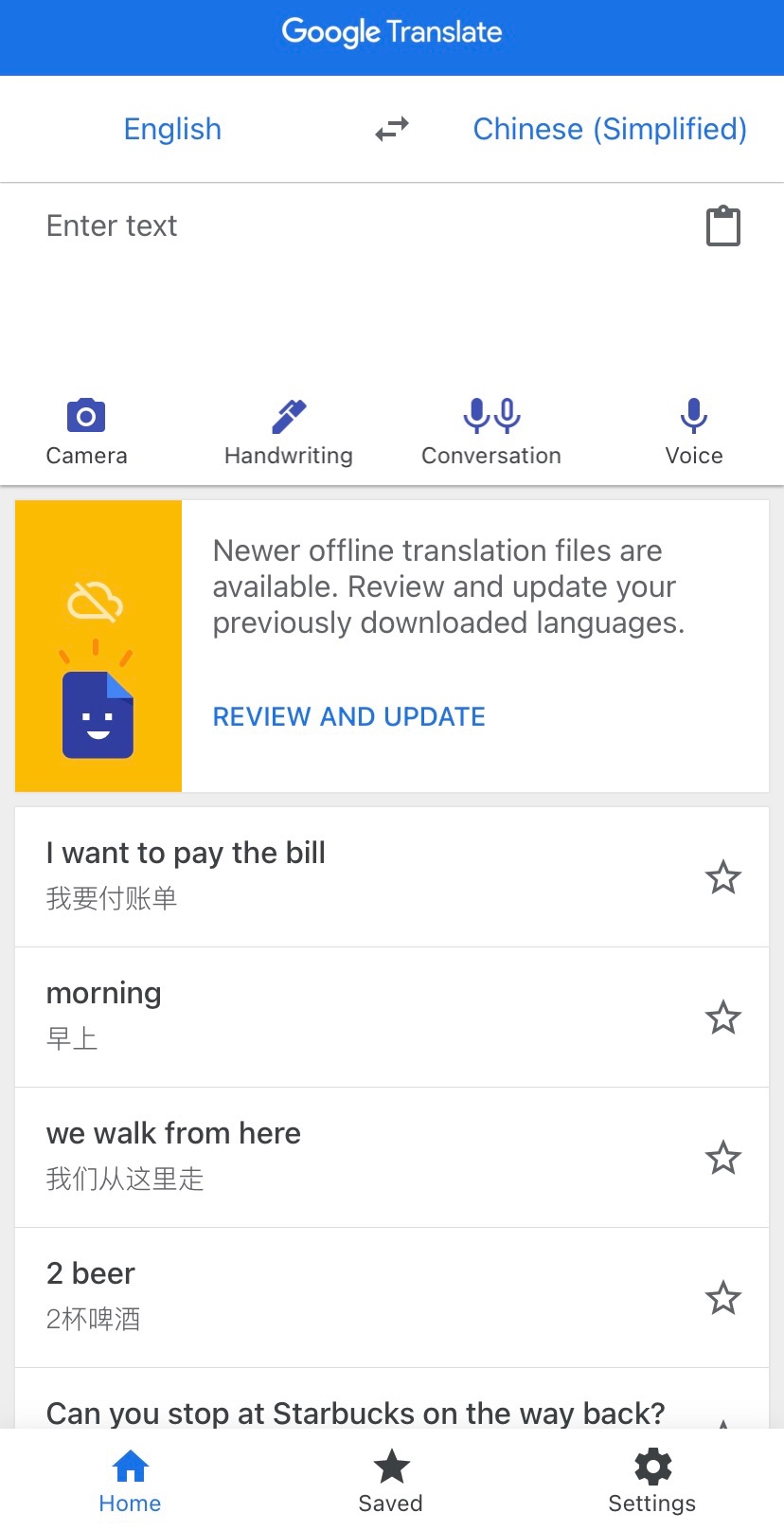
Contrary to mostly all Google websites, Google Translate works in China. You can download different language packs and even use it only.
It can translate texts by camera, written input and spoken input. It is really a life saver if you want, for example find out some ingredients in a certain food product, read a sign or even translating the newspaper.
Of course, it has it its limitations, but normally, you will be able to get the meaning.
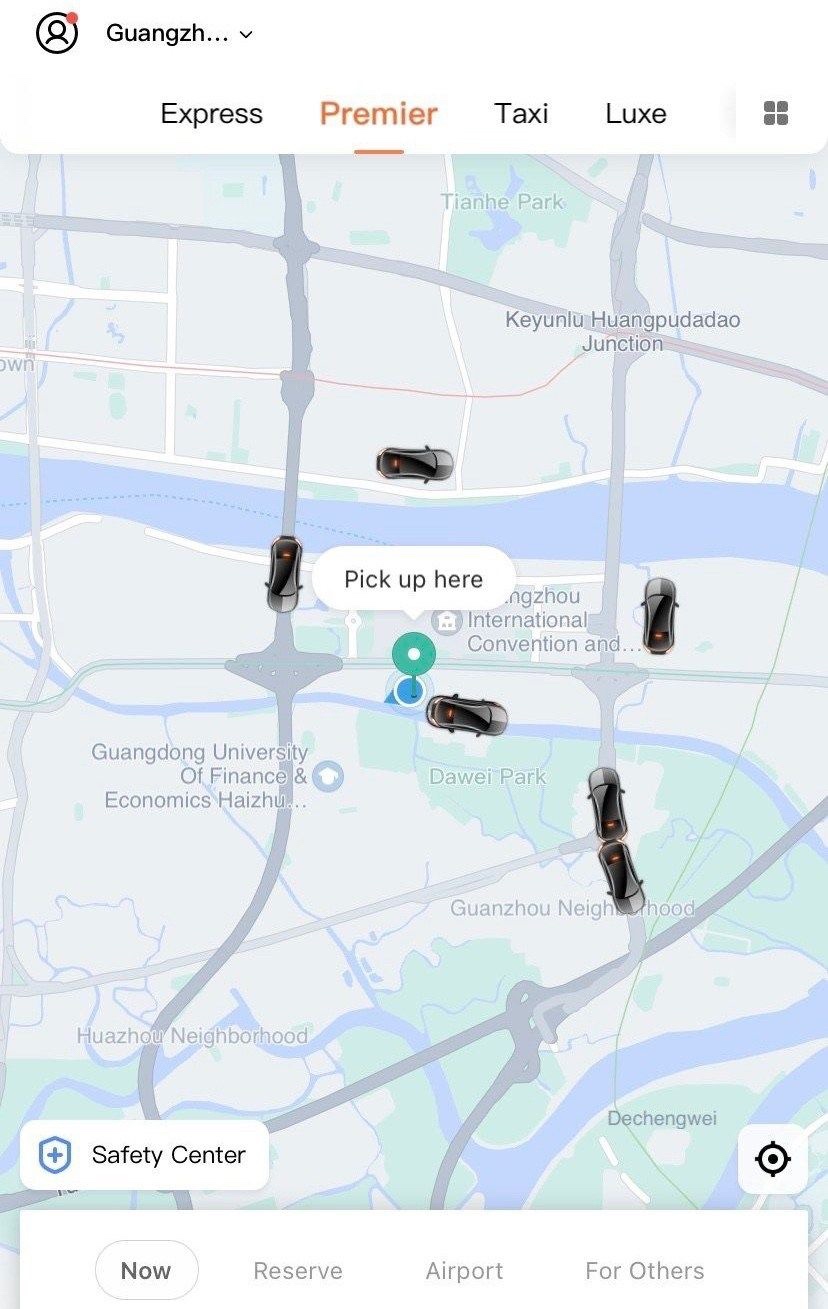
DiDi is the number one ride hailing APP in China. It works in almost any bigger city, and even in smaller cities. It also offers an option to switch to English language (you may need a Chinese friend to set it up in the first place)
There are different services, you can use:
Taxi
ordinary taxi
I recommend this only if nothing else is available
the quality of official taxis can really vary between “OK” at best to “i will never take a taxi again” (driver smoking, open windows, run down cars, unsafe driving, loud music, you can experience anything)
Express
normal cars, mostly Chinese models
good basic experience
Premier
only available in selected cities
good middle class cars (VW , Honda, Nissan)
increased service, such as free water provided.
This is the way to go if available, the price is barely more expensive than a normal taxi
Luxe
kind of a limousine service
high end cars, e.g. S-class Mercedes
I have not tested it so far.
It is only available in a few cities
Normally you will connect your DiDi account with WeChat, then the payment is done automatically after the ride. You can also somehow add some credits to your DiDi wallet, but I have not tried that so far.
The rides are normally (except Taxi) very safe, you can even call the police in the APP or send complaints, but I have never needed it. The quality is consistent and good. You can also rate the driver, and every driver knows that if they have a bad rating, they will get less customers.
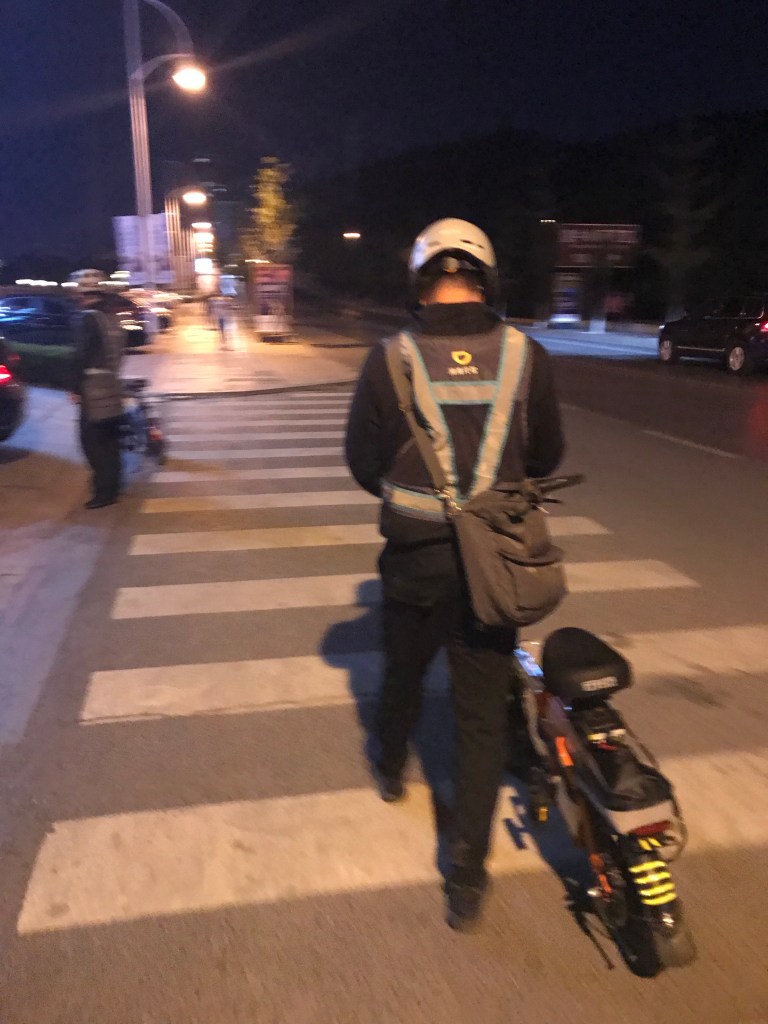
I almost forgot the best thing about DiDi . You can order a driver for your own car to drive you back home after you have been drinking! This is the single most greatest invention I have ever experienced. No more getting a taxi and having to get your car back from wherever the next day.
The drivers will drive back with an foldable electric scooter they place in your trunk. They even use gloves and seat covers in your car and drive you home safely.
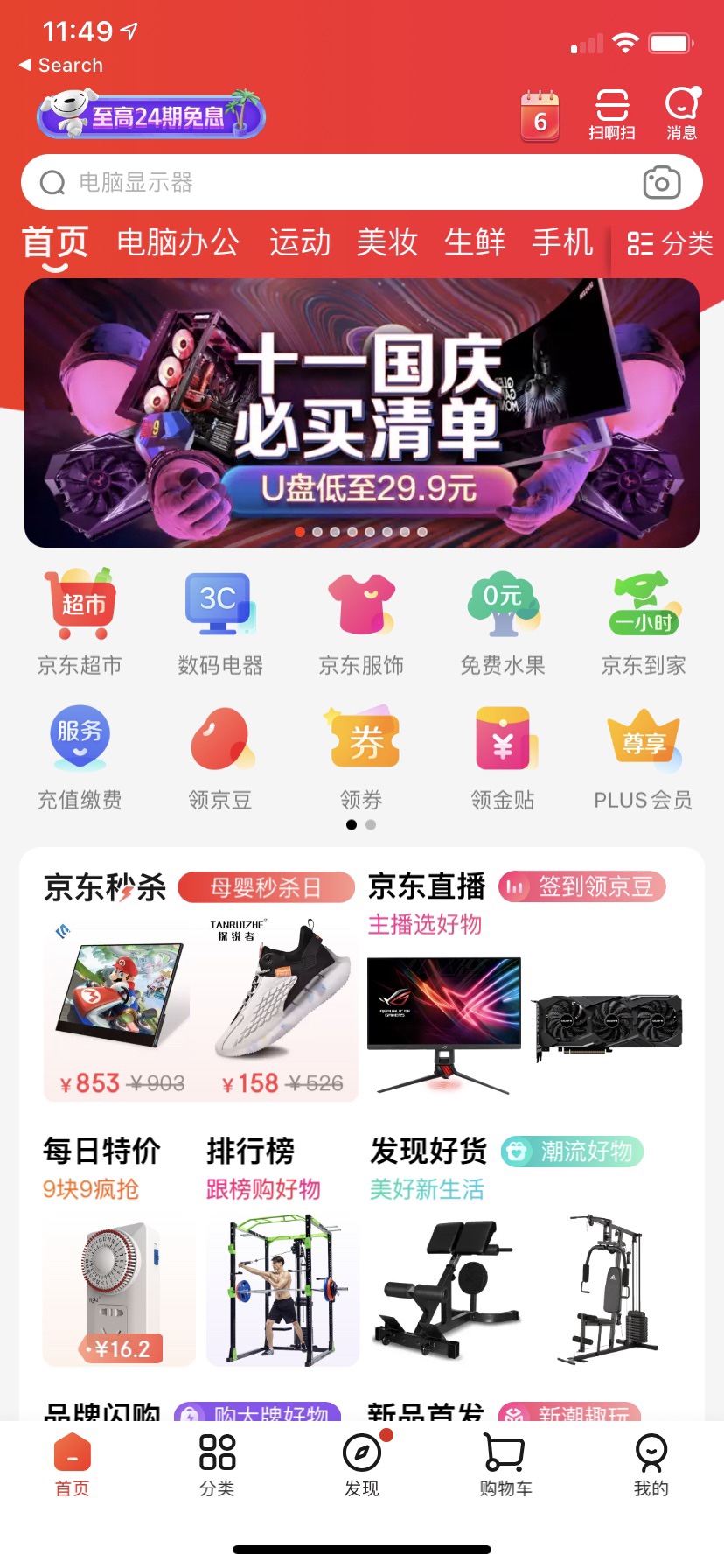
JD is one major store in China, mostly for electronic products but also for almost everything else.
All you need to do to set it up is connect your WeChat account and setup a delivery address (i recommend a mailbox station, otherwise, the delivery guy will call you every time. There are mailbox stations available at many big companies or in your living compound).
The APP does not offer an english version, so you may need someone who can read Chinese to help you set it up. Using the APP is straightforward and you figure out which button does what eventually.
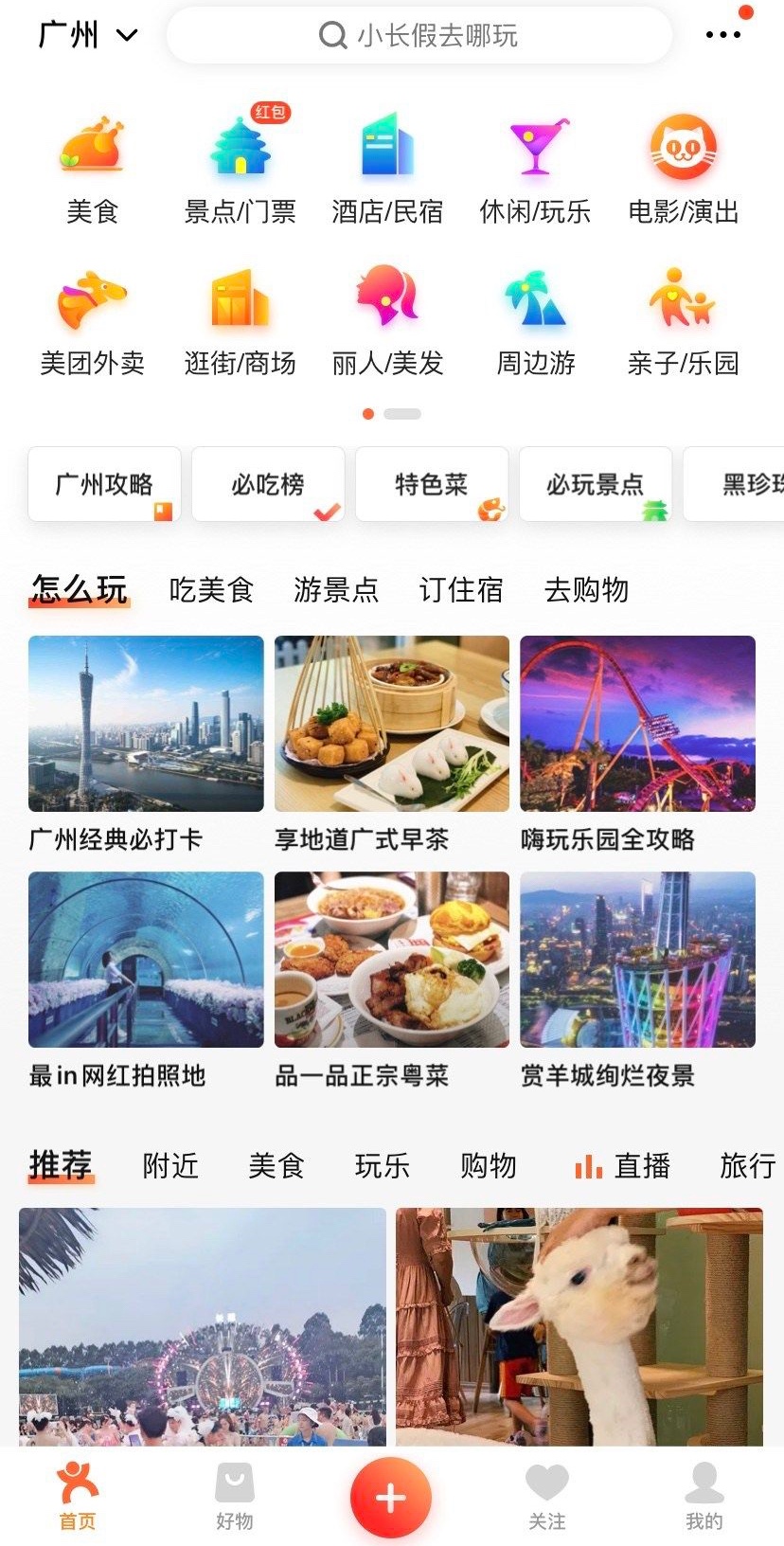
Dianping is the “Chinese Yelp”. Anything, from restaurants to KTVs can be reviewed and looked up in there. It is a great tool to find bars or restaurants around your location and not just blindly go somewhere.
All the locations are rated, even though the comments are 99% in Chinese language you can make out if it is the right place for you by looking at the pictures and judging from the rating.
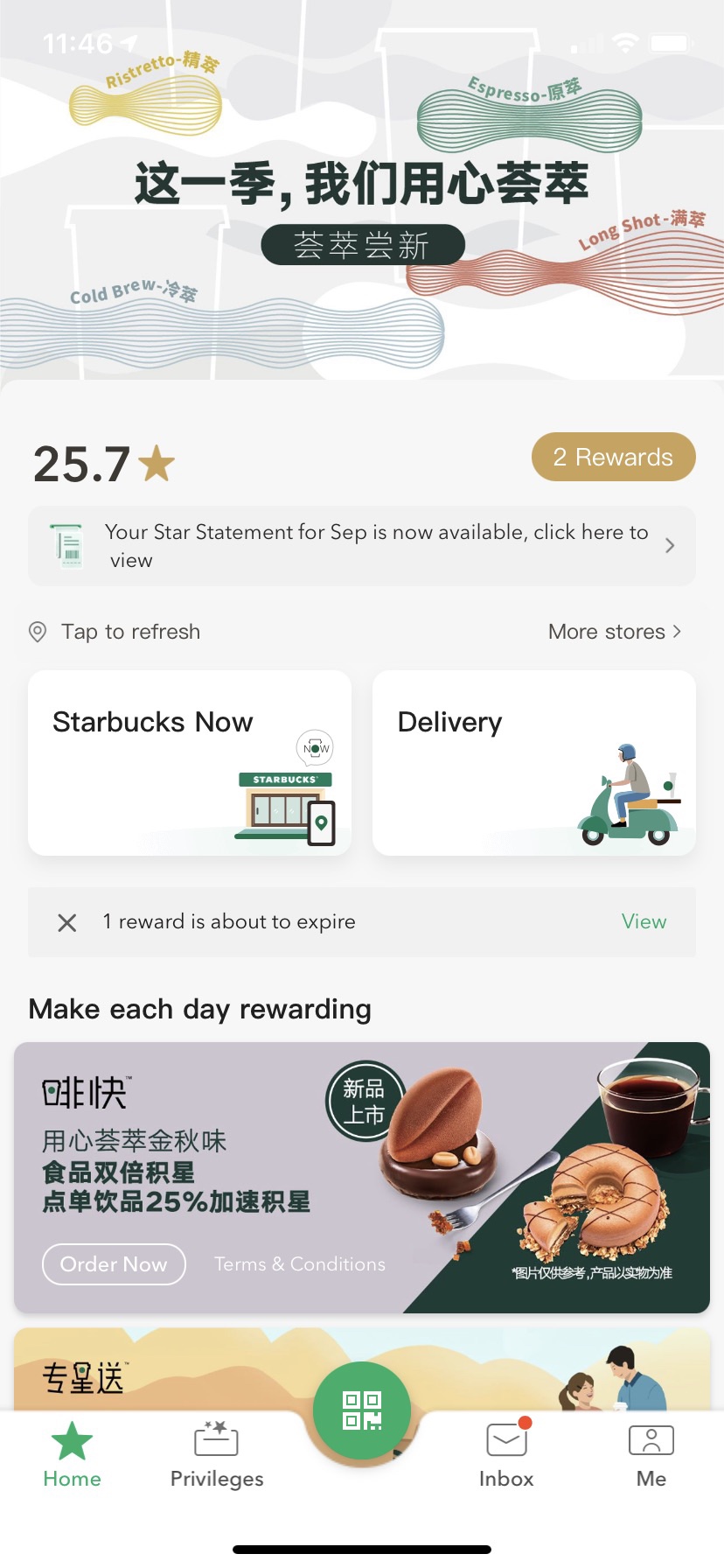
If you love coffee, there is no way around this APP.
There is a localized APP for Starbucks and it has an English language option.
The functions are similar to any US/European version I suppose, online orders, delivery, collecting reward points and payment as well as finding the next store nearest to you.
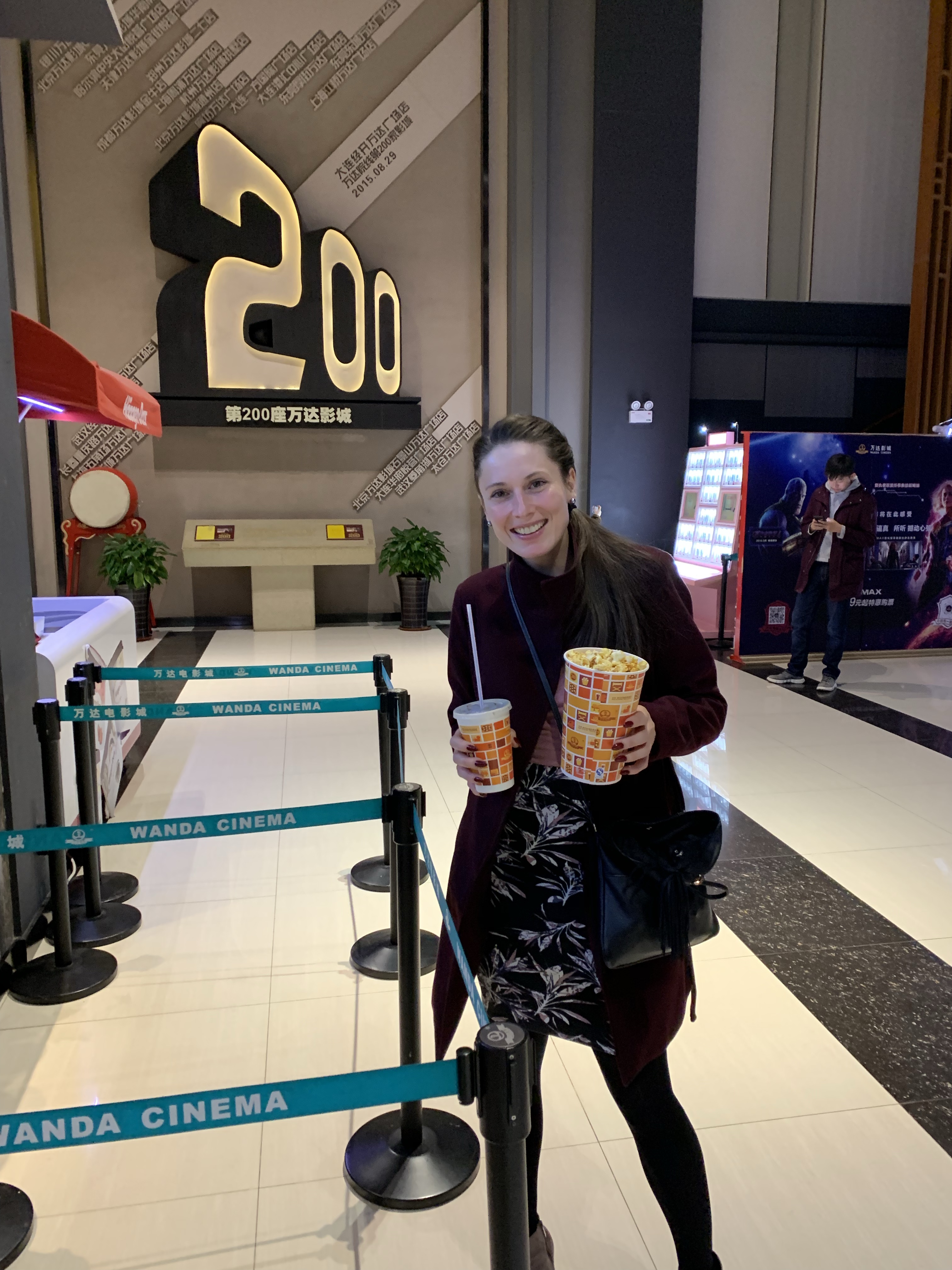
Wanda is a huge real estate company based in Dalian. Almost any city will have a Wanda Plaza mall. Wanda Cinemas are therefore the way to go if you love movies.
You can order tickets online or just look up the latest movies showing in your local cinema.
Most western movies are shown in English language with Chinese subtitles. Most big western blockbusters are shown in China.
Which websites/western apps work, which don’t?
As you may or may not know, the Chinese government is quite restrictive when it comes to western websites or services. Therefore, I will try to give you a picture what to expect.
Obviously, this cannot be a complete list, since I cannot test every single website. It will give you a good idea however, what works and what does not.
Websites and services that DO NOT work
Facebook
Google
Twitter
Instagram
Amazon Prime (by fire stick)
Google Chromecast
Most western news websites
Netflix
YouTube
Google Maps
WhatsApp (only text messages, but nothing else)
Spotify
Websites and services that DO work
iTunes Store (only foreign stores, there is no chinese iTunes Store)
Apple TV (so you can watch western movies)
Most online games, even on servers outside China
Play Station Network (PSN)
Steam
Amazon (there is not really an amazon china, but you can for example order ebooks in your “home country” or other stuff outside China, in case you want to buy any presents for relatives, etc.)
Paypal
Microsoft Bing (Search engine)
Most online banking APPs and finance apps (foreign banks)
Kindle ebook reader
LinkedIn
Xing (Similar to LinkedIn, mostly used in Germany)
Apple Maps
eBay
most western mail providers
most podcasts
Workarounds
There are plenty of VPNs you can use which will give you access to websites that are normally not available in China. VPNs are officially illegal in China, so I cannot advertise for them here. Check with your company if you are allowed to use them on company hardware.
Personally, i have tried a few, and there is not really a big difference between the top 5 providers. The price range is around 99-150 EUR per year.
The connection quality varies greatly and depends on recent updates of the “Chinese great firewall”. Sometimes, the VPN connection works as if you are in your home country. Unfortunately, this is rarely the case. Sometimes, you cannot get a connection to work at all for days, in very bad cases even up to 2 weeks. Then there are time when you get connected, but the speed is so bad you cannot really do much. You will be happy if your regular website loads, but forget about streaming music or even videos.
Being optimistic i would summarize the situation as this:
25% of the time, it does not work at all
25% of the time, it works, but the speed is horrible
25% of the time, it works OK, but not great
25% of the time, it works great.
Pro Tip: Download videos or any other content as much as possible when the connection is good and watch/consume it later offline. You will safe yourself a lot of headaches.
Local alternative webites, APPs and services
I will list a few websites and services / apps that could “replace” some of the functions of western apps you may be used to.
equivalent to Netflix, you can watch Chinese and international TV shows and movies
Free version includes heavy advertisement (2/3 of the screen is full of comments and ads)
VIP version available (to remove ads)
Chinadaily (local and global news in english language)
Global Times (local and global news in english language)
Of course the APPs listed above will replace your typical shopping apps.
There is plenty of movie and TV show APPs on any Chinese smart TV or basically any TV bought in China. There are also many english movies for rent, you can pay by scanning a WeChat Code on the screen. The prices are between 15-49 RMB, depending on the APP and movie.
There are some websites that offer your local (German, US, etc.) TV programs, even prerecorded so you can fast forward etc. I don’t know the details since we do not watch TV, but it should be easy to research.
What’s next?
There are still many topics to be covered to get your life started in China. In the next blogs, I will focus on following:
Should I get a driving license and how to get it?
Should I learn the language and how do I learn most effectively?
Where to buy western food?
“Life hacks” for daily life
Myths and facts you may have heard about China that are not true
Chinese habits you probably are not used to
What is on your mind? What questions do you have? Let us know in the comment section! Also feel free to share any interesting APP or website that could be helpful for other expats. We appreciate any input!














 2GIC
2GIC 